
The moment you crack open a jar of kanji, that sharp, tangy aroma hits you instantly, transporting you straight to a kitchen filled with the scent of fermented goodness. This traditional Indian probiotic drink has been nourishing families for centuries, and making it at home is surprisingly simple and deeply rewarding.
Kanji is a naturally fermented beverage made from carrots, mustard seeds, and spices that transforms humble ingredients into a gut-friendly powerhouse. What makes this recipe special is that it requires minimal effort, uses ingredients you likely have on hand, and rewards your patience with a drink that’s tangy, probiotic-rich, and absolutely delicious.
The magic happens in just a few days of fermentation, and you’ll end up with a drink that’s perfect for sipping alongside meals, using as a digestive aid, or even mixing into cocktails. By the end of this guide, you’ll understand exactly how to make kanji at home and why this humble fermented drink deserves a permanent spot in your kitchen.
Why You’ll Love This Recipe
Making kanji at home gives you complete control over ingredients and fermentation, plus you’ll save money compared to buying bottled versions. This recipe is forgiving, requires no special equipment, and delivers probiotics that support digestive health naturally.
- Naturally fermented and packed with live probiotics for gut health
- Requires just five basic ingredients and minimal active prep time
- Costs pennies per batch compared to store-bought versions
- Ready to drink in 3 to 5 days without any special equipment
- Tangy, spiced flavor that pairs perfectly with meals or stands alone
My Experience Making This Recipe
The first time I made kanji, I was honestly skeptical that leaving carrots and spices on a shelf would create something actually delicious. Three days later, I opened that jar to find a vibrant magenta liquid with the most complex, tangy flavor I wasn’t expecting from something so simple.
My family’s reaction was mixed at first since kanji tastes nothing like the sweet carrot juice they expected. After a week, everyone was reaching for small glasses before meals, and my kids actually asked for more without complaining about the sour taste.
What surprised me most was how forgiving the process is and how the flavor deepens the longer it ferments. I’ve now made it consistently for two years, and each batch teaches me something new about fermentation and flavor development.
Recipe Overview
- Recipe Name: Kanji (Indian Fermented Carrot Drink)
- Servings: Makes approximately 1 quart (32 ounces)
- Prep Time: 10 minutes
- Fermentation Time: 3 to 5 days
- Total Time: 3 to 5 days plus 10 minutes active time
- Course: Beverage
- Cuisine: Indian
- Calories per Serving: 15 calories per 4-ounce serving
Equipment You Will Need
- Clean glass jar (1 quart or 32-ounce capacity)
- Cutting board and sharp knife
- Measuring spoons and cups
- Wooden spoon or chopstick for stirring
- Cheesecloth or coffee filter
- Rubber band or jar lid
- Fine mesh strainer
- Glass bottles for storing finished kanji
Ingredients for Kanji
- Carrots: 3 to 4 large carrots, cut into thick sticks or chunks
- Water: 4 cups filtered or boiled water, cooled to room temperature
- Black mustard seeds: 1 teaspoon, slightly crushed
- Red chili pepper: 1 whole dried red chili or 1/2 teaspoon red chili flakes
- Salt: 1/2 teaspoon fine sea salt or rock salt
Ingredient Notes and Substitutions
- Carrots: The primary ingredient that gives kanji its color and subtle sweetness, which fermentation converts into complex tanginess. Substitute with red radish, beets, or purple cabbage for different colors and flavors, though the taste profile will shift noticeably.
- Black mustard seeds: These seeds provide the characteristic peppery kick and contain compounds that enhance fermentation. Use yellow mustard seeds if black seeds are unavailable, though the flavor will be slightly milder and less traditional.
- Red chili pepper: Adds heat and antimicrobial properties that support fermentation while adding depth. Replace with 1/4 teaspoon cayenne pepper or omit entirely if you prefer a milder kanji.
- Salt: Essential for controlling fermentation speed and supporting beneficial bacteria growth. Rock salt or sea salt work best, but avoid iodized salt which can inhibit fermentation.
- Water: Use filtered or boiled and cooled water to avoid chlorine and tap water chemicals that interfere with fermentation. Distilled water works but lacks minerals that support healthy fermentation.
How to Make Kanji
Step 1: Prepare Your Jar and Ingredients
Start by cleaning your glass jar thoroughly with hot water and letting it air dry completely, which removes any bacteria that might interfere with proper fermentation. Cut 3 to 4 large carrots into thick sticks or 1-inch chunks, keeping the skin intact since it contains beneficial microorganisms that jumpstart fermentation.
Step 2: Combine Carrots and Spices
Place the carrot pieces into your clean, dry jar, then add 1 teaspoon of slightly crushed black mustard seeds and 1 whole dried red chili pepper. The mustard seeds release their oils and antimicrobial compounds slowly during fermentation, enhancing both flavor and safety.
Step 3: Add Salt to the Jar
Sprinkle 1/2 teaspoon of fine sea salt or rock salt over the carrots and spices, which controls fermentation speed and prevents unwanted bacteria from taking hold. The salt creates an environment where only beneficial lactic acid bacteria can thrive, giving you safe and delicious kanji.
Step 4: Pour in Cooled Water
Fill the jar with 4 cups of filtered or boiled and cooled water, ensuring all carrot pieces are fully submerged under the liquid. Submerging prevents mold from growing on exposed surfaces and helps fermentation proceed evenly throughout the batch.
Step 5: Stir and Cover
Use a clean wooden spoon or chopstick to stir everything together gently, distributing the salt and spices evenly. Cover the jar loosely with a cheesecloth, coffee filter, or a lid that’s not sealed tight, allowing gases produced during fermentation to escape while keeping dust and insects out.
Step 6: Place in a Warm Location
Set your jar on a kitchen counter or shelf away from direct sunlight, at a room temperature between 65 and 75 degrees Fahrenheit for optimal fermentation. Warmer temperatures speed fermentation (ready in 2 to 3 days), while cooler temperatures slow it down (5 to 7 days), so adjust expectations based on your kitchen climate.
Step 7: Monitor Fermentation Progress
By day 2 or 3, you should notice the water turning a deep pink or magenta color as pigments from the carrots leach into the liquid. You might also see tiny bubbles rising through the liquid and smell a pleasantly tangy, fermented aroma, both signs that fermentation is progressing correctly.
Step 8: Taste Test and Ferment Longer if Needed
On day 3, open the jar and take a small taste of the liquid to gauge tanginess and flavor development. If you prefer a milder, slightly sweet kanji, drink it now; if you want deeper tanginess and more probiotic development, let it ferment another 2 days.
Step 9: Strain and Bottle Your Kanji
Once fermentation reaches your preferred level, pour the liquid through a fine mesh strainer into clean glass bottles, leaving the carrot pieces behind. The liquid you’ve strained is your finished kanji, ready to drink immediately or store in the refrigerator.
Step 10: Store Properly for Longevity
Cap your bottles tightly and refrigerate the kanji, which slows fermentation dramatically and keeps the drink fresh for up to 3 weeks. The flavor continues evolving slowly in the refrigerator, becoming more complex and tangy the longer it sits.
Pro Tip: Save the fermented carrot pieces to add to salads, rice bowls, or eat as a probiotic snack; they’re packed with beneficial bacteria and have a wonderful tangy crunch.
Tips for the Best Kanji
- Use carrots with unblemished skin since natural bacteria on the skin initiates fermentation; scrub gently under cool water rather than peeling.
- Keep your jar covered but not sealed so carbon dioxide can escape, preventing pressure buildup while protecting against contamination.
- Maintain consistent room temperature between 65 and 75 degrees Fahrenheit; temperature swings can slow or stall fermentation unpredictably.
- Taste kanji starting on day 3 rather than waiting a full week, so you catch your preferred level of tanginess and stop fermentation at the right moment.
- Shake the bottle gently before serving to distribute any sediment, which contains beneficial bacteria and adds nutritional value.
- Never discard the fermentation liquid; cloudy sediment and floating particles are probiotic colonies and are perfectly safe to consume.
Common Mistakes to Avoid
- Using iodized table salt instead of sea salt or rock salt inhibits fermentation because iodine kills beneficial bacteria; stick to non-iodized varieties only.
- Sealing the jar too tightly traps gases produced during fermentation, creating pressure that can crack the jar or cause an explosion when opened.
- Using chlorinated tap water directly introduces compounds that interfere with fermentation; always boil and cool water first or use filtered water.
- Placing the jar in direct sunlight degrades the color, flavor, and beneficial bacteria; keep kanji in a cool, dark spot on your counter.
- Throwing away the fermented carrot pieces wastes probiotic-rich food that adds texture and flavor to meals throughout the week.
Serving Suggestions
Kanji shines as a small sipper served chilled before or alongside meals, where its sharp tanginess aids digestion and cleanses the palate. You can also mix it into recipes, use it as a base for creative drinks, or simply enjoy it straight from the bottle as a daily probiotic boost.
- Serve as a 4-ounce digestive shot before heavy meals to support digestion and ease bloating
- Mix into cocktails or mocktails as a unique, probiotic-rich ingredient with complex flavor depth
- Pour over rice bowls or dal dishes for added tanginess and a pop of color
- Blend into smoothies with fruit and yogurt for a tangy, fermented probiotic drink
- Serve ice-cold as a refreshing beverage alongside spiced Indian meals
Variations to Try
- Beet Kanji: Replace carrots with beets for a deeper earthiness and striking deep purple color; the flavor becomes richer and slightly less sweet than carrot kanji.
- Turmeric Kanji: Add 1/2 teaspoon of turmeric powder to the jar for anti-inflammatory benefits and a golden hue; turmeric adds warmth without overpowering the fermented tang.
- Ginger Kanji: Include 4 to 5 thin slices of fresh ginger alongside the carrots for warming spice and added digestive support that pairs beautifully with the basic recipe.
- Mixed Vegetable Kanji: Combine 2 carrots with 1 small beet and 3 to 4 radishes for complexity; the mixture ferments at the same rate and produces a beautifully balanced flavor.
- Mild Kanji: Omit the red chili entirely and reduce mustard seeds to 1/2 teaspoon for a gentler version that appeals to those sensitive to heat or strong flavors.
Dietary Adaptations
- Gluten-Free: Kanji is naturally gluten-free; simply ensure your salt and spices haven’t been processed in facilities handling gluten, which rarely happens but worth verifying on labels.
- Dairy-Free: Kanji contains no dairy whatsoever, making it perfect for vegans and those avoiding dairy entirely while still providing probiotics.
- Vegan and Vegetarian: Kanji is completely plant-based with no animal products at any stage, fitting seamlessly into vegan and vegetarian lifestyles.
- Low-Carb and Keto: Kanji is extremely low in carbohydrates with just 3 to 4 grams per 4-ounce serving, making it keto-friendly; however, limit portion size since fermentation produces small amounts of alcohol.
Storage and Reheating
Refrigerator
Store finished kanji in clean glass bottles with tight-fitting lids on your refrigerator shelf, where it keeps for 2 to 3 weeks. The cold temperature slows fermentation almost completely while the flavor continues developing subtly.
- Keep bottles upright and away from light to maintain color and beneficial bacteria
- Shake gently before pouring to redistribute settled sediment
- Transfer to smaller bottles as you use kanji to minimize air exposure
Freezer
Kanji can be frozen in ice cube trays or small containers for up to 3 months, though freezing halts fermentation and reduces probiotic count slightly. Thaw frozen kanji in the refrigerator before serving rather than at room temperature.
- Freeze in portions you’ll actually use to avoid repeated thawing
- Leave 1/2 inch headspace in containers since liquid expands when frozen
- Use frozen kanji cubes as starter cultures for your next batch
Reheating
Never heat kanji since heat kills the beneficial bacteria that make it special; always serve it chilled or at room temperature. If you’ve frozen kanji, thaw it slowly in the refrigerator overnight to preserve as many probiotics as possible.
- Serve straight from the refrigerator for maximum probiotic activity
- Let frozen kanji thaw in the fridge rather than on the counter
Nutrition Information
| Nutrient | Amount |
|---|---|
| Calories | 15 per 4 oz serving |
| Total Fat | 0.2g |
| Saturated Fat | 0g |
| Carbohydrates | 3.5g |
| Fiber | 0.5g |
| Sugar | 2.8g |
| Protein | 0.3g |
| Sodium | 280mg |
| Cholesterol | 0mg |
Nutritional values are approximate and based on a 4-ounce serving of finished kanji strained of solids. Actual values may vary based on fermentation length, carrot size, and water absorption during the process.
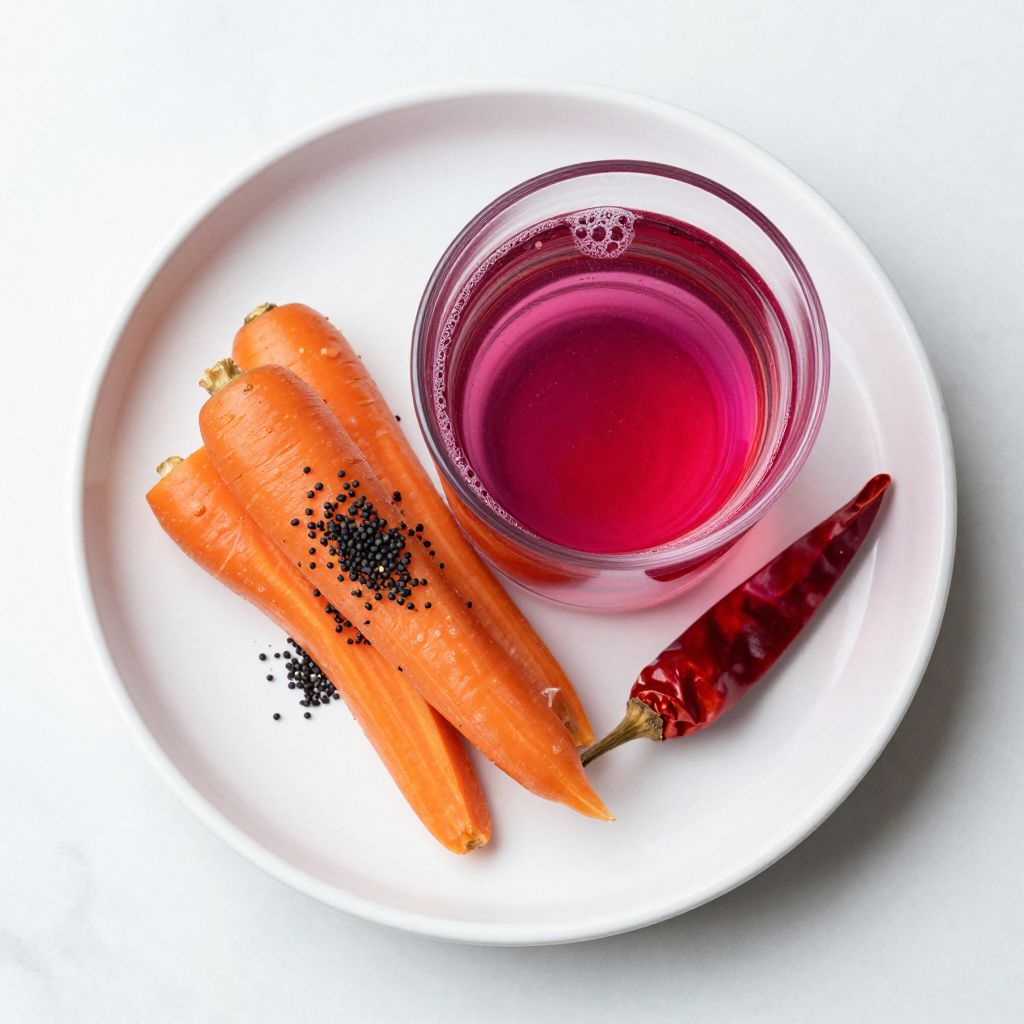
Kanji (Indian Fermented Carrot Drink)
Ingredients
Equipment
Method
- Clean a 1 quart glass jar with hot water and air dry completely.
- Cut carrots into thick sticks or 1-inch chunks, leaving the skin intact.
- Place carrot pieces into the jar and add black mustard seeds and dried red chili pepper.
- Sprinkle salt over the carrots and spices, ensuring even distribution.
- Pour in cooled filtered water to fully submerge the carrot pieces.
- Stir gently with a wooden spoon or chopstick to mix salt and spices.
- Cover the jar loosely with cheesecloth or a lid to allow gases to escape.
- Ferment at room temperature (65–75°F) for 3 to 5 days until liquid turns pink and tangy, tasting at day 3 and fermenting longer if desired.
- Strain the liquid through a fine mesh strainer into clean glass bottles, discarding or saving the carrot pieces.
- Refrigerate the bottled kanji to slow fermentation; it keeps for up to 3 weeks.
Notes
Frequently Asked Questions
Can I use store-bought carrot juice instead of fresh carrots?
No, store-bought juice is pasteurized, which kills the beneficial bacteria needed to start fermentation. Fresh, unpeeled carrots contain natural bacteria on their skin that initiates the fermentation process successfully.
What if my kanji develops mold on the surface?
Surface mold means the jar wasn’t covered properly or fermentation stalled from temperature issues. Discard the entire batch and start fresh, ensuring your jar is well-covered and placed in a warm location.
Can I ferment kanji for longer than 5 days?
Yes, longer fermentation increases tanginess and probiotic count, but flavor becomes extremely sour after 7 to 10 days and the carrots start breaking down mushy. Taste and adjust based on your preference, then refrigerate immediately to slow further fermentation.
Is the cloudy sediment at the bottom of my kanji bottle safe to drink?
Absolutely, that sediment is beneficial bacteria and actually increases the probiotic value of your kanji. Shake the bottle gently before serving to distribute the sediment throughout the liquid.
How much kanji should I drink daily for digestive benefits?
Start with 4 ounces (one small serving) daily before meals to allow your digestive system to adjust to the probiotics. Most people can increase to 8 ounces daily after a week without any issues.
Can I use the carrot pieces from fermentation again?
Yes, fermented carrot pieces are delicious and probiotic-rich; chop them into salads, add to rice bowls, or eat as a crunchy snack. They’ll keep in the refrigerator for about a week when stored separately from the liquid.
Final Thoughts
Making kanji at home transforms you into a home fermentation expert with just one simple recipe and a bit of patience. Once you taste the tangy, complex flavor of homemade kanji compared to store-bought versions, you’ll understand why this drink has been treasured for centuries.
Don’t be intimidated by fermentation; kanji is one of the most forgiving fermented foods you can make at home. Start your first batch this week, and you’ll be sipping your own probiotic kanji within days.
If you love exploring traditional recipes, you might enjoy making gyudon recipe for a complete meal experience. You could also satisfy your sweet tooth with mochi waffle recipe as a delightful dessert to serve alongside your kanji.