
There’s nothing quite like the smell of sourdough baking in your oven on a lazy weekend morning, filling your kitchen with that unmistakable tang and warmth. The King Arthur sourdough recipe has earned its reputation for good reason: it delivers a deeply flavored, beautifully structured loaf that tastes like it came straight from a professional bakery.
This recipe stands out because it balances simplicity with technique, requiring just four ingredients and patience rather than fancy equipment. You’ll get a loaf with a crackling crust, an open crumb structure, and that signature sourdough flavor that makes every slice worth savoring.
Why You’ll Love This Recipe
This sourdough checks every box for home bakers who want restaurant-quality results without the stress.
- Uses only flour, water, salt, and a healthy starter for pure, clean flavor
- Develops incredible texture through long fermentation rather than complicated techniques
- Works on your schedule with flexible timing that fits real life
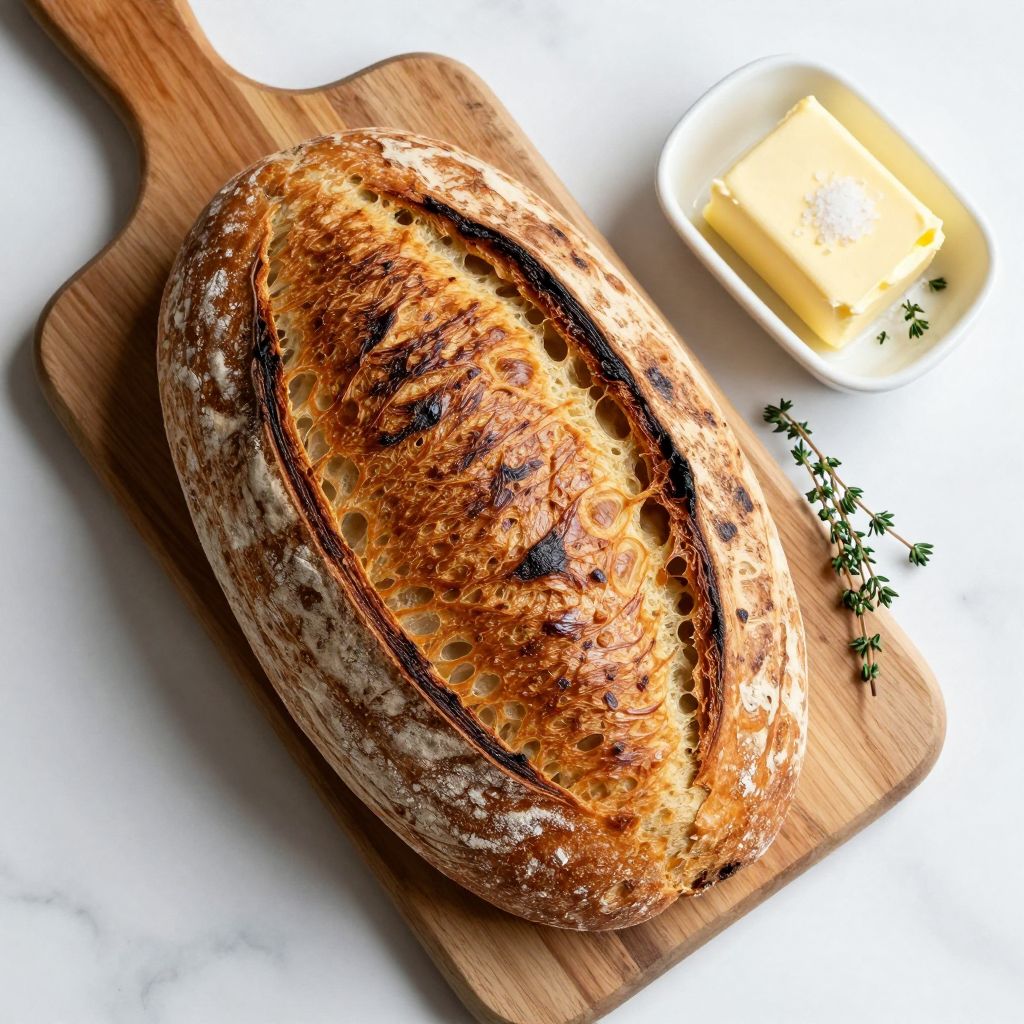
- Produces a loaf with a gorgeous shatter-crust and soft, open interior
- Improves your sourdough game whether you’re a beginner or experienced baker
My Experience Making This Recipe
I first made this recipe on a whim after my sourdough starter had been neglected in the fridge for weeks. I mixed the dough one evening, forgot about it overnight, and woke to a beautifully risen bulk that smelled incredible.
Shaping and scoring felt intuitive, and when that loaf came out of the Dutch oven, the crust crackled so loudly I thought something was breaking. The crumb was exactly what I’d been chasing: open, irregular holes with a tender, chewy structure that held together perfectly.
My family devoured half the loaf in one sitting, which told me everything I needed to know. This recipe became my go-to because it works consistently without overthinking.
Recipe Overview
- Recipe Name: King Arthur Sourdough
- Servings: 1 large loaf (about 12 slices)
- Prep Time: 20 minutes
- Cook Time: 45 minutes
- Total Time: 14 to 18 hours (mostly inactive)
- Course: Bread
- Cuisine: American
- Calories per Serving: 190
Equipment You Will Need
- Large mixing bowl
- Kitchen scale (highly recommended for accuracy)
- Dutch oven or covered baking vessel
- Bench scraper or dough knife
- Banneton or proofing basket (or a bowl lined with a floured towel)
- Instant-read thermometer (optional but helpful)
- Lame or sharp knife for scoring
Ingredients for King Arthur Sourdough
- 500 grams bread flour (or all-purpose flour)
- 350 grams water, divided
- 100 grams active sourdough starter, fed and at peak
- 10 grams salt
Ingredient Notes and Substitutions
- Bread flour develops stronger gluten and creates a more open crumb than all-purpose, but all-purpose works if that’s what you have on hand. If substituting, expect a slightly tighter crumb and slightly lower rise.
- Water makes up about 70 percent of the dough weight, which creates the open structure sourdough is known for. If your dough feels unmanageably wet, reduce water by 25 grams, though the crumb will be tighter.
- Active sourdough starter is one that’s been fed 4 to 8 hours prior and shows visible bubbles at the top. If your starter is sluggish, feed it twice daily for 3 to 5 days until it reliably doubles in size.
- Salt strengthens the gluten network and controls fermentation speed, so don’t skip it or reduce it. Kosher salt and fine sea salt work equally well.
How to Make King Arthur Sourdough
Step 1: Mix the Dough
Combine 500 grams bread flour and 325 grams water in a large mixing bowl, stirring until shaggy dough forms with no dry flour visible. This initial mix, called the autolyse, allows flour to fully hydrate and improves gluten development without any kneading.
Step 2: Rest the Dough
Cover the bowl and let the dough rest for 30 minutes to 2 hours at room temperature. During this rest, the flour absorbs water, which makes the next steps easier and builds flavor naturally.
Step 3: Add Starter and Salt
Dissolve 100 grams of active starter in the remaining 25 grams of water, then pour this mixture into the dough along with 10 grams of salt. Use your hand or a bench scraper to fold and squeeze the dough, incorporating the starter and salt thoroughly, which takes about 3 to 5 minutes of work.
Step 4: Begin Bulk Fermentation
Cover the bowl and let it sit at room temperature (68 to 72 degrees Fahrenheit is ideal) for 4 to 5 hours. During this time, you’ll perform a series of stretches and folds to build strength.
Step 5: Perform Stretch and Folds
Every 30 minutes for the first 2 hours, wet your hand, grab one side of the dough, and stretch it up and over the center, rotating the bowl a quarter turn after each stretch. After 4 turns around the bowl, you’ve completed one set of stretches and folds, which builds tension without harsh kneading.
Step 6: Complete Bulk Rise
After 4 to 5 hours total, the dough should increase by 50 to 75 percent in volume and feel airy with visible bubbles throughout. Press your finger into the dough; it should slowly spring back halfway, indicating readiness for shaping.
Step 7: Shape the Dough
Turn the dough out onto a lightly floured surface, gently shape it into a round, then flip it seam-side down and use cupped hands to drag the dough toward you several times, building surface tension. This tension helps the loaf rise up rather than spreading out during the final proof.
Step 8: Cold Proof Overnight
Place the shaped dough seam-side up into a floured banneton or a bowl lined with a floured kitchen towel, then cover and refrigerate for 12 to 16 hours. Cold fermentation develops deep flavor and makes scoring easier because the dough is firm.
Step 9: Preheat and Score
Remove the dough from the fridge about 20 minutes before baking, then preheat your Dutch oven in a 500 degree Fahrenheit oven for 45 minutes. Using a sharp lame or knife, score the top of the loaf with a single confident slash at a 30-degree angle, which controls where the loaf expands.
Step 10: Bake Covered
Carefully turn the dough into the preheated Dutch oven, cover with the lid, and bake for 20 minutes at 500 degrees. The covered environment traps steam, which keeps the crust soft during the first stage of baking and allows maximum oven spring.
Step 11: Bake Uncovered
Remove the Dutch oven lid and reduce the oven temperature to 450 degrees, then bake for 25 to 30 minutes more until the loaf is deep golden brown all over. The lower heat and open environment allow the crust to deepen in color and crackle while the interior finishes cooking.
Step 12: Cool Completely
Transfer the loaf to a wire rack and let it cool for at least 1 hour before slicing. The crumb continues to set during cooling, and slicing too early releases steam and makes the interior gummy.
Pro Tip: Keep your sourdough starter at room temperature and feed it daily if you plan to bake weekly, or store it in the fridge and feed it once a week for occasional baking. A hungry, active starter is the foundation of consistent sourdough.
Tips for the Best King Arthur Sourdough
- Use a kitchen scale for all measurements, especially water and flour, because volume measurements are unreliable and lead to inconsistent results. A $15 scale saves hundreds in failed loaves.
- Watch the dough, not the clock. Fermentation speed depends on room temperature, so a bulk that takes 4 hours in summer might take 6 in winter.
- Your starter should double in size within 4 to 8 hours of feeding and smell pleasantly sour before you use it. If it’s sluggish, it needs more consistent feeding.
- The cold overnight proof is your secret weapon for flavor and manageability. Don’t skip it or rush it, as it’s where the magic happens.
- Score decisively with confidence. A hesitant, shallow score leads to an uncontrolled tear, while a quick, deep cut opens exactly where you want.
- If your Dutch oven doesn’t have a lid, use heavy-duty aluminum foil to cover it tightly during the first 20 minutes of baking.
Common Mistakes to Avoid
- Using a starter that’s not at peak rises too slowly or not at all, leading to dense, underbaked loaves. Always use starter that’s visibly bubbly and has nearly doubled in size.
- Skipping the stretch and folds during bulk fermentation leaves you with weak gluten that collapses during shaping. These folds are not optional.
- Baking without preheating the Dutch oven means no oven spring and a thick, tough crust instead of a crispy one. Forty-five minutes of preheat is non-negotiable.
- Opening the oven lid during the first 20 minutes releases steam and collapses the rise, so resist the urge to peek. Trust the process and check after the lid comes off.
- Slicing the loaf while it’s still warm creates a gummy interior because the crumb is still setting. Patience for one full hour of cooling makes all the difference.
Serving Suggestions
Sourdough is wonderful on its own, but here are some ways to enjoy it fresh or day-old.
- Slice it warm and serve with good butter and sea salt for a simple, honest snack that lets the bread shine
- Toast thick slices the next day and top with smashed avocado, a fried egg, and flaky salt for an easy breakfast
- Cube and dry it to make croutons for salads, or bake into panzanella salad with ripe tomatoes and fresh basil
- Use day-old slices for open-faced sandwiches with roasted turkey, arugula, and whole-grain mustard
- Tear it into chunks and serve alongside soups, stews, or a board of cheeses and cured meats
Variations to Try
- Whole Wheat Sourdough: Replace 100 grams of bread flour with whole wheat flour for a nuttier flavor and denser crumb. Whole wheat absorbs more water, so add an extra 10 to 15 grams if the dough feels too stiff.
- Seeded Sourdough: Toast 75 grams of seeds (sunflower, sesame, poppy, or a mix) and fold them into the dough after the autolyse for crunch and extra nutrition. Seeds add texture and mild flavor without changing fermentation much.
- Sourdough with Herbs: Add 1 teaspoon dried oregano or rosemary to the dough after the autolyse for a savory twist that pairs beautifully with olive oil for dipping. Fresh herbs can burn during baking, so stick with dried.
- Enriched Sourdough: Add 15 grams of honey or a beaten egg after the autolyse for a softer crumb and richer color. The extra richness creates a slightly sweeter, more tender loaf.
- Naturally Leavened Focaccia: Use the same dough but shape it into a thick rectangle on an oiled pan, top with olive oil and flaky salt, and bake covered for 15 minutes and uncovered for 15 more at 425 degrees. You’ll get a pillowy, oil-rich bread instead of a tall loaf.
Dietary Adaptations
- Gluten-Free Sourdough: Use a gluten-free bread flour blend with xanthan gum and increase water to 375 grams, as gluten-free flour absorbs more liquid. The crumb will be denser and the rise less impressive, but the result is still delicious and digestible.
- Dairy-Free: This recipe is naturally dairy-free and requires no changes. Serve with vegan butter or olive oil instead of regular butter if desired.
- Vegan and Vegetarian: Sourdough is inherently plant-based and requires no adaptation. It’s naturally vegan friendly.
- Low-Carb or Keto: Standard sourdough is too high in carbs for strict keto, but you can reduce portions and pair slices with fat and protein to lower the impact. Alternatively, explore keto bread recipes using almond flour or coconut flour.
Storage and Reheating
Refrigerator
Store cooled sourdough in a paper bag or linen bag at room temperature for up to 3 days, or wrap it tightly and refrigerate for up to a week.
- Room temperature storage preserves the crust but the bread dries slightly each day
- Refrigeration slows staling significantly but softens the crust slightly
Freezer
Slice the loaf before freezing so you can toast individual slices directly from frozen. Wrap tightly in plastic wrap and aluminum foil to prevent freezer burn, and freeze for up to 3 months.
- Frozen slices thaw and toast beautifully without any quality loss
- Freezing before slicing makes the whole loaf harder to portion later
Reheating
To revive a slightly stale loaf, wrap it in a damp paper towel and microwave for 15 to 20 seconds, or spray the outside with water and warm it in a 350 degree oven for 5 to 10 minutes.
- The moisture restores softness to the crumb without making it soggy
- Don’t reheat more than once, as repeated heating degrades texture
Nutrition Information
| Nutrient | Amount |
|---|---|
| Calories | 190 |
| Total Fat | 1 g |
| Saturated Fat | 0 g |
| Carbohydrates | 38 g |
| Fiber | 2 g |
| Sugar | 1 g |
| Protein | 7 g |
| Sodium | 450 mg |
| Cholesterol | 0 mg |
These values are approximate and based on standard bread flour and a 12-slice loaf. Actual nutrition varies slightly with ingredient brands and serving size.
Frequently Asked Questions
Can I use all-purpose flour instead of bread flour?
Yes, all-purpose flour works fine and produces a loaf with slightly less extensibility and a tighter crumb than bread flour. The flavor and texture are still excellent, just slightly more compact.
How do I know if my starter is ready to use?
Your starter should be fed 4 to 8 hours before baking and show visible bubbles and at least doubled in height. If it consistently fails to double within 8 hours of feeding, feed it twice daily for several days to build strength.
Can I bake this loaf without a Dutch oven?
You can, but you’ll need to create steam another way: place a metal pan filled with boiling water on the bottom oven rack and bake the loaf directly on a baking stone. The crust won’t be quite as crispy or shiny, but it will still be good.
What if my bulk fermentation is taking longer than expected?
Longer fermentation usually means your kitchen is cool, which is actually a good thing for flavor. Just continue with the rest of the recipe as written, trusting the visual cues (50 to 75 percent rise and jiggle) over the timer.
Why is my crumb dense even though the loaf looks big?
A dense crumb usually means either your starter wasn’t active enough, or you didn’t do enough stretch and folds during bulk fermentation. Ensure your starter doubles reliably before baking, and don’t skip a single set of stretches and folds.
Can I skip the overnight cold proof?
You can shape and bake the same day if you let the shaped dough rise at room temperature for 2 to 3 hours after shaping, but the flavor will be less complex and the crust less crispy. The overnight cold fermentation is where sourdough develops its signature tang.
Final Thoughts
The King Arthur sourdough recipe proves that exceptional bread doesn’t require complicated equipment or obscure techniques. With just patience, a few folds, and time in a cold fridge, you’ll create a loaf that rivals any professional bakery.
The first time you pull your loaf from the oven and hear that glorious crackle, you’ll understand why home bakers become obsessed with sourdough. Give this recipe a try, and come back to tell me how it turned out.
King Arthur Sourdough
Ingredients
Equipment
Method
- Combine 500 grams bread flour and 325 grams water in a large mixing bowl, stirring until shaggy dough forms with no dry flour visible.
- Cover the bowl and let the dough rest for 30 minutes to 2 hours at room temperature.
- Dissolve 100 grams of active starter in the remaining 25 grams of water, then pour this mixture into the dough along with 10 grams of salt. Use your hand or a bench scraper to fold and squeeze the dough for 3 to 5 minutes.
- Cover the bowl and let it sit at room temperature (68 to 72 degrees Fahrenheit) for 4 to 5 hours.
- Every 30 minutes for the first 2 hours, wet your hand, grab one side of the dough, and stretch it up and over the center, rotating the bowl a quarter turn after each stretch. Complete 4 turns around the bowl for one set of stretches and folds.
- After 4 to 5 hours total, the dough should increase by 50 to 75 percent in volume and feel airy with visible bubbles throughout.
- Turn the dough out onto a lightly floured surface, gently shape it into a round, then flip it seam-side down and use cupped hands to drag the dough toward you several times, building surface tension.
- Place the shaped dough seam-side up into a floured banneton or a bowl lined with a floured kitchen towel, then cover and refrigerate for 12 to 16 hours.
- Remove the dough from the fridge about 20 minutes before baking, then preheat your Dutch oven in a 500 degree Fahrenheit oven for 45 minutes.
- Using a sharp lame or knife, score the top of the loaf with a single confident slash at a 30-degree angle.
- Carefully turn the dough into the preheated Dutch oven, cover with the lid, and bake for 20 minutes at 500 degrees Fahrenheit.
- Remove the Dutch oven lid and reduce the oven temperature to 450 degrees Fahrenheit, then bake for 25 to 30 minutes more until the loaf is deep golden brown all over.
- Transfer the loaf to a wire rack and let it cool for at least 1 hour before slicing.