
Picture this: a luscious, creamy mayonnaise that captures the essence of fresh olives with every bite. Making your own Olive Oil Mayonnaise is a delightful way to elevate your sandwiches, salads, and dips, and it’s surprisingly simple! This recipe is special not just for its rich flavor but for its versatility—it’s a healthier choice without the preservatives found in store-bought versions. With just a handful of ingredients, you can whip up a batch that’s perfect for any occasion. Let’s get started with the ingredients you’ll need.
Why You’ll Love This Recipe
This recipe is a must-try for several reasons.
- Rich and savory flavor from fresh olive oil.
- Easy to make with just a few ingredients.
- Customizable to suit your taste preferences.
- Healthier alternative to commercial mayonnaise.
- Perfect for sandwiches, salads, and more.
My Experience Making This Recipe
The first time I made this mayonnaise, I was amazed at how quickly it came together. The aroma of the olive oil blended with the other ingredients filled my kitchen with a warm, inviting scent.
When I served it with fresh vegetables and crusty bread, my family couldn’t help but rave about the flavor. It turned an ordinary meal into something special!
Recipe Overview
- Recipe Name: Olive Oil Mayonnaise
- Servings: 1 cup
- Prep Time: 10 minutes
- Cook Time: 0 minutes
- Total Time: 10 minutes
- Course: Condiment
- Cuisine: Mediterranean
- Calories per Serving: 90
Equipment You Will Need
- Immersion blender or food processor
- Measuring cups and spoons
- Mixing bowl
- Spatula
- Storage container
Ingredients for Olive Oil Mayonnaise
- 1 large egg (at room temperature)
- 1 tablespoon Dijon mustard
- 1 tablespoon white wine vinegar
- 1 cup olive oil (extra virgin recommended)
- Salt (to taste)
- Pepper (to taste)
Ingredient Notes and Substitutions
- Egg: The egg is the emulsifier that helps the mayonnaise thicken. For a vegan option, use aquafaba (chickpea brine) instead.
- Dijon mustard: Adds depth and flavor. You can substitute with yellow mustard, but the taste will differ slightly.
- White wine vinegar: Offers a balanced acidity. Apple cider vinegar works as a great substitute.
- Olive oil: Provides a unique flavor. Feel free to use avocado oil for a milder taste.
- Salt and pepper: Enhance the flavor. Adjust according to your personal taste.
How to Make Olive Oil Mayonnaise
Step 1: Gather Your Ingredients
Start by gathering all your ingredients. This makes the process smoother and ensures you have everything ready to go.
Step 2: Combine Egg and Mustard
In a mixing bowl, add the large egg and Dijon mustard. This combination is the base for your mayonnaise.
Step 3: Add Vinegar
Pour in the white wine vinegar. This adds acidity, which balances the richness of the olive oil.
Step 4: Blend the Ingredients
Using an immersion blender or food processor, blend the egg, mustard, and vinegar until smooth. This should take about 30 seconds.
Step 5: Slowly Drizzle in Olive Oil
With the blender running, slowly drizzle in the olive oil. Adding it gradually helps create a stable emulsion, resulting in creamy mayonnaise.
Step 6: Season to Taste
Once all the olive oil is incorporated, taste your mayonnaise. Add salt and pepper to your liking for enhanced flavor.
Step 7: Store the Mayonnaise
Transfer the mayonnaise to a storage container. Make sure it is airtight to keep it fresh.
Step 8: Refrigerate and Enjoy
Refrigerate the mayonnaise for at least 30 minutes before using. Chilling allows the flavors to meld beautifully.
Pro Tip: For a fun twist, try adding garlic or herbs to your mayonnaise for extra flavor.
Tips for the Best Olive Oil Mayonnaise
- Ensure your egg is at room temperature for better emulsification.
- Use high-quality olive oil for the best flavor.
- Blend on low speed initially to prevent splattering.
- Experiment with flavored oils for unique variations.
- Store in a clean, dry container to extend shelf life.
Common Mistakes to Avoid
- Not using room temperature ingredients can lead to separation.
- Adding oil too quickly may prevent proper emulsification.
- Skipping the vinegar can result in a bland flavor.
- Not blending long enough can leave the mayonnaise too thin.
Serving Suggestions
This mayonnaise pairs beautifully with a variety of dishes.
- Spread it on sandwiches for a flavor boost.
- Use it as a dip for fresh vegetables.
- Mix it into pasta salads for creaminess.
- Serve alongside grilled meats for a refreshing contrast.
Variations to Try
- Add minced garlic for a classic aioli flavor.
- Stir in fresh herbs like basil or dill for a garden-fresh taste.
- Incorporate a splash of lemon juice for brightness.
- Use chipotle pepper for a smoky kick.
Dietary Adaptations
- Gluten-Free: This recipe is naturally gluten-free.
- Dairy-Free: No dairy is used, making it suitable for dairy-free diets.
- Vegan/Vegetarian: Substitute the egg with aquafaba for a vegan version.
- Low-Carb/Keto: This mayonnaise is low in carbs, perfect for keto diets.
Storage and Reheating
Refrigerator
Store your mayonnaise in the refrigerator for up to one week.
- Ensure it is in a sealed container.
- Always use a clean utensil to avoid contamination.
Freezer
Freezing mayonnaise is not recommended, as it can change the texture.
- Instead, make smaller batches to avoid waste.
Reheating
This mayonnaise does not need reheating as it is served cold.
- Simply bring it to room temperature before serving if stored cold.
Nutrition Information
| Nutrient | Amount |
|---|---|
| Calories | 90 |
| Total Fat | 10g |
| Saturated Fat | 1.5g |
| Carbohydrates | 0g |
| Fiber | 0g |
| Sugar | 0g |
| Protein | 0.5g |
| Sodium | 70mg |
| Cholesterol | 30mg |
This nutrition information is an estimate and may vary based on the specific ingredients used.
Frequently Asked Questions
Can I use a different type of oil?
Yes, you can use other oils like avocado oil for a different flavor, but olive oil gives the best taste.
How long does this mayonnaise keep?
Homemade mayonnaise can be stored in the refrigerator for up to one week.
Can I make this ahead of time?
Absolutely! Making it ahead allows the flavors to meld together nicely.
What if my mayonnaise is too thin?
If it’s too thin, try blending in a bit more oil slowly until it thickens.
Can I add flavors to the mayonnaise?
Yes! Adding garlic, herbs, or spices can create delicious variations.
Final Thoughts
Homemade Olive Oil Mayonnaise is a delightful addition to your kitchen repertoire. With its rich flavor and creamy texture, it’s sure to impress family and friends alike.
So, roll up your sleeves and give this recipe a try! You won’t regret having this creamy gem at your fingertips.
If you’re interested in more delicious sauces, check out my Garlic Mayo Recipe or try the famous In-N-Out Sauce Recipe for even more flavor fun!
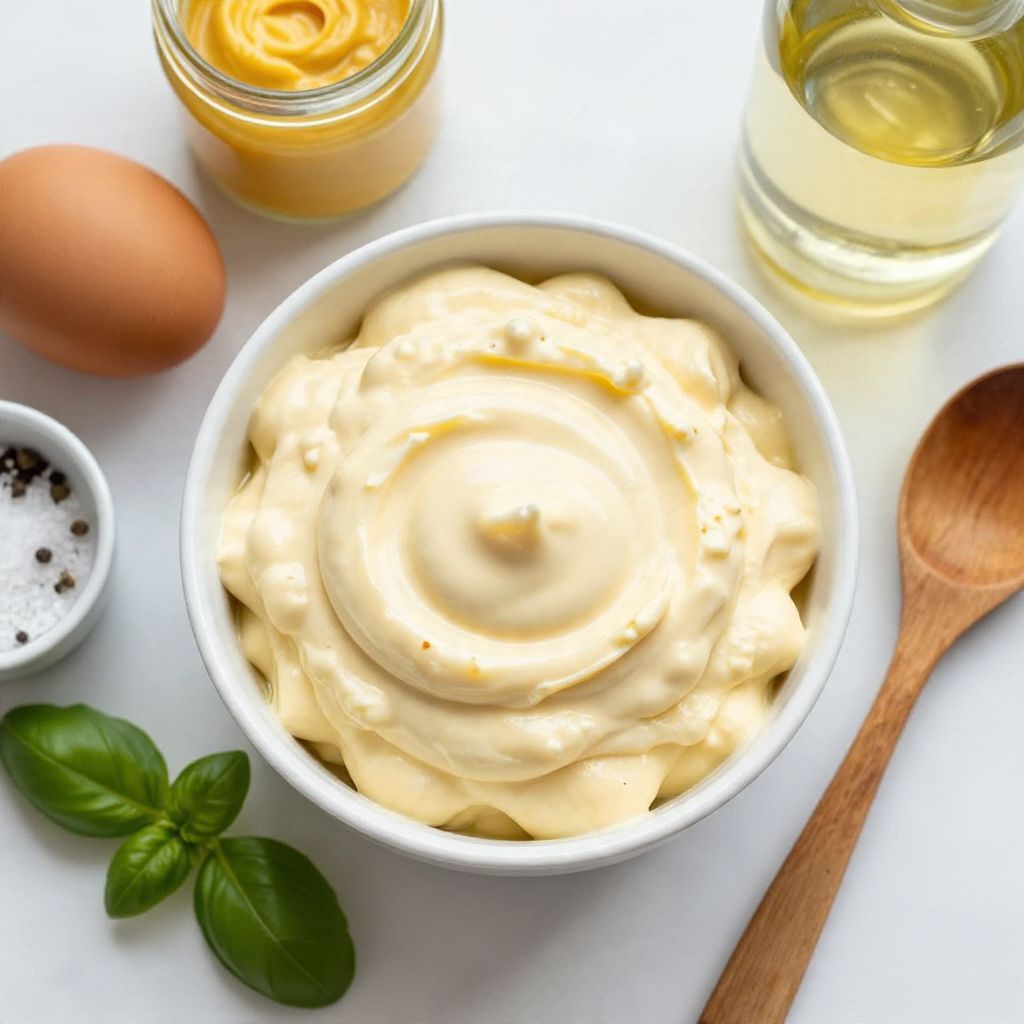
Olive Oil Mayonnaise
Ingredients
Equipment
Method
- Gather all your ingredients to ensure you have everything ready.
- In a mixing bowl, add the large egg and Dijon mustard.
- Pour in the white wine vinegar.
- Using an immersion blender or food processor, blend the egg, mustard, and vinegar until smooth, about 30 seconds.
- With the blender running, slowly drizzle in the olive oil.
- Once all olive oil is incorporated, taste and add salt and pepper to your liking.
- Transfer the mayonnaise to a storage container.
- Refrigerate the mayonnaise for at least 30 minutes before serving.