
There’s nothing quite like the aroma of a perfectly seasoned prime rib filling your home, inviting everyone to gather around the table. That first slice, with its juicy tenderness and rich, savory flavor, is an experience that lingers long after the meal is over.
This Prime Rib Seasoning Recipe is your secret weapon for elevating this classic dish. With a balance of herbs and spices, it creates a mouthwatering crust that locks in all those delightful juices. Let’s dive into the details that will have everyone asking for seconds.
Why You’ll Love This Recipe
This seasoning mix is a must-try for meat lovers who appreciate bold flavors.
- Simple to make with pantry staples.
- Perfectly complements the rich flavor of prime rib.
- Can be adjusted to suit your taste preferences.
- Enhances the overall dining experience.
My Experience Making This Recipe
When I first tried this seasoning, I was amazed by how such a simple blend could transform my roast. The first bite was a revelation: a burst of flavor that elevated the prime rib from ordinary to extraordinary.
Each time I make it, friends and family rave about the taste. It’s become a staple in my kitchen for any special occasion.
Recipe Overview
- Recipe Name: Prime Rib Seasoning
- Servings: Enough for a 5-7 pound roast
- Prep Time: 10 minutes
- Cook Time: N/A
- Total Time: 10 minutes
- Course: Seasoning
- Cuisine: American
- Calories per Serving: Negligible per serving
Equipment You Will Need
- Mixing bowl
- Measuring spoons
- Whisk or fork
- Storage container
Ingredients for Prime Rib Seasoning
- 2 tablespoons kosher salt
- 1 tablespoon black pepper
- 1 tablespoon garlic powder
- 1 tablespoon onion powder
- 1 tablespoon dried rosemary
- 1 tablespoon dried thyme
- 1 tablespoon smoked paprika
- 1 teaspoon cayenne pepper (optional for heat)
Ingredient Notes and Substitutions
- Kosher salt: Enhances flavor and is easy to sprinkle. You can substitute with sea salt, but adjust the amount as it’s finer.
- Black pepper: Adds warmth and depth. Use white pepper for a milder flavor.
- Garlic powder: Provides savory notes. Fresh minced garlic can be used but may alter the texture.
- Onion powder: Complements the garlic and adds sweetness. Dried shallots can be a good alternative.
- Dried rosemary: Offers a fragrant touch. You can use fresh rosemary but increase the amount slightly.
- Dried thyme: Adds earthiness. Oregano can be substituted for a different herbal note.
- Smoked paprika: Contributes a smoky flavor. Regular paprika works if you prefer less smokiness.
- Cayenne pepper: Adds spice. Omit if you prefer a milder seasoning.
How to Make Prime Rib Seasoning
Step 1: Gather Ingredients
Start by measuring out all your spices and herbs. Having everything ready makes the mixing process easier.
Step 2: Combine Dry Ingredients
In a mixing bowl, combine the kosher salt, black pepper, garlic powder, onion powder, dried rosemary, dried thyme, and smoked paprika. This step allows for even distribution of flavors.
Step 3: Add Cayenne Pepper
If you like a bit of heat, add cayenne pepper to the mix. Adjust the amount based on your spice preference.
Step 4: Mix Thoroughly
Use a whisk or fork to blend the ingredients until well combined. This ensures every bite of your prime rib is seasoned perfectly.
Step 5: Taste the Seasoning
If you’re feeling adventurous, taste a small pinch of the seasoning. This helps you gauge the balance of flavors.
Step 6: Store the Seasoning
Transfer the seasoning into an airtight storage container. This keeps it fresh and ready for your next prime rib.
Step 7: Season the Prime Rib
Generously rub the seasoning all over the prime rib before cooking. This creates a flavorful crust and enhances the meat’s natural juices.
Step 8: Let it Sit
Allow the seasoned meat to sit at room temperature for about 30 minutes. This helps the flavors penetrate the meat better.
Pro Tip: For an extra flavor boost, season your prime rib the night before and refrigerate it. This allows the seasoning to deepen.
Tips for the Best Prime Rib Seasoning
- Always use fresh spices for the best flavor impact.
- Adjust the salt based on your dietary needs or preferences.
- Try adding a splash of Worcestershire sauce for extra umami.
- Experiment with different herbs to find your favorite combination.
- Let the seasoning mix sit for a few hours to allow the flavors to meld.
Common Mistakes to Avoid
- Using stale spices can lead to a lackluster flavor.
- Not measuring ingredients can result in an unbalanced seasoning.
- Skipping the resting time after seasoning can prevent full flavor absorption.
- Over-salting the prime rib can make it too salty and overpower the meat’s flavor.
Serving Suggestions
This seasoned prime rib pairs beautifully with sides that complement its richness. Here are some classic pairings to consider:
- Garlic mashed potatoes
- Roasted seasonal vegetables
- Yorkshire pudding
- Classic Caesar salad
- Red wine reduction sauce
Variations to Try
- Swap out rosemary for thyme for a different herbal note.
- Add lemon zest for a bright, citrusy flavor boost.
- Incorporate balsamic vinegar into the seasoning for added depth.
- Use fresh herbs instead of dried for a fresher flavor.
- Add brown sugar for a hint of sweetness and caramelization.
Dietary Adaptations
- Gluten-free: All ingredients are naturally gluten-free.
- Dairy-free: This recipe contains no dairy products.
- Vegan/Vegetarian: While this seasoning is for prime rib, it can be used on other vegetables for grilling.
- Low-carb/Keto: This seasoning fits perfectly into a low-carb or keto diet.
Storage and Reheating
Refrigerator
Store the seasoning in an airtight container in the refrigerator for up to six months.
- Keep it away from moisture for better longevity.
Freezer
You can freeze the seasoning for longer storage. Use a freezer-safe container.
- Label it with the date for reference.
Reheating
No reheating is necessary for the seasoning itself. Just sprinkle it on your prime rib before cooking.
- Always use fresh seasoning to enhance your meat.
Nutrition Information
| Nutrient | Amount |
|---|---|
| Calories | Negligible |
| Total Fat | 0g |
| Saturated Fat | 0g |
| Carbohydrates | 0g |
| Fiber | 0g |
| Sugar | 0g |
| Protein | 0g |
| Sodium | Negligible |
| Cholesterol | 0mg |
Nutrition values are approximate and can vary based on specific ingredients used.
Frequently Asked Questions
Can I make this seasoning ahead of time?
Absolutely! It can be mixed and stored for several months.
What if I don’t have all the ingredients?
You can substitute similar herbs and spices based on what you have on hand.
How do I store leftover seasoning?
Keep it in an airtight container in a cool, dry place. Refrigeration extends freshness.
Will this work on other meats?
Yes! This seasoning is also great on beef tenderloin, pork, or even roasted vegetables.
How do I know if the seasoning is balanced?
Taste a small pinch; it should have a well-rounded flavor without one element overpowering others.
Final Thoughts
This Prime Rib Seasoning Recipe is an essential addition to your culinary repertoire. It’s easy to prepare, full of flavor, and will impress anyone at your dinner table.
So next time you plan a special meal, give this seasoning a try. You won’t regret it!
Explore more delicious recipes like this prime rib rub recipe or a tasty boneless prime rib recipe for your next gathering.
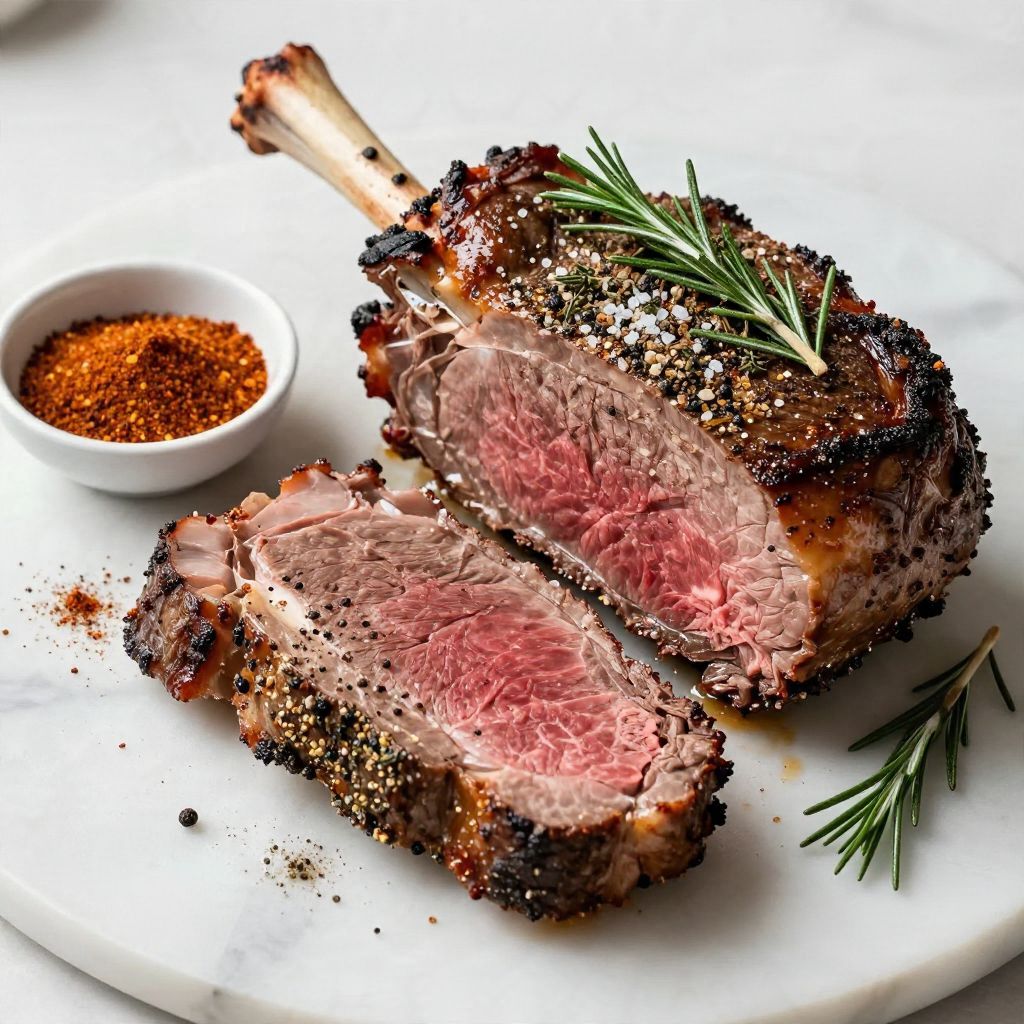
Prime Rib Seasoning
Ingredients
Equipment
Method
- Measure out all the spices and herbs.
- In a mixing bowl, combine kosher salt, black pepper, garlic powder, onion powder, dried rosemary, dried thyme, and smoked paprika.
- If desired, add cayenne pepper for heat.
- Mix the ingredients thoroughly using a whisk or fork.
- Taste a small pinch of the seasoning to check the flavor.
- Transfer the seasoning into an airtight storage container.