Almond flour bread is a game-changing low-carb alternative that delivers a tender, moist crumb without a single grain of wheat. Perfect for anyone following keto, gluten-free, or paleo diets, this bread uses almond flour to create a subtly nutty loaf that toasts beautifully and holds up to your favorite spreads and sandwiches.
You can whip up this bread in under an hour with just a handful of simple ingredients. The result is a versatile loaf that rivals traditional bread in texture and taste.
Why You’ll Love This Recipe
This almond flour bread checks every box for a satisfying, healthy bread option. It works for meal prep, weekday lunches, and even special occasions when you want something a bit more wholesome.
- Ready in less than 60 minutes from start to finish
- Only 7 ingredients and no special equipment required
- Naturally gluten-free, low-carb, and keto-friendly
- Freezes beautifully for up to 3 months
- Holds together perfectly for sandwiches and toast
My Experience Making This Recipe
The first time I made almond flour bread, I expected it to crumble or taste eggy like so many low-carb breads do. I was shocked when it sliced cleanly and had a soft, almost pillowy texture that reminded me of the white bread I grew up with.
My family devoured half the loaf warm from the oven, slathered with butter and a drizzle of honey. The kitchen smelled like toasted almonds and comfort, and I knew this recipe would become a weekly staple.
Now I bake two loaves at a time because it disappears faster than I ever imagined a grain-free bread could. Even my skeptical teenagers request it for their school sandwiches.
Recipe Overview
- Recipe Name: Almond Flour Bread
- Servings: 12 slices
- Prep Time: 10 minutes
- Cook Time: 45 minutes
- Total Time: 55 minutes
- Course: Bread, Breakfast, Side
- Cuisine: American, Gluten-Free
- Calories per Serving: 165
Equipment You Will Need
- 9×5-inch loaf pan
- Parchment paper
- Large mixing bowl
- Medium mixing bowl
- Whisk or electric mixer
- Rubber spatula
- Measuring cups and spoons
- Cooling rack
Ingredients for Almond Flour Bread
- 2 cups blanched almond flour (not almond meal)
- 6 large eggs, at room temperature
- 1/4 cup melted coconut oil or avocado oil
- 1 tablespoon baking powder
- 1/2 teaspoon sea salt
- 1 tablespoon apple cider vinegar
- 1 tablespoon honey (optional, for a hint of sweetness)
Ingredient Notes and Substitutions
- Blanched almond flour: This creates a light, fine texture without dark flecks; almond meal works but creates a denser, grainier loaf.
- Eggs: They provide structure and moisture in this grain-free recipe; flax eggs do not work well as the bread will not rise or hold together.
- Coconut oil: Adds richness and helps the bread stay moist; substitute with melted butter or avocado oil if you prefer a neutral flavor.
- Baking powder: This leavens the bread and creates the rise; make sure it is fresh and aluminum-free for the best results.
- Apple cider vinegar: It reacts with baking powder to increase lift and lighten the crumb; fresh lemon juice works as a substitute.
How to Make Almond Flour Bread
Step 1: Prepare Your Pan and Preheat
Preheat your oven to 350°F and line a 9×5-inch loaf pan with parchment paper, leaving some overhang on the sides. This overhang acts as handles for easy removal once the bread has cooled.
Step 2: Mix the Dry Ingredients
Whisk together the almond flour, baking powder, and sea salt in a large bowl until no lumps remain. Blending these thoroughly prevents pockets of baking powder that can create an uneven rise or bitter taste.
Step 3: Combine the Wet Ingredients
In a separate medium bowl, whisk the eggs until they become slightly frothy and lighter in color. Add the melted coconut oil, apple cider vinegar, and honey (if using), then whisk again until everything is fully combined and smooth.
Step 4: Create the Batter
Pour the wet ingredients into the dry ingredients and stir with a rubber spatula until just combined. The batter will be thicker than traditional bread batter but still pourable, similar to a thick pancake batter.
Step 5: Transfer to the Pan
Scrape the batter into your prepared loaf pan and use the spatula to smooth the top into an even layer. Tap the pan gently on the counter a few times to release any air bubbles trapped in the batter.
Step 6: Bake Until Golden
Place the pan in the center of your preheated oven and bake for 40 to 45 minutes. The bread is done when the top is golden brown and a toothpick inserted into the center comes out clean or with just a few dry crumbs.
Step 7: Cool Completely
Remove the pan from the oven and let the bread cool in the pan for 10 minutes. Use the parchment overhang to lift the loaf out and transfer it to a cooling rack to cool completely, which takes about 30 minutes and prevents a gummy texture.
Step 8: Slice and Serve
Once fully cooled, use a sharp serrated knife to slice the bread into 12 even slices. The bread slices best when completely cool, as cutting it while warm can cause it to compress and become dense.
Pro Tip: Let the bread cool completely before slicing to avoid a gummy, dense texture. Warm almond flour bread is fragile and needs time to set up properly, so patience here makes all the difference in achieving clean, bakery-perfect slices.
Tips for the Best Almond Flour Bread
- Use room temperature eggs so they incorporate smoothly and create a lighter, fluffier texture in the final loaf.
- Measure almond flour by spooning it into the measuring cup and leveling it off; scooping directly can pack it down and result in a dense, heavy bread.
- Check your baking powder freshness by dropping a bit into hot water; if it bubbles vigorously, it is still good to use.
- Do not overmix the batter once you combine wet and dry ingredients, as this can deflate the air and create a tough crumb.
- Let the loaf cool in the pan for exactly 10 minutes before transferring; too soon and it may fall apart, too long and it can steam and become soggy.
- Toast slices lightly before making sandwiches to add extra structure and a delicious nutty flavor that complements any filling.
Common Mistakes to Avoid
- Using almond meal instead of blanched almond flour creates a coarse, crumbly texture that does not hold together well for slicing.
- Skipping the parchment paper makes the bread stick to the pan and tear when you try to remove it.
- Opening the oven door during the first 30 minutes of baking causes the bread to collapse in the center and not rise properly.
- Slicing the bread while it is still warm leads to a gummy, compressed texture because the structure has not fully set.
- Using expired baking powder results in a flat, dense loaf that does not rise or develop the characteristic light crumb.
Serving Suggestions
This almond flour bread shines as a base for both sweet and savory toppings. Its mild, nutty flavor pairs well with just about anything you would put on regular bread.
- Toast with butter and sugar-free jam for a quick breakfast
- Use for turkey and avocado sandwiches with crisp lettuce and tomato
- Serve alongside a bowl of soup or chili for dipping
- Make French toast by dipping slices in an egg mixture and pan-frying until golden
- Top with almond butter and sliced bananas for a protein-packed snack
Variations to Try
- Garlic Herb Bread: Fold in 2 teaspoons of garlic powder and 1 tablespoon of Italian seasoning for a savory version perfect with pasta dinners.
- Cinnamon Raisin: Add 1 tablespoon of cinnamon and 1/3 cup of raisins to the batter for a sweet breakfast bread that toasts beautifully.
- Everything Bagel: Sprinkle the top with everything bagel seasoning before baking for a fun twist that works great for sandwiches.
- Seeded Bread: Mix in 2 tablespoons each of sunflower seeds, pumpkin seeds, and sesame seeds for added crunch and nutrition.
- Cheese and Chive: Stir in 1/2 cup shredded cheddar and 2 tablespoons chopped fresh chives for a rich, savory loaf.
Dietary Adaptations
- Gluten-Free: This recipe is naturally gluten-free as written, just confirm your baking powder is certified gluten-free if you have celiac disease.
- Dairy-Free: Use coconut oil or avocado oil instead of butter, and the bread remains completely dairy-free with no loss of moisture or flavor.
- Vegan: Egg replacements do not work well in this recipe since eggs provide the primary structure; the bread will not rise or hold together without them.
- Keto/Low-Carb: Skip the honey to keep this bread fully keto-compliant at around 3g net carbs per slice, making it perfect for low-carb meal plans.
Storage and Reheating
Refrigerator
Store the cooled bread in an airtight container or resealable bag in the refrigerator for up to 7 days. The cool temperature helps almond flour bread maintain its texture better than leaving it at room temperature.
- Slice the entire loaf before storing for grab-and-go convenience
- Place parchment paper between slices if stacking to prevent sticking
- Bring slices to room temperature or toast before eating for the best flavor
Freezer
Freeze individual slices or the whole loaf wrapped tightly in plastic wrap, then placed in a freezer bag for up to 3 months. Freezing is the best long-term storage option for almond flour bread.
- Flash-freeze slices on a baking sheet for 1 hour before bagging to prevent them from sticking together
- Label the bag with the date so you can track freshness
- Thaw overnight in the refrigerator or toast directly from frozen
Reheating
Toast slices in a toaster or toaster oven for 2 to 3 minutes until warmed through and slightly crispy on the edges. You can also wrap the loaf in foil and warm it in a 300°F oven for 10 to 15 minutes.
- Avoid microwaving as it makes the bread rubbery and tough
- Add a pat of butter while the toast is still hot for extra richness
Nutrition Information
| Nutrient | Amount |
|---|---|
| Calories | 165 |
| Total Fat | 14g |
| Saturated Fat | 3g |
| Carbohydrates | 5g |
| Fiber | 2g |
| Sugar | 2g |
| Protein | 7g |
| Sodium | 240mg |
| Cholesterol | 93mg |
Nutrition values are estimates based on standard ingredient measurements and may vary depending on the specific brands and exact amounts you use.
Frequently Asked Questions
Can I use almond meal instead of almond flour?
You can, but the texture will be much grainier and denser with visible brown flecks throughout. Blanched almond flour produces a lighter, more bread-like crumb that holds together better for slicing.
Can I make this bread ahead of time?
Absolutely, this bread actually tastes better the next day after the flavors have had time to develop. Bake it up to 3 days in advance and store it in the refrigerator until you need it.
Why is my almond flour bread dense and heavy?
Dense bread usually means you packed the almond flour when measuring or your baking powder was old and had lost its leavening power. Always spoon and level your flour and test your baking powder before using it.
Can I reduce the number of eggs?
Unfortunately, no, the eggs are what hold this bread together and give it structure. Reducing them will result in a bread that crumbles apart and does not rise properly.
How do I know when the bread is fully baked?
The top should be golden brown and spring back when lightly pressed, and a toothpick inserted in the center should come out clean or with just a few dry crumbs. If the toothpick has wet batter on it, bake for another 5 minutes and test again.
Can I bake this in muffin tins instead?
Yes, this batter makes excellent muffins that bake in just 18 to 22 minutes at 350°F. Fill muffin cups about two-thirds full and check for doneness with a toothpick.
Why does my bread have a strong eggy taste?
Using older eggs or not mixing the batter thoroughly can cause pockets of egg flavor. Make sure your eggs are fresh and that you whisk the wet ingredients well before combining them with the dry ingredients.
Final Thoughts
This almond flour bread proves that eating low-carb or gluten-free does not mean giving up the comfort of real bread. It slices beautifully, toasts like a dream, and works for everything from breakfast to dinner.
Give this recipe a try and watch it become a staple in your kitchen. You might just find yourself baking it every week like I do.
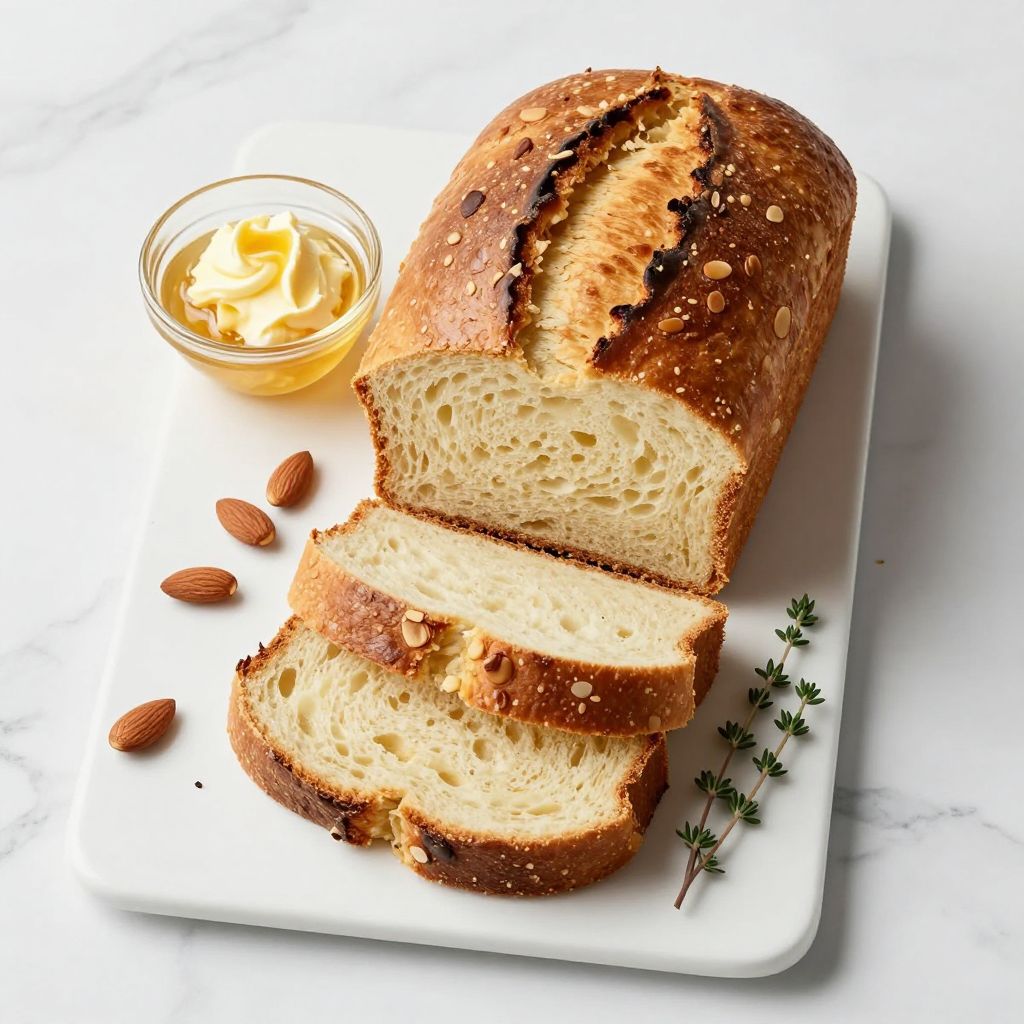
Almond Flour Bread
Ingredients
Equipment
Method
- Preheat your oven to 350°F and line a 9x5-inch loaf pan with parchment paper, leaving some overhang on the sides for easy removal.
- Whisk together the 2 cups blanched almond flour, 1 tablespoon baking powder, and 1/2 teaspoon sea salt in a large bowl until no lumps remain.
- In a separate medium bowl, whisk the 6 eggs until they become slightly frothy and lighter in color.
- Add the 1/4 cup melted coconut oil, 1 tablespoon apple cider vinegar, and 1 tablespoon honey (if using) to the eggs, then whisk again until everything is fully combined and smooth.
- Pour the wet ingredients into the dry ingredients and stir with a rubber spatula until just combined. The batter will be thicker than traditional bread batter but still pourable.
- Scrape the batter into your prepared loaf pan and use the spatula to smooth the top into an even layer. Tap the pan gently on the counter a few times to release any air bubbles.
- Place the pan in the center of your preheated oven and bake for 40 to 45 minutes. The bread is done when the top is golden brown and a toothpick inserted into the center comes out clean or with just a few dry crumbs.
- Remove the pan from the oven and let the bread cool in the pan for 10 minutes.
- Use the parchment overhang to lift the loaf out and transfer it to a cooling rack to cool completely, about 30 minutes.
- Once fully cooled, use a sharp serrated knife to slice the bread into 12 even slices.