
There’s something undeniably comforting about the aroma of a slow-cooked pork roast wafting through your home, isn’t there? This Pork Roast Gravy Recipe transforms that savory roast into a rich, flavorful gravy that elevates any meal, making it a staple for family gatherings or cozy dinners.
What sets this recipe apart is its simplicity and depth of flavor. With just a handful of ingredients, you can create a velvety gravy that complements the tender pork beautifully. Let’s dive into the details and get cooking!
Why You’ll Love This Recipe
This gravy is not just a sauce; it’s a hug in a bowl. Here are a few reasons to whip it up:
- Rich, savory flavors that enhance your pork roast.
- Simple ingredients that you probably already have at home.
- Quick to make, allowing you more time to enjoy your meal.
- Versatile enough to use on mashed potatoes, biscuits, or roasted veggies.
- Perfect for special occasions or everyday dinners.
My Experience Making This Recipe
The first time I made this gravy, I was amazed at how a few simple steps turned my pork roast into a gourmet experience. The moment I poured the gravy over my mashed potatoes, the flavors mingled in a way that made me feel like a culinary genius.
Friends and family couldn’t get enough of it, and requests for the recipe came pouring in. Trust me, once you try it, you’ll be serving it up at every gathering.
Recipe Overview
- Recipe Name: Pork Roast Gravy
- Servings: 4
- Prep Time: 10 minutes
- Cook Time: 20 minutes
- Total Time: 30 minutes
- Course: Sauce
- Cuisine: American
- Calories per Serving: 120
Equipment You Will Need
- Large skillet
- Whisk
- Measuring cups and spoons
- Wooden spoon
- Gravy separator (optional)
Ingredients for Pork Roast Gravy
- Pork drippings from the roast
- 2 tablespoons butter
- ¼ cup all-purpose flour
- 2 cups chicken stock
- Salt and pepper to taste
- 1 teaspoon garlic powder (optional)
- 1 teaspoon onion powder (optional)
Ingredient Notes and Substitutions
- Pork drippings: They provide a rich flavor and color. You can use beef drippings if you prefer.
- Butter: This adds creaminess to the gravy. Olive oil can work as a lighter substitute.
- All-purpose flour: It thickens the gravy. Cornstarch can be used for a gluten-free option.
- Chicken stock: Adds depth and flavor. Vegetable broth is a great alternative for a vegetarian version.
How to Make Pork Roast Gravy
Step 1: Collect the Drippings
After roasting your pork, pour the drippings from the roasting pan into a measuring cup. This is where all the flavor lives, and you don’t want to miss it.
Step 2: Skim the Fat
Let the drippings sit for a few minutes until the fat rises to the top. Skim off some of the fat, leaving about 2 tablespoons for richness in your gravy.
Step 3: Make a Roux
In a large skillet, melt the butter over medium heat. Once it’s bubbly, whisk in the flour to create a roux, cooking it for about 2 minutes until it’s golden brown.
Step 4: Add the Drippings
Slowly whisk in the reserved pork drippings, stirring constantly to avoid lumps. This creates a flavorful base for your gravy.
Step 5: Pour in the Chicken Stock
Gradually add the chicken stock, continuing to whisk until the mixture is smooth. This will help the gravy achieve a creamy consistency.
Step 6: Season the Gravy
Add salt, pepper, garlic powder, and onion powder if using. Taste and adjust the seasoning to your liking, because who doesn’t love a well-seasoned gravy?
Step 7: Simmer
Bring the gravy to a simmer, allowing it to thicken for about 5-10 minutes. This step is crucial for developing a deep flavor.
Step 8: Serve and Enjoy
Once thickened to your desired consistency, remove from heat and serve. Drizzle generously over your pork roast or favorite sides.
Pro Tip: For extra depth, add a splash of soy sauce or Worcestershire sauce at the end.
Tips for the Best Pork Roast Gravy
- Always use a whisk to avoid lumps in your gravy.
- Allow the gravy to simmer longer for a richer flavor.
- If too thick, thin it out with additional stock or water.
- Keep tasting as you go; seasoning can make all the difference.
- Don’t skip the roux; it’s key for a smooth texture.
Common Mistakes to Avoid
- Not skimming the fat: Too much fat can make the gravy greasy.
- Skipping the roux: This will result in a lumpy gravy.
- Not whisking enough: Lumps will form if you don’t whisk constantly.
- Overcooking: If you cook too long, the gravy can become too thick or burn.
Serving Suggestions
This gravy pairs perfectly with a variety of dishes. Here are a few ideas to get you started:
- Mashed potatoes for a classic comfort meal.
- Biscuits to soak up every drop.
- Roasted vegetables for a hearty side.
- On top of rice for a filling dish.
Variations to Try
- Add mushrooms for an earthy flavor.
- Incorporate herbs like thyme or rosemary for added freshness.
- Use different stocks or broths for a unique taste.
- Mix in some cream for a richer, more decadent gravy.
Dietary Adaptations
- Gluten-free: Use cornstarch instead of flour for thickening.
- Dairy-free: Substitute butter with olive oil or dairy-free margarine.
- Vegan: Use vegetable stock and skip the drippings.
- Low-carb/Keto: Replace flour with almond flour or xanthan gum for thickening.
Storage and Reheating
Refrigerator
Store any leftover gravy in an airtight container for up to 3 days.
- Let it cool completely before refrigerating.
- Label with the date for easy tracking.
Freezer
You can freeze the gravy for up to 3 months. Make sure to use a freezer-safe container.
- Leave some space at the top for expansion.
- Thaw overnight in the refrigerator before reheating.
Reheating
Reheat on the stove over low heat, stirring often. Add a splash of stock if it’s too thick.
- Microwaving is okay but can change the texture.
- Always ensure it is heated through before serving.
Nutrition Information
| Nutrient | Amount |
|---|---|
| Calories | 120 |
| Total Fat | 8g |
| Saturated Fat | 4g |
| Carbohydrates | 10g |
| Fiber | 0g |
| Sugar | 0g |
| Protein | 2g |
| Sodium | 300mg |
| Cholesterol | 20mg |
This information is an estimate and can vary based on specific ingredients used.
Frequently Asked Questions
Can I make this gravy ahead of time?
Yes, you can make it ahead and refrigerate it. Just reheat gently before serving.
What if my gravy is too thick?
Simply add a bit of stock or water to reach your desired consistency. Stir continuously until blended.
Can I substitute the pork drippings?
Absolutely! You can use beef or vegetable broth if you don’t have drippings. Just adjust the seasoning accordingly.
How do I store leftover gravy?
Store in an airtight container in the fridge for up to three days or freeze for longer storage.
What if my gravy turns out lumpy?
If you encounter lumps, strain the gravy through a fine-mesh sieve for a smooth finish. Next time, whisk more vigorously!
Final Thoughts
This Pork Roast Gravy Recipe is a delightful addition to any meal, bringing warmth and flavor to your table. Don’t hesitate to experiment with variations and make it your own.
Enjoy creating this comforting dish, and for more delicious recipes, check out my favorites like Pork Chop Supreme and Pork Cutlets. Happy cooking!
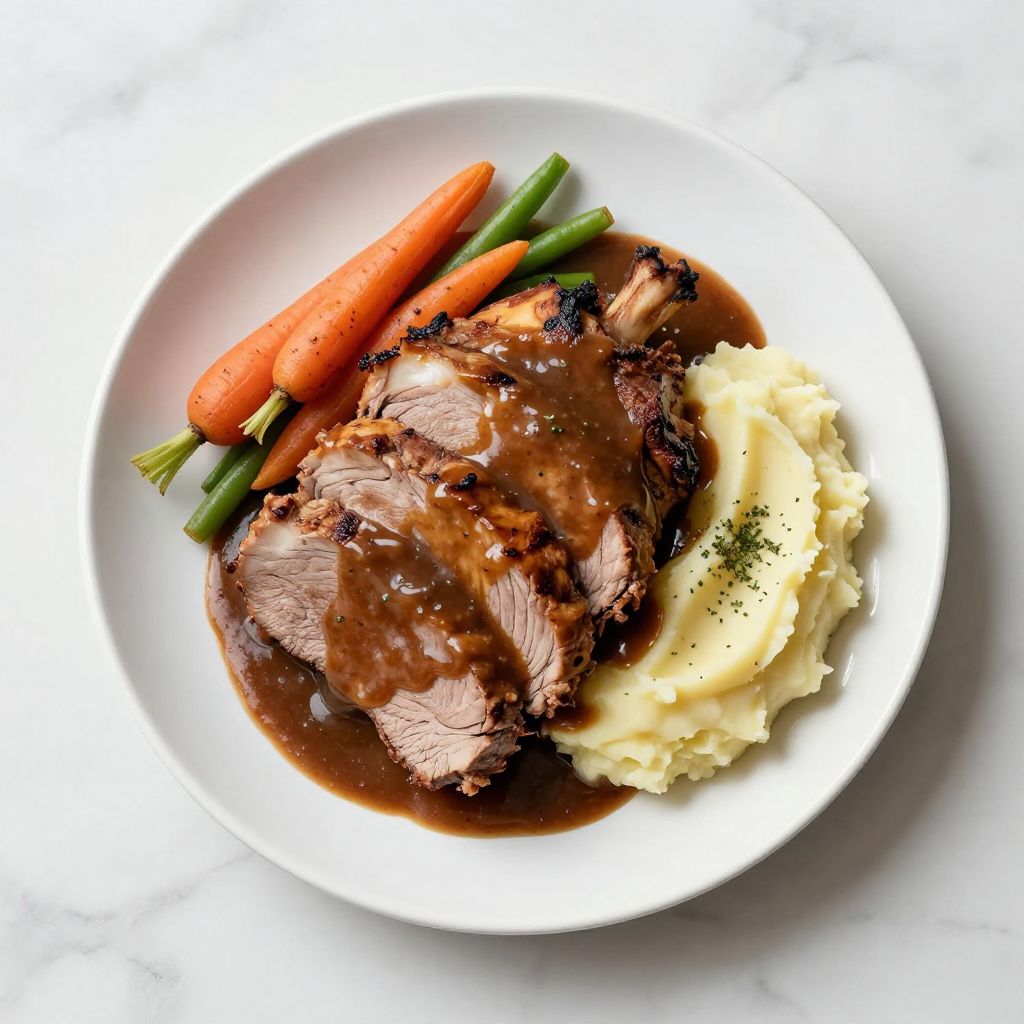
Pork Roast Gravy
Ingredients
Equipment
Method
- After roasting your pork, pour the drippings from the roasting pan into a measuring cup.
- Let the drippings sit for a few minutes until the fat rises to the top. Skim off some of the fat, leaving about 2 tablespoons.
- In a large skillet, melt the butter over medium heat.
- Whisk in the flour to create a roux, cooking for about 2 minutes until golden brown.
- Slowly whisk in the reserved pork drippings, stirring constantly.
- Gradually add the chicken stock, continuing to whisk until smooth.
- Add salt, pepper, garlic powder, and onion powder if using. Taste and adjust seasoning.
- Bring the gravy to a simmer, allowing it to thicken for about 5-10 minutes.
- Once thickened, remove from heat and serve over your pork roast or favorite sides.