
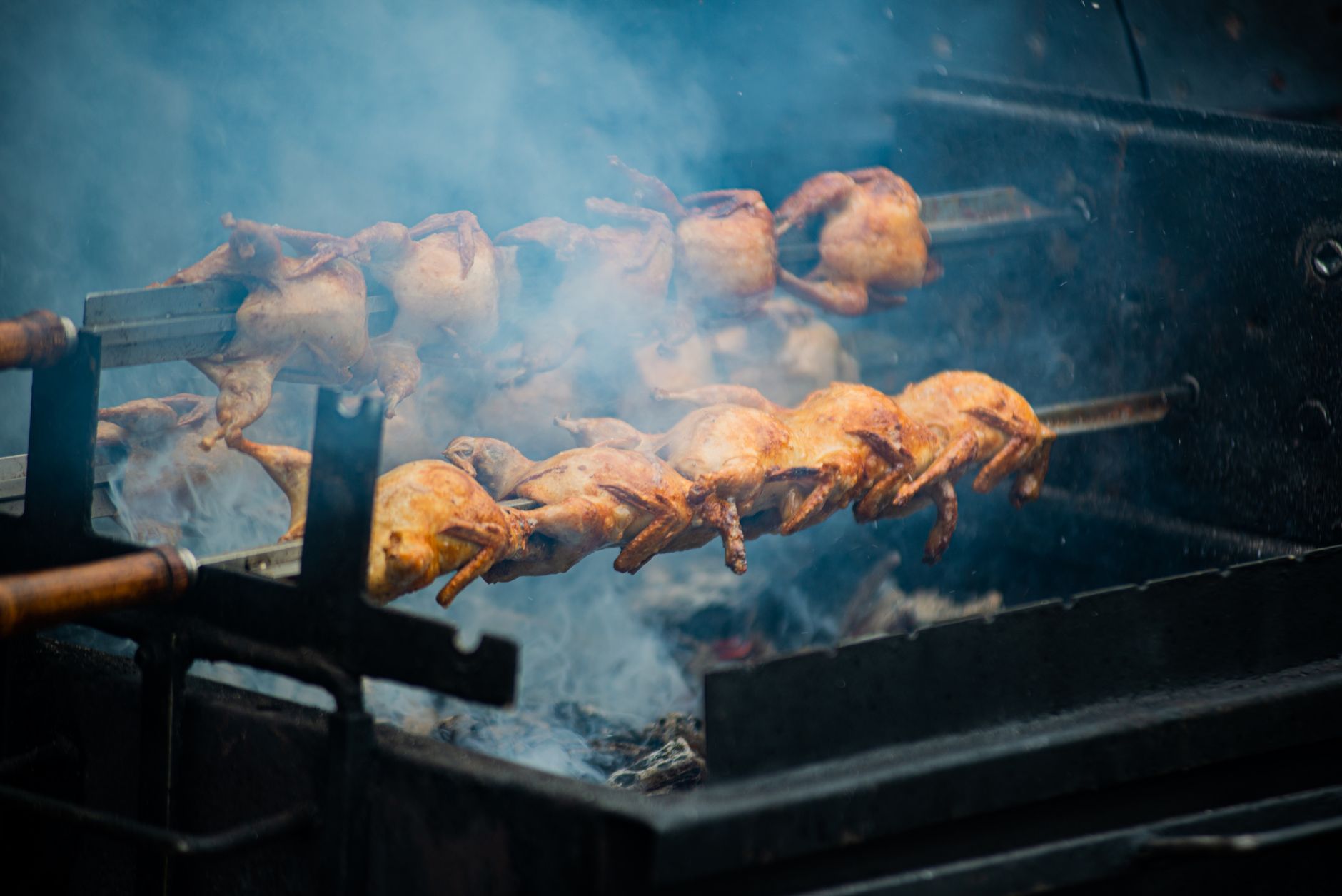
A spit roast is a cooking technique involving the slow roasting of meat, typically over an open flame or hot coals, while it is rotated on a spit. This method not only imparts a distinct, smoky flavor to the meat but also ensures that it is juicy and tender.
This article will cover everything you need to know about spit roasting, including preparation, cooking techniques, serving tips, and how to make the most of this ancient culinary art.
What Is a Spit Roast?
A spit roast refers to the method of cooking meat on a long rod, or “spit”, that is rotated over fire or hot coals. It can be used for various meats, including whole animals or larger cuts, and is prized for its ability to retain moisture and develop a caramelized crust. The process allows for even cooking and infuses the meat with rich flavors as the juices baste the meat while it cooks.
Types of Meat Suitable for Spit Roasting
While spit roasting can be done with various meats, some are particularly well-suited for this technique:
- Pork: Whole hogs or cuts like pork shoulders and sirloins provide excellent flavor.
- Beef: Cuts such as whole sides of beef or rib roasts are favored for their flavor and tenderness.
- Lamb: A whole lamb can be spit roasted for a succulent meal with rich flavors.
- Poultry: Chickens, turkeys, and ducks can be roasted on a spit for even cooking and crispy skin.
- Goat: Commonly spit-roasted in many cultures, goat meat is tender and flavorful when cooked slowly.
Essential Equipment for Spit Roasting
To achieve a well-executed spit roast, you will need specific equipment:
- Spit: A robust metal rod designed to hold meat securely as it rotates.
- Rotisserie or Charcoal Grill: Depending on whether you want to use gas, charcoal, or wood, a grill with rotisserie capability will help maintain a consistent temperature.
- Fire Pit or Spit Rod Holder: For open flame cooking, a stable setup is essential.
- Meat Thermometer: An internal thermometer is crucial to ensure meat reaches safe cooking temperatures.
- Carving Knife: For slicing the finished product easily.
Preparation for Spit Roasting
Preparing your meat is crucial for maximizing flavor and tenderness. Here are some guidelines:
Choosing the Meat
Select a piece that has an even shape for uniform cooking. Consider the size of the meat relative to the spit and ensure it is manageable.
Marination and Seasoning
- Marinating: Marinate the meat for several hours or overnight to enhance flavor and tenderness. Acidic components like vinegar or citrus can help break down the meat fibers.
- Seasoning: Use salt, pepper, and your favorite herbs and spices. A dry rub can enhance the crust, while a wet marinade adds moisture.
Securing the Meat
Using metal skewers or twine, secure the meat firmly to the spit. This ensures that it turns uniformly and does not slip during cooking.
Cooking Techniques for Spit Roasting
Different techniques can be employed when spit roasting, including indirect and direct heat cooking.
Direct Heat Cooking
This method cooks meat directly over the flame. While it can produce a crispy outer layer quickly, it does require close monitoring to avoid burning. Generally recommended for smaller cuts or poultry.
Indirect Heat Cooking
Using this method, the flames are placed to the side of the meat, allowing for a slow cooking process that promotes juiciness. Ideal for larger cuts of meat, this method allows time for even cooking and flavor development.
Rotating the Meat
The key to a successful spit roast is steady rotation. If you’re using an electric rotisserie, this will be automatic. If cooking manually, rotate the meat every 15-30 minutes to ensure even cooking.
Cooking Times and Temperatures
The cooking time for a spit roast varies based on the type and size of the meat. Here are some general guidelines:
- Pork: 15-20 minutes per pound at 225-250°F (107-121°C).
- Beef: 20 minutes per pound for medium-rare at 250°F (121°C); aim for an internal temperature of 130°F (54°C).
- Lamb: 20 minutes per pound at 225°F (107°C) for medium, reaching an internal temperature of 135°F (57°C).
- Poultry: 18-20 minutes per pound until it reaches a safe internal temperature of 165°F (74°C).
Visual and Texture Cues to Monitor
When spit roasting, certain visual cues will indicate doneness:
- A golden brown and crispy exterior.
- Juices running clear when the meat is pierced.
- A consistent internal temperature when checked with a meat thermometer.
Common Mistakes and Troubleshooting
Here are some pitfalls to avoid during the spit roasting process, along with solutions:
- Uneven Cooking: Rotate the meat consistently and ensure even exposure to heat.
- Burnt Exterior: Use indirect heat or adjust your distance from the flame to reduce charring.
- Dry Meat: Overcooking is a common issue; use internal temperature as a guide.
Serving Tips for Spit-Roasted Meat
Once your spit roast is cooked, allow it to rest for at least 15-20 minutes. This helps the juices redistribute within the meat.
How to Carve
Use a sharp carving knife to slice against the grain, cutting into wedges for easier serving. The crusty exterior will yield to tender, juicy meat.
Pairing Suggestions
- Side Dishes: Roasted vegetables, salads, and potatoes work well as accompaniments.
- Sauces: Consider serving your spit roast with BBQ sauce, gravy, or chimichurri for added flavor.
Make-Ahead Strategies
If planning to serve spit roast at a gathering, consider preparing the meat a day in advance. Here are some suggestions:
- Marinate overnight for deep flavor infusion.
- Prepare individual servings ahead and keep them warm in an oven set to low heat until serving time.
Storage and Reheating
Leftover spit roast can be stored safely in the refrigerator:
- Wrap tightly in plastic or store in an airtight container for up to 3-4 days.
- When reheating, place it in an oven at a low temperature to maintain moisture, or use a microwave with a cover to prevent drying out.
Popular Variations of Spit Roasting
Spit roasting has global variations that showcase different flavors and techniques:
Greek Souvlaki
This involves marinated meat skewered and grilled, often served with pita and tzatziki sauce.
Mexican Tacos al Pastor
Similar to shawarma, this method features pork marinated in adobo sauce, roasted, and served in corn tortillas.
Portuguese Leitão
A whole roasted pig traditional in Portugal, often seasoned with a blend of garlic, herbs, and spices.
Conclusion
Spit roasting is an enriching culinary tradition that adds unique flavors and textures to your meat dishes. With the right preparation and techniques, you can create a meal destined to impress. Our next steps are clear: gather your ingredients, secure your equipment, and enjoy the art of spit roasting.
For delicious roast ideas, check out the recipes for pork sirloin roast and smoked beef ribs to complement your next spit-roasted feast!