
There’s nothing quite like the tangy crunch of homemade Fermented Pickles to elevate your snack game. This recipe is a delightful way to transform fresh cucumbers into zesty bites that burst with flavor, all while providing gut-friendly probiotics that your body will thank you for.
Why You’ll Love This Recipe
These pickles are not only delicious but also incredibly versatile.
- Simple ingredients that you likely have at home.
- Ideal for customizing with your favorite spices.
- Perfect for snacking, salads, or sandwiches.
- Health benefits from fermentation.
- Long-lasting and easy to store.
My Experience Making This Recipe
Every time I make these pickles, I am reminded of summer days spent in my grandmother’s kitchen, watching her work her magic. The sound of crunchy cucumbers going into the jar is music to my ears.
Once I took that first bite of the tangy, crisp pickles, I knew I had created something special. Friends and family rave about them, and they never last long!
Recipe Overview
- Recipe Name: Fermented Pickles
- Servings: 4
- Prep Time: 15 minutes
- Cook Time: 0 minutes
- Total Time: 15 minutes + fermentation
- Course: Snack
- Cuisine: American
- Calories per Serving: 15
Equipment You Will Need
- Quart-sized mason jar
- Weight or small plate (to keep cucumbers submerged)
- Measuring cups and spoons
- Knife and cutting board
- Towel (for covering the jar)
Ingredients for Fermented Pickles
- 4 cups of fresh cucumbers, sliced into spears or rounds
- 2 cups of filtered water
- 2 tablespoons of sea salt
- 2 cloves of garlic, crushed
- 1 tablespoon of dill seeds or fresh dill
- 1 teaspoon of red pepper flakes (optional)
Ingredient Notes and Substitutions
- Cucumbers: They provide the crunch; pickling cucumbers work best. You can substitute with other firm veggies.
- Sea salt: Used for flavor and fermentation; avoid iodized salt as it can hinder fermentation. Use kosher salt instead if needed.
- Garlic: Adds flavor; you can leave it out for a milder taste or use garlic powder.
- Dill: For that classic pickle flavor; substitute with other herbs like coriander for a different twist.
- Red pepper flakes: For heat; skip if you prefer milder pickles.
How to Make Fermented Pickles
Step 1: Prepare the Cucumbers
Start by washing your cucumbers thoroughly to remove any dirt. Fresh cucumbers yield the best flavor and crunch.
Step 2: Make the Brine
In a separate container, combine the filtered water and sea salt. Stir until the salt completely dissolves to create your brine.
Step 3: Pack the Jar
Place the sliced cucumbers in the mason jar, packing them tightly. This helps them stay submerged during fermentation.
Step 4: Add Flavorings
Add the crushed garlic, dill, and red pepper flakes into the jar with the cucumbers. These ingredients will infuse wonderful flavors into your pickles.
Step 5: Pour in the Brine
Carefully pour the brine over the cucumbers, ensuring they are fully submerged. Leave about an inch of headspace at the top of the jar.
Step 6: Weigh Down the Cucumbers
Use a weight or a small plate to keep the cucumbers submerged beneath the brine. This prevents mold from forming on the surface.
Step 7: Cover and Ferment
Cover the jar with a towel to protect it from dust while allowing gases to escape. Place it in a cool, dark spot for 5 to 10 days to ferment.
Step 8: Taste and Store
After 5 days, check the pickles daily and taste them. Once they reach your preferred tanginess, transfer the jar to the refrigerator to slow fermentation.
Pro Tip: For extra crunch, add a few grape leaves to the jar; they contain tannins that help keep pickles crisp.
Tips for the Best Fermented Pickles
- Use fresh, firm cucumbers for the best texture.
- Ensure all utensils and jars are clean to avoid unwanted bacteria.
- Ferment at room temperature, ideally between 60-75°F for best results.
- Taste regularly to find the perfect balance of sourness.
- Adjust spices and herbs according to your taste preferences.
Common Mistakes to Avoid
- Not using enough salt can lead to spoilage. Salt is crucial for proper fermentation.
- Forgetting to keep cucumbers submerged can result in mold. Make sure they stay under the brine.
- Fermenting in direct sunlight can cause uneven fermentation. Always choose a cool, dark spot.
- Rushing the fermentation process can lead to bland pickles. Give them time to develop flavor.
Serving Suggestions
These pickles pair wonderfully with a variety of dishes or can be enjoyed solo as a snack.
- Serve alongside a charcuterie board.
- Add to sandwiches for extra crunch.
- Use as a topping for burgers.
- Incorporate them into salads for a tangy kick.
Variations to Try
- Add mustard seeds for a zesty twist.
- Include sliced jalapeños for a spicy kick.
- Try using different herbs, like thyme or coriander.
- Experiment with sugar for sweet and sour pickles.
Dietary Adaptations
- Gluten-Free: This recipe is naturally gluten-free.
- Dairy-Free: Contains no dairy, making it suitable for everyone.
- Vegan/Vegetarian: Perfect for those following a plant-based diet.
- Low-Carb/Keto: A great low-carb snack option.
Storage and Reheating
Refrigerator
Once fermented, keep your pickles in the refrigerator. They will last for several months.
- Make sure the jar is tightly sealed.
- Check regularly for any signs of spoilage.
Freezer
Freezing is not recommended for pickles, as it alters the texture. They are best enjoyed fresh from the fridge.
- Consider making smaller batches to avoid waste.
Reheating
There’s no need to reheat fermented pickles; they are best served cold or at room temperature.
- Enjoy straight from the jar or on your favorite dish.
Nutrition Information
| Nutrient | Amount |
|---|---|
| Calories | 15 |
| Total Fat | 0g |
| Saturated Fat | 0g |
| Carbohydrates | 3g |
| Fiber | 1g |
| Sugar | 0g |
| Protein | 1g |
| Sodium | 300mg |
| Cholesterol | 0mg |
This nutritional information is approximate and can vary based on specific ingredients used.
Frequently Asked Questions
Can I use regular table salt instead of sea salt?
Regular table salt can contain additives that may hinder fermentation, so it’s best to use sea salt or kosher salt.
How long can I store fermented pickles?
Fermented pickles can last for several months in the refrigerator if stored properly.
Can I make these pickles ahead of time?
Absolutely! They improve in flavor as they ferment, so making them a week in advance is ideal.
What if my pickles are too soft?
This can happen if they are over-fermented or not fresh enough; always use firm cucumbers and check regularly.
Can I use other vegetables for fermentation?
Yes! Carrots, radishes, and green beans are great alternatives that can be fermented in a similar way.
Final Thoughts
Making your own Fermented Pickles is a rewarding experience that brings a bit of crunch and tang to your meals. With a little patience, you’ll have delicious pickles that are sure to impress.
So gather your ingredients, roll up your sleeves, and get ready to enjoy the delightful flavor of homemade pickles. For more delicious recipes, check out this half sour pickle recipe or indulge in some sweet with this sweet pickle recipe.
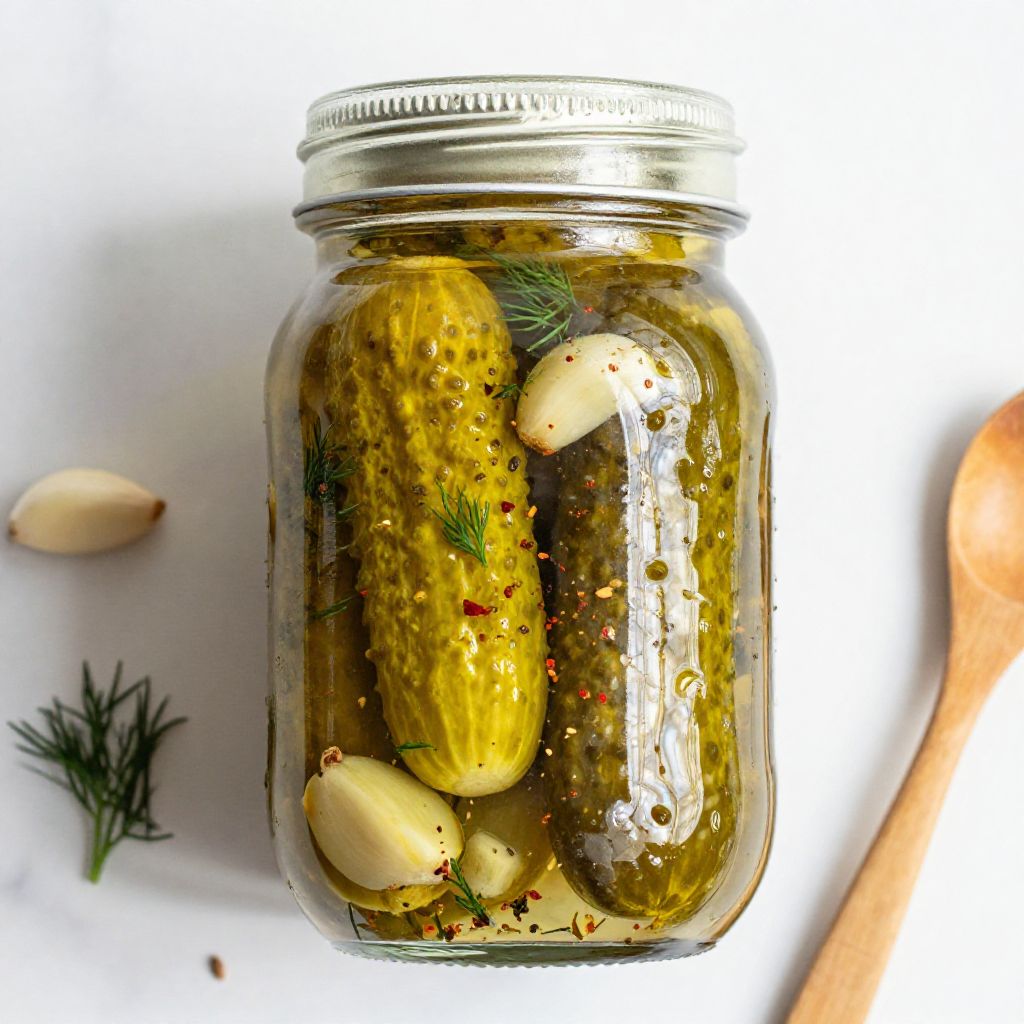
Fermented Pickles
Ingredients
Equipment
Method
- Start by washing your cucumbers thoroughly to remove any dirt.
- In a separate container, combine the filtered water and sea salt. Stir until the salt completely dissolves to create your brine.
- Place the sliced cucumbers in the mason jar, packing them tightly.
- Add the crushed garlic, dill, and red pepper flakes into the jar with the cucumbers.
- Carefully pour the brine over the cucumbers, ensuring they are fully submerged.
- Use a weight or a small plate to keep the cucumbers submerged beneath the brine.
- Cover the jar with a towel to protect it from dust while allowing gases to escape and place it in a cool, dark spot for 5 to 10 days to ferment.
- After 5 days, check the pickles daily and taste them. Once they reach your preferred tanginess, transfer the jar to the refrigerator to slow fermentation.