
Picture this: warm, pillowy parathas, bursting with the earthy sweetness of beetroot, and a hint of spice that dances on your palate. The Beetroot Paratha is not just a dish; it’s a colorful celebration on your plate, perfect for breakfast, lunch, or dinner. This recipe is a delightful way to sneak in some veggies while indulging in the comforting flavors of homemade Indian bread. With its vibrant hue and nutritious benefits, this dish is as visually appealing as it is delicious. Let’s roll up our sleeves and get started!
Why You’ll Love This Recipe
This recipe is a keeper for several reasons.
- Quick to prepare, perfect for busy mornings.
- Nutritious and packed with vitamins from beetroot.
- Great for kids and adults alike.
- Versatile – serve it with yogurt, pickles, or even as a wrap.
- Beautifully colored, making it a feast for the eyes.
My Experience Making This Recipe
The first time I made Beetroot Paratha, I was amazed at how such a simple ingredient could transform a traditional dish. The vibrant color of the beetroot made my kitchen feel like a cozy café, and the aroma filled the air, making my family curious.
As we sat around the table, the parathas disappeared quickly. Everyone loved how soft and flavorful they were, and I couldn’t help but smile at the empty plates.
Recipe Overview
- Recipe Name: Beetroot Paratha
- Servings: 4
- Prep Time: 15 minutes
- Cook Time: 20 minutes
- Total Time: 35 minutes
- Course: Main Dish
- Cuisine: Indian
- Calories per Serving: 170
Equipment You Will Need
- Mixing bowl
- Rolling pin
- Non-stick skillet or tawa
- Grater or food processor
- Measuring cups and spoons
Ingredients for Beetroot Paratha
- 1 cup whole wheat flour
- 1/2 cup grated or pureed beetroot
- 1/2 teaspoon salt
- 1/2 teaspoon cumin seeds
- 1 tablespoon oil (plus extra for cooking)
- Water (as needed for kneading)
Ingredient Notes and Substitutions
- Whole wheat flour: It provides a nutty flavor and is more nutritious. You can substitute with all-purpose flour for a softer texture.
- Beetroot: Adds sweetness and color. You can use spinach or sweet potato puree for different flavors.
- Salt: Enhances flavor. If you need a low-sodium option, reduce the amount or use a salt substitute.
- Cumin seeds: Adds a warm, earthy note. You can omit them for a milder taste or substitute with caraway seeds.
- Oil: Used for kneading and cooking. Ghee or butter can be used for richer flavor.
How to Make Beetroot Paratha
Step 1: Prepare the Dough
In a mixing bowl, combine the whole wheat flour, salt, and cumin seeds. This forms the base and gives the paratha its flavor.
Step 2: Add Beetroot
Mix in the grated or pureed beetroot and oil until all ingredients are combined. This step ensures that the beetroot is evenly distributed.
Step 3: Knead the Dough
Gradually add water and knead the mixture into a soft, pliable dough. Soft dough is key to making the parathas fluffy.
Step 4: Rest the Dough
Cover the dough with a damp cloth and let it rest for at least 15 minutes. Resting allows the gluten to relax, making rolling easier.
Step 5: Divide the Dough
After resting, divide the dough into equal portions, about the size of a golf ball. This makes rolling out the parathas more manageable.
Step 6: Roll Out the Parathas
On a floured surface, roll out each portion into a circle, about 6-8 inches in diameter. Keep the thickness even for uniform cooking.
Step 7: Cook the Parathas
Heat a non-stick skillet over medium heat. Cook each paratha for 1-2 minutes on each side until golden brown and cooked through.
Step 8: Serve Hot
Remove from the skillet and brush with a little oil if desired. Serve hot with yogurt or your favorite chutney.
Pro Tip: For extra flavor, add finely chopped herbs like cilantro or mint to the dough.
Tips for the Best Beetroot Paratha
- Always use fresh beetroot for the best flavor and color.
- Don’t skip the resting time; it’s crucial for soft parathas.
- Adjust the water while kneading for the right dough consistency.
- Keep the heat moderate to avoid burning while cooking.
- Experiment with spices like garam masala for an extra kick.
Common Mistakes to Avoid
- Not resting the dough can lead to tough parathas.
- Using too much water makes the dough sticky and hard to roll.
- Cooking on high heat can burn the parathas without cooking them through.
- Rolling too thin can cause them to dry out while cooking.
Serving Suggestions
These parathas can be enjoyed in many ways. Consider pairing them with:
- Plain yogurt or raita
- Spicy pickle
- Fresh salad
- Dal or lentil curry
- A side of chutney
Variations to Try
- For a cheesy twist, add crumbled feta or paneer to the dough.
- Incorporate spices like turmeric or chili powder for added warmth.
- Mix in finely chopped spinach for a nutrient boost.
- Substitute part of the flour with gram flour for a different flavor.
Dietary Adaptations
- Gluten-free: Use chickpea flour or gluten-free blends.
- Dairy-free: Omit any dairy products; the paratha is naturally vegan.
- Vegan: The recipe is vegan-friendly as is; just use oil instead of ghee.
- Low-carb/Keto: Substitute flour with almond flour for a low-carb option.
Storage and Reheating
Refrigerator
Store leftover parathas in an airtight container in the fridge.
- They will stay fresh for up to 3 days.
- Reheat on a skillet for best results.
Freezer
For longer storage, freeze the parathas with parchment paper between each.
- They can be frozen for up to 2 months.
- Thaw in the fridge or at room temperature before reheating.
Reheating
Reheat frozen or refrigerated parathas on a skillet or in a toaster. This keeps them crispy.
- A splash of water while reheating can help restore moisture.
Nutrition Information
| Nutrient | Amount |
|---|---|
| Calories | 170 |
| Total Fat | 4g |
| Saturated Fat | 0.5g |
| Carbohydrates | 30g |
| Fiber | 4g |
| Sugar | 2g |
| Protein | 5g |
| Sodium | 200mg |
| Cholesterol | 0mg |
This information is approximate and can vary based on specific ingredients used.
Frequently Asked Questions
Can I make the dough ahead of time?
Yes, you can prepare the dough in advance and refrigerate it for up to 24 hours.
What can I substitute for beetroot?
Try using spinach or sweet potato for different flavors and colors.
How do I store leftover parathas?
Store them in an airtight container in the fridge for up to three days or freeze them for longer storage.
Why are my parathas tough?
This usually happens if the dough wasn’t rested or was kneaded too much. Make sure to let it rest!
Can I make these parathas without oil?
Yes, you can skip the oil, but it helps in making the dough softer and adds flavor.
Final Thoughts
The Beetroot Paratha is a delightful dish that combines health and taste, making it perfect for any meal. Give this recipe a try and enjoy its vibrant flavors and colors.
If you’re looking for more delicious ideas, check out this Harvard Beets recipe or try making Cottage Cheese Flatbread for a cozy meal.
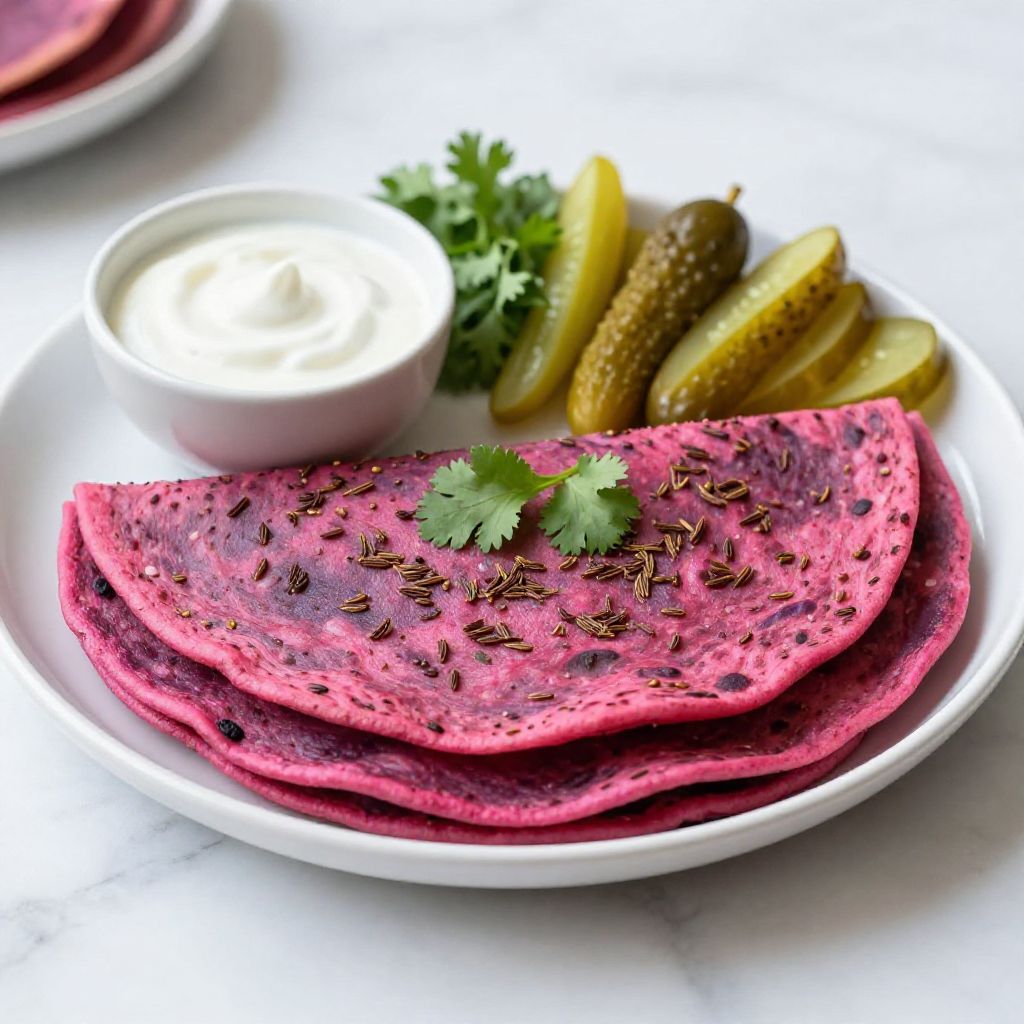
Beetroot Paratha
Ingredients
Equipment
Method
- In a mixing bowl, combine 1 cup whole wheat flour, 1/2 teaspoon salt, and 1/2 teaspoon cumin seeds.
- Add 1/2 cup grated or pureed beetroot and 1 tablespoon oil, mixing until evenly combined.
- Gradually add water and knead the mixture for 5-7 minutes into a soft, pliable dough.
- Cover the dough with a damp cloth and let it rest for at least 15 minutes.
- Divide the rested dough into 8 equal portions, rolling each into a ball.
- On a lightly floured surface, roll out each ball into a 6-8 inch circle.
- Heat a non-stick skillet over medium heat (around 180°C) and cook each paratha for 1-2 minutes on each side until golden brown spots appear.
- Brush each paratha with a little oil if desired and serve hot with yogurt or chutney.