
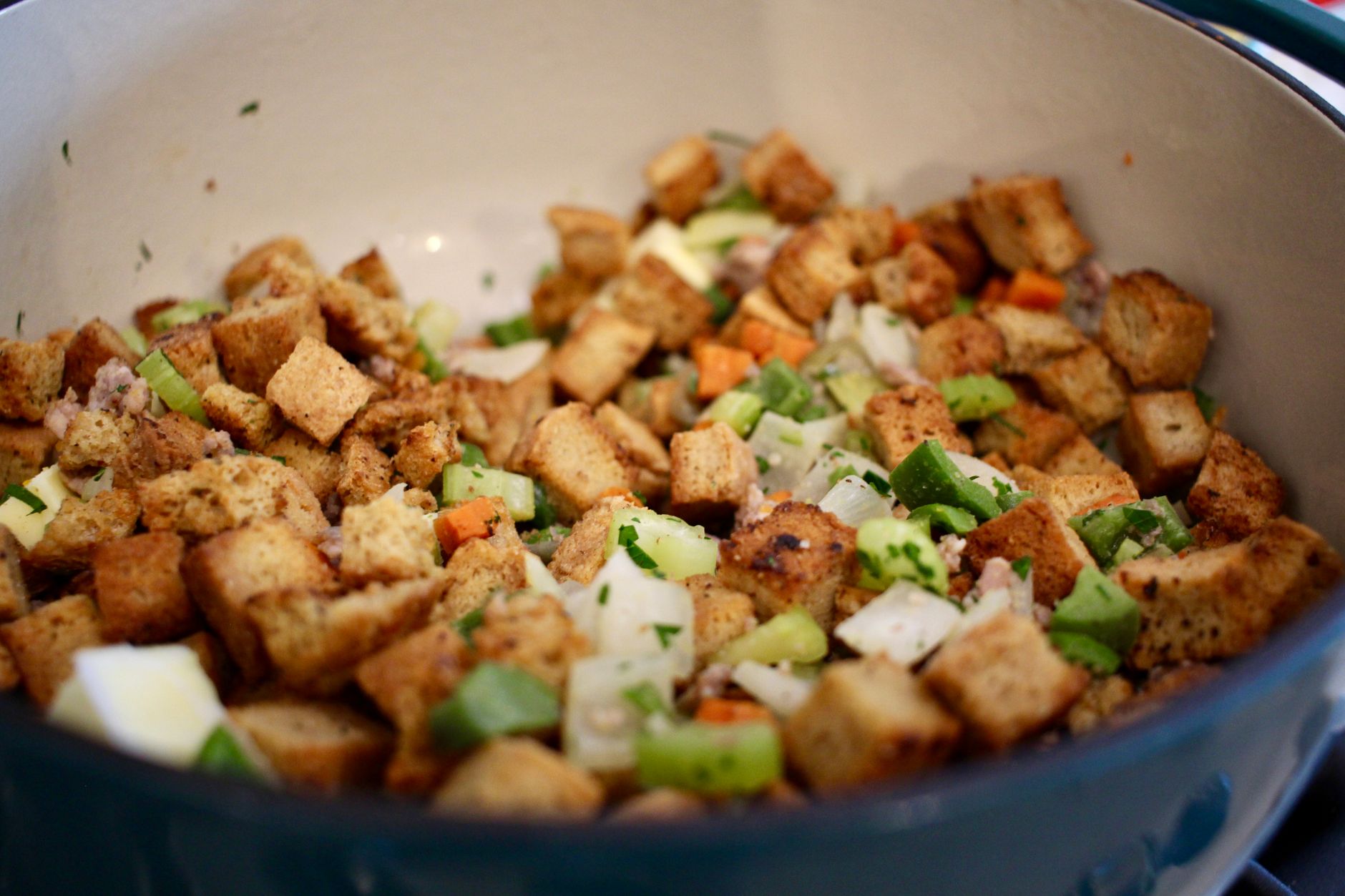
Stuffing, often served alongside roasted meats or inside poultry, is a dish that adds flavor and texture to meals. Traditionally made of bread, herbs, and other ingredients, stuffing is versatile enough to accommodate various flavors and dietary preferences.
This article will explore what stuffing is made of, its common ingredients, different variations, and tips for making your own stuffing at home.
What Is Stuffing Made Of?
Stuffing is predominantly made of bread, which serves as the base. It typically contains various seasonings, vegetables, and, in some cases, proteins. The precise combination of these ingredients can vary widely based on regional traditions and personal preferences.
Although the classic stuffing is based on stale bread, other forms are also popular, such as rice or cornbread stuffing, which offer unique flavors and textures.
The Essential Ingredients of Stuffing
The foundation of any stuffing recipe is generally composed of a few standard ingredients. Here, we’ll break down each component and its role in creating a delicious stuffing.
Bread
- Types: Common bread types used include white bread, whole grain, cornbread, or sourdough.
- Preparation: Bread is typically cubed and left to stale for a day or two. Staling allows the bread to absorb flavors without becoming mushy.
- Texture: The type of bread used influences the texture and flavor of the stuffing. Sourdough adds tanginess, while white bread gives a softer texture.
Broth or Stock
- Function: Broth or stock is essential for moistening the bread and helping all ingredients bind together.
- Options: Chicken, vegetable, or turkey broth can be used depending on dietary preference and desired flavor.
- Measurement: Typically, about 1 to 2 cups of broth is added to the stuffing mix, but this can vary based on the dryness of the bread.
Herbs and Spices
- Common Herbs: Parsley, sage, thyme, and rosemary are traditional choices.
- Usage: Fresh herbs will provide a more vibrant flavor profile, while dried herbs are convenient and often have a concentrated flavor.
- Customization: Feel free to experiment with different herbs and spices to create a unique flavor that suits your meal.
Vegetables
- Types: Common vegetables include onions, celery, carrots, and garlic.
- Preparation: These vegetables are typically sautéed before being added to the stuffing to enhance their flavor.
- Variations: Seasonal vegetables, such as mushrooms or butternut squash, can also be tasty additions, especially for fall dishes.
Proteins
- Options: While traditional stuffing usually contains little to no meat, some variations may incorporate sausage, bacon, or even nuts.
- Considerations: If adding protein like sausage, make sure to cook it beforehand and drain excess fat.
- Flavor Profile: Adding meat can introduce a savory depth that complements the herbs and vegetables.
Different Types of Stuffing
Stuffing can be categorized into different styles based on regional traditions, main ingredients, and personal tastes. Here are some popular variations:
Classic Bread Stuffing
This is the most traditional form of stuffing, often featuring white bread, onions, celery, and a mix of fresh herbs. It’s usually served with turkey during Thanksgiving but is delicious year-round.
Cornbread Stuffing
Cornbread stuffing utilizes cornbread as the base ingredient, giving it a slightly sweet and crumbly texture. It’s ideal for Southern-style dishes and pairs well with fried chicken or ham.
Wild Rice Stuffing
Utilizing wild rice gives this stuffing a nutty flavor and chewy texture. It often includes mushrooms, cranberries, and nuts, making it an elegant option for holiday meals.
Quinoa Stuffing
A quinoa base makes this stuffing gluten-free and rich in protein. Typically combined with seasonal vegetables and herbs, it caters to health-conscious eaters and those avoiding gluten.
Herbed Rice Stuffing
This variation features cooked rice as the base and can include a variety of herbs and spices for flavor. It works well in stuffed vegetables like peppers or zucchini.
How to Make Stuffing: A Step-by-Step Guide
Making stuffing at home is straightforward and allows for creativity. Here’s a general method for preparing stuffing:
Ingredients
- 6 cups of stale bread, cubed (your choice of bread)
- 1 cup of broth (chicken, vegetable, or turkey)
- 1 medium onion, diced
- 2 stalks of celery, diced
- 2 tablespoons of fresh herbs (such as parsley, sage, and thyme)
- 1 teaspoon of salt
- 1/2 teaspoon of black pepper
- Optional: 1 cup of cooked sausage, nuts, or dried fruits
Essential Equipment
- Large mixing bowl
- Skillet
- Wooden spoon or spatula
- Baking dish
- Oven
Preparation Steps
- Preheat the oven to 350°F (175°C).
- In a skillet over medium heat, add a splash of broth and sauté the onions and celery until tender, about 5-7 minutes.
- In a large mixing bowl, combine the cubed stale bread, sautéed vegetables, herbs, salt, and pepper.
- Pour in the remaining broth, mixing until the bread is well moistened. If using, fold in any optional ingredients like sausage or nuts.
- Transfer the mixture to a greased baking dish and cover with foil.
- Bake for approximately 30 minutes. Remove the foil and bake for an additional 10-15 minutes, or until the top is golden brown and crisp.
Tips and Troubleshooting
Here are some practical tips to ensure your stuffing turns out perfectly:
Moisture Levels
The key to a good stuffing is achieving the right moisture level. If it appears too dry, gradually add more broth until you reach the desired consistency.
Flavor Balance
Pay attention to the balance of flavors. Taste the uncooked stuffing mixture before baking to adjust seasonings accordingly. Remember, it will taste different after cooking.
Avoiding Soggy Stuffing
To prevent soggy stuffing, ensure the bread is stale and adequately cubed instead of overly moist. Stale bread absorbs the broth without becoming mushy.
Storing Leftovers
If you have leftover stuffing, it can be stored in an airtight container in the refrigerator for up to three days. Reheat in the oven before serving, adding a splash of broth to revive moisture.
Serving Suggestions
Stuffing pairs well with various main courses and can complement a wide range of flavors:
- Roasted Turkey: A classic pairing during Thanksgiving.
- Pork or Lamb: Rich meats are enhanced by the herb flavors in stuffing.
- Vegetarian Dishes: Stuffing can serve as a hearty side for plant-based meals.
- Stuffed Vegetables: Use stuffing as a filling for hollowed vegetables like peppers or squash.
Make-Ahead Guidance
Stuffing can easily be prepared in advance, making it a convenient option for busy holiday meals or family gatherings:
- Prepare the stuffing mixture the day before, then cover and refrigerate it. Before baking, let it sit at room temperature for about 30 minutes.
- Alternatively, you can assemble the stuffing in a baking dish and store it unbaked in the refrigerator. Just add about 10 minutes more baking time if it goes in the oven cold.
Common Mistakes to Avoid
- Not Stale Enough Bread: Fresh bread can lead to sogginess—always use stale or toasted bread.
- Overmixing: Mix just until combined to avoid dense stuffing.
- Insufficient Broth: Under-seasoning or not adding enough broth can result in dry stuffing.
Variations You Can Try
Feel free to get creative with your stuffing! Here are a few ideas for variations:
- Add nuts, such as pecans or walnuts, for added crunch.
- Incorporate dried fruits like cranberries or apricots for sweetness.
- Experiment with different spices, such as nutmeg or cumin, to introduce unique flavors.
- Try adding cheese, such as feta or parmesan, for a creamy texture and rich taste.
Stuffing is a quintessential comfort food that provides endless opportunities for personalization. Whether you stick with tradition or innovate your own version, this versatile dish can enhance any meal. Take the time to explore the various ingredients, flavors, and techniques that make stuffing a beloved addition to holiday and family dinners.
If you’re interested in trying new recipes or learning more about impactful side dishes, explore our pineapple stuffing recipe or discover our sourdough stuffing recipe for a delightful twist on classic stuffing.