
The smell of sourdough stuffing baking in the oven is what autumn tastes like to me, that perfect marriage of tangy bread and savory herbs that makes your whole kitchen smell like Thanksgiving morning.
Sourdough stuffing takes a classic holiday side dish and transforms it with the complex, slightly fermented flavor of sourdough bread. The tanginess cuts through the richness of broth and butter, while the sturdy crumb holds up beautifully to soaking without turning to mush.
This recipe works for small gatherings or large crowds, makes ahead beautifully, and honestly tastes better than the boxed stuff you might have grown up with. If you’ve got a loaf of sourdough sitting around, this is exactly what you should do with it.
Why You’ll Love This Recipe
Sourdough adds a sophisticated flavor dimension that regular white bread stuffing simply cannot match. The fermented tang pairs beautifully with sage, thyme, and celery, creating a side dish that tastes homemade and intentional.
- Deep, complex flavor from real sourdough bread instead of plain sandwich bread
- Make it up to two days ahead and bake it fresh on serving day
- Crispy edges with a moist, custardy center when baked in a casserole dish
- Easily feeds 12 people from one large loaf of sourdough
- Works for vegan, vegetarian, or traditional meat-based variations
My Experience Making This Recipe
I first made this stuffing five years ago when I had a leftover sourdough loaf and no time for my usual recipe. I was skeptical at first, wondering if the tang would work with Thanksgiving flavors.
The moment I pulled it from the oven, I knew I’d stumbled onto something special. The top was golden and crispy, the inside was custardy and rich, and that sourdough flavor made everything taste more complex and refined.
My family asked if I’d changed the recipe that year (they’d had my stuffing dozens of times before), which is the highest compliment I could get. Now sourdough is the only bread I use, and I hunt for the best loaves at farmers markets specifically for this dish.
Recipe Overview
- Recipe Name: Sourdough Stuffing
- Servings: 12 servings
- Prep Time: 20 minutes
- Cook Time: 45 minutes
- Total Time: 1 hour 5 minutes (plus optional overnight rest)
- Course: Side Dish
- Cuisine: American
- Calories per Serving: 280
Equipment You Will Need
- 9×13 inch baking dish (or similar 3-quart casserole)
- Large mixing bowl
- Medium saucepan
- Wooden spoon or whisk
- Measuring cups and spoons
- Knife and cutting board for prepping vegetables
- Oven thermometer (optional but helpful)
Ingredients for Sourdough Stuffing
- Sourdough bread: 1 large loaf (about 1.5 pounds), cut into 3/4-inch cubes (about 10 cups)
- Butter: 6 tablespoons
- Yellow onion: 2 medium, diced
- Celery: 3 stalks, diced
- Garlic: 4 cloves, minced
- Chicken or vegetable broth: 3 cups, warmed
- Eggs: 3 large
- Fresh sage: 2 tablespoons, chopped (or 1.5 teaspoons dried)
- Fresh thyme: 1 tablespoon, chopped (or 1 teaspoon dried)
- Kosher salt: 1.5 teaspoons
- Black pepper: 0.5 teaspoon
- Poultry seasoning: 1 teaspoon (optional but recommended)
Ingredient Notes and Substitutions
- Sourdough bread: The tangy flavor is what makes this special; it should be slightly day-old so it absorbs liquid better without falling apart. Substitute with whole wheat sourdough if you want more nutty flavor, or use a white loaf from your local bakery if true sourdough is unavailable, though the result will be less complex.
- Butter: Real butter adds richness and keeps the stuffing moist; the milk solids also brown slightly during baking for better flavor. Use olive oil for a lighter version, though the flavor will shift toward Mediterranean instead of classic Thanksgiving.
- Broth: Chicken broth is traditional and adds savory depth; vegetable broth works beautifully for vegetarian versions. Low-sodium broth gives you control over salt levels, so taste as you go.
- Eggs: These act as a binder and create the custard-like interior; do not skip them. If making vegan, use aquafaba (chickpea liquid) instead, using 6 tablespoons per egg.
- Fresh herbs: Fresh sage and thyme are preferable to dried and taste more vibrant; if using dried, cut the amount in half. Parsley can be added for color and freshness, though it is milder in flavor.
How to Make Sourdough Stuffing
Step 1: Prepare Your Sourdough Bread
Cut your sourdough loaf into 3/4-inch cubes and spread them on two sheet pans. Bake at 325 degrees Fahrenheit for 15 minutes, stirring halfway through, until the cubes are lightly toasted but still have some chew inside.
This toasting step matters more than you might think. It creates a surface that will soak up broth without turning to mush, and it deepens the already complex flavor of the sourdough.
Step 2: Sauté the Aromatics
Melt 6 tablespoons of butter in a large saucepan over medium heat. Add 2 diced medium onions and 3 diced celery stalks, cooking for 5 to 7 minutes until the vegetables are soft and translucent.
These aromatics are your flavor foundation. Cooking them long enough brings out their natural sweetness and removes the raw bite from the onion.
Step 3: Add Garlic and Herbs
Stir in 4 minced garlic cloves and cook for 1 minute until fragrant. Add 2 tablespoons fresh sage (or 1.5 teaspoons dried), 1 tablespoon fresh thyme (or 1 teaspoon dried), and 1 teaspoon poultry seasoning if using.
The one-minute cook time for garlic prevents it from burning while releasing its oils into the butter. This blooming process is where much of your savory depth comes from.
Step 4: Heat Your Broth
Pour 3 cups of chicken or vegetable broth into the pan with the cooked vegetables and herbs. Bring the mixture to a simmer and cook for 2 minutes to meld all the flavors.
Warming the broth ahead of time is a small detail that helps your final stuffing cook evenly and prevents the sourdough from shocking into toughness when cold liquid hits hot bread.
Step 5: Combine Bread and Broth Mixture
Place your toasted sourdough cubes in a large mixing bowl and pour the hot broth mixture over them, stirring gently with a wooden spoon. Let this sit for 5 minutes so the bread can absorb the liquid.
The bread should look very wet at this stage. If it still seems dry, add up to 1/2 cup more broth, a quarter cup at a time, until the mixture feels like very moist dressing.
Step 6: Make the Egg Custard
Whisk 3 large eggs in a small bowl with 1.5 teaspoons kosher salt and 0.5 teaspoon black pepper. Pour this mixture into the bread and broth, stirring gently to distribute the eggs evenly throughout.
The eggs create a creamy custard as the stuffing bakes, turning the interior from just wet to luxuriously moist. Mixing gently prevents you from breaking apart the bread cubes too much.
Step 7: Transfer to Baking Dish
Pour the entire mixture into a 9×13 inch baking dish, spreading it evenly. If making ahead, cover with plastic wrap and refrigerate for up to 2 days at this point.
Make-ahead stuffing is a real game changer for holiday cooking. The flavors actually deepen as it sits, and you eliminate a dish that needs last-minute attention on serving day.
Step 8: Bake Until Golden
Bake uncovered at 350 degrees Fahrenheit for 40 to 50 minutes if baking fresh, or 50 to 60 minutes if baking from cold. The top should be deep golden brown and the edges should pull away slightly from the dish.
A meat thermometer inserted in the center should read 165 degrees Fahrenheit. The longer baking time for cold stuffing allows the custard to set through and the flavors to fully meld.
Step 9: Rest Before Serving
Remove the stuffing from the oven and let it rest for 5 to 10 minutes before serving. This rest allows the custard to set a bit more so it holds together when plated.
If you cut into it immediately, it will be more custardy and loose, which some people prefer. Either way, you have a window of 15 to 20 minutes before it cools too much.
Pro Tip: Day-old sourdough bread works better than fresh because the crust is firmer and the interior has the perfect amount of moisture to absorb the custard without turning to mush.
Tips for the Best Sourdough Stuffing
- Use high-quality sourdough from a bakery or farmers market rather than grocery store loaves, which often contain sugar and additives that muddy the flavor. The tang should be pronounced but not mouth-puckering.
- Toast your bread cubes even if you’re in a hurry; this single step prevents soggy, gloppy stuffing and deepens the toasted bread flavor throughout the dish.
- Warm your broth before pouring it over the bread so it absorbs evenly and cooks the stuffing more uniformly. Cold broth creates pockets of dense, undercooked bread.
- Taste the broth mixture before pouring it over the bread and adjust seasoning as needed. The bread will not add much salt, so this is your chance to get the flavor right.
- If your stuffing seems too wet after sitting, you can add 1 more egg whisked with 2 tablespoons of broth to help it bind; if too dry, add broth a quarter cup at a time.
- Bake uncovered so the top gets crispy and golden rather than steamed and pale. This textural contrast is what separates good stuffing from great stuffing.
Common Mistakes to Avoid
- Using fresh, soft bread that hasn’t been toasted will result in a gluey, mushy stuffing that falls apart when you scoop it. Toast your bread first to give it structure.
- Skipping the sauté step and just dumping raw onions and celery into the mixture creates harsh, raw flavors that never fully cook through. The sauté mellows these vegetables and develops sweetness.
- Using cold broth instead of warm will shock the bread and create uneven cooking, with some pieces soaking up liquid while others stay dry and hard. Always heat your broth.
- Adding too much broth at once makes the stuffing soggy and dense rather than moist and fluffy. Start with the amount called for and add more only if needed.
- Cutting your bread into chunks that are too small turns everything to mush, while chunks that are too large stay hard in the center. Aim for 3/4-inch cubes for the best texture.
Serving Suggestions
Sourdough stuffing is the perfect complement to roasted turkey, chicken, or ham, but it also stands beautifully alongside vegetarian mains like roasted vegetables or lentil loaf. The savory, custard-like texture makes it hearty enough to feel like a main course side.
- Serve alongside roasted turkey with cranberry sauce and gravy for a classic Thanksgiving plate
- Pair with herb-roasted chicken and roasted root vegetables for a simpler autumn dinner
- Offer alongside glazed ham with sweet potato casserole for a holiday brunch
- Serve with roasted mushrooms and kale for a vegetarian Thanksgiving that feels just as complete
- Top with a fried egg and serve with sautéed greens for a hearty breakfast or brunch dish
Variations to Try
- Sausage Sourdough Stuffing: Brown 1 pound of Italian sausage (removed from casings) and mix it in with the bread before baking. This adds savory, meaty depth and makes the stuffing more substantial, perfect for those who want a heartier side.
- Apple and Walnut Version: Add 1 cup diced apples and 1 cup toasted walnuts to the bread mixture along with an extra teaspoon of sage. The apples add slight sweetness and brightness that balances the sourdough tang beautifully.
- Mushroom Sourdough Stuffing: Sauté 1 pound of sliced mushrooms (cremini, shiitake, or a mix) with the onions and celery, then proceed as normal. Mushrooms add umami depth and a meaty texture that vegetarians especially appreciate.
- Oyster Dressing: Add 1 cup of shucked oysters with their liquid in place of half the broth for an oyster dressing with sourdough tang. This is a traditional pairing that adds briny, oceanic richness.
- Cornbread and Sourdough Blend: Use 5 cups sourdough cubes and 5 cups cornbread cubes for a textural mix with slightly different flavors. Cornbread adds mild sweetness while sourdough brings savory tang.
Dietary Adaptations
- Gluten-Free: Substitute gluten-free sourdough bread in the same amount; the bake time may need to shorten by 5 to 10 minutes depending on the bread’s density. Gluten-free bread often bakes faster and can dry out if over-cooked.
- Dairy-Free: Use olive oil or dairy-free butter in place of regular butter and proceed as normal; use vegetable broth instead of chicken broth. The flavor will be slightly lighter, but the dish remains delicious and still gets crispy edges.
- Vegan: Substitute olive oil for butter and use 18 tablespoons of aquafaba (liquid from canned chickpeas) in place of the 3 eggs; use vegetable broth. The binding power is the same, though the custard interior will be slightly less rich.
- Low-Carb or Keto: Use keto bread in place of sourdough, increase vegetables slightly, and reduce broth by half to account for the denser bread. The result will be lower-carb but denser and less fluffy than traditional stuffing.
Storage and Reheating
Refrigerator
Store leftover sourdough stuffing in an airtight container for up to 4 days. It will firm up as it cools, making it easy to reheat in portions.
- Keep covered to prevent the surface from drying out
- Store separately from other dishes with strong flavors to preserve the sourdough tang
Freezer
Freeze assembled but unbaked stuffing in your baking dish covered tightly with plastic wrap and foil for up to 3 months. Alternatively, freeze baked stuffing in an airtight container for up to 2 months.
- Bake frozen unbaked stuffing directly from the freezer, adding 15 to 20 minutes to the bake time
- Thaw baked stuffing overnight in the refrigerator before reheating for best results
Reheating
Reheat refrigerated or thawed stuffing covered with foil at 350 degrees Fahrenheit for 15 to 20 minutes until warmed through. If the top dries out, tent it with foil and add a tablespoon of broth before heating.
- Reheat on the stovetop in a skillet over medium-low heat with a splash of broth for a quicker option
- Microwave individual portions at 50 percent power for 2 to 3 minutes to prevent overheating the eggs
Nutrition Information
| Nutrient | Amount |
|---|---|
| Calories | 280 |
| Total Fat | 11 g |
| Saturated Fat | 6 g |
| Carbohydrates | 36 g |
| Fiber | 2 g |
| Sugar | 3 g |
| Protein | 9 g |
| Sodium | 620 mg |
| Cholesterol | 58 mg |
Nutrition values are estimates and vary based on specific ingredients used and portion size. Use these figures as a general guide rather than absolute values.
Frequently Asked Questions
Can I Make Sourdough Stuffing Ahead of Time?
Yes, this is one of the best features of this recipe. You can assemble the stuffing up to 2 days ahead, cover it, and refrigerate it.
The flavors actually deepen as it sits, and baking directly from cold adds only 10 to 15 minutes to the bake time.
What if I Don’t Have Fresh Herbs?
Dried herbs work perfectly; use half the amount called for since dried herbs are more concentrated. One tablespoon fresh sage becomes 1.5 teaspoons dried.
Add dried herbs during the sauté step so they bloom in the butter and release their flavors fully.
How Do I Know When the Stuffing Is Cooked Through?
The top should be deep golden brown and the edges should pull away slightly from the baking dish. A meat thermometer inserted in the center should read 165 degrees Fahrenheit.
If the top is browning too fast but the center seems underdone, tent with foil and lower the oven temperature by 25 degrees.
Can I Use Store-Bought Sourdough Bread?
Yes, store-bought sourdough works beautifully as long as it has real sourdough flavor and not just added vinegar for tang. Check the ingredient list for sourdough starter culture rather than vinegar.
Bakery sourdough tastes noticeably better than mass-produced loaves from big grocery stores, so visit a local bakery if possible.
Why Is My Stuffing Dry?
This usually happens when too little broth is used or the bread cubes are too large and cannot absorb the liquid fully. Add broth a quarter cup at a time if the mixture seems dry before baking.
You can also brush the top with melted butter before baking to help keep the surface moist.
Can I Make This Stuffing Vegetarian or Vegan?
Absolutely. Use vegetable broth instead of chicken broth, and the stuffing is already vegetarian if you keep the eggs.
For vegan, replace the eggs with aquafaba and use dairy-free butter, and you have a fully plant-based dish that tastes just as rich and satisfying.
Final Thoughts
Sourdough stuffing transforms a humble Thanksgiving side into something genuinely special, the kind of dish people ask about and request you make again next year. Once you taste the difference that real sourdough makes, you will never go back to the boxed version.
The best part is how forgiving this recipe is. You can make it days ahead, reheat it easily, and adapt it endlessly to match your preferences and dietary needs. Give it a try this holiday season and watch how your guests react to that first forkful of tangy, custard-filled, perfectly crispy-edged sourdough stuffing.
If you love working with quality bread, you might also enjoy our sourdough baguette recipe for everyday slicing and sandwiches. For another spectacular sourdough application, check out our King Arthur sourdough recipe that creates a beautifully structured loaf perfect for any occasion.
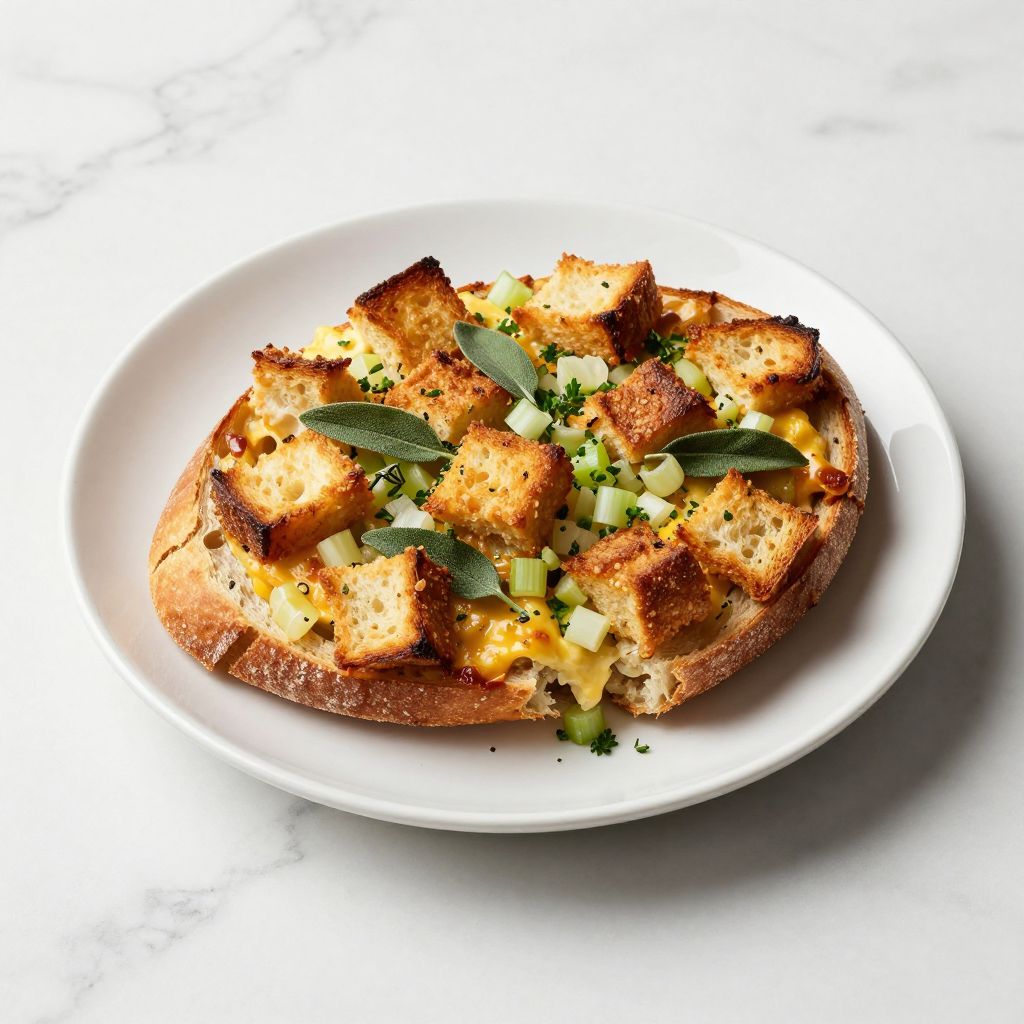
Sourdough Stuffing
Ingredients
Equipment
Method
- Cut sourdough loaf into 3/4-inch cubes and spread on two sheet pans. Bake at 325°F for 15 minutes, stirring halfway, until lightly toasted.
- Melt 6 tablespoons butter in a medium saucepan over medium heat. Add diced onions and celery and cook for 5 to 7 minutes until soft and translucent.
- Stir in minced garlic and cook for 1 minute until fragrant. Add sage, thyme, and poultry seasoning and cook briefly to bloom the herbs.
- Pour warmed broth into the pan, bring to a simmer, and cook for 2 minutes to meld flavors.
- Place toasted bread cubes in a large mixing bowl and pour hot broth mixture over them. Stir gently and let sit for 5 minutes to absorb the liquid.
- Whisk eggs with salt and pepper in a small bowl, then pour over the bread mixture and stir gently to combine.
- Transfer the stuffing mixture to a 9x13-inch baking dish, spread evenly, and cover with plastic wrap if making ahead. Refrigerate for up to 2 days if desired.
- Bake uncovered at 350°F for 40 to 50 minutes (50 to 60 minutes from cold) until the top is golden brown and the edges pull away. The center should reach 165°F.
- Remove from the oven and let the stuffing rest for 5 to 10 minutes before serving to allow the custard to set.