
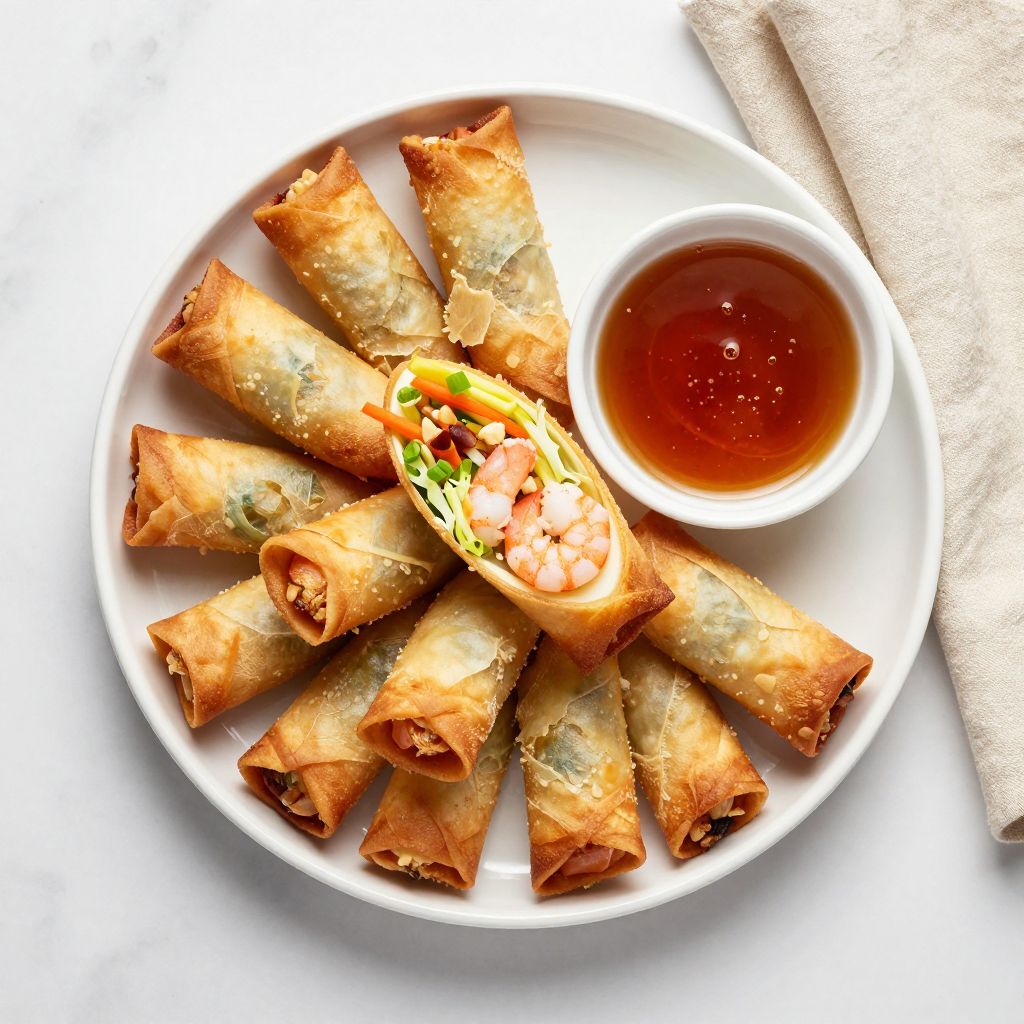
The aroma of shrimp egg rolls frying in hot oil is unmistakable, crispy and golden with that satisfying crunch that keeps you reaching for more.
Shrimp egg rolls are the perfect appetizer because they deliver restaurant-quality results at home without the complexity. They combine tender shrimp, crisp vegetables, and a paper-thin wrapper that shatters between your teeth, all in one addictive bite.
This recipe walks you through making them from scratch, sharing the tricks I’ve learned for achieving that ideal golden exterior and moist filling every time. You’ll find they’re faster than you’d expect and absolutely impress guests.
Why You’ll Love This Recipe
These egg rolls hit every note: crunchy outside, succulent inside, and totally customizable to your taste preferences.
- Restaurant-quality results you can make at home in about 45 minutes
- Naturally gluten-free wrapper options available for dietary needs
- Freezer-friendly so you can prep ahead for easy entertaining
- Pairs perfectly with sweet and sour sauce or a spicy sriracha dip
- Works as an appetizer, snack, or light meal depending on portions
My Experience Making This Recipe
The first time I made shrimp egg rolls, I expected them to be finicky. Instead, I found the assembly surprisingly meditative and the cooking faster than frying spring rolls.
My family demolished them within minutes, and I realized I’d been paying too much for takeout versions that didn’t taste nearly as fresh. The key was using large shrimp so you could actually see and taste them in each bite.
Now I make a double batch whenever we entertain, and people always ask for the recipe. What surprised me most was how forgiving the process becomes once you wrap your first few.
Recipe Overview
- Recipe Name: Shrimp Egg Rolls
- Servings: 12 egg rolls (serves 4 as an appetizer)
- Prep Time: 25 minutes
- Cook Time: 12 minutes
- Total Time: 37 minutes
- Course: Appetizer
- Cuisine: Asian-Fusion
- Calories per Serving: 185 calories
Equipment You Will Need
- Large mixing bowl
- Cutting board and sharp knife
- Deep skillet or wok
- Candy or deep-fry thermometer
- Paper towels
- Shallow dish for water
- Tongs or slotted spoon
- Wooden spoon for stirring
Ingredients for Shrimp Egg Rolls
- 1 pound large shrimp, peeled, deveined, and chopped into bite-sized pieces
- 2 cups finely shredded cabbage, preferably napa cabbage
- 1 cup shredded carrots
- 1/2 cup diced water chestnuts
- 3 green onions, sliced thin
- 2 cloves garlic, minced
- 1 tablespoon soy sauce
- 1 teaspoon sesame oil
- 1/2 teaspoon white pepper
- 12 egg roll wrappers
- Oil for frying (vegetable or peanut oil)
- Water for sealing wrappers
Ingredient Notes and Substitutions
- Large shrimp: They hold their shape during cooking and provide a satisfying texture in each bite. Substitute with cooked diced chicken breast if you prefer poultry, though you’ll lose some of the sweet briny flavor.
- Napa cabbage: Its delicate crunch and mild flavor complement shrimp perfectly. Regular green cabbage works but has a stronger taste that may overpower the filling.
- Water chestnuts: They provide that prized crisp texture that survives frying. Diced jicama or bamboo shoots offer similar crunch and structure.
- Sesame oil: A small amount adds authentic toasted depth without overpowering the shrimp. Skip it entirely if you don’t have it rather than substitute, as vegetable oil won’t provide the same aromatic quality.
- Egg roll wrappers: Thinner than spring roll wrappers, they fry to a shattering crispness. Spring roll wrappers work in a pinch but will be slightly chewier.
How to Make Shrimp Egg Rolls
Step 1: Prepare the Shrimp and Vegetables
Pat your chopped shrimp dry with paper towels to remove excess moisture. This step prevents the filling from becoming watery and helps the wrappers stay crispy instead of getting soggy during cooking.
Place the dried shrimp in a large mixing bowl with the cabbage, carrots, water chestnuts, and green onions. Combine them gently so everything is evenly distributed.
Step 2: Make the Filling Mixture
Add the minced garlic, soy sauce, sesame oil, and white pepper to the shrimp and vegetable mixture. Stir everything together until the seasonings coat every piece evenly.
Taste a small piece of filling and adjust seasoning if needed. The mixture should taste bright and savory without being salty, since the shrimp already carries its own briny notes.
Step 3: Set Up Your Wrapper Station
Place a shallow dish of water nearby for sealing the wrappers. Lay one egg roll wrapper in front of you in a diamond orientation, with one corner pointing toward you.
Having your water bowl, filling bowl, and clean work surface ready speeds up the wrapping process significantly. This prevents wrappers from drying out while you’re working.
Step 4: Fill the First Egg Roll
Place about 3 tablespoons of filling in the center of the wrapper, slightly closer to the corner pointing toward you. Don’t overfill or the wrapper will burst during frying.
Fold the bottom corner up over the filling, then fold in the left and right corners. Press gently so they stick to the wrapper but don’t tear it.
Step 5: Roll and Seal the Wrapper
Roll the egg roll away from you tightly, tucking the filling as you go. When you reach the top corner, wet it with a small dab of water and fold it down to seal the seam.
The seal should be tight enough that the wrapper doesn’t unroll during frying. Place the finished egg roll seam-side down on a clean plate and repeat with the remaining wrappers.
Step 6: Heat the Oil
Pour enough oil into a deep skillet to reach about 2 inches up the sides. Heat the oil to 350 degrees Fahrenheit, checking with a thermometer for accuracy.
Oil temperature is non-negotiable here. Too cool and your egg rolls absorb excess oil and become greasy; too hot and the outside burns before the inside cooks through.
Step 7: Fry the Egg Rolls in Batches
Carefully place 3 to 4 egg rolls in the hot oil, seam-side down first to help seal them. Fry for about 2 to 3 minutes on the first side until golden brown.
Turn them gently with tongs and fry the other side for another 2 to 3 minutes until they’re uniformly golden. Don’t overcrowd the pan or the temperature will drop and they’ll steam instead of fry.
Step 8: Drain and Cool
Remove the finished egg rolls with tongs or a slotted spoon and place them on a plate lined with paper towels. The paper towels absorb excess oil and help maintain that coveted crispy texture.
Let them cool for 2 to 3 minutes before serving so the filling sets slightly. This prevents the center from being scalding hot and helps the wrapper stay crisp longer.
Pro Tip: Freeze uncooked egg rolls on a baking sheet for 2 hours, then transfer to a freezer bag. They’ll fry beautifully straight from frozen, needing just an extra minute or two, and you’ll have impressive appetizers ready whenever you need them.
Tips for the Best Shrimp Egg Rolls
- Pat the shrimp completely dry before mixing into the filling, as moisture is the enemy of crispiness. Any excess water from the vegetables should also be removed with paper towels.
- Keep finished wrappers covered with a damp cloth while you’re wrapping to prevent them from drying out and cracking. Dry wrappers will split and leak filling during frying.
- Don’t skip the thermometer when heating oil. Guessing the temperature is how most home cooks end up with greasy, soggy results.
- Fry the seam-side down first to help seal it before flipping. This prevents the filling from leaking out into your oil and creates a stronger seal overall.
- Serve within 15 minutes of frying while they’re still at peak crispiness. They soften quickly as they cool.
- Make a double batch and freeze extras uncooked for emergency entertaining or easy weeknight snacks.
Common Mistakes to Avoid
- Overfilling the wrappers: Too much filling stretches the wrapper thin and causes it to burst during frying, leaking filling everywhere and creating a mess in your oil.
- Using wet shrimp or vegetables: Moisture turns your crispy exterior into a soft, oil-logged shell. Always pat ingredients thoroughly dry before mixing.
- Frying at the wrong temperature: Oil that’s too cool makes greasy, soggy rolls while oil that’s too hot burns the outside before cooking the inside. Use a thermometer every single time.
- Not sealing the wrappers properly: A weak seal means your filling leaks into the oil and your egg roll falls apart when you try to pick it up.
- Skipping the rest time: Serving them immediately after frying makes the filling dangerously hot inside. Two to three minutes lets the temperature equalize while the wrapper stays crisp.
Serving Suggestions
These egg rolls shine as a passed appetizer at parties, but they’re equally satisfying served with steamed rice as a light dinner. Pair them with complementary dipping sauces to let guests customize their experience.
- Sweet and sour sauce for a classic tangy-sweet pairing
- Spicy sriracha mixed with mayo for heat lovers
- Soy sauce with a squeeze of fresh lime juice for brightness
- Garlic-infused chili oil for bold, savory depth
- Plum sauce for a fruity, slightly thick dip
Variations to Try
- Vegetable Egg Rolls: Skip the shrimp and add more mushrooms, bell peppers, and bok choy for a vegetarian version that’s equally crunchy and flavorful. The sesame oil becomes even more important as your aromatic anchor.
- Spicy Shrimp Egg Rolls: Stir a teaspoon of sriracha and fresh minced Thai chili into the filling for heat that builds as you eat. The spice complements the shrimp’s sweetness beautifully.
- Cream Cheese Shrimp Egg Rolls: Mix 2 ounces of softened cream cheese into the filling for richness and a slightly crispy-creamy contrast when bitten. This version works especially well with a sweet chili dipping sauce.
- Asian Pear and Shrimp Egg Rolls: Dice half a cup of Asian pear into the filling for subtle sweetness and extra crispness. The pear adds complexity that makes people guess what that mysterious sweet flavor is.
- Mango and Shrimp Egg Rolls: Replace the water chestnuts with fresh diced mango for tropical brightness. This version pairs beautifully with a lime-cilantro dipping sauce.
Dietary Adaptations
- Gluten-Free: Use certified gluten-free egg roll wrappers made with cornstarch or tapioca flour. Most Asian markets carry them, though the texture will be slightly thinner and more delicate when fried.
- Dairy-Free: The base recipe is naturally dairy-free, so no changes needed unless making the cream cheese variation, in which case use a dairy-free cream cheese substitute.
- Vegan and Vegetarian: Replace the shrimp with 1.5 cups of finely diced mushrooms, tofu, or additional vegetables like bell peppers. Add a tablespoon of soy sauce to boost umami depth that the shrimp would have provided.
- Low-Carb and Keto: Use lettuce or nori sheets instead of egg roll wrappers to keep carbs minimal. The filling remains unchanged and tastes equally delicious served as lettuce wraps.
Storage and Reheating
Refrigerator
Leftover cooked egg rolls keep for up to 3 days in an airtight container. They’ll soften over time, so they’re best eaten the same day they’re made.
- Store in an airtight container to slow moisture loss
- Keep them separate from dipping sauces to maintain crispiness
- Let them come to room temperature before reheating if possible
Freezer
Uncooked egg rolls freeze beautifully for up to 3 months, making them perfect for meal prep. This is actually better than refrigerating them since they fry up crispy and fresh every time.
- Freeze uncooked rolls on a baking sheet for 2 hours, then transfer to freezer bags
- Label with the date so you know how long they’ve been frozen
- Fry directly from frozen, adding just 1 to 2 extra minutes to cooking time
Reheating
The air fryer gives the crispiest results for leftovers, though the oven works well too. Never microwave them as they’ll turn rubbery.
- Air fryer at 350 degrees for 5 to 6 minutes until heated through and crispy
- Regular oven at 375 degrees for 8 to 10 minutes on a baking sheet
- For best results, reheat from frozen rather than thawed
Nutrition Information
| Nutrient | Amount |
|---|---|
| Calories | 185 |
| Total Fat | 9g |
| Saturated Fat | 1.5g |
| Carbohydrates | 18g |
| Fiber | 1g |
| Sugar | 2g |
| Protein | 12g |
| Sodium | 320mg |
| Cholesterol | 65mg |
Nutritional values are approximate and based on per-egg-roll servings when making 12 rolls from this recipe. Actual values vary depending on oil absorption during frying and specific brands used.
Frequently Asked Questions
Can I bake these instead of frying them?
You can bake them at 400 degrees for 15 to 18 minutes until golden, but they won’t develop that characteristic crispy, shattering texture that makes egg rolls special. Baking gives you a more tender wrapper with less satisfying crunch.
How far in advance can I assemble these?
Assembled but uncooked egg rolls can refrigerate for up to 4 hours before frying. Longer than that and the wrappers start absorbing moisture from the filling and become difficult to fry crisply.
What should the oil temperature be exactly?
Aim for 350 degrees Fahrenheit for the best balance between a crispy exterior and cooked filling. This temperature allows the inside to heat through completely while the outside turns golden without burning.
Why did my egg rolls split open during frying?
This usually happens when the wrapper wasn’t sealed tightly enough, the filling had too much moisture, or the oil temperature was too high. Check your sealing technique and always pat your shrimp and vegetables dry before mixing.
Can I use cooked shrimp instead of raw?
Yes, but use the same amount and chop them the same way. Cooked shrimp will heat through in the same timeframe and taste nearly identical once combined with the vegetables and seasonings.
What’s the difference between egg rolls and spring rolls?
Egg roll wrappers are thicker and chewier while spring roll wrappers are thinner and crispier. Egg rolls typically contain cooked ingredients and are fried, while spring rolls are often served fresh and uncooked with herbs and dipping sauce.
Final Thoughts
These shrimp egg rolls prove that restaurant favorites belong in your home kitchen. Once you master the wrapping technique, you’ll find yourself making them regularly for everything from casual family dinners to impressive entertaining.
Start with this base recipe and explore the variations that call to you. Your guests will be impressed, and you’ll wonder why you ever paid for takeout versions.
Want more shrimp-forward recipes? Try this shrimp scampi recipe without wine for an elegant weeknight dinner, or explore a shrimp sauce recipe to elevate your meal prep game. Both offer simple techniques that showcase shrimp’s natural sweetness and versatility.
Shrimp Egg Rolls
Ingredients
Equipment
Method
- Pat the chopped shrimp dry with paper towels to remove excess moisture before mixing.
- In a large mixing bowl, combine the dried shrimp, shredded cabbage, shredded carrots, diced water chestnuts, and sliced green onions until evenly distributed.
- Add minced garlic, soy sauce, sesame oil, and white pepper to the bowl and stir until the seasonings coat every piece of filling. Adjust seasoning to taste.
- Set up a wrapper station with a shallow dish of water, a clean work surface, and your bowl of filling to speed up assembly and prevent wrappers from drying out.
- Lay one egg roll wrapper in a diamond orientation with a corner pointing toward you. Place about 3 tablespoons of filling in the center, slightly closer to the corner.
- Fold the bottom corner over the filling, then fold in the left and right corners. Roll the wrapper away from you tightly, tucking the filling as you go.
- Moisten the top corner with water and seal the seam. Place the finished egg roll seam-side down on a clean plate and repeat with remaining wrappers.
- Pour enough oil into a deep skillet to reach 2 inches up the sides and heat to 350°F (175°C) using a candy or deep-fry thermometer.
- Fry egg rolls in batches of three to four, seam-side down first, for 2 to 3 minutes per side until uniformly golden brown and crispy.
- Remove egg rolls with tongs or a slotted spoon and drain on paper towels. Let cool for 2 to 3 minutes before serving so the filling sets and the wrapper stays crisp.