
There’s something undeniably comforting about the aroma of a slow-roasted meat dish wafting through your home, especially when it’s a Venison Neck Roast. This recipe is special because it transforms a tough cut into something tender and flavorful, perfect for a cozy family dinner or a weekend gathering. With its rich, gamey flavor and melt-in-your-mouth texture, this roast is sure to impress even the pickiest eaters. Ready to roll up your sleeves and get cooking? Let’s gather our ingredients and get started!
Why You’ll Love This Recipe
This recipe stands out for its heartwarming flavors and easy preparation.
- Transforms a tougher cut into a tender delight.
- Rich, savory flavors that pair beautifully with sides.
- Perfect for feeding a crowd or meal prepping.
- Simple ingredients make it accessible for everyone.
- Leftovers can be reinvented in various dishes.
My Experience Making This Recipe
When I first made this Venison Neck Roast, I was surprised by how simple it was. The smell as it roasted filled my kitchen, making my mouth water in anticipation.
Serving it to friends was a delight; everyone raved about the flavor and tenderness. It’s one of those dishes that brings people together, and I loved hearing their compliments.
Recipe Overview
- Recipe Name: Venison Neck Roast
- Servings: 6-8
- Prep Time: 15 minutes
- Cook Time: 4-5 hours
- Total Time: 4 hours 15 minutes – 5 hours 15 minutes
- Course: Main Course
- Cuisine: American
- Calories per Serving: Approximately 350
Equipment You Will Need
- Large roasting pan
- Sharp knife
- Cutting board
- Meat thermometer
- Aluminum foil
Ingredients for Venison Neck Roast
- 3-4 pounds venison neck roast
- 2 tablespoons olive oil
- 1 teaspoon salt
- 1 teaspoon black pepper
- 2 teaspoons garlic powder
- 1 teaspoon onion powder
- 1 teaspoon dried thyme
- 1 teaspoon rosemary
- 2 cups beef or venison broth
- 3 carrots, chopped
- 2 onions, quartered
- 3 potatoes, diced
Ingredient Notes and Substitutions
- Venison neck roast: It has a rich flavor and becomes tender when cooked slowly. You can substitute with beef chuck roast if necessary.
- Olive oil: This adds flavor and helps sear the meat. Can be replaced with vegetable oil.
- Broth: Enhances the flavor during cooking. Use chicken broth as an alternative.
- Carrots and potatoes: They add sweetness and heartiness. Feel free to substitute with other root vegetables.
How to Make Venison Neck Roast
Step 1: Prepare the Roast
Start by trimming excess fat from the venison neck roast. This helps avoid a greasy texture and allows the meat to soak up the flavors better.
Step 2: Season the Meat
In a bowl, combine salt, black pepper, garlic powder, onion powder, thyme, and rosemary. Rub this mixture generously over the roast to enhance its flavor during cooking.
Step 3: Sear the Meat
Heat olive oil in a large roasting pan over medium-high heat. Sear the roast on all sides until browned, about 3-4 minutes per side, to lock in the juices.
Step 4: Add Vegetables
Remove the roast and add chopped carrots, quartered onions, and diced potatoes to the pan. They will absorb the flavors as the roast cooks.
Step 5: Return the Roast
Place the seared roast on top of the vegetables in the pan. This layering allows the juices from the meat to flavor the veggies.
Step 6: Pour in the Broth
Carefully pour in the broth around the roast, ensuring it doesn’t wash away the seasoning. This keeps the roast moist and adds flavor.
Step 7: Cover and Roast
Cover the pan tightly with aluminum foil. Roast in a preheated oven at 325°F (163°C) for 4-5 hours, or until the meat is tender and easily pulls apart with a fork.
Step 8: Rest and Serve
Once cooked, remove the roast from the oven and let it rest for 15-20 minutes. This allows the juices to redistribute, ensuring every bite is juicy.
Pro Tip: Always let your roast rest before slicing. This keeps the meat juicy!
Tips for the Best Venison Neck Roast
- Use a meat thermometer to check for doneness; aim for at least 190°F (88°C) for tender meat.
- Don’t rush the searing process; it creates a flavorful crust.
- Adjust seasoning according to your taste; feel free to experiment with spices.
- If you have time, marinate the roast overnight to deepen the flavors.
- Serve with a rich gravy made from the pan drippings for extra flavor.
Common Mistakes to Avoid
- Skipping the searing step; this can lead to a less flavorful roast.
- Not using enough seasoning; venison benefits from bold flavors.
- Cooking at too high a temperature; slow and steady is key for tenderness.
- Not allowing the roast to rest; this can dry out the meat.
Serving Suggestions
This roast pairs wonderfully with hearty sides. Consider serving it with:
- Garlic mashed potatoes
- Roasted Brussels sprouts
- Fresh green salad
- Homemade bread to soak up the juices
Variations to Try
- Add mushrooms for an earthy flavor that complements the venison.
- Incorporate red wine into the broth for a deeper richness.
- Try adding a splash of balsamic vinegar for a tangy twist.
- Substitute root vegetables with seasonal produce like squash or sweet potatoes.
Dietary Adaptations
- Gluten-free: This recipe is naturally gluten-free as it contains no wheat products.
- Dairy-free: No dairy is used, making it suitable for dairy-free diets.
- Low-carb/keto: Skip the potatoes and serve with low-carb veggies for a keto-friendly meal.
Storage and Reheating
Refrigerator
Store leftover roast in an airtight container in the fridge for up to 4 days.
- Slice the roast before storing for convenient reheating.
- Keep vegetables separate to maintain their texture.
Freezer
Freeze leftover roast for up to 3 months in a freezer-safe container.
- Wrap tightly in plastic wrap and then foil to prevent freezer burn.
- Label with the date for easy tracking.
Reheating
Reheat in the oven at 300°F (150°C) until warmed through, about 20 minutes.
- Adding a splash of broth can help retain moisture.
- Microwaving is convenient but may dry out the meat.
Nutrition Information
| Nutrient | Amount |
|---|---|
| Calories | 350 |
| Total Fat | 20g |
| Saturated Fat | 8g |
| Carbohydrates | 15g |
| Fiber | 3g |
| Sugar | 2g |
| Protein | 25g |
| Sodium | 600mg |
| Cholesterol | 90mg |
This nutritional information is estimated and may vary based on ingredients used.
Frequently Asked Questions
Can I substitute the venison neck roast with another cut?
Yes, you can use beef chuck roast or a similar cut that benefits from slow cooking.
Can I make this ahead of time?
Absolutely! You can prepare it a day in advance and reheat before serving.
How do I store leftovers?
Store leftovers in an airtight container in the fridge for up to four days.
What if the roast is tough after cooking?
This usually means it needs more cooking time; check for tenderness before removing.
Can I use a slow cooker for this recipe?
Yes, you can adapt this recipe for a slow cooker by cooking on low for 8 hours.
Final Thoughts
Making a Venison Neck Roast is a rewarding experience that brings the family together over a hearty meal. I encourage you to give this recipe a try; it may just become a new favorite in your kitchen.
If you enjoyed this recipe, explore more delicious ideas like this venison jerky recipe or try your hand at a top round roast recipe for another fantastic meal.
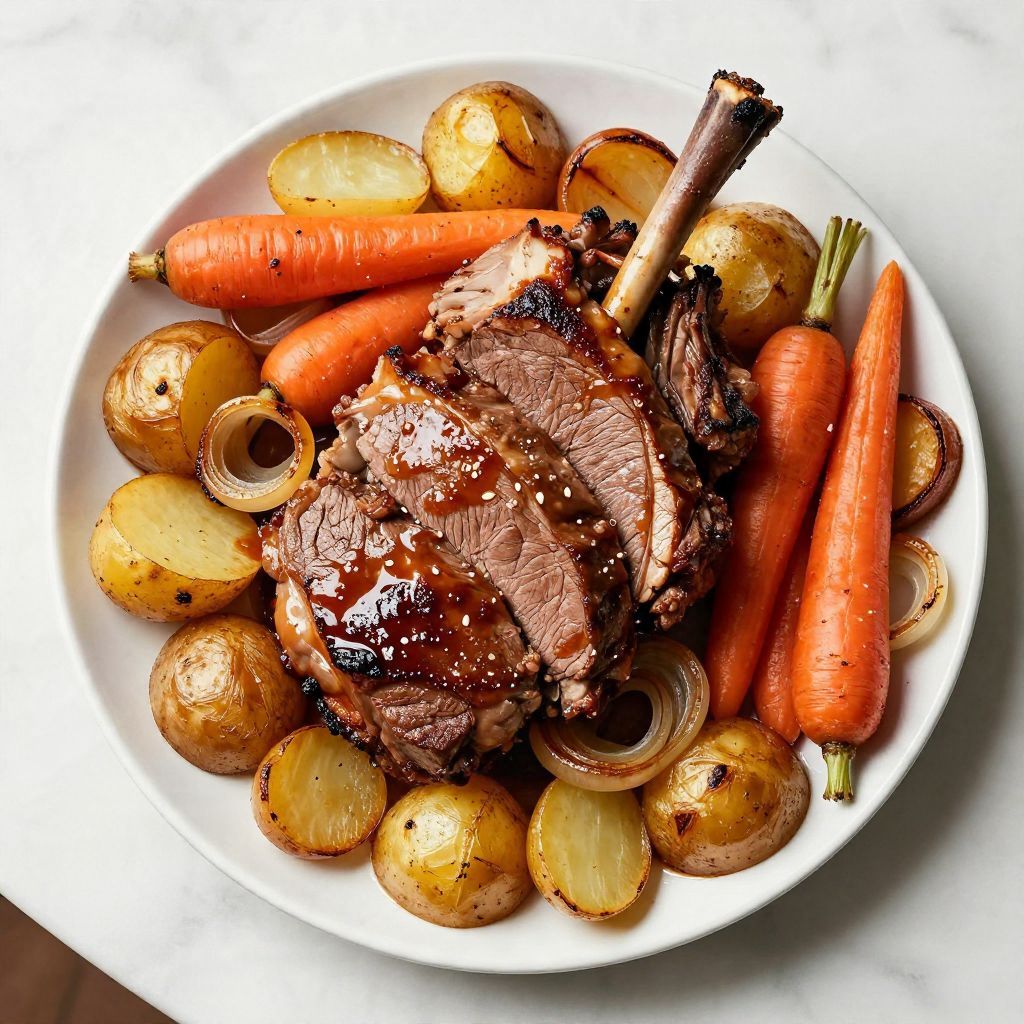
Venison Neck Roast
Ingredients
Equipment
Method
- Trim excess fat from the venison neck roast.
- In a bowl, combine salt, black pepper, garlic powder, onion powder, thyme, and rosemary. Rub this mixture generously over the roast.
- Heat olive oil in a large roasting pan over medium-high heat. Sear the roast on all sides until browned, about 3-4 minutes per side.
- Remove the roast and add chopped carrots, quartered onions, and diced potatoes to the pan.
- Place the seared roast on top of the vegetables.
- Pour in the broth around the roast.
- Cover the pan tightly with aluminum foil. Roast in a preheated oven at 325°F (163°C) for 4-5 hours, or until the meat is tender.
- Once cooked, remove the roast from the oven and let it rest for 15-20 minutes.