
Picture this: a warm, inviting kitchen filled with the rich, earthy aroma of melting beef fat. Making your own Tallow is not just a sustainable choice; it’s also an easy way to elevate your cooking and baking. This versatile ingredient is perfect for frying, roasting, or even as a base for homemade soap. You’ll love the deep flavor it adds to your dishes, and it’s a fantastic way to utilize every part of the animal. Ready to get started? Let’s dive into the steps and ingredients you need!
Why You’ll Love This Recipe
Creating tallow at home is both rewarding and practical. It allows you to control the quality of your ingredients.
- Rich flavor that enhances any dish.
- Simple process with minimal ingredients.
- Utilizes every part of the animal, reducing waste.
- Great for frying and baking.
- Long shelf life when stored properly.
My Experience Making This Recipe
When I first tried making tallow, I was pleasantly surprised by how straightforward it was. The process felt almost meditative, and the results were incredibly satisfying.
As the fat melted slowly in the pot, the kitchen filled with an inviting aroma that had my family curious about what I was up to. Everyone gathered around, eager to taste the deliciousness that was about to unfold.
Recipe Overview
- Recipe Name: Tallow
- Servings: Varies
- Prep Time: 10 minutes
- Cook Time: 2 to 4 hours
- Total Time: 2 to 4 hours 10 minutes
- Course: Condiment
- Cuisine: American
- Calories per Serving: 115
Equipment You Will Need
- Large heavy-bottomed pot or Dutch oven
- Strainer or cheesecloth
- Glass jar or container for storage
- Wooden spoon or spatula
Ingredients for Tallow
- Beef fat (such as suet or trim) – 2 pounds
Ingredient Notes and Substitutions
- Beef fat: This is the main ingredient, providing that rich flavor. You can also use lamb fat or pork fat for different flavors.
How to Make Tallow
Step 1: Prepare the Beef Fat
Start by cutting the beef fat into small, uniform pieces. Smaller pieces melt more evenly and quickly.
Step 2: Heat the Pot
Place your large pot on the stove over low heat. Low heat ensures the fat melts gently, preventing it from burning.
Step 3: Add the Beef Fat
Add the cut beef fat to the pot. Stir occasionally to help distribute the heat evenly.
Step 4: Render the Fat
Allow the fat to cook slowly for 2 to 4 hours. You will see the fat begin to liquefy, and the solid bits will become crispy.
Step 5: Strain the Tallow
Once the fat has fully melted and the solids have separated, set up your strainer or cheesecloth over a bowl. This step is crucial to remove any impurities.
Step 6: Transfer to Storage
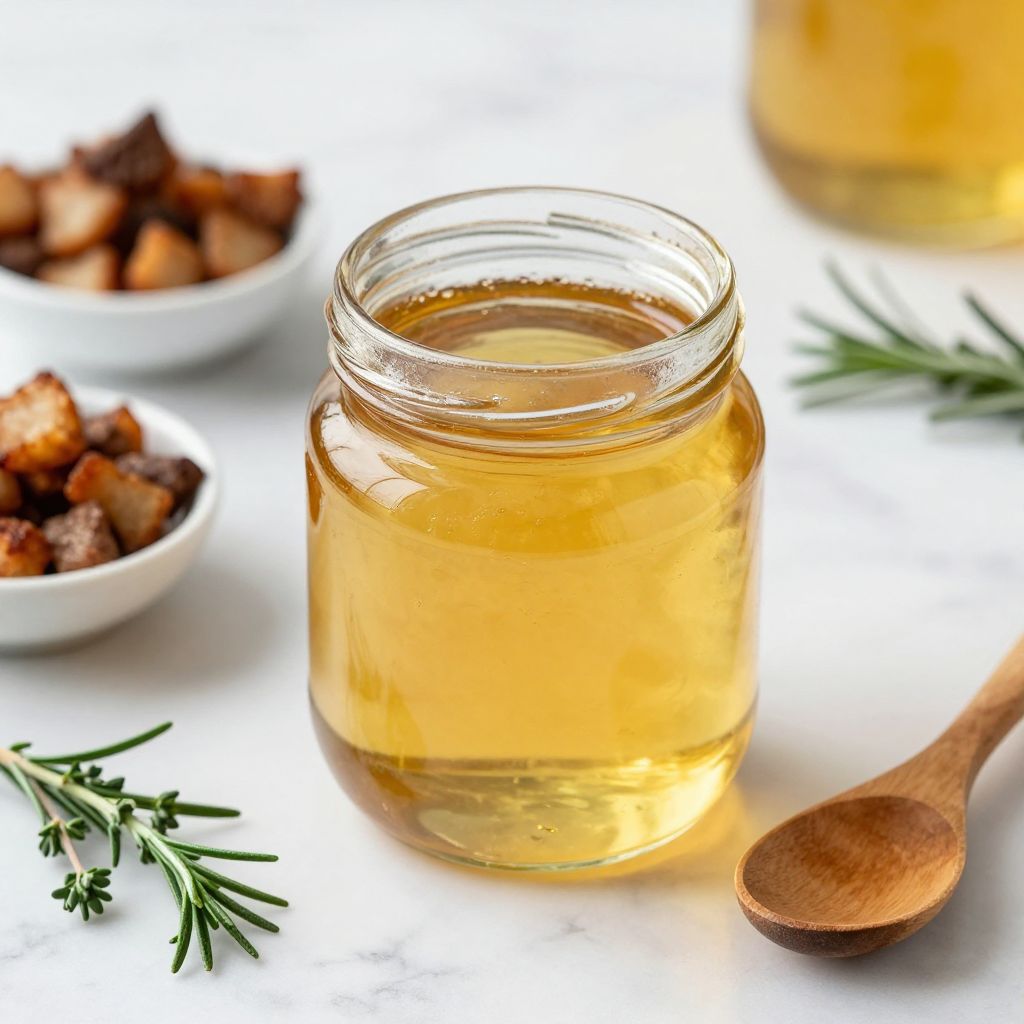
Pour the strained liquid fat into a glass jar or container. Make sure to leave any solid bits behind.
Step 7: Cool and Store
Let the tallow cool at room temperature before sealing it. Stored properly, it can last for months in the refrigerator.
Step 8: Enjoy Your Tallow
Use your homemade tallow in various recipes or as a cooking fat. The possibilities are endless!
Pro Tip: Make sure to keep the heat low while rendering to avoid burning the fat and developing off-flavors.
Tips for the Best Tallow
- Use fresh, high-quality beef fat for the best flavor.
- Cut the fat into small pieces to ensure even melting.
- Don’t rush the process; slow rendering yields the best results.
- Store in a cool, dark place to extend shelf life.
- Try using the crispy bits leftover for flavoring other dishes.
Common Mistakes to Avoid
- Using too high heat can burn the fat, leading to undesirable flavors.
- Not straining properly can leave impurities in the tallow, affecting its quality.
- Skipping the cooling step can result in a messy storage situation.
- Using old or rancid fat will ruin the flavor of your tallow.
Serving Suggestions
Homemade tallow is a versatile cooking fat that can be used in many recipes. Here are some ideas to pair it with:
- Frying potatoes for crispy French fries.
- Roasting vegetables for a rich, savory flavor.
- In baking, substitute for butter in pie crusts.
- As a base for hearty soups and stews.
- For sautéing meats and fish to enhance their flavor.
Variations to Try
- Try combining tallow with herbs for a flavored cooking fat.
- Use it in place of shortening for a more robust pie crust.
- Mix with spices to create a unique seasoning fat for cooking meats.
- Blend tallow with garlic for a savory spread.
Dietary Adaptations
- Gluten-free: Tallow is naturally gluten-free, suitable for all diets.
- Dairy-free: Ideal for those avoiding dairy, as it contains no milk products.
- Vegan/Vegetarian: Not suitable, as it is an animal product.
- Low-carb/Keto: Perfect for ketogenic diets, adding healthy fats.
Storage and Reheating
Refrigerator
Store sealed tallow in the refrigerator for up to six months.
- Keep in an airtight jar to prevent absorption of odors.
Freezer
For longer storage, freeze tallow in small portions.
- Use freezer-safe containers or bags for best results.
Reheating
Reheat tallow in a pan over low heat until melted.
- Do not microwave, as it may heat unevenly and cause splattering.
Nutrition Information
| Nutrient | Amount |
|---|---|
| Calories | 115 |
| Total Fat | 13g |
| Saturated Fat | 6g |
| Carbohydrates | 0g |
| Fiber | 0g |
| Sugar | 0g |
| Protein | 0g |
| Sodium | 0mg |
| Cholesterol | 0mg |
This nutrition information is an estimate and will vary based on the specific ingredients used.
Frequently Asked Questions
Can I use other types of fat for making tallow?
Yes, you can use lamb fat or pork fat, but the flavor will vary.
Can I make tallow ahead of time?
Absolutely! Tallow can be made in advance and stored for later use.
How should I store leftover tallow?
Store it in an airtight container in the refrigerator or freezer to keep it fresh.
Why is my tallow grainy?
A grainy texture can occur if the fat was heated too quickly or not strained properly.
How can I use tallow in baking?
Substitute tallow for butter or shortening in recipes for a rich flavor.
Final Thoughts
Making your own tallow is a wonderful way to embrace traditional cooking methods while adding rich flavor to your meals. Once you try this simple process, you may never look back.
So why not give it a try? You might just find yourself loving this versatile ingredient as much as I do. For more culinary inspiration, check out my clarified butter recipe or learn how to make chicken stock.
Tallow
Ingredients
Equipment
Method
- Cut the beef fat into small, uniform pieces.
- Place your large pot on the stove over low heat.
- Add the cut beef fat to the pot and stir occasionally.
- Allow the fat to cook slowly for 2 to 4 hours until it liquefies.
- Set up your strainer or cheesecloth over a bowl and strain the melted fat.
- Pour the strained liquid fat into a glass jar or container.
- Let the tallow cool at room temperature before sealing it.
- Store the tallow in the refrigerator.