
Picture this: a cozy kitchen filled with the warm aroma of simmering broth and tender seaweed. This Seaweed Soup is not just a dish; it’s a comforting hug in a bowl, perfect for chilly days or a soothing remedy for the soul.
This recipe is special because it combines rich, umami flavors with a light yet satisfying texture. The seaweed adds a unique taste that elevates the broth, making it an irresistible choice for both special occasions and everyday meals.
Let’s dive into the ingredients and steps to create this delightful soup.
Why You’ll Love This Recipe
This Seaweed Soup is a must-try for many reasons.
- Quick to prepare, making it perfect for busy weeknights.
- Rich in nutrients and low in calories, it’s a healthy choice.
- Versatile; you can easily customize it with your favorite proteins.
- Comforting and satisfying, it warms you from the inside out.
My Experience Making This Recipe
When I first made this Seaweed Soup, I was taken back to my childhood, watching my mother stir the pot with love. The moment I took a sip, nostalgia washed over me, and I felt a wave of warmth that only a home-cooked meal can bring.
My family gathered around the table, and each of us couldn’t help but enjoy the delicate flavors. It was a hit, with everyone asking for seconds.
Recipe Overview
- Recipe Name: Seaweed Soup
- Servings: 4
- Prep Time: 10 minutes
- Cook Time: 20 minutes
- Total Time: 30 minutes
- Course: Soup
- Cuisine: Korean
- Calories per Serving: 120
Equipment You Will Need
- Large pot
- Wooden spoon or ladle
- Measuring cups and spoons
- Knife and cutting board
Ingredients for Seaweed Soup
- Dried seaweed (wakame): 1 cup
- Beef or anchovy broth: 6 cups
- Garlic: 3 cloves, minced
- Soy sauce: 2 tablespoons
- Sesame oil: 1 tablespoon
- Green onions: 2, chopped
- Salt: to taste
- Black pepper: to taste
Ingredient Notes and Substitutions
- Dried seaweed (wakame): Adds a salty, ocean flavor; you can use fresh seaweed if available.
- Beef or anchovy broth: Provides depth; vegetable broth can be used for a vegetarian option.
- Garlic: Enhances flavor; shallots can be a substitute for a milder taste.
- Soy sauce: Adds umami; tamari works for a gluten-free version.
- Sesame oil: Gives a nutty aroma; olive oil can be used but will change the flavor profile.
How to Make Seaweed Soup
Step 1: Soak the Seaweed
Begin by soaking the dried seaweed in warm water for about 10 minutes. This rehydrates it and brings out its flavor.
Step 2: Prepare the Broth
In a large pot, combine the beef or anchovy broth and bring it to a gentle simmer. Using a good broth sets the foundation for a rich soup.
Step 3: Add Garlic
Add the minced garlic to the simmering broth. This infuses the soup with a savory aroma and depth of flavor.
Step 4: Add Seaweed
Drain the soaked seaweed and add it to the pot. This is where the magic happens, as it imparts its unique taste to the broth.
Step 5: Season the Soup
Stir in the soy sauce and sesame oil. These ingredients enhance the umami and add a delightful nuttiness.
Step 6: Simmer the Soup
Let the soup simmer for another 10 minutes, allowing all the flavors to meld together. This is crucial for a well-rounded taste.
Step 7: Add Green Onions
Just before serving, stir in the chopped green onions. They add freshness and a pop of color to the dish.
Step 8: Taste and Adjust
Finally, taste the soup and adjust the seasoning with salt and pepper as needed. This ensures every spoonful is perfect.
Pro Tip: Use high-quality broth for the best flavor; it makes all the difference!
Tips for the Best Seaweed Soup
- Soak the seaweed long enough for it to fully rehydrate.
- Use homemade broth if possible for a richer taste.
- Don’t skip the sesame oil; it adds essential flavor.
- Adjust seasonings at the end to ensure the perfect balance.
- Serve hot for the best experience; it truly enhances the flavors.
Common Mistakes to Avoid
- Not soaking the seaweed long enough; this can lead to a chewy texture.
- Using low-quality broth; it can make the soup bland.
- Skipping the garlic; it’s crucial for depth of flavor.
- Overcooking the seaweed; it can turn mushy and lose its charm.
- Not tasting before serving; seasoning is key to a delicious soup.
Serving Suggestions
This Seaweed Soup pairs wonderfully with a variety of dishes. Here are some ideas to enhance your meal.
- Serve with steamed rice for a complete meal.
- Pair with kimchi for a spicy kick.
- Enjoy alongside grilled meats for a hearty feast.
- Accompany with pickled vegetables for added crunch.
Variations to Try
- Add tofu for a vegetarian protein boost and creaminess.
- Include sliced mushrooms for an earthy flavor.
- Mix in seafood like shrimp or clams for a seafood version.
- Incorporate vegetables like spinach for added nutrition.
- Add noodles for a heartier soup experience.
Dietary Adaptations
- Gluten-free: Use tamari instead of soy sauce.
- Dairy-free: This recipe is naturally dairy-free.
- Vegan/Vegetarian: Substitute broth with vegetable broth and skip any meat.
- Low-carb/Keto: Skip rice or noodles to keep it low-carb.
Storage and Reheating
Refrigerator
Store the soup in an airtight container in the fridge for up to 3 days.
- Let it cool completely before sealing.
- Reheat gently on the stove or microwave.
Freezer
This soup freezes well for up to 2 months.
- Use freezer-safe containers to prevent freezer burn.
- Thaw overnight in the fridge before reheating.
Reheating
Reheat on the stove over low heat until warmed through.
- Add a splash of water if it thickens too much.
- Stir occasionally to ensure even heating.
Nutrition Information
| Nutrient | Amount |
|---|---|
| Calories | 120 |
| Total Fat | 4g |
| Saturated Fat | 1g |
| Carbohydrates | 15g |
| Fiber | 3g |
| Sugar | 1g |
| Protein | 6g |
| Sodium | 800mg |
| Cholesterol | 20mg |
This nutritional information is an approximation and can vary based on ingredients used.
Frequently Asked Questions
Can I substitute the dried seaweed?
Yes, fresh seaweed can be used, but it may require different cooking times.
Can I make this soup ahead of time?
Absolutely! It tastes even better the next day as flavors meld.
How should I store leftovers?
Store in the fridge in an airtight container for up to three days.
Will the soup thicken when reheated?
It may thicken slightly; just add a bit of water while reheating.
Can I add protein to the soup?
Definitely! Tofu or seafood are excellent additions for extra heartiness.
Final Thoughts
Making this Seaweed Soup is more than just a recipe; it’s about creating warm memories and nurturing your body. I hope this soup brings you as much joy as it has brought me.
So grab your ingredients and get cooking! You’ll find yourself craving this comforting dish time and again. For more delicious recipes, check out my Galbitang recipe or try some refreshing Hwachae.
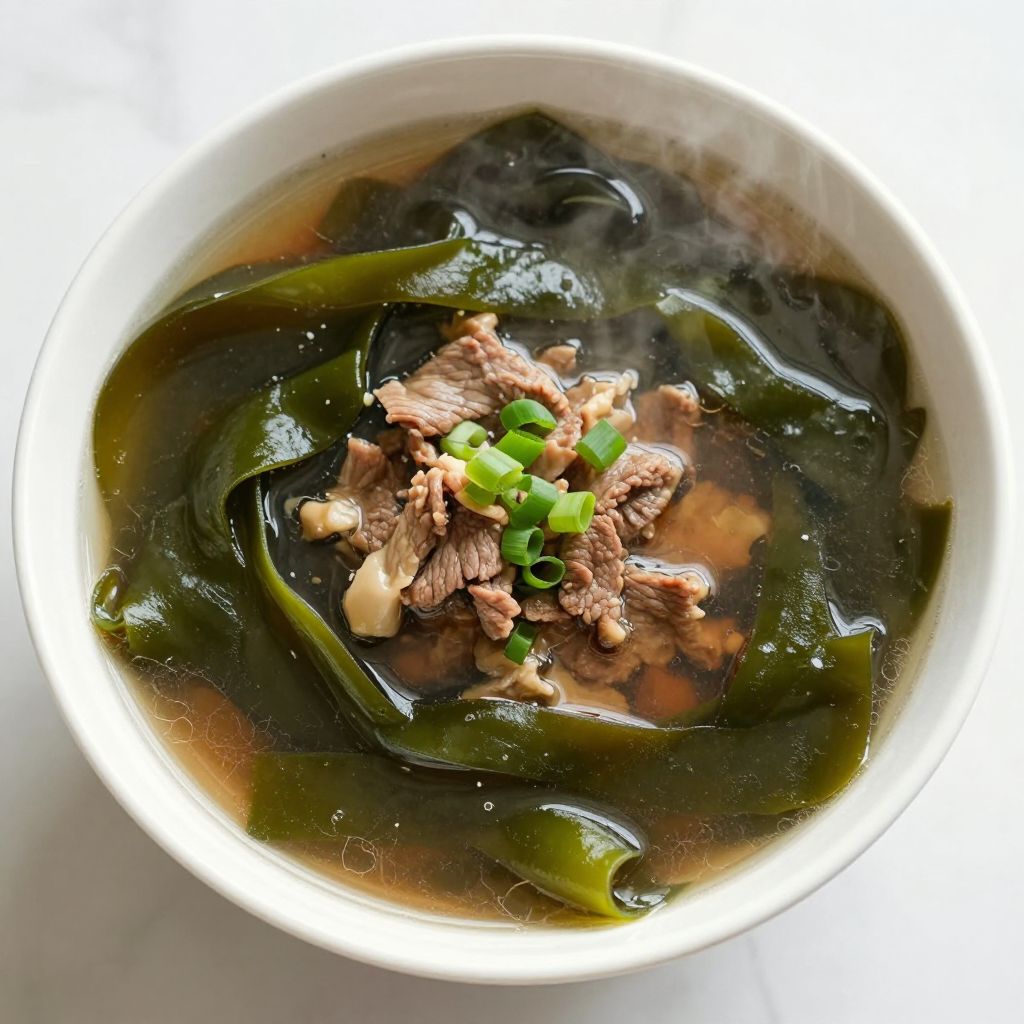
Seaweed Soup
Ingredients
Equipment
Method
- Soak the dried seaweed in warm water for about 10 minutes to rehydrate.
- In a large pot, combine the beef or anchovy broth and bring to a gentle simmer.
- Add the minced garlic to the simmering broth.
- Drain the soaked seaweed and add it to the pot.
- Stir in the soy sauce and sesame oil.
- Let the soup simmer for another 10 minutes.
- Stir in the chopped green onions just before serving.
- Taste the soup and adjust the seasoning with salt and pepper as needed.