
The moment that ruby-red tuna hits a screaming hot pan, something magical happens. That satisfying sizzle, the aroma of sesame oil filling your kitchen, and the promise of a restaurant-quality dinner in under fifteen minutes makes seared ahi tuna one of the most rewarding dishes you can master at home.
This recipe delivers what every great ahi tuna should: a deeply caramelized, peppery crust giving way to cool, buttery flesh that practically melts on your tongue. Whether you’re impressing guests or treating yourself to a weeknight indulgence, this dish punches way above its weight class in terms of effort versus payoff.
The secret lies in simplicity and technique. With just a handful of ingredients and proper pan control, you’ll create something that rivals any upscale sushi bar. Let’s walk through everything you need to know to nail this dish every single time.
Why You’ll Love This Recipe
This seared ahi tuna recipe hits all the right notes for both casual dinners and special occasions. Here’s what makes it a keeper in your recipe rotation.
- Ready in under 15 minutes from start to finish
- Only 6 main ingredients needed for stunning results
- High protein, low carb, and naturally gluten-free
- Impressive presentation that looks like it took hours
- Endlessly customizable with different crusts and sauces
My Experience Making This Recipe
I’ll be honest: the first time I attempted seared ahi tuna, I absolutely butchered it. Overcooked it to the point where it resembled canned tuna, and I nearly gave up on the whole concept.
But persistence paid off, and now this recipe has become my go-to for date nights and dinner parties. The trick, I discovered, was getting comfortable with high heat and trusting the short cook time.
The reactions I get when I slice into that perfectly seared steak never get old. Seeing those concentric rings of deep brown crust surrounding jewel-toned raw center makes all the practice worthwhile.
Recipe Overview
- Recipe Name: Seared Ahi Tuna with Sesame Crust
- Servings: 4
- Prep Time: 10 minutes
- Cook Time: 4 minutes
- Total Time: 14 minutes
- Course: Main Course or Appetizer
- Cuisine: Asian Fusion
- Calories per Serving: 285 calories
Equipment You Will Need
- Cast iron skillet or heavy stainless steel pan
- Sharp chef’s knife
- Paper towels
- Shallow dish or plate for coating
- Tongs
- Cutting board
- Small bowl for sauce mixing
Ingredients for Seared Ahi Tuna
For the Tuna
- 1 pound sushi-grade ahi tuna steaks, about 1 inch thick
- 3 tablespoons white sesame seeds
- 3 tablespoons black sesame seeds
- 1 teaspoon coarse sea salt
- 1/2 teaspoon freshly ground black pepper
- 2 tablespoons sesame oil
For the Dipping Sauce
- 1/4 cup low-sodium soy sauce
- 1 tablespoon rice vinegar
- 1 teaspoon fresh ginger, finely grated
- 1/2 teaspoon wasabi paste
- 1 teaspoon honey
Ingredient Notes and Substitutions
- Sushi-grade tuna: This designation means the fish has been flash-frozen to kill parasites, making it safe to eat rare. Never substitute regular tuna steaks for this recipe.
- Sesame seeds: The mix of black and white creates visual appeal and nutty flavor. You can use all white if black seeds are unavailable.
- Sesame oil: Provides high smoke point and complements the crust. Avocado oil works as a neutral alternative.
- Soy sauce: Adds umami to the dipping sauce. Coconut aminos make an excellent soy-free and lower-sodium swap.
- Wasabi paste: Brings heat and sinus-clearing punch. Substitute a tiny bit of horseradish if needed.
How to Make Seared Ahi Tuna
Step 1: Prepare Your Tuna Steaks
Remove the tuna from the refrigerator about 20 minutes before cooking to take the chill off. Pat the steaks completely dry with paper towels, because surface moisture is the enemy of a good sear.
Step 2: Mix the Sesame Seed Crust
Combine white and black sesame seeds on a shallow plate or dish. Add the salt and pepper, then mix everything together with your fingers until evenly distributed.
Step 3: Season and Coat the Tuna
Lightly brush each tuna steak with a thin layer of sesame oil. Press each side firmly into the sesame seed mixture, making sure to coat the edges as well for maximum crust coverage.
Step 4: Prepare the Dipping Sauce
Whisk together soy sauce, rice vinegar, grated ginger, wasabi paste, and honey in a small bowl. Set aside to let the flavors meld while you cook the tuna.
Step 5: Heat Your Pan Until Smoking
Place your cast iron skillet over high heat for at least 3 minutes. You want this pan ripping hot because the brief sear time depends entirely on intense heat to create that crust without overcooking the interior.
Step 6: Add Oil and Sear the First Side
Add the remaining sesame oil to the screaming hot pan. Immediately and carefully place the tuna steaks in the pan, then let them cook undisturbed for exactly 45 seconds to 1 minute.
Step 7: Sear the Remaining Sides
Using tongs, flip the tuna and sear for another 45 seconds to 1 minute. If your steaks are thick enough, briefly sear the edges by holding them sideways with tongs for about 15 seconds per edge.
Step 8: Rest and Slice
Transfer the seared tuna to a cutting board and let it rest for 1 minute. Using a very sharp knife, slice against the grain into 1/4 inch thick pieces to reveal that beautiful rare center.
Step 9: Plate and Serve
Arrange the sliced tuna on plates in a fanned pattern. Serve immediately with the dipping sauce on the side and garnish with sliced scallions if desired.
Pro Tip: Your knife matters more than you think here. A dull blade will tear the delicate tuna flesh and ruin your presentation, so sharpen up before slicing.
Tips for the Best Seared Ahi Tuna
- Buy the freshest sushi-grade tuna you can find and use it the same day for optimal flavor and texture.
- Drying the fish thoroughly before coating ensures the sesame seeds adhere properly and the crust stays crispy.
- Resist the urge to move or peek at the tuna while searing. Let the crust develop undisturbed.
- Use a timer if you’re nervous about overcooking. Those 45 seconds fly by faster than you’d expect.
- A hot pan is non-negotiable. If you don’t see smoke, you’re not ready to cook.
- Slice with a single drawing motion rather than sawing back and forth to keep slices clean.
Common Mistakes to Avoid
- Overcooking the tuna: This transforms silky, delicate flesh into dry, chewy disappointment. Keep it rare.
- Skipping the drying step: Wet tuna steams instead of sears, leaving you with a soggy, pale exterior.
- Using a cold pan: Without screaming hot temperatures, you’ll cook the interior before the crust forms.
- Crowding the pan: Adding too many steaks at once drops the temperature drastically. Work in batches if needed.
- Buying non-sushi-grade fish: Regular tuna isn’t safe to eat rare, and this dish requires a rare center to shine.
Serving Suggestions
Seared ahi tuna works brilliantly as both a main course and an elegant appetizer. Here are some ways to build a complete meal around it.
- Atop a bed of mixed greens with sesame ginger vinaigrette
- Alongside steamed jasmine rice and sauteed bok choy
- Over chilled soba noodles with cucumber and edamame
- With crispy wonton chips for an upscale appetizer presentation
- Paired with mango avocado salsa and coconut rice
Variations to Try
- Blackened Cajun Crust: Replace sesame seeds with Cajun seasoning for a spicy Southern twist with bold, smoky flavors.
- Everything Bagel Crust: Use everything bagel seasoning for an unexpected but delicious fusion that adds garlic and onion notes.
- Panko and Nori Crust: Mix crushed nori sheets with panko breadcrumbs for extra crunch and oceanic depth.
- Citrus Ponzu Version: Swap the soy dipping sauce for yuzu ponzu and add citrus zest to the crust for brightness.
- Spicy Sriracha Mayo: Serve with a drizzle of sriracha mayo for creamy heat that complements the cool tuna beautifully.
Dietary Adaptations
- Gluten-free: Use tamari or coconut aminos instead of soy sauce, and this recipe is naturally gluten-free.
- Dairy-free: This recipe contains no dairy as written, so you’re already set.
- Low-carb and Keto: Skip the honey in the sauce or use a sugar-free alternative to keep carbs minimal.
- Whole30: Use coconut aminos and omit the honey for a fully compliant version.
Storage and Reheating
Refrigerator
Leftover seared ahi tuna stores reasonably well when properly handled. Keep in mind that the texture changes once refrigerated.
- Store in an airtight container for up to 2 days
- Keep sliced tuna in a single layer to prevent sticking
- Best enjoyed cold in salads or rice bowls
Freezer
Freezing cooked seared ahi tuna is not recommended. The texture degrades significantly upon thawing.
- Raw sushi-grade tuna can be frozen for up to 3 months
- Thaw overnight in the refrigerator before cooking
Reheating
Honestly, reheating seared ahi tuna defeats the purpose of keeping it rare. If you must warm it, proceed with extreme caution.
- A quick 10 second flash in a hot pan works if absolutely necessary
- Better option: enjoy cold over salad or in sushi bowls
- Microwave reheating will destroy the texture completely
Nutrition Information
| Nutrient | Amount |
|---|---|
| Calories | 285 |
| Total Fat | 14g |
| Saturated Fat | 2g |
| Carbohydrates | 6g |
| Fiber | 1g |
| Sugar | 2g |
| Protein | 32g |
| Sodium | 580mg |
| Cholesterol | 51mg |
Nutritional values are estimates based on standard ingredients and may vary based on specific products used and portion sizes.
Frequently Asked Questions
Can I use frozen tuna for this recipe?
Yes, as long as it’s labeled sushi-grade. Thaw it completely in the refrigerator overnight and pat it very dry before coating and searing.
How do I know when the tuna is done?
For rare, aim for an internal temperature of 115F at the very center. The exterior should be deeply browned while the interior stays cool and red.
Can I make this ahead for a dinner party?
You can prep the crust mixture and sauce hours ahead, but sear the tuna immediately before serving. This dish truly shines when freshly made.
Why did my sesame seeds fall off during cooking?
The tuna surface was likely too wet, or you didn’t press the seeds firmly enough. Make sure to dry thoroughly and really push those seeds into the flesh.
What if I accidentally overcook my tuna?
It happens to everyone at least once. While not ideal, overcooked ahi still tastes good chopped into a salad or mixed into sushi rice for poke bowls.
Final Thoughts
Mastering seared ahi tuna feels like unlocking a culinary superpower. With minimal ingredients and just a few minutes of actual cooking, you create something that looks and tastes like it belongs in a high-end restaurant.
Give this recipe a try for your next dinner party or weeknight treat. Once you nail that perfect sear and slice into the gorgeous pink center, you’ll understand why this dish has earned its place in kitchens around the world.
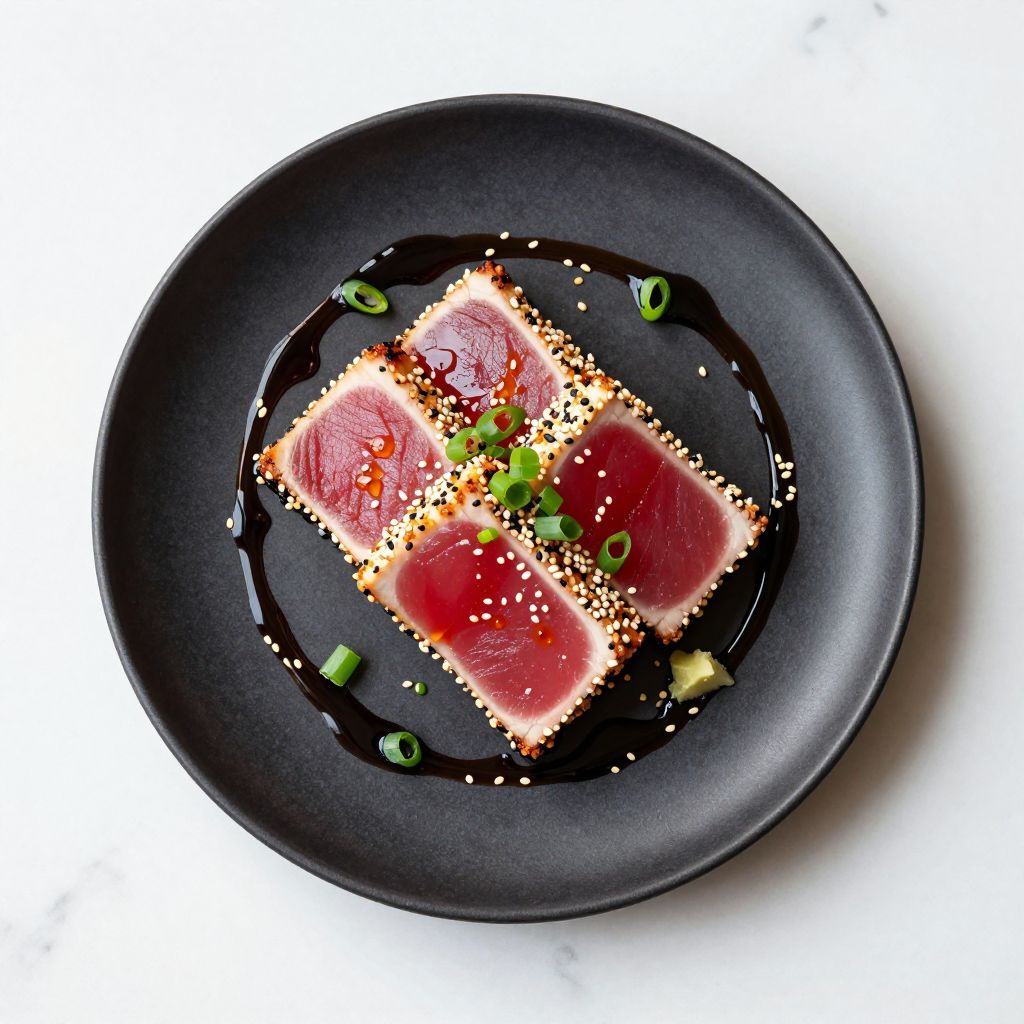
Seared Ahi Tuna with Sesame Crust
Ingredients
Equipment
Method
- Remove the tuna from the refrigerator about 20 minutes before cooking to take the chill off. Pat the steaks completely dry with paper towels, because surface moisture is the enemy of a good sear.
- Combine white and black sesame seeds on a shallow plate or dish. Add the salt and pepper, then mix everything together with your fingers until evenly distributed.
- Lightly brush each tuna steak with a thin layer of sesame oil. Press each side firmly into the sesame seed mixture, making sure to coat the edges as well for maximum crust coverage.
- Whisk together soy sauce, rice vinegar, grated ginger, wasabi paste, and honey in a small bowl. Set aside to let the flavors meld while you cook the tuna.
- Place your cast iron skillet over high heat for at least 3 minutes. You want this pan ripping hot because the brief sear time depends entirely on intense heat to create that crust without overcooking the interior.
- Add the remaining sesame oil to the screaming hot pan. Immediately and carefully place the tuna steaks in the pan, then let them cook undisturbed for exactly 45 seconds to 1 minute.
- Using tongs, flip the tuna and sear for another 45 seconds to 1 minute. If your steaks are thick enough, briefly sear the edges by holding them sideways with tongs for about 15 seconds per edge.
- Transfer the seared tuna to a cutting board and let it rest for 1 minute. Using a very sharp knife, slice against the grain into 1/4 inch thick pieces to reveal that beautiful rare center.
- Arrange the sliced tuna on plates in a fanned pattern. Serve immediately with the dipping sauce on the side and garnish with sliced scallions if desired.