
There’s something almost magical about the moment cabbage hits a hot pan and the kitchen fills with that sweet, caramelized aroma. Sauteed cabbage transformed my weeknight dinners from rushed and forgettable to genuinely delicious, and it can do the same for yours.
This recipe delivers crispy-tender cabbage with deep, complex flavors in under 20 minutes, making it perfect for busy cooks who refuse to sacrifice taste. The magic happens when you let the cabbage develop a slight char, which brings out natural sweetness and adds layers of savory depth that you simply can’t get from raw or boiled versions.
Why You’ll Love This Recipe
Sauteed cabbage is the kind of side dish that quietly becomes a household favorite because it checks every box.
- Ready in 15 minutes, with minimal hands-on time for busy weeknights
- Naturally gluten-free, vegan, and keto-friendly with zero modifications needed
- Works as a side dish, salad base, taco topping, or grain bowl component
- Uses one budget-friendly vegetable that stays fresh for weeks in your fridge
- Builds deep caramelized flavors through simple technique rather than expensive ingredients
My Experience Making This Recipe
I first made this when I had half a head of cabbage sitting in my crisper drawer and needed something fast. I chopped it up, threw it in a hot skillet with butter and garlic, and about ten minutes later I had something so good I made it three more times that week.
The first time my partner tried it, he was shocked that cabbage could taste this good. He actually asked for seconds, which in our house means the dish has officially earned its place in the regular rotation.
What keeps me coming back is how the flavors change depending on what I add. Sometimes it’s just garlic and butter, sometimes I add apple cider vinegar for brightness, and sometimes I finish it with a splash of soy sauce for umami depth.
Recipe Overview
- Recipe Name: Sauteed Cabbage
- Servings: 4 servings
- Prep Time: 10 minutes
- Cook Time: 15 minutes
- Total Time: 25 minutes
- Course: Side Dish
- Cuisine: American
- Calories per Serving: 120
Equipment You Will Need
- Large skillet or wide saucepan (12-inch works best)
- Cutting board
- Sharp chef’s knife
- Wooden spoon or silicone spatula
- Measuring spoons
- Colander or fine-mesh strainer (optional, for washing cabbage)
Ingredients for Sauteed Cabbage
- 1 medium head green cabbage, about 1.5 pounds, cored and thinly sliced
- 3 tablespoons butter, unsalted
- 1 medium yellow onion, thinly sliced
- 4 cloves garlic, minced
- 1 teaspoon kosher salt
- 1/2 teaspoon black pepper
- 2 tablespoons apple cider vinegar
- 1 tablespoon soy sauce or tamari
- Optional: 1/4 teaspoon caraway seeds for earthier flavor
Ingredient Notes and Substitutions
- Green cabbage is mild and tender, making it ideal for sauteing. Red cabbage works but takes slightly longer to soften; use napa cabbage for a faster-cooking, more delicate result.
- Butter adds richness and helps develop that caramelized flavor. Substitute olive oil for a lighter touch, though you’ll lose some depth; ghee works beautifully for nuttier complexity.
- Apple cider vinegar brightens the dish and cuts through the richness. White vinegar, rice vinegar, or white wine vinegar all work; adjust quantity based on how acidic your cabbage needs to be.
- Soy sauce builds umami depth that makes the cabbage taste more complex. Tamari, coconut aminos, or even a splash of Worcestershire sauce work as replacements.
- Garlic brings savory punch and natural sweetness when caramelized. Shallots or leeks can replace garlic for a milder, more refined flavor profile.
How to Make Sauteed Cabbage
Step 1: Prep Your Cabbage
Wash the cabbage under cool running water and pat it dry with a clean kitchen towel or paper towels. Moisture on the surface prevents proper caramelization, so make sure it’s genuinely dry before moving forward.
Step 2: Slice the Cabbage Thinly
Place the cabbage cut-side down on your cutting board and remove the core by making angled cuts around it with your knife. Slice the cabbage into thin ribbons, about 1/4 inch thick, which helps it cook quickly and evenly while maximizing surface area for caramelization.
Step 3: Slice the Onion
Cut your onion in half lengthwise, then slice it into thin half-moons about 1/4 inch wide. Onions cooked alongside cabbage add natural sweetness and develop golden caramelized edges that complement the cabbage beautifully.
Step 4: Heat Your Skillet
Place your large skillet over medium-high heat and let it warm for about one minute. You want the pan hot enough that butter sizzles immediately when added, which signals proper temperature for caramelization.
Step 5: Melt Butter and Cook Onion
Add the butter to your hot skillet and let it melt completely, then add the sliced onion with a pinch of salt. Cook for about 3 to 4 minutes, stirring occasionally, until the onion softens and turns golden at the edges.
Step 6: Add Garlic and Cook Briefly
Stir in your minced garlic and cook for about 30 seconds until fragrant, but don’t let it brown or it will taste bitter. You’re looking for that raw garlic smell to transform into something warm and toasted.
Step 7: Add Cabbage and Season
Add all your sliced cabbage to the skillet along with the kosher salt and black pepper, then stir well to combine with the onion and garlic. The cabbage will look like an enormous pile at first, but it wilts down significantly as it cooks.
Step 8: Saute and Let It Caramelize
Stir the cabbage occasionally but not constantly, letting it sit for 1 to 2 minutes between stirs so it develops golden, slightly charred edges. Cook for 8 to 10 minutes total until the cabbage is tender but still has a slight bite, and most pieces have some golden-brown color.
Step 9: Finish with Vinegar and Soy Sauce
Add the apple cider vinegar and soy sauce, stirring well to coat everything evenly. Cook for another 1 to 2 minutes so the flavors meld and any excess liquid reduces slightly.
Step 10: Taste and Adjust Seasoning
Taste your sauteed cabbage and add more salt, pepper, or vinegar if needed based on your preferences. Some people love extra acidity, while others prefer to keep it mild and savory.
Pro Tip: Don’t stir constantly. Let each batch of cabbage sit untouched for a minute so it develops that caramelized, slightly crispy texture that makes this dish special.
Tips for the Best Sauteed Cabbage
- Slice your cabbage as thin as you can manage. Thicker pieces take longer to cook and won’t develop that tender-crispy texture you’re after.
- Use a large skillet so the cabbage isn’t crowded. A 12-inch pan lets heat reach every piece instead of steaming them.
- Keep your heat at medium-high throughout cooking. Too low and you won’t get caramelization; too high and the outside burns before the inside softens.
- Don’t wash away all the natural cabbage flavor by over-vinegaring. Start with the amount called for, then add more only if it needs brightness.
- Make this dish just before serving for the best texture. It keeps its crispness for about 20 minutes but gets softer if it sits too long.
- Brown your onions properly before adding cabbage. Those golden, caramelized bits transfer flavor into the entire dish and add visual appeal.
Common Mistakes to Avoid
- Wet cabbage prevents caramelization and causes steaming instead of sauteing. Pat your cabbage completely dry after washing to ensure proper browning.
- Overcrowding the pan drops the temperature and creates steam that softens the cabbage rather than crisping it. Use a large skillet and cook in batches if needed.
- Stirring constantly keeps the cabbage from developing those golden, caramelized edges. Let it sit for 1 to 2 minutes between stirs to build flavor and texture.
- Adding cabbage before the onion is properly caramelized means your base flavor never gets built. Give the onion its full cooking time before moving forward.
- Cooking on too low heat extends the time dramatically and prevents proper caramelization. Medium-high heat is your friend here.
Serving Suggestions
Sauteed cabbage works as a flexible side dish that pairs with almost anything in your dinner lineup. It’s hearty enough to feel like a real component of the meal, not an afterthought.
- Serve alongside grilled or roasted chicken, pork chops, or baked salmon for a complete dinner plate
- Top grain bowls with sauteed cabbage for added texture and volume without extra calories
- Use it as a taco filling or taco topping for crunch and depth instead of plain shredded cabbage
- Pair with roasted potatoes and a protein for a simple, cozy weeknight meal
- Layer it in sandwiches or wraps to add warmth, flavor, and nutrition beyond cold vegetables
Variations to Try
- Bacon and Cheddar: Cook 3 to 4 strips of bacon until crispy, crumble it, and stir it in at the end along with a handful of sharp cheddar cheese for richness. The smoky bacon complements the caramelized cabbage perfectly.
- Asian-Inspired: Use sesame oil instead of butter, add fresh ginger and a bit more soy sauce, then finish with sesame seeds and chopped scallions. This version tastes bright and aromatic rather than savory-rich.
- Caraway and Apple: Add 1/2 teaspoon caraway seeds and one small diced apple along with the cabbage for an Eastern European-inspired dish with sweet-spice notes.
- Spicy Kick: Add 1/4 teaspoon red pepper flakes along with the garlic for heat that builds subtly throughout the dish without overpowering other flavors.
- Creamy Version: Finish with a splash of heavy cream or sour cream stirred in at the end for a richer, more luxurious texture and flavor profile.
Dietary Adaptations
- Gluten-Free: This recipe is naturally gluten-free, but use tamari or certified gluten-free soy sauce if you’re avoiding gluten entirely.
- Dairy-Free: Substitute olive oil or ghee for the butter without any flavor loss, though you’ll have a lighter rather than rich finish.
- Vegan: Replace butter with olive oil and use soy sauce or tamari, which is already vegan, and you have a completely plant-based side dish.
- Low-Carb or Keto: This recipe is already low in carbs and fits perfectly into keto diets, so no modifications are necessary at all.
Storage and Reheating
Refrigerator
Store leftover sauteed cabbage in an airtight container in your refrigerator for up to four days. The flavors actually deepen slightly as it sits, making it even better the next day.
- Cool the cabbage completely before transferring to your container to prevent excess condensation
- Store separately from any wet sauces or toppings that might make it soggy
Freezer
Sauteed cabbage freezes well for up to three months if stored properly. The texture softens slightly after thawing, but the flavor remains excellent.
- Cool completely before freezing to prevent ice crystals
- Use a freezer-safe container or bag, removing as much air as possible
- Thaw in the refrigerator overnight before reheating
Reheating
Reheat your sauteed cabbage gently to preserve texture and flavor. Microwave reheating works but can dry it out slightly.
- Stovetop method: Warm in a skillet over medium heat with a splash of water or broth, stirring occasionally, for 3 to 5 minutes
- Microwave method: Place in a microwave-safe bowl, cover loosely, and heat in 1-minute intervals, stirring between each, until warmed through
Nutrition Information
| Nutrient | Amount |
|---|---|
| Calories | 120 |
| Total Fat | 8g |
| Saturated Fat | 5g |
| Carbohydrates | 11g |
| Fiber | 2g |
| Sugar | 6g |
| Protein | 2g |
| Sodium | 480mg |
| Cholesterol | 20mg |
These values are calculated based on the ingredients listed and assume four servings with no additional toppings or modifications.
Frequently Asked Questions
Can I make this recipe with red cabbage instead of green?
Red cabbage works beautifully but takes about 2 to 3 minutes longer to soften completely. The color deepens when you add vinegar, which is actually a nice visual touch.
How far ahead can I prep the cabbage?
You can slice the cabbage and store it in an airtight container in your fridge for up to three days, but it will lose some crispness and moisture. Slice it the morning of or a few hours before cooking for the best texture.
What if my cabbage comes out too soft or mushy?
You’re probably cooking it too long or on too high heat, which breaks down the cell structure faster than intended. Next time, cook for 8 to 10 minutes on medium-high heat and taste frequently to catch it at the right doneness.
Can I make this recipe without vinegar?
Yes, you can skip the vinegar entirely and finish with just salt and pepper, though you’ll lose some brightness. If you want acidity without vinegar, try a squeeze of fresh lemon juice instead.
Is this recipe good cold as a slaw or salad base?
Sauteed cabbage is best served warm for maximum flavor and texture, but it works as a warm slaw or salad ingredient once cooled. The caramelized edges soften more as it cools, so it won’t have quite the same crispness.
Can I cook this in a Dutch oven or smaller pan?
A smaller pan will work but the cabbage will cook more slowly because it’s crowded and steam builds up. You’ll need to stir more frequently and watch carefully to prevent burning on the bottom.
Final Thoughts
Sauteed cabbage proved to me that simplicity and technique trump fancy ingredients every time. This recipe shows what happens when you respect basic ingredients and treat them with the attention they deserve.
Make this dish this week and watch it become a regular part of your cooking. You’ll find yourself reaching for cabbage more often because you now know exactly how to make it taste incredible.
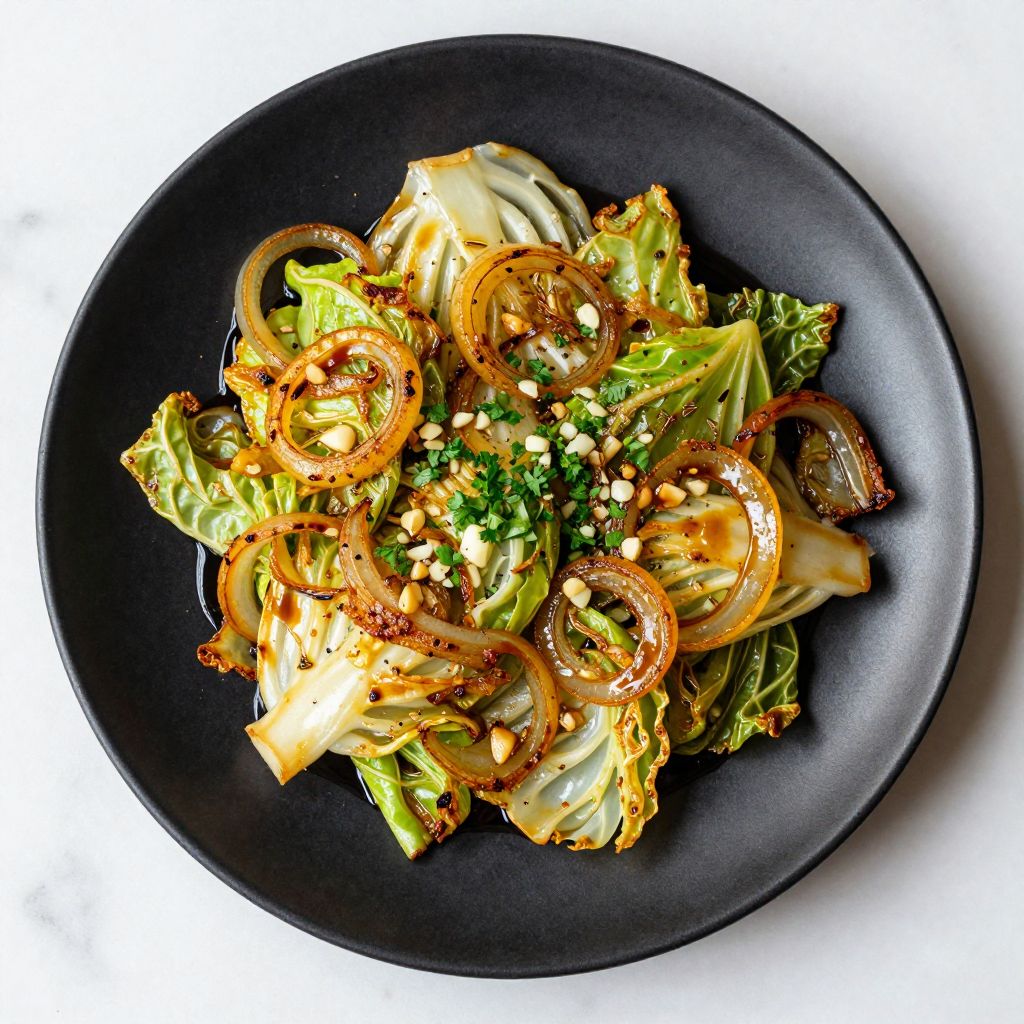
Sauteed Cabbage
Ingredients
Equipment
Method
- Wash the cabbage under cool running water and pat it dry with a clean kitchen towel or paper towels. Moisture on the surface prevents proper caramelization, so make sure it's genuinely dry before moving forward.
- Place the cabbage cut-side down on your cutting board and remove the core by making angled cuts around it with your knife. Slice the cabbage into thin ribbons, about 1/4 inch thick, which helps it cook quickly and evenly while maximizing surface area for caramelization.
- Cut your onion in half lengthwise, then slice it into thin half-moons about 1/4 inch wide.
- Place your large skillet over medium-high heat and let it warm for about one minute. You want the pan hot enough that butter sizzles immediately when added.
- Add the butter to your hot skillet and let it melt completely, then add the sliced onion with a pinch of salt. Cook for about 3 to 4 minutes, stirring occasionally, until the onion softens and turns golden at the edges.
- Stir in your minced garlic and cook for about 30 seconds until fragrant, but don't let it brown or it will taste bitter.
- Add all your sliced cabbage to the skillet along with the kosher salt and black pepper, then stir well to combine with the onion and garlic.
- Stir the cabbage occasionally but not constantly, letting it sit for 1 to 2 minutes between stirs so it develops golden, slightly charred edges. Cook for 8 to 10 minutes total until the cabbage is tender but still has a slight bite, and most pieces have some golden-brown color.
- Add the apple cider vinegar and soy sauce, stirring well to coat everything evenly. Cook for another 1 to 2 minutes so the flavors meld and any excess liquid reduces slightly.
- Taste your sauteed cabbage and add more salt, pepper, or vinegar if needed based on your preferences.