
Picture this: the smell of freshly baked bread wafting through your kitchen, crisp crust crackling under your fingers as you slice into it. The Rye Sourdough Recipe is a baking adventure that combines deep, earthy flavors with a delightful tang, making it a standout at any table. This bread features a chewy texture that keeps you coming back for more, and it’s surprisingly simple to make, even for those who might shy away from sourdough. Let’s dive into the ingredients and get started on this delicious journey!
Why You’ll Love This Recipe
This recipe is a delightful twist on traditional sourdough.
- Rich, nutty flavor from the rye flour.
- Chewy texture that holds up well to toppings.
- Easy to follow, even for beginners.
- Versatile and perfect for sandwiches or toast.
- Uses a natural sourdough starter for authentic taste.
My Experience Making This Recipe
I couldn’t wait to smell that distinctive aroma of rye bread baking in the oven. The first time I made this, my family couldn’t resist stealing slices as soon as it was cool enough to cut.
Each bite was a blend of savory and slightly sweet, and the tangy flavor was a pleasant surprise. Watching the dough rise and transform was incredibly satisfying.
Recipe Overview
- Recipe Name: Rye Sourdough Recipe
- Servings: 12
- Prep Time: 30 minutes
- Cook Time: 45 minutes
- Total Time: 12 hours (includes rising time)
- Course: Bread
- Cuisine: Artisan
- Calories per Serving: 180
Equipment You Will Need
- Large mixing bowl
- Wooden spoon or dough whisk
- Measuring cups and spoons
- Kitchen scale (optional but helpful)
- Proofing basket or bowl
- Sharp knife or bread lame for scoring
- Baking stone or baking sheet
- Oven
Ingredients for Rye Sourdough Recipe
- 500g rye flour – for a rich, hearty flavor.
- 300g all-purpose flour – to balance the density of rye.
- 700ml water – helps create the right dough consistency.
- 200g active sourdough starter – for natural fermentation and flavor.
- 10g salt – enhances flavor and strengthens gluten.
Ingredient Notes and Substitutions
- Rye flour: Adds unique flavor and color; white flour can be used as a substitute.
- Active sourdough starter: Essential for fermentation; a store-bought starter can work in a pinch.
- Salt: Improves taste and texture; sea salt or kosher salt are great alternatives.
How to Make Rye Sourdough Recipe
Step 1: Prepare the Dough
In a large mixing bowl, combine the rye flour and all-purpose flour. This will give the bread a balanced flavor and texture.
Step 2: Mix the Ingredients
Add the active sourdough starter and water to the flour mixture. Stir until no dry flour remains, ensuring everything is well combined.
Step 3: Autolyse
Let the dough rest for about 30 minutes. This process allows the flour to absorb water, enhancing gluten development.
Step 4: Add Salt
After the autolyse, sprinkle the salt over the dough and mix it in thoroughly. Salt strengthens the dough and helps control fermentation.
Step 5: Bulk Fermentation
Cover the bowl with a damp cloth and let the dough rise at room temperature for about 4-6 hours. This step develops flavor and texture.
Step 6: Stretch and Fold
Every hour during the bulk fermentation, stretch and fold the dough. This action helps build strength without needing to knead.
Step 7: Shape the Dough
After bulk fermentation, turn the dough onto a floured surface and shape it into a round loaf. This helps to create surface tension, which is crucial for a good rise.
Step 8: Final Proof
Place the shaped dough into a proofing basket and cover it. Let it rise for another 2-3 hours at room temperature or overnight in the fridge for enhanced flavor.
Pro Tip: For the best crust, place a pan with water in the oven while the bread bakes for added steam.
Tips for the Best Rye Sourdough Recipe
- Use a kitchen scale for accuracy in measuring ingredients.
- Refresh your sourdough starter the day before for maximum activity.
- Keep the dough covered to prevent it from drying out during fermentation.
- Experiment with different rye percentages for varied flavors.
- Score the loaf just before baking to control how it expands in the oven.
Common Mistakes to Avoid
- Skipping the autolyse: It reduces flavor and affects texture.
- Not using enough water: Rye flour absorbs more water than wheat flour.
- Over-proofing the dough: It can cause the bread to collapse.
- Not preheating the oven: A hot oven is key for a good rise.
Serving Suggestions
This rye sourdough is perfect for hearty meals or snacks. Pair it with butter, cheese, or smoked meats.
- Spread with cream cheese and smoked salmon.
- Serve alongside a rich soup.
- Pair with pickles for a classic deli experience.
- Top with avocado and a sprinkle of salt.
Variations to Try
- Add seeds such as caraway or sunflower for extra texture and flavor.
- Incorporate dried fruits like raisins for a sweet twist.
- Mix in whole grains for improved nutrition.
- Try adding herbs for a fragrant variation.
Dietary Adaptations
- Gluten-free: Substitute gluten-free flour blend, but expect a different texture.
- Dairy-free: This recipe is naturally dairy-free.
- Vegan: No animal products are used, making it suitable for vegans.
- Low-carb/keto: Rye flour is higher in carbs; consider almond flour instead.
Storage and Reheating
Refrigerator
Store the bread wrapped in a cloth or paper bag for up to one week.
- Wrap tightly to keep it fresh.
- Slice before storing for easy access.
Freezer
For longer storage, freeze slices in a zip-top bag for up to three months.
- Allow slices to cool completely before freezing.
- Separate slices with parchment paper to prevent sticking.
Reheating
Thaw slices at room temperature or toast them directly from the freezer.
- For best results, use a toaster or oven.
- A few minutes in the oven will revive the crust.
Nutrition Information
| Nutrient | Amount |
|---|---|
| Calories | 180 |
| Total Fat | 1g |
| Saturated Fat | 0g |
| Carbohydrates | 38g |
| Fiber | 5g |
| Sugar | 1g |
| Protein | 6g |
| Sodium | 200mg |
| Cholesterol | 0mg |
This nutritional information may vary based on specific ingredients and brands used.
Frequently Asked Questions
Can I use whole rye flour instead of light rye flour?
Absolutely! Whole rye flour will yield a denser bread with a stronger flavor.
How can I tell if my sourdough starter is active?
Your starter should be bubbly and have doubled in size within a few hours after feeding.
Can I prepare the dough ahead of time?
Yes, you can shape it and let it rise in the fridge overnight for a more developed flavor.
Why did my bread not rise?
This could be due to an inactive starter or over-proofing the dough.
Is it possible to make this without a sourdough starter?
You can use commercial yeast, but the flavor will not be as complex or tangy.
Final Thoughts
Making your own rye sourdough is a rewarding experience that fills your home with warmth and wonderful aromas. Give this recipe a try, and you might just find your new favorite bread.
If you enjoyed this recipe, explore more delicious ideas like the King Arthur Sourdough Recipe or check out the Sourdough Discard Bagel Recipe for more sourdough inspiration.
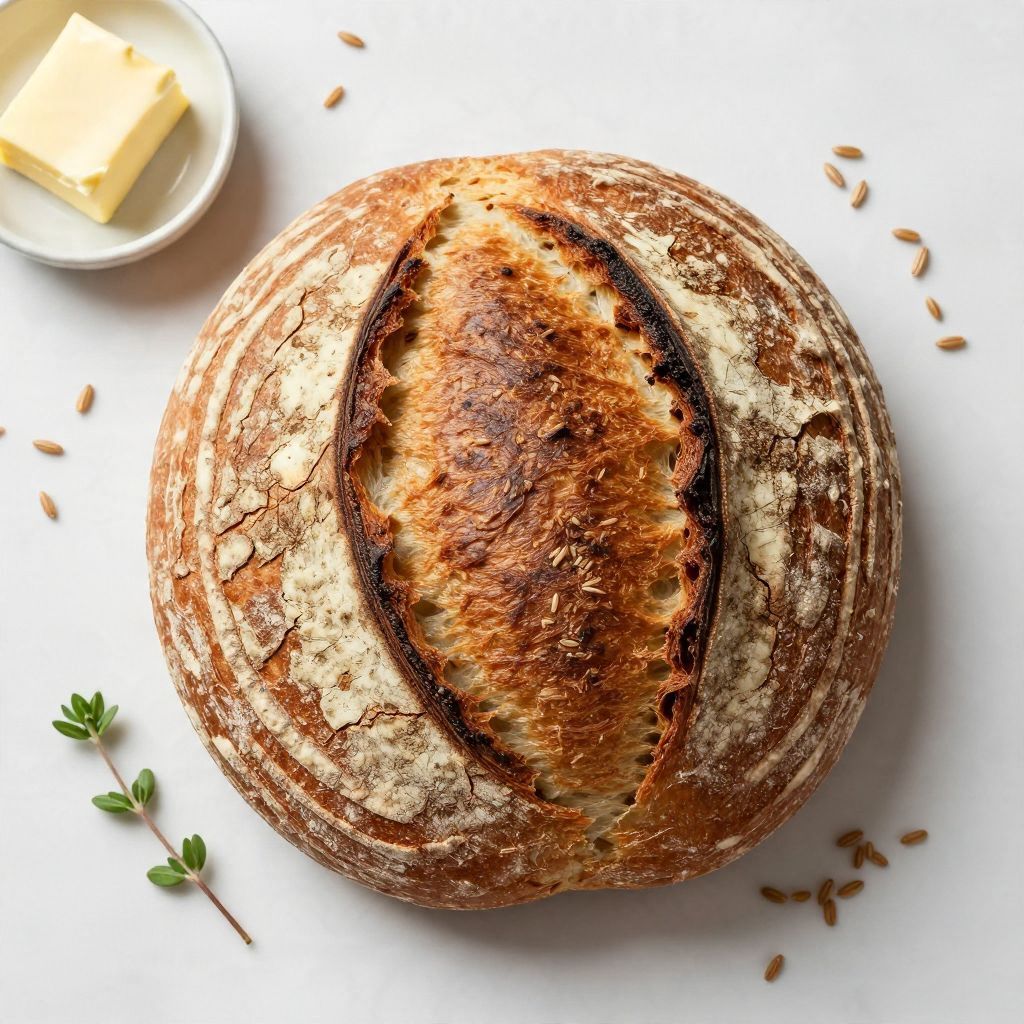
Rye Sourdough Recipe
Ingredients
Equipment
Method
- In a large mixing bowl, combine the rye flour and all-purpose flour.
- Add the active sourdough starter and water to the flour mixture.
- Stir until no dry flour remains.
- Let the dough rest for about 30 minutes.
- Sprinkle the salt over the dough and mix it in thoroughly.
- Cover the bowl with a damp cloth and let the dough rise at room temperature for about 4-6 hours.
- Every hour during the bulk fermentation, stretch and fold the dough.
- Turn the dough onto a floured surface and shape it into a round loaf.
- Place the shaped dough into a proofing basket and cover it.
- Let it rise for another 2-3 hours at room temperature or overnight in the fridge.
- Preheat the oven with a baking stone or sheet inside.
- Score the loaf just before baking to control how it expands in the oven.
- Bake the bread in the preheated oven for approximately 45 minutes.