
Imagine the warm aroma of freshly baked bread filling your kitchen, a comforting embrace that invites everyone to gather around the table. This Homemade Artisan Bread is not just any loaf; it’s a delightful combination of crispy crust and soft, chewy interior that’s perfect for sandwiches or simply slathered with butter. With its straightforward method and minimal ingredients, this recipe stands out for being both approachable and utterly satisfying. Ready to get your hands floury and dive into the world of bread-making? Let’s get started!
Why You’ll Love This Recipe
This recipe is a must-try for any bread lover.
- Simple ingredients that you probably already have.
- Perfect for any occasion, from casual meals to special gatherings.
- Requires no special tools or equipment.
- Results in bread that rivals your favorite bakery.
- Great for beginners and seasoned bakers alike.
My Experience Making This Recipe
I’ve baked this bread countless times, and each time it brings joy and satisfaction. The sound of the crust crackling as it cools is music to my ears.
Once, I made this for a family gathering, and it vanished within minutes. Watching everyone enjoy the bread reminded me of why I love baking so much.
Recipe Overview
- Recipe Name: Homemade Artisan Bread
- Servings: 12 slices
- Prep Time: 20 minutes
- Cook Time: 30 minutes
- Total Time: 50 minutes
- Course: Bread
- Cuisine: American
- Calories per Serving: 150
Equipment You Will Need
- Larger mixing bowl
- Wooden spoon or spatula
- Plastic wrap or a clean kitchen towel
- Baking sheet or Dutch oven
- Cooling rack
Ingredients for Homemade Artisan Bread
- 3 cups all-purpose flour
- 1 1/2 teaspoons salt
- 1/2 teaspoon instant yeast
- 1 1/2 cups warm water
Ingredient Notes and Substitutions
- All-purpose flour: This is the backbone of the bread. You can substitute bread flour for a chewier texture.
- Salt: Enhances flavor. Kosher salt works well if you need a substitute.
- Instant yeast: This helps the bread rise efficiently. Active dry yeast can be used but needs to be activated first.
- Warm water: Activates the yeast. If you don’t have warm water, room temperature will work, just allow a bit more time for rising.
How to Make Homemade Artisan Bread
Step 1: Mix the Dry Ingredients
In a large mixing bowl, combine the flour, salt, and instant yeast. This ensures the yeast is evenly distributed for consistent rising.
Step 2: Add Warm Water
Pour in the warm water and stir with a wooden spoon until a shaggy dough forms. This is a no-knead bread, so don’t worry about it being too messy.
Step 3: First Rise
Cover the bowl with plastic wrap or a kitchen towel. Let it rise at room temperature for 12 to 18 hours, until the surface is bubbly and the dough has doubled in size.
Step 4: Shape the Dough
Lightly flour your countertop and gently turn the dough out. Fold it over itself a few times to shape it into a round loaf.
Step 5: Second Rise
Transfer the loaf to a floured surface or a well-floured kitchen towel. Cover it again and let it rise for about 1 to 2 hours.
Step 6: Preheat the Oven
About 30 minutes before baking, preheat your oven to 450°F (232°C). If using a Dutch oven, place it inside to preheat as well.
Step 7: Bake the Bread
Carefully remove the hot Dutch oven, and place the dough inside. Cover with the lid and bake for 30 minutes, then remove the lid and bake for an additional 15 to 20 minutes until golden brown.
Step 8: Cool the Bread
Once baked, transfer the bread to a cooling rack. Let it cool for at least 30 minutes before slicing to allow the interior to set.
Pro Tip: For an extra crispy crust, add a few ice cubes to the bottom of the oven when you bake.
Tips for the Best Homemade Artisan Bread
- Use a kitchen scale for precise measurements of flour for better results.
- Experiment with different flours like whole wheat or rye for varied flavors.
- Don’t skip the long rise; it develops flavor and texture.
- Ensure your water is warm but not hot to avoid killing the yeast.
- Let the loaf cool completely before cutting to avoid a gummy texture.
Common Mistakes to Avoid
- Not measuring flour correctly can lead to dense bread.
- Skipping the long rise results in less flavor and texture.
- Using water that is too hot can kill the yeast.
- Not letting the bread cool before slicing will make it gummy.
Serving Suggestions
This bread pairs beautifully with a variety of dishes.
- Serve it with olive oil and balsamic vinegar for dipping.
- Enjoy it as a side with soups or salads.
- Use it for gourmet sandwiches with your favorite fillings.
- Top with butter and jam for a delightful breakfast.
Variations to Try
- Add herbs like rosemary or thyme to the dough for a savory twist.
- Mix in cheese for a cheesy artisan bread.
- Incorporate nuts or seeds for added texture and nutrition.
- Try adding dried fruits like cranberries or apricots for a sweet touch.
Dietary Adaptations
- Gluten-free: Substitute with a gluten-free flour blend but adjust water as needed.
- Dairy-free: This recipe is naturally dairy-free, perfect for those with lactose intolerance.
- Vegan: No animal products are used, making it suitable for a vegan diet.
- Low-carb/Keto: This recipe is not low-carb, but you can explore almond flour bread alternatives.
Storage and Reheating
Refrigerator
Store any leftovers in an airtight container for up to 3 days.
- Slice the bread before storing to make it easier to grab.
- Place a slice of apple in the container to keep it moist.
Freezer
This bread freezes well for up to 3 months.
- Wrap it tightly in plastic wrap, then foil to prevent freezer burn.
- Slice before freezing for easy thawing.
Reheating
To reheat, place the bread in a preheated oven at 350°F (175°C) for about 10 minutes.
- Wrap it in aluminum foil to retain moisture.
- For a crispy crust, remove the foil for the last 2 minutes.
Nutrition Information
| Nutrient | Amount |
|---|---|
| Calories | 150 |
| Total Fat | 0.5g |
| Saturated Fat | 0g |
| Carbohydrates | 30g |
| Fiber | 1g |
| Sugar | 0g |
| Protein | 4g |
| Sodium | 300mg |
| Cholesterol | 0mg |
This nutrition information is approximate and may vary based on specific ingredients and portion sizes.
Frequently Asked Questions
Can I use whole wheat flour instead?
Yes, you can replace some or all of the all-purpose flour with whole wheat flour for a nuttier flavor.
How long does this bread last?
The bread stays fresh for about 3 days at room temperature. It can also be frozen for longer storage.
Can I make this ahead of time?
Absolutely, you can prepare the dough the night before and bake it the next day for fresh bread.
Why is my bread dense?
A dense loaf is often due to not enough rise time or too much flour. Be sure to measure accurately.
What can I add to the dough?
Feel free to add herbs, cheese, or nuts to customize your bread and enhance flavor.
Final Thoughts
After trying this recipe, you may find yourself baking bread every week. The satisfaction of pulling a fresh loaf from the oven is unparalleled.
So go ahead, gather your ingredients, and give this Homemade Artisan Bread a try. You won’t regret it!
For more ideas, explore topics like substituting rosemary or learn what molasses is made from.
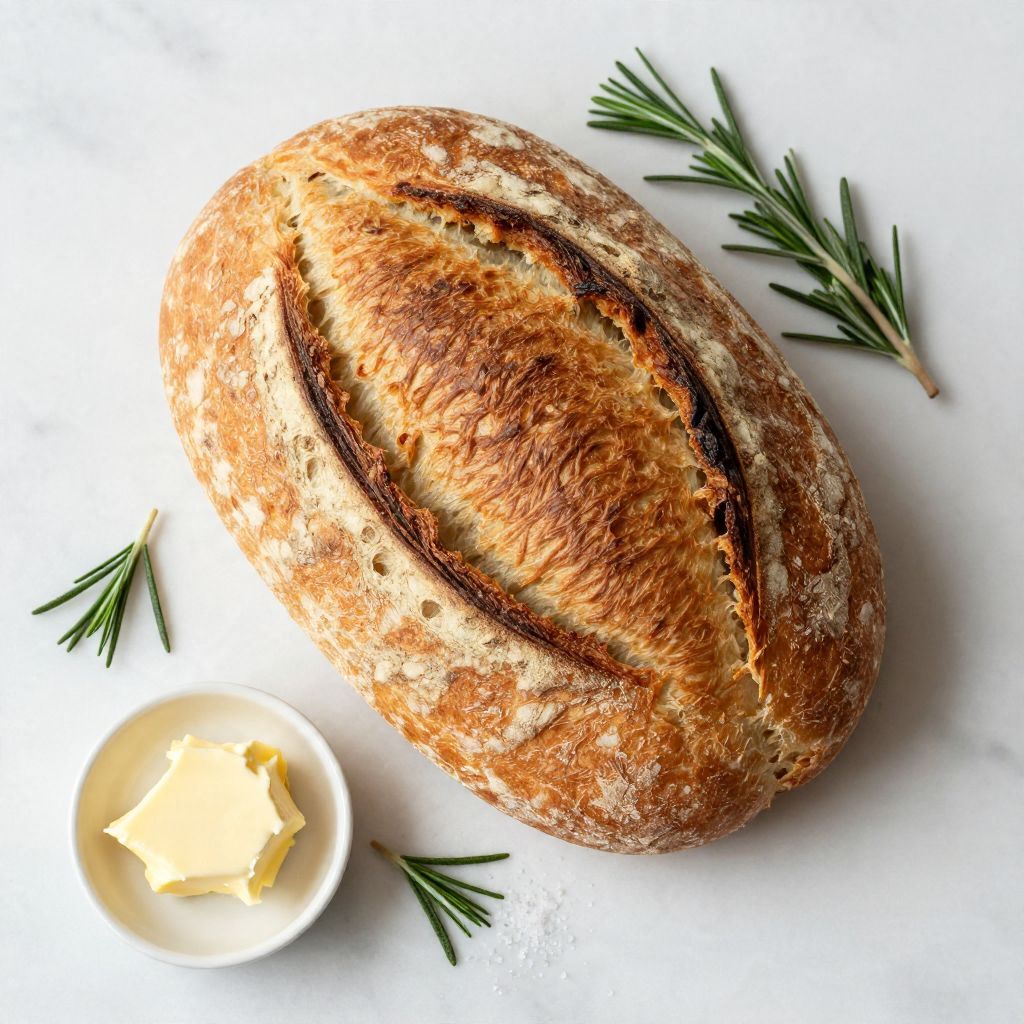
Homemade Artisan Bread
Ingredients
Equipment
Method
- In a large mixing bowl, combine the flour, salt, and instant yeast.
- Pour in the warm water and stir with a wooden spoon until a shaggy dough forms.
- Cover the bowl with plastic wrap or a kitchen towel and let it rise at room temperature for 12 to 18 hours.
- Lightly flour your countertop and gently turn the dough out. Fold it over itself a few times to shape it into a round loaf.
- Transfer the loaf to a floured surface or a well-floured kitchen towel, cover it again, and let it rise for about 1 to 2 hours.
- Preheat your oven to 450°F (232°C) about 30 minutes before baking.
- Carefully remove the hot Dutch oven and place the dough inside. Cover with the lid and bake for 30 minutes.
- Remove the lid and bake for an additional 15 to 20 minutes until golden brown.
- Once baked, transfer the bread to a cooling rack and let it cool for at least 30 minutes before slicing.