
As the aroma of simmering bones fills your kitchen, it’s like a warm hug for the soul. Making your own Chicken Stock is not just about flavor; it’s a comforting ritual that brings a touch of homemade magic to your dishes.
This recipe is worth making because it’s simple, versatile, and incredibly satisfying. With a rich, deep flavor and a nourishing quality, homemade stock elevates soups, stews, and sauces from ordinary to extraordinary.
Let’s gather our ingredients and get started on this culinary journey that will transform your cooking.
Why You’ll Love This Recipe
Homemade chicken stock is a kitchen staple that every cook should master.
- Rich, deep flavor that outshines store-bought options.
- Versatile for soups, sauces, and countless recipes.
- Simple ingredients that make a big impact.
- Great way to use leftover chicken bones and vegetables.
- Can be made in large batches and frozen for later.
My Experience Making This Recipe
Every time I make Chicken Stock, I feel like I’m stepping into my grandmother’s kitchen. The simmering aroma instantly transports me back to my childhood, where warmth and comfort were always present.
Each batch I create turns out a little different, but that’s the beauty of it. The richness of the stock, combined with the subtle hints of herbs and spices, makes each pot a unique masterpiece.
Recipe Overview
- Recipe Name: Chicken Stock
- Servings: About 8 cups
- Prep Time: 15 minutes
- Cook Time: 4-6 hours
- Total Time: 4-6 hours 15 minutes
- Course: Soup
- Cuisine: American
- Calories per Serving: Approximately 50
Equipment You Will Need
- Large stock pot
- Strainer or cheesecloth
- Cutting board
- Sharp knife
- Measuring cups
- Storage containers
Ingredients for Chicken Stock
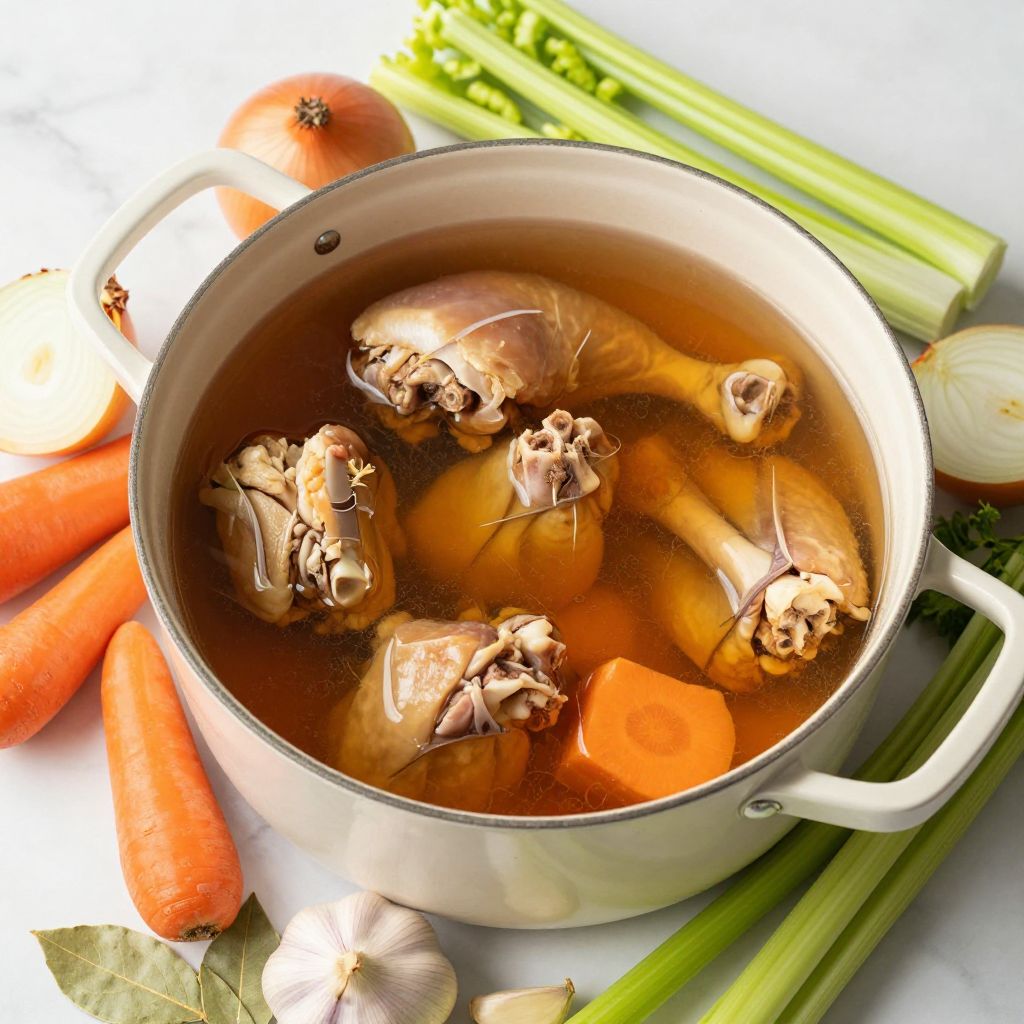
- 2-3 pounds chicken bones (leftover carcasses work great)
- 1 large onion, quartered
- 2-3 carrots, chopped
- 2-3 celery stalks, chopped
- 4 cloves garlic, smashed
- 2-3 bay leaves
- 1 teaspoon black peppercorns
- Fresh herbs (like thyme or parsley, optional)
- Water (enough to cover the ingredients)
Ingredient Notes and Substitutions
- Chicken bones: They provide the foundation for flavor. You can substitute with turkey bones for a different taste.
- Onion: Adds sweetness and depth. Shallots or leeks can be used if preferred.
- Carrots and celery: These aromatic vegetables enhance the stock. Feel free to add other vegetables like parsnips.
- Garlic: Brings a warm flavor. You can omit this if you prefer a milder taste.
- Fresh herbs: They add freshness. Dried herbs can substitute, but use less as they are more concentrated.
How to Make Chicken Stock
Step 1: Prepare the Ingredients
Start by gathering all your ingredients. This makes the cooking process feel organized and efficient.
Step 2: Roast the Bones (Optional)
Roasting the chicken bones in the oven for about 30 minutes at 400°F adds a deep flavor. This step is optional but highly recommended for richness.
Step 3: Combine Ingredients in Stock Pot
Place the bones, onion, carrots, celery, garlic, bay leaves, and peppercorns in a large stock pot. This mixture is where all the magic begins.
Step 4: Add Water
Pour enough water into the pot to cover the ingredients by about an inch. This ensures that everything cooks evenly and extracts maximum flavor.
Step 5: Bring to a Boil
Heat the pot over medium-high heat until it reaches a boil. Boiling helps to extract the flavors from the bones quickly.
Step 6: Reduce Heat and Simmer
Once boiling, reduce the heat to low and let it simmer uncovered for 4-6 hours. This slow cooking allows the flavors to deepen and blend beautifully.
Step 7: Skim the Surface
Occasionally skim off any foam or impurities that rise to the surface. This keeps your stock clear and clean-tasting.
Step 8: Strain the Stock
Once finished, strain the stock through a fine-mesh strainer or cheesecloth into a large bowl. This separates the liquid from the solids, leaving you with a beautifully clear stock.
Pro Tip: Don’t rush the simmering process. Low and slow is key for the richest flavor.
Tips for the Best Chicken Stock
- Use leftover bones from a roast chicken for added flavor.
- Add a splash of vinegar to help extract minerals from the bones.
- Experiment with different herbs to find your favorite flavor profile.
- Cool the stock quickly to prevent spoilage.
- Label and date your stock before freezing to keep track of freshness.
Common Mistakes to Avoid
- Not skimming the foam: This can lead to a cloudy stock.
- Using too much water: This dilutes the flavor. Aim for just enough to cover.
- Rushing the simmering: Quick cooking results in a bland stock.
- Not straining well: Leaving bits in can affect the texture.
- Storing improperly: Make sure to cool before freezing to maintain quality.
Serving Suggestions
Homemade chicken stock is a versatile ingredient that can enhance many dishes. Here are some great pairings:
- Rich soups like chicken noodle or vegetable.
- Hearty stews with robust flavors.
- Risottos that need a flavorful base.
- Grains such as rice or quinoa for extra taste.
- Sauces that require a rich broth.
Variations to Try
- Use roasted vegetables for added sweetness.
- Add ginger and lemongrass for an Asian twist.
- Incorporate tomatoes for a more Italian flavor.
- Add a splash of white wine for depth.
- Experiment with different types of bones like beef or fish.
Dietary Adaptations
- Gluten-free: This recipe is naturally gluten-free.
- Dairy-free: No dairy is used, so it’s safe for those avoiding lactose.
- Vegan/Vegetarian: Substitute with vegetable scraps and water for a veggie stock.
- Low-carb/Keto: This recipe is low in carbs, making it suitable for keto diets.
Storage and Reheating
Refrigerator
Store in the fridge for up to one week.
- Use airtight containers to maintain freshness.
- Cool completely before refrigeration.
Freezer
Chicken stock can be frozen for up to six months.
- Use freezer-safe containers or ice cube trays for easy portioning.
- Label with the date for reference.
Reheating
Thaw in the refrigerator overnight, or reheat directly from frozen.
- Heat on the stove over low heat, stirring occasionally.
- Never microwave directly from frozen to avoid uneven heating.
Nutrition Information
| Nutrient | Amount |
|---|---|
| Calories | 50 |
| Total Fat | 2g |
| Saturated Fat | 0.5g |
| Carbohydrates | 5g |
| Fiber | 1g |
| Sugar | 1g |
| Protein | 5g |
| Sodium | 200mg |
| Cholesterol | 30mg |
This nutrition information is approximate and can vary based on specific ingredients used.
Frequently Asked Questions
Can I use store-bought chicken bones?
Absolutely! Store-bought bones work well and can save time.
How long can I store chicken stock?
In the refrigerator, it lasts about a week; in the freezer, up to six months.
Can I make this stock ahead of time?
Yes! It’s perfect for meal prep and can be made in advance.
Why is my stock cloudy?
Cloudiness usually comes from not skimming impurities during cooking.
Can I use vegetable scraps instead of chicken?
Yes! Vegetable scraps make a tasty, vegetarian stock.
Final Thoughts
Making your own Chicken Stock is a rewarding experience that fills your kitchen with love. Once you taste your homemade stock, you’ll never want to go back to store-bought again.
So, gather those ingredients, put on your apron, and let’s create something special. For more delicious recipes, be sure to check out this chicken stock recipe and if you’re in the mood for something different, try this turkey broth recipe.
Chicken Stock
Ingredients
Equipment
Method
- Start by gathering all your ingredients.
- Roast the chicken bones in the oven for about 30 minutes at 400°F if desired.
- Place the bones, onion, carrots, celery, garlic, bay leaves, and peppercorns in a large stock pot.
- Pour enough water into the pot to cover the ingredients by about an inch.
- Heat the pot over medium-high heat until it reaches a boil.
- Once boiling, reduce the heat to low and let it simmer uncovered for 4-6 hours.
- Occasionally skim off any foam or impurities that rise to the surface.
- Once finished, strain the stock through a fine-mesh strainer or cheesecloth into a large bowl.