
The aroma of fresh vegetables cooking in olive oil is enough to transport anyone to a sun-drenched Italian terrace. This Primavera Sauce Recipe celebrates the vibrant flavors of seasonal produce, making it a delightful addition to pasta, grains, or even grilled chicken. Bursting with freshness, this sauce is not only colorful but also versatile, allowing you to switch up the vegetables based on what you have on hand. Ready in under 30 minutes, it’s perfect for busy weeknights or leisurely weekend dinners.
Why You’ll Love This Recipe
This sauce brings together the best of summer’s bounty in a delicious way.
- Quick and easy to prepare in just 30 minutes.
- Loaded with fresh vegetables for a nutritious boost.
- Versatile enough to pair with various dishes.
- Light and refreshing, perfect for any season.
- Customizable, allowing you to use your favorite veggies.
My Experience Making This Recipe
When I first made this sauce, the kitchen filled with the delightful scent of sautéed garlic and basil. Watching the colorful vegetables dance in the pan was like a mini celebration.
Everyone at the table couldn’t get enough, and it quickly became a family favorite. It’s the kind of dish that feels special yet doesn’t take a lot of effort.
Recipe Overview
- Recipe Name: Primavera Sauce
- Servings: 4
- Prep Time: 10 minutes
- Cook Time: 15 minutes
- Total Time: 25 minutes
- Course: Sauce
- Cuisine: Italian
- Calories per Serving: 150
Equipment You Will Need
- Large skillet
- Wooden spoon or spatula
- Measuring cups and spoons
- Cutting board
- Chef’s knife
Ingredients for Primavera Sauce
For the Sauce
- 2 tablespoons olive oil
- 2 cloves garlic, minced
- 1 small onion, diced
- 1 medium zucchini, diced
- 1 medium bell pepper, diced (any color)
- 1 cup cherry tomatoes, halved
- 1 cup asparagus, cut into 1-inch pieces
- 1 teaspoon dried Italian herbs
- Salt and pepper to taste
- 1/4 cup fresh basil, chopped (for garnish)
Ingredient Notes and Substitutions
- Olive oil: Adds flavor and richness; you can substitute with avocado oil for a different taste.
- Garlic: Provides a fragrant base; shallots can be used for a milder flavor.
- Zucchini: A key ingredient for texture; yellow squash can be a great alternative.
- Bell pepper: Adds sweetness; feel free to use any color or omit if preferred.
- Cherry tomatoes: For juiciness; you can use chopped regular tomatoes if needed.
How to Make Primavera Sauce
Step 1: Heat the Olive Oil
In a large skillet, heat the olive oil over medium heat. This will help to create a flavorful base for the sauce.
Step 2: Sauté the Aromatics
Add the minced garlic and diced onion to the skillet. Cooking these first allows their flavors to infuse the oil.
Step 3: Cook the Zucchini
Add the diced zucchini to the skillet and sauté for about 3 minutes. This will soften it while keeping a bit of crunch.
Step 4: Add the Bell Pepper
Stir in the diced bell pepper and cook for another 2 minutes. This adds sweetness and color to the sauce.
Step 5: Incorporate the Asparagus
Add the asparagus pieces and sauté for another 3 minutes. This ensures they are tender yet still vibrant.
Step 6: Add the Cherry Tomatoes
Stir in the halved cherry tomatoes and cook for about 2 minutes. This step allows the tomatoes to soften and release their juices.
Step 7: Season the Sauce
Sprinkle in the dried Italian herbs, salt, and pepper to taste. Seasoning at this stage enhances the overall flavor profile.
Step 8: Finish and Garnish
Remove the skillet from heat and stir in the fresh basil. This final touch adds a burst of freshness.
Pro Tip: Use seasonal vegetables for the best flavor and nutrition.
Tips for the Best Primavera Sauce
- Chop vegetables uniformly to ensure even cooking.
- Don’t overcrowd the skillet; this prevents steaming.
- Adjust seasoning to your preference for a personalized touch.
- Serve immediately for the freshest taste and texture.
- Pair with al dente pasta for the best experience.
Common Mistakes to Avoid
- Skipping the garlic: It adds essential flavor.
- Overcooking the vegetables: They should be tender but still vibrant.
- Not seasoning enough: Proper seasoning makes the dish pop.
- Using frozen veggies: Fresh ones provide better flavor and texture.
Serving Suggestions
This primavera sauce pairs beautifully with a variety of dishes.
- Pasta of any shape, like penne or fettuccine.
- Quinoa or rice for a hearty grain option.
- Grilled chicken or fish for added protein.
- As a topping for bruschetta for a light appetizer.
Variations to Try
- Swap in your favorite vegetables like broccoli or spinach for different flavors.
- Add a splash of cream for a rich, creamy version.
- Incorporate cooked shrimp or chicken for added protein.
- Use a splash of white wine for extra depth in flavor.
Dietary Adaptations
- Gluten-free: Serve with gluten-free pasta or zucchini noodles.
- Dairy-free: Omit any cheese and use olive oil for richness.
- Vegetarian: This recipe is naturally vegetarian.
- Low-carb/keto: Pair with spiralized vegetables instead of pasta.
Storage and Reheating
Refrigerator
Store any leftovers in an airtight container in the refrigerator for up to 3 days.
- Make sure to cool the sauce before sealing it.
- Reheat gently on the stove or in the microwave.
Freezer
This sauce can also be frozen for up to 3 months.
- Cool completely before transferring to freezer-safe containers.
- Label with the date for easy tracking.
Reheating
To reheat, thaw in the refrigerator overnight and warm on low heat.
- Add a splash of water or broth if it seems too thick.
- Stir frequently to avoid sticking.
Nutrition Information
| Nutrient | Amount |
|---|---|
| Calories | 150 |
| Total Fat | 9g |
| Saturated Fat | 1g |
| Carbohydrates | 15g |
| Fiber | 3g |
| Sugar | 5g |
| Protein | 3g |
| Sodium | 250mg |
| Cholesterol | 0mg |
This nutritional information is approximate and will vary based on specific ingredients used.
Frequently Asked Questions
Can I make this sauce ahead of time?
Yes, you can prepare it in advance and store it in the refrigerator for up to 3 days.
What can I substitute for fresh basil?
Fresh parsley or oregano can be used as a substitute, though the flavor will differ slightly.
How do I store leftover primavera sauce?
Keep it in an airtight container in the refrigerator for up to 3 days or freeze it for up to 3 months.
Can I add protein to this sauce?
Absolutely! Grilled chicken, shrimp, or even chickpeas can be added for extra protein.
What if my sauce seems too watery?
If it is too watery, let it simmer a bit longer to allow excess moisture to evaporate.
Final Thoughts
This Primavera Sauce Recipe is a delicious way to enjoy fresh vegetables and brighten up your meals. I hope it finds a regular spot on your dinner table, bringing a taste of the garden straight to your plate.
For more culinary inspiration, check out my delicious Pomodoro Sauce Recipe or try my tasty Pasta and Peas Recipe for delightful variations.
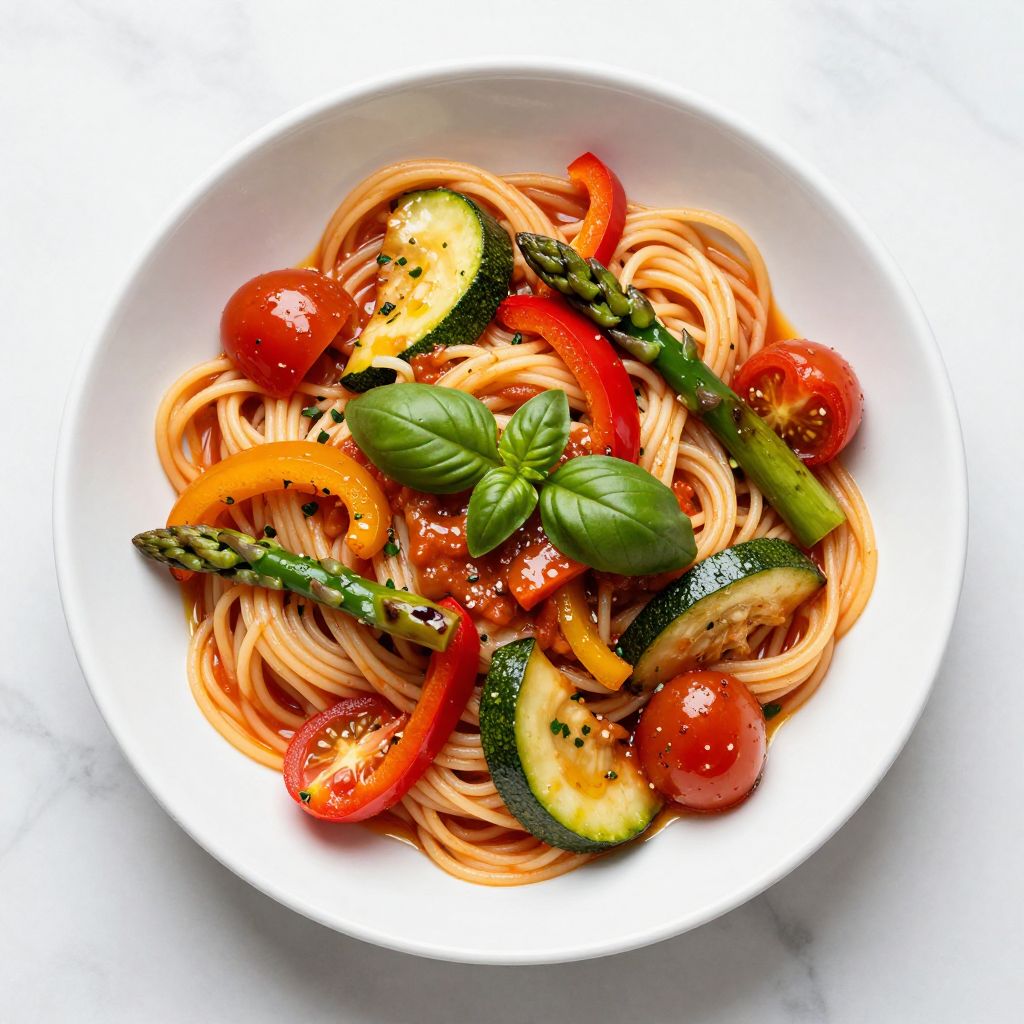
Primavera Sauce
Ingredients
Equipment
Method
- In a large skillet, heat the olive oil over medium heat.
- Add the minced garlic and diced onion to the skillet. Cook for 2-3 minutes until softened.
- Add the diced zucchini and sauté for about 3 minutes.
- Stir in the diced bell pepper and cook for another 2 minutes.
- Add the asparagus pieces and sauté for another 3 minutes.
- Stir in the halved cherry tomatoes and cook for about 2 minutes.
- Sprinkle in the dried Italian herbs, salt, and pepper. Stir to combine.
- Remove from heat and stir in the fresh basil.