
The first time I tasted pikliz, I understood why this Haitian hot pepper condiment has survived centuries and crossed oceans without losing its soul. This fiery, garlicky, vinegar-based pickle is the kind of condiment that transforms a simple plate of rice and beans into something unforgettable.
Pikliz belongs on your table if you crave bold, complex flavors that wake up your palate and pair with almost any savory dish. The magic lies in its simplicity: fresh Scotch bonnet peppers, vinegar, garlic, and a handful of aromatics create a condiment that gets better with time.
Whether you serve it alongside grilled chicken, stews, or rice dishes, pikliz brings the kind of heat and tangy depth that store-bought hot sauces simply cannot match. Making your own batch takes just minutes of active work, and you’ll have a jar that keeps giving for months.
Why You’ll Love This Recipe
Pikliz delivers serious flavor with minimal fuss, and it transforms your cooking in ways you won’t expect. This condiment is bold, versatile, and practically impossible to mess up once you understand the basic technique.
- Fiery heat balanced with sharp vinegar tang and deep garlic notes
- Ready to eat in days, but improves dramatically after a week or longer
- Requires just 15 minutes of prep work with no cooking involved
- Keeps for months in the refrigerator, making it perfect for meal prep
- Elevates rice, beans, grilled meats, soups, and even tacos instantly
My Experience Making This Recipe
I made my first batch of pikliz in a small kitchen with nothing but a cutting board, a knife, and jars I’d saved from pasta sauce. The aroma that filled my apartment was so intense that my neighbor knocked to ask if I was okay.
Within three days, the peppers had released their oils, the garlic had mellowed into something almost sweet, and the whole jar glowed with this beautiful golden-red color. I tasted it on rice and black beans, and suddenly I understood why Haitian families guard their pikliz recipes like treasures.
By the second week, the flavor had deepened into something almost smoky, with layers of heat that didn’t come all at once but built on your tongue. My friends now ask me to bring pikliz to every dinner party, which is the highest compliment a condiment can receive.
Recipe Overview
- Recipe Name: Haitian Pikliz
- Servings: Makes approximately 1 quart (about 32 servings as a condiment)
- Prep Time: 15 minutes
- Cook Time: 0 minutes (fermentation time: 3 days to 2 weeks)
- Total Time: 15 minutes active, plus fermentation
- Course: Condiment
- Cuisine: Haitian
- Calories per Serving: 8
Equipment You Will Need
- Sharp chef’s knife
- Cutting board
- Glass jars with tight-fitting lids (quart-sized or larger)
- Measuring cups and spoons
- Vegetable peeler or small paring knife
- Paper towels for cleaning jars
Ingredients for Pikliz
- 2 pounds fresh Scotch bonnet peppers, whole or halved
- 1 cup white vinegar (or apple cider vinegar)
- 8 cloves garlic, sliced thin
- 1 tablespoon sea salt
- 2 tablespoons peppercorns (black or mixed)
- 4 whole cloves
- 2 bay leaves
- 1 teaspoon thyme (fresh or dried)
- 1/2 cup water
Ingredient Notes and Substitutions
- Scotch bonnet peppers deliver the authentic heat level and fruity undertone that defines true pikliz. If you cannot find them, habaneros work as a substitute, though they lack the exact fruity complexity.
- White vinegar provides the sharp backbone and preserves the peppers’ bright color effectively. Apple cider vinegar works and adds deeper warmth, but expect a slightly different flavor profile and darker color over time.
- Fresh garlic is non-negotiable here because it mellows and sweetens as the peppers ferment, becoming a key flavor component. Garlic powder cannot replicate this transformation and will taste flat.
- Sea salt draws moisture from the peppers and enhances fermentation naturally. Table salt works but may leave a slightly metallic aftertaste.
- Peppercorns and cloves add complexity and prevent spoilage through their antimicrobial properties. These are worth seeking out rather than skipping.
How to Make Pikliz
Step 1: Wash and Prepare Your Peppers
Rinse your Scotch bonnet peppers under cool running water and pat them completely dry with paper towels. Moisture left on the surface can invite mold, so take your time with this step.
Step 2: Choose Your Cutting Style
You can leave the peppers whole if you prefer milder heat that releases more gradually, or halve them lengthwise for faster, more intense flavor extraction. Whole peppers create a more attractive finished jar and offer better portion control when serving.
Step 3: Prepare Your Jars
Wash your glass jars thoroughly with hot soapy water and rinse them completely, then air dry or dry them with a clean towel. Clean jars prevent unwanted bacteria and mold from competing with your pikliz.
Step 4: Slice the Garlic
Peel your garlic cloves and slice them into thin, uniform pieces roughly 1/8-inch thick. Thinner slices allow the garlic to mellow and integrate into the brine more evenly.
Step 5: Layer Your Peppers and Aromatics
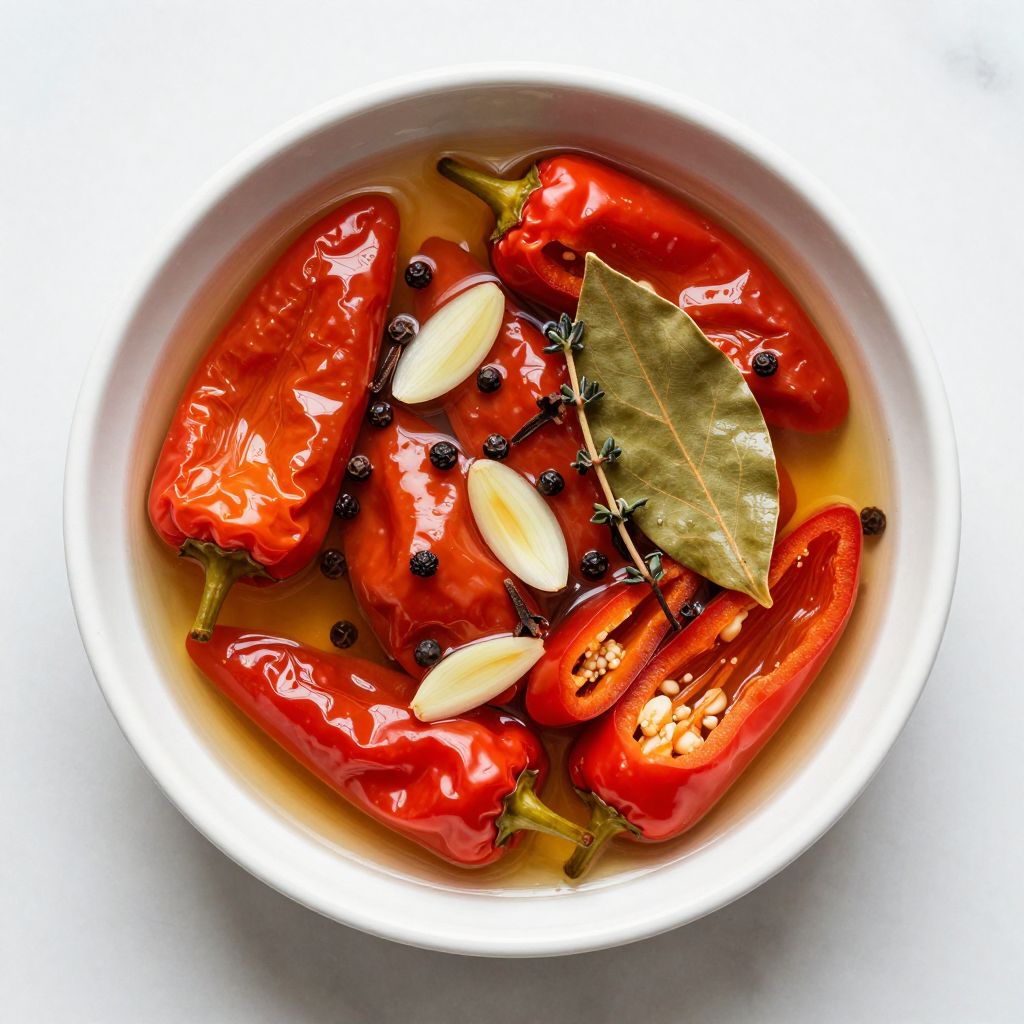
Begin filling your jar by alternating layers of peppers, sliced garlic, peppercorns, cloves, bay leaves, and thyme. This approach distributes flavors evenly and creates a beautiful presentation when you open the jar.
Step 6: Mix Your Brine
In a measuring cup, combine the vinegar, water, and salt, stirring until the salt dissolves completely. This simple brine will preserve your peppers and create the signature tangy-spicy flavor.
Step 7: Pour the Brine Over Your Peppers
Carefully pour the brine mixture over your layered peppers and aromatics until everything is submerged completely. Peppers that float above the brine are at risk of mold, so make sure each piece is covered.
Step 8: Seal and Begin Fermentation
Screw your jar lid on tightly and store it at room temperature away from direct sunlight for at least three days before tasting. The peppers will begin releasing their oils and flavors immediately, gradually turning the brine a gorgeous golden-red color.
Pro Tip: The longer you let pikliz ferment, the deeper and more complex the flavor becomes. After one week, it tastes good. After two weeks, it tastes exceptional. After a month, it becomes something genuinely special.
Tips for the Best Pikliz
- Use the freshest peppers you can find because quality ingredients create superior flavor. Old peppers that have sat in the store for weeks will produce duller, less vibrant pikliz.
- Invest in good quality vinegar with at least 5% acidity to ensure proper preservation and balanced tang. Cheap vinegar tastes thin and sour without the complexity you want.
- Shake or invert your jar gently every few days during fermentation to distribute flavors and prevent any floating pieces from developing mold. This small effort makes a noticeable difference in the final result.
- Keep your jar away from direct sunlight because light fades the beautiful color and can accelerate unwanted fermentation. A dark cabinet or pantry shelf is ideal.
- Taste your pikliz daily after the third day to catch your preferred fermentation point, which varies based on temperature and personal preference. Room temperature above 70 degrees ferments faster than cooler conditions.
- Use a clean spoon every time you remove pikliz to serve, never your fingers, to prevent contamination and extend shelf life. This habit takes seconds but prevents spoilage.
Common Mistakes to Avoid
- Using wet peppers invites mold to develop on the surface where moisture sits. Always pat your peppers completely dry before packing them into jars.
- Leaving peppers above the brine allows them to oxidize and develop mold colonies that can spread throughout your jar. Make sure every piece is submerged under liquid.
- Using too little salt or vinegar compromises preservation and makes your pikliz vulnerable to spoilage. The ratios in this recipe exist for a reason.
- Opening your jar excessively during fermentation introduces oxygen and bacteria that can create off-flavors or mold. Resist the urge to check on it constantly.
- Storing in warm direct sunlight fades color and accelerates fermentation unpredictably, resulting in mushy peppers and unpleasant flavors. Keep your jar in a cool, dark place.
Serving Suggestions
Pikliz shines brightest when paired with rich, mild flavors that can handle its aggressive personality. Use a teaspoon or two to add instant complexity to almost any savory meal.
- Spoon over rice and beans, fried plantains, or any Caribbean rice dish
- Serve alongside grilled chicken, fish, or pork for a bright, spicy contrast
- Add to soups and stews in the final minutes of cooking for a flavor boost
- Mix into mayonnaise or sour cream to create a spicy dip for vegetables or chips
- Drizzle over eggs, avocado toast, or breakfast potatoes for morning heat
Variations to Try
- Make a milder version using half the peppers or replacing some Scotch bonnets with milder habaneros, which creates pikliz suitable for heat-sensitive palates while maintaining authentic flavor. The trade-off is less intense burn but similar complexity.
- Add thin slices of fresh ginger during layering for warm, spicy depth that complements the garlic beautifully. Ginger ferments well and adds an unexpected sophistication.
- Include whole star anise or a cinnamon stick for subtle sweetness and warm spice that deepens during fermentation. These additions transform pikliz into something almost medicinal in the best way.
- Create a vinegar-forward version using only vinegar with no water added for maximum tang and sharper edges that suit acidic palates perfectly. This version preserves longer but tastes less balanced to most people.
- Layer in fresh dill or cilantro for herbaceous notes that brighten the heat and add garden freshness. Herbs should be added fresh rather than dried for the best effect.
Dietary Adaptations
- Gluten-free: Pikliz is naturally gluten-free with no special changes needed, making it safe for all gluten-sensitive diets.
- Dairy-free: This recipe contains no dairy ingredients, so it works perfectly for vegan, dairy-free, and all restricted diets.
- Vegan/Vegetarian: Pikliz is completely plant-based with no animal products involved in any step of the process.
- Low-carb/Keto: This condiment is extremely low in carbohydrates with minimal sugar, making it ideal for ketogenic and low-carb eating plans.
- Paleo: All ingredients align with paleo principles, though check that your salt source is paleo-approved if this matters for your diet.
Storage and Reheating
Refrigerator
Store sealed pikliz jars in the refrigerator indefinitely, though flavor peaks within 3 to 6 months. The cold slows fermentation dramatically, essentially pausing the process and preserving your pepper investment.
- Keep jars sealed until you need them
- Once opened, use clean utensils only
- Consume within 2 to 3 weeks of opening for best quality
Freezer
Pikliz can be frozen, though texture changes somewhat as ice crystals break down pepper cell walls. Freeze individual portions in ice cube trays for easy use rather than freezing entire jars.
- Freeze in ice cube trays, then transfer cubes to freezer bags
- Frozen pikliz keeps for 6 months maximum
- Thaw in the refrigerator before use
Reheating
Pikliz is served cold or at room temperature and never requires reheating. If you have frozen portions, simply thaw them in the refrigerator or use them straight from the freezer as a condiment.
- Serve cold directly from the jar
- Allow frozen portions to thaw completely before serving
- Never heat pikliz, which destroys delicate fermented flavors
Nutrition Information
| Nutrient | Amount |
|---|---|
| Calories | 8 |
| Total Fat | 0.1g |
| Saturated Fat | 0g |
| Carbohydrates | 1.5g |
| Fiber | 0.3g |
| Sugar | 0.7g |
| Protein | 0.2g |
| Sodium | 240mg |
| Cholesterol | 0mg |
These values are estimates based on standard nutrition databases and assume 32 servings per quart jar. Actual values may vary slightly depending on exact ingredients used and fermentation time.
Frequently Asked Questions
Can I use other types of hot peppers instead of Scotch bonnets?
Habaneros work reasonably well as a substitute, though they lack the fruity sweetness that makes authentic pikliz special. Thai chilies or ghost peppers create different flavor profiles and much higher heat levels that may overwhelm other ingredients.
How long does pikliz last once opened?
An opened jar keeps quality for 2 to 3 weeks in the refrigerator if you use clean utensils every time you serve. After 3 weeks, flavors fade and fermentation continues slowly, eventually making the peppers mushy.
Can I make pikliz without vinegar?
Vinegar is essential for preservation and flavor balance, so skipping it risks spoilage and creates a completely different product. You could make a fermented pepper paste without vinegar, but that requires different techniques and longer fermentation times.
Why are my peppers turning mushy during fermentation?
Over-fermentation beyond 3 to 4 weeks breaks down pepper flesh, or you may have used older peppers that lacked firmness initially. Try shortening your fermentation time or starting with fresher, firmer peppers from a farmers market.
Is the white film that appears on top mold?
A white film on the surface is likely kahm yeast, which is harmless but unpleasant tasting, and it should be skimmed off carefully. This appears when your jar is partially exposed to air, so ensure peppers stay submerged and lids seal tightly.
Can I adjust the heat level in my pikliz?
You can control heat by using fewer peppers, removing some seeds before packing, or fermenting for shorter periods. For milder versions, include habaneros or even poblanos mixed with Scotch bonnets.
Final Thoughts
Making pikliz transformed my understanding of how simple ingredients, time, and patience create something genuinely extraordinary. This condiment rewarded my initial skepticism with complex flavors that grew better day by day in my refrigerator.
Your first batch will convert you into a pikliz maker for life, and soon you’ll find yourself automatically adding jars to your gift list and sharing bottles with anyone willing to try them. Start your batch this week and taste the difference that homemade brings.
Explore more fermented vegetable recipes to expand your condiment collection, including pickled okra recipe and Asian coleslaw recipe, both of which share pikliz’s ability to transform simple meals into something memorable.
Haitian Pikliz
Ingredients
Equipment
Method
- Rinse 2 pounds fresh Scotch bonnet peppers under cool running water and pat completely dry with paper towels to remove all surface moisture.
- Optionally leave peppers whole for milder, gradual heat or halve them lengthwise for faster, more intense flavor extraction.
- Thoroughly wash glass jars and lids with hot soapy water, rinse well, and dry completely to prevent contamination.
- Peel 8 cloves garlic and slice them into thin 1/8-inch pieces for even distribution in the brine.
- Layer peppers, sliced garlic, 2 tablespoons peppercorns, 4 whole cloves, 2 bay leaves, and 1 teaspoon thyme evenly in the prepared jars.
- In a measuring cup, combine 1 cup white vinegar, 1/2 cup water, and 1 tablespoon sea salt, stirring until the salt dissolves completely to form the brine.
- Pour the brine over the layered ingredients, ensuring all solids are fully submerged to prevent mold growth.
- Seal jars tightly and store at room temperature (about 70°F) away from direct sunlight for a minimum of 3 days before tasting; let ferment up to 2 weeks for best flavor.