
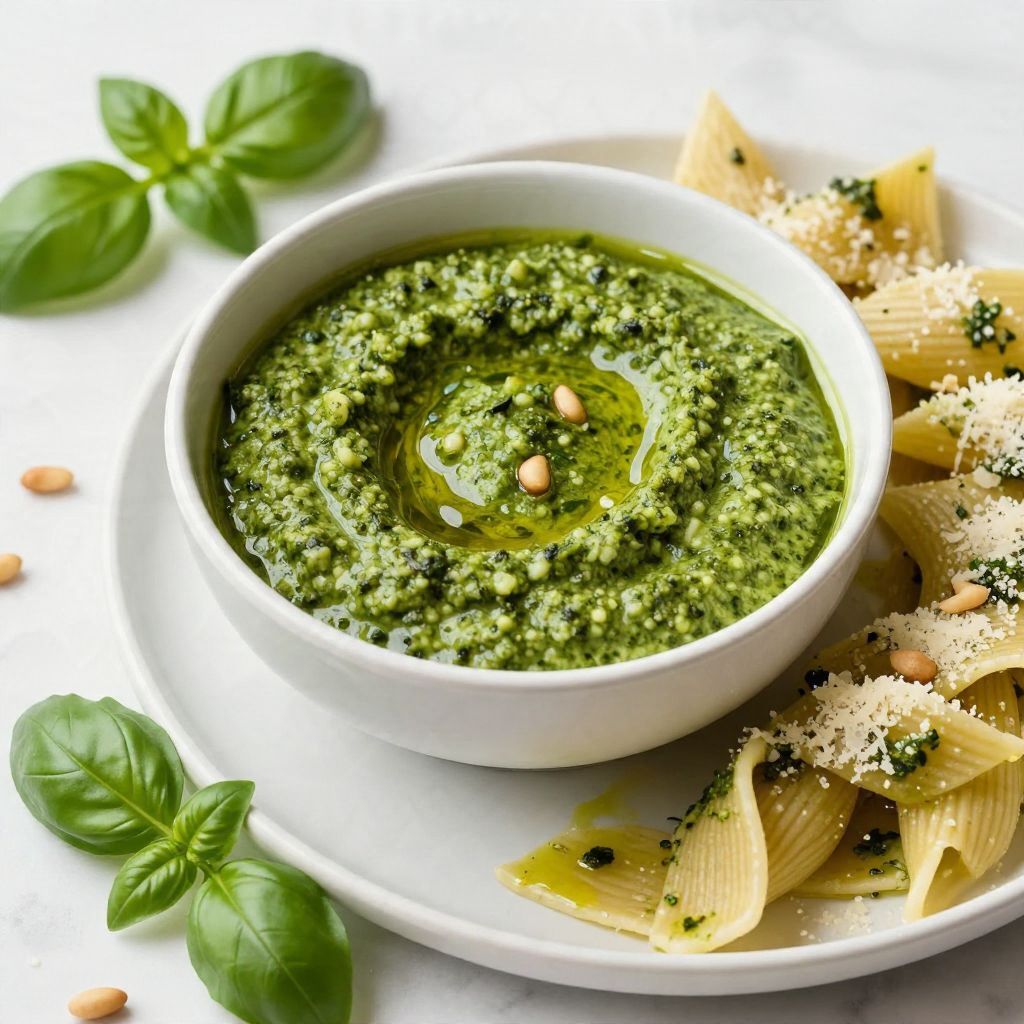
Picture this: a bowl of freshly tossed pasta, drizzled with a vibrant, aromatic sauce that instantly transports you to an Italian terrace. That magic is what a homemade Pesto Sauce brings to the table, and it’s quicker to make than you might think! This recipe stands out because it’s versatile, bursting with flavor, and can elevate any dish from mundane to magnificent in mere moments. Plus, you can customize it to suit your taste. Ready to dive into this culinary delight? Let’s gather our ingredients and get started!
Why You’ll Love This Recipe
This pesto sauce recipe is a kitchen must-have for several reasons.
- Quick and easy to whip up in under 15 minutes.
- Bright, fresh flavors that complement a variety of dishes.
- Made with simple ingredients you likely already have.
- Perfect for meal prep and versatile enough to use on pasta, sandwiches, and more.
- Can be customized with different nuts and herbs to suit your palate.
My Experience Making This Recipe
Every time I make this pesto, I’m reminded of sunny days spent in my grandmother’s garden, surrounded by fragrant basil plants. The aroma of fresh basil and garlic fills my kitchen, and I can hardly wait to taste the outcome.
When I first served it over pasta, the vibrant green sauce glistened like a jewel. The first bite was a burst of flavor, and I knew I had created something special. It’s become a staple in my home, and I’m sure it will be in yours too!
Recipe Overview
- Recipe Name: Pesto Sauce
- Servings: 4
- Prep Time: 10 minutes
- Cook Time: 0 minutes
- Total Time: 10 minutes
- Course: Sauce
- Cuisine: Italian
- Calories per Serving: 200
Equipment You Will Need
- Food processor or blender
- Measuring cups and spoons
- Spatula
- Storage container
Ingredients for Pesto Sauce
- 2 cups fresh basil leaves
- 1/2 cup olive oil
- 1/3 cup pine nuts
- 2 cloves fresh garlic
- 1/2 cup freshly grated Parmesan cheese
- Salt to taste
- Freshly ground black pepper to taste
Ingredient Notes and Substitutions
- Basil leaves: They provide the signature flavor of pesto. Substitute with spinach for a milder taste.
- Olive oil: This adds richness and helps blend the ingredients smoothly. Avocado oil can be used for a different flavor profile.
- Pine nuts: These give a creamy texture and unique taste. Walnuts or almonds can be a budget-friendly substitute.
- Garlic: This ingredient adds a delicious kick. Roasted garlic can be used for a sweeter flavor.
- Parmesan cheese: It adds depth and umami. Nutritional yeast offers a vegan alternative.
How to Make Pesto Sauce
Step 1: Gather Your Ingredients
Start by measuring out all your ingredients. Having everything ready makes the blending process much smoother.
Step 2: Blend the Base
In your food processor, add the fresh basil leaves, pine nuts, and garlic. Blend until the mixture becomes a coarse paste.
Step 3: Add Cheese
Next, add the freshly grated Parmesan cheese to the basil mixture. This step adds creaminess and enhances the flavor.
Step 4: Slowly Incorporate Olive Oil
With the processor running, slowly drizzle in the olive oil. This helps emulsify the ingredients and creates a smooth sauce.
Step 5: Season to Taste
Once blended, taste your pesto. Add salt and freshly ground black pepper to achieve your desired flavor.
Step 6: Adjust Consistency
If the pesto is too thick, add a bit more olive oil or a splash of water to reach your preferred consistency.
Step 7: Store Your Pesto
Transfer the pesto sauce into an airtight container. Make sure to cover the surface with a thin layer of olive oil to prevent browning.
Step 8: Enjoy!
Your homemade pesto sauce is now ready to transform your meals. Toss it with pasta, spread it on sandwiches, or use it as a dip.
Pro Tip: For a vibrant green color, avoid over-processing the basil and add a bit of lemon juice to keep it fresh.
Tips for the Best Pesto Sauce
- Use fresh basil for the best flavor; dried herbs won’t give the same freshness.
- Toast the pine nuts lightly to enhance their flavor before adding them to the mix.
- Don’t skip the cheese; it adds essential umami that balances the sauce.
- Experiment with different nuts or herbs to create your signature pesto.
- Make a larger batch and freeze it in ice cube trays for easy portioning later.
Common Mistakes to Avoid
- Using wilted basil can lead to a bland sauce; always choose fresh leaves.
- Over-blending the sauce can cause it to turn brown; pulse just until combined.
- Neglecting to season properly can result in a flat taste; taste and adjust as you go.
- Skipping the cheese makes it taste incomplete; don’t leave it out!
Serving Suggestions
Pesto sauce is incredibly versatile and pairs well with many dishes. Here are some ideas to get you started:
- Tossed with freshly cooked pasta for a classic dish.
- Spread on toasted bread for a quick appetizer.
- Drizzled over grilled vegetables for added flavor.
- Used as a marinade for chicken or fish to enhance their taste.
- Mixed into salads for an extra kick.
Variations to Try
- Spinach Pesto: Substitute spinach for basil for a milder flavor.
- Sun-Dried Tomato Pesto: Add sun-dried tomatoes for a rich, tangy twist.
- Pistachio Pesto: Swap pine nuts with pistachios for a unique nutty flavor.
- Cilantro Pesto: Use cilantro instead of basil for a fresh, zesty taste.
Dietary Adaptations
- Gluten-free: This recipe is naturally gluten-free.
- Dairy-free: Substitute nutritional yeast for cheese.
- Vegan: Use a vegan cheese alternative or omit the cheese altogether.
- Low-carb/Keto: This sauce is low in carbs, making it keto-friendly.
Storage and Reheating
Refrigerator
Store pesto in an airtight container in the refrigerator for up to one week.
- Cover the surface with olive oil to prevent browning.
Freezer
Pesto freezes well for up to 3 months.
- Consider freezing it in ice cube trays for easy portioning.
Reheating
Pesto can be used cold or at room temperature; no reheating is necessary.
- If desired, gently warm it in a saucepan over low heat.
Nutrition Information
| Nutrient | Amount |
|---|---|
| Calories | 200 |
| Total Fat | 20g |
| Saturated Fat | 3g |
| Carbohydrates | 3g |
| Fiber | 1g |
| Sugar | 0g |
| Protein | 4g |
| Sodium | 160mg |
| Cholesterol | 10mg |
This nutritional information is approximate and may vary based on specific ingredients used.
Frequently Asked Questions
Can I use other nuts instead of pine nuts?
Absolutely! Walnuts, almonds, or even cashews can work beautifully in pesto.
Can I make pesto ahead of time?
Yes, you can make it a few days in advance and store it in the fridge or freeze it for longer storage.
How should I store leftover pesto?
Store it in an airtight container in the fridge, covering the surface with olive oil to prevent browning.
Why is my pesto too thick?
If your pesto is too thick, add a little more olive oil or a splash of water to reach your desired consistency.
Can I make this recipe vegan?
Yes, simply omit the cheese or use a vegan cheese alternative for a delicious vegan pesto.
Final Thoughts
Making your own pesto sauce is truly rewarding and adds a fresh touch to any dish. I encourage you to experiment with the ingredients and make it your own!
For more delicious variations, check out this pesto recipe without pine nuts or try a unique twist with this pistachio pesto recipe. Enjoy your culinary adventure!
Pesto Sauce
Ingredients
Equipment
Method
- Gather your ingredients.
- In your food processor, add the fresh basil leaves, pine nuts, and garlic. Blend until the mixture becomes a coarse paste.
- Next, add the freshly grated Parmesan cheese to the basil mixture.
- With the processor running, slowly drizzle in the olive oil.
- Once blended, taste your pesto. Add salt and freshly ground black pepper to achieve your desired flavor.
- If the pesto is too thick, add a bit more olive oil or a splash of water to reach your preferred consistency.
- Transfer the pesto sauce into an airtight container. Cover the surface with a thin layer of olive oil to prevent browning.
- Your homemade pesto sauce is now ready to transform your meals.