
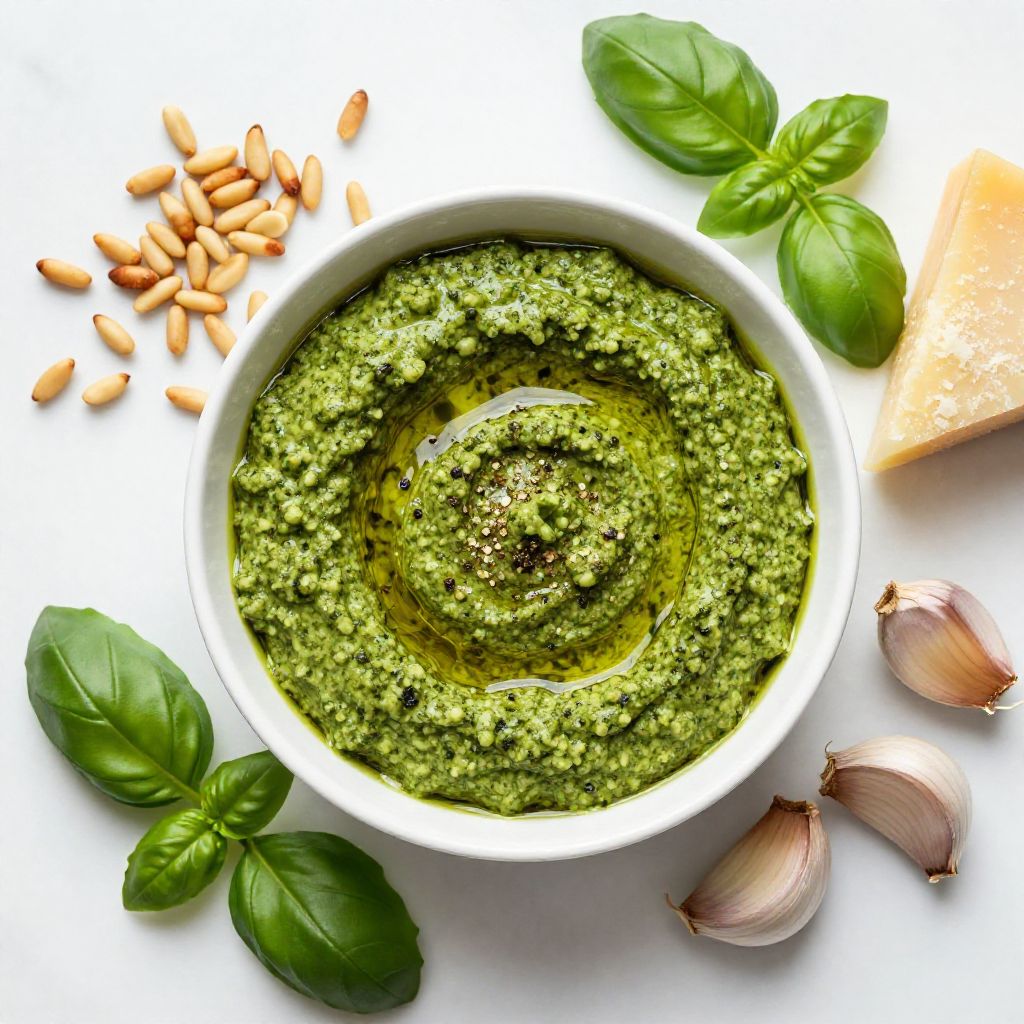
Picture this: a lush green garden bursting with basil, the aroma wafting through the air, and suddenly, you crave a vibrant, homemade Pesto. This recipe is special because it’s a quick way to bring fresh flavors to your dishes, requiring just a handful of ingredients and minimal effort. Its creamy texture and herbaceous notes make it incredibly versatile, perfect for pasta, sandwiches, or even as a dip. Let’s explore how to create this delicious sauce that packs a punch!
Why You’ll Love This Recipe
Making your own pesto is simple and rewarding, and it opens up a world of flavor. Here’s why this recipe will become a staple in your kitchen:
- Quick to prepare—ready in just 10 minutes.
- Uses fresh ingredients for a vibrant taste.
- Versatile—great for pasta, pizza, or as a spread.
- Customizable to suit your taste preferences.
- Freezes well for convenient meals later.
My Experience Making This Recipe
When I first made this pesto, I was amazed at how quickly it came together. The vibrant green color and the aroma of fresh basil brought back memories of summer kitchens filled with laughter.
Each time I whip up a batch, it feels like a celebration of flavors. Friends and family rave about it, and I love sharing this simple, yet impressive recipe!
Recipe Overview
- Recipe Name: Pesto
- Servings: 4
- Prep Time: 10 minutes
- Cook Time: 0 minutes
- Total Time: 10 minutes
- Course: Sauce
- Cuisine: Italian
- Calories per Serving: 150
Equipment You Will Need
- Food processor or blender
- Spatula
- Measuring cups
- Measuring spoons
Ingredients for Pesto
- 2 cups fresh basil leaves, packed
- 1/2 cup grated Parmesan cheese
- 1/2 cup extra-virgin olive oil
- 1/3 cup pine nuts (or walnuts)
- 2 garlic cloves, minced
- Salt and pepper to taste
Ingredient Notes and Substitutions
- Basil: Provides the classic flavor; you can substitute with spinach or arugula for different tastes.
- Parmesan cheese: Adds creaminess; a vegan alternative is nutritional yeast.
- Pine nuts: Traditionally used; swap with walnuts or sunflower seeds if needed.
- Olive oil: Enhances richness; any neutral oil can work, but the flavor will differ.
- Garlic: Infuses flavor; roasted garlic can give a sweeter note.
How to Make Pesto
Step 1: Prep Your Ingredients
Start by washing the basil leaves thoroughly to remove any dirt. Dry them gently with a paper towel to avoid excess moisture.
Step 2: Toast the Nuts
In a dry skillet over medium heat, toast the pine nuts for about 3-5 minutes until golden. This enhances their flavor and adds a lovely crunch.
Step 3: Blend the Basil
In your food processor, add the basil leaves and toasted pine nuts. Pulse them together until they are finely chopped.
Step 4: Add Garlic and Cheese
Next, add the minced garlic and grated Parmesan cheese to the processor. Pulse again until everything is well combined.
Step 5: Incorporate Olive Oil
With the processor running, slowly drizzle in the olive oil until the mixture is smooth. This emulsification is key for the right texture.
Step 6: Season to Taste
Add salt and pepper to taste, blending briefly to combine. Adjust seasoning based on your preference for saltiness.
Step 7: Scrape Down the Sides
Pause to scrape down the sides of the processor with a spatula. This ensures all ingredients are well incorporated.
Step 8: Store or Serve
Your pesto is ready! Serve immediately or transfer it to a jar and refrigerate for later use. It’s even better the next day!
Pro Tip: For a creamier pesto, add a bit more olive oil or a splash of water as you blend.
Tips for the Best Pesto
- Use fresh, vibrant basil leaves for the best flavor.
- Toast the nuts lightly to enhance their natural oils.
- Adjust the garlic according to your preference; less for a milder taste.
- Store pesto in an airtight container with a thin layer of olive oil on top to prevent browning.
- Experiment with different cheese for unique flavor profiles.
Common Mistakes to Avoid
- Using wilted basil can lead to a dull flavor.
- Over-blending can make the pesto too watery.
- Skipping the toasting step may result in bland nuts.
- Not adjusting salt can leave your pesto tasting flat.
Serving Suggestions
Pesto is a fantastic addition to many dishes. Here are a few ideas to get you started:
- Toss it with your favorite pasta for a quick meal.
- Spread on toasted bread for a delicious crostini.
- Drizzle over grilled vegetables for a fresh side.
- Mix into scrambled eggs for a flavorful breakfast.
Variations to Try
- Swap basil for spinach for a milder flavor.
- Try adding sun-dried tomatoes for a tangy twist.
- Use different nuts like almonds or cashews for a unique taste.
- Incorporate lemon juice for a zesty kick.
Dietary Adaptations
- Gluten-free: This recipe is naturally gluten-free, so enjoy without worry.
- Dairy-free: Omit the cheese or replace it with nutritional yeast.
- Vegan: Substitute cheese with nutritional yeast for a vegan version.
- Low-carb/Keto: Perfect as is, just watch the portion size of nuts.
Storage and Reheating
Refrigerator
Pesto can be stored in the fridge for up to a week.
- Keep it in an airtight container.
- Add a thin layer of olive oil on top to prevent browning.
Freezer
For longer storage, freeze pesto for up to 3 months.
- Use ice cube trays to freeze in small portions.
- Transfer to a freezer bag once solid for easy access.
Reheating
There’s no need to reheat pesto, just toss it with hot pasta or dishes.
- Thaw frozen pesto in the refrigerator overnight before using.
- For quicker thawing, place the bag in warm water.
Nutrition Information
| Nutrient | Amount |
|---|---|
| Calories | 150 |
| Total Fat | 15g |
| Saturated Fat | 2g |
| Carbohydrates | 4g |
| Fiber | 1g |
| Sugar | 0g |
| Protein | 3g |
| Sodium | 120mg |
| Cholesterol | 5mg |
This information is estimated and will vary based on specific ingredients used.
Frequently Asked Questions
Can I substitute the nuts in pesto?
Yes, you can use walnuts, almonds, or sunflower seeds as alternatives for pine nuts.
How can I make pesto ahead of time?
Pesto can be made in advance and stored in the refrigerator or freezer for later use.
How should I store leftover pesto?
Store leftover pesto in an airtight container in the refrigerator with a little olive oil on top to prevent browning.
Why is my pesto too thick?
This can happen if you don’t add enough olive oil; adjust by adding a bit more oil or water until the desired consistency is reached.
Can I use dried basil instead of fresh?
Fresh basil yields the best flavor; if you must use dried, reduce the amount significantly since it’s more concentrated.
Final Thoughts
This homemade Pesto is a delightful way to elevate your meals with fresh flavors and simplicity. I encourage you to give it a try and see how it transforms your dishes!
For more pesto inspiration, check out my pesto recipe without pine nuts or my pistachio pesto recipe. Happy cooking!
Pesto
Ingredients
Equipment
Method
- Wash the basil leaves thoroughly and dry them gently with a paper towel.
- In a dry skillet over medium heat, toast the pine nuts for 3 to 5 minutes until golden, stirring frequently.
- Add the basil leaves and toasted pine nuts to the food processor and pulse until finely chopped.
- Add the minced garlic and grated Parmesan cheese to the processor and pulse until well combined.
- With the processor running, slowly drizzle in the olive oil until the mixture reaches a smooth consistency.
- Season with salt and pepper to taste, blending briefly to incorporate.
- Pause and scrape down the sides of the processor with a spatula to ensure all ingredients are evenly mixed.
- Transfer the pesto to a jar or container and serve immediately, or refrigerate for later use.