
Imagine the aroma of fresh basil wafting through your kitchen, mingling with the rich, nutty scent of toasted walnuts. This Pesto Recipe Vegan stands out because it’s vibrant, full of flavor, and incredibly versatile, making it a must-have in your cooking repertoire. With just a handful of ingredients, you can whip up a sauce that elevates pasta, sandwiches, and even salads. Let’s gather our ingredients and get started!
Why You’ll Love This Recipe
This vegan pesto is not just tasty; it’s a powerhouse of flavor and nutrition.
- Quick to prepare in under 10 minutes.
- Made with fresh ingredients for a burst of flavor.
- Nutty and creamy without any dairy.
- Perfect for meal prep and versatile in many dishes.
- Free from common allergens, making it accessible.
My Experience Making This Recipe
Every time I make this pesto, I am reminded of summer afternoons spent in my garden, harvesting fresh basil. The vibrant green color and fresh aroma bring back memories of family gatherings where pasta was always a highlight.
My friends rave about how delicious it is, and they never guess it’s completely vegan. It’s the kind of recipe that has you thinking, “Why didn’t I try this sooner?”
Recipe Overview
- Recipe Name: Pesto Recipe Vegan
- Servings: 4
- Prep Time: 10 minutes
- Cook Time: 0 minutes
- Total Time: 10 minutes
- Course: Sauce
- Cuisine: Italian
- Calories per Serving: 180
Equipment You Will Need
- Food processor or blender
- Measuring cups and spoons
- Spatula
- Storage container
Ingredients for Pesto Recipe Vegan
- 2 cups fresh basil leaves
- 1/2 cup walnuts, toasted
- 2 cloves garlic, minced
- 1/2 cup nutritional yeast
- 1/2 cup extra-virgin olive oil
- Salt to taste
- Juice of 1 lemon
Ingredient Notes and Substitutions
- Basil: Provides the fresh, aromatic base for the pesto. Substitute with spinach or arugula for different flavors.
- Walnuts: Add a nutty richness. You can use pine nuts or almonds in their place, but adjust the quantity as needed.
- Nutritional yeast: Offers a cheesy flavor without dairy. If unavailable, you can omit it, but the flavor will change.
- Garlic: Gives a robust flavor. Adjust to your taste or use garlic powder as a substitute.
- Olive oil: Provides creaminess and mouthfeel. Avocado oil can be a lighter alternative.
How to Make Pesto Recipe Vegan
Step 1: Gather Ingredients
Start by assembling all your ingredients on the counter. This makes the blending process smoother and quicker.
Step 2: Toast the Walnuts
In a dry skillet over medium heat, toast the walnuts for about 5 minutes until fragrant. Toasting enhances their flavor, giving your pesto a richer taste.
Step 3: Blend the Base Ingredients
In your food processor, combine the basil, toasted walnuts, garlic, and nutritional yeast. This forms the flavorful base of your pesto.
Step 4: Add Olive Oil
With the processor running, slowly drizzle in the olive oil until the mixture is smooth. Adding the oil gradually helps emulsify the pesto, creating a creamy texture.
Step 5: Season to Taste
Stop the processor and taste your pesto. Add salt and lemon juice to brighten the flavors and balance the richness.
Step 6: Adjust Consistency
If your pesto is too thick, add a little water or more olive oil until it reaches your desired consistency. This ensures it’s spreadable and easy to mix with your dish.
Step 7: Store or Serve
Transfer the pesto to a storage container if not using immediately. Be sure to cover it with a thin layer of olive oil to prevent browning.
Step 8: Enjoy!
Now, use your delicious vegan pesto on pasta, sandwiches, or as a dip. Its versatility means you’ll find many ways to enjoy it!
Pro Tip: Always taste and adjust seasoning as you go; the balance of flavors can vary based on ingredient freshness.
Tips for the Best Pesto Recipe Vegan
- Use fresh, vibrant basil for the best flavor and color.
- Toast the nuts lightly to bring out their natural oils and flavor.
- Don’t skip the lemon juice; it adds brightness and freshness.
- Store pesto in an airtight container to keep it fresh longer.
- Experiment with other herbs like cilantro or parsley for a unique twist.
Common Mistakes to Avoid
- Using wilted or brown basil will result in a lackluster pesto. Always choose fresh herbs.
- Not toasting the nuts can lead to a bland flavor. Toasting enhances their nuttiness.
- Over-blending can make the pesto too oily and lose its texture. Blend just until combined.
- Skipping the salt can dull the flavors. Season gradually and taste as you go.
Serving Suggestions
This pesto is incredibly versatile and can elevate many dishes. Here are some pairing ideas:
- Stir into warm pasta for a quick meal.
- Spread on sandwiches or wraps for added flavor.
- Use as a dip for fresh vegetables or crackers.
- Drizzle over grilled vegetables or pizza.
- Mix into soups for a creamy finish.
Variations to Try
- Swap walnuts for cashews for a creamier texture.
- Add sun-dried tomatoes for a tangy twist.
- Incorporate roasted red peppers for a sweeter flavor.
- Use different herbs like cilantro or mint for a unique taste.
- Mix in avocado for an extra creamy pesto that’s rich in healthy fats.
Dietary Adaptations
- Gluten-free: This recipe is naturally gluten-free.
- Dairy-free: No dairy is used, making it vegan-friendly.
- Vegan/vegetarian: Perfect for both diets with no animal products.
- Low-carb/keto: Substitute with zucchini noodles for a keto-friendly option.
Storage and Reheating
Refrigerator
Store the pesto in an airtight container in the refrigerator for up to a week.
- Make sure to cover it with a thin layer of olive oil to prevent oxidation.
Freezer
Pesto freezes well for up to 3 months.
- Portion it into ice cube trays for easy use later.
Reheating
When ready to use, thaw overnight in the refrigerator or on the counter for a few hours.
- Do not heat directly, as it can alter the flavor.
Nutrition Information
| Nutrient | Amount |
|---|---|
| Calories | 180 |
| Total Fat | 18g |
| Saturated Fat | 2g |
| Carbohydrates | 4g |
| Fiber | 1g |
| Sugar | 0g |
| Protein | 4g |
| Sodium | 15mg |
| Cholesterol | 0mg |
This nutritional information is approximate and may vary based on ingredient brands and specific quantities used.
Frequently Asked Questions
Can I make this pesto ahead of time?
Yes, pesto can be made a few days in advance and stored in the refrigerator.
What can I substitute for nutritional yeast?
If you don’t have nutritional yeast, you can omit it, but the flavor will be less cheesy.
How should I store unused pesto?
Store unused pesto in an airtight container with a layer of olive oil on top in the fridge.
Why is my pesto too thick?
If your pesto is too thick, add a little more olive oil or water to achieve your desired consistency.
Can I use frozen basil?
Yes, frozen basil can be used, but it may alter the fresh flavor slightly.
Final Thoughts
Making your own vegan pesto is simple and satisfying, plus it opens up a world of culinary possibilities. I encourage you to try this recipe and explore its delightful versatility.
For more delicious variations, check out my pesto recipe without pine nuts and my pistachio pesto recipe.
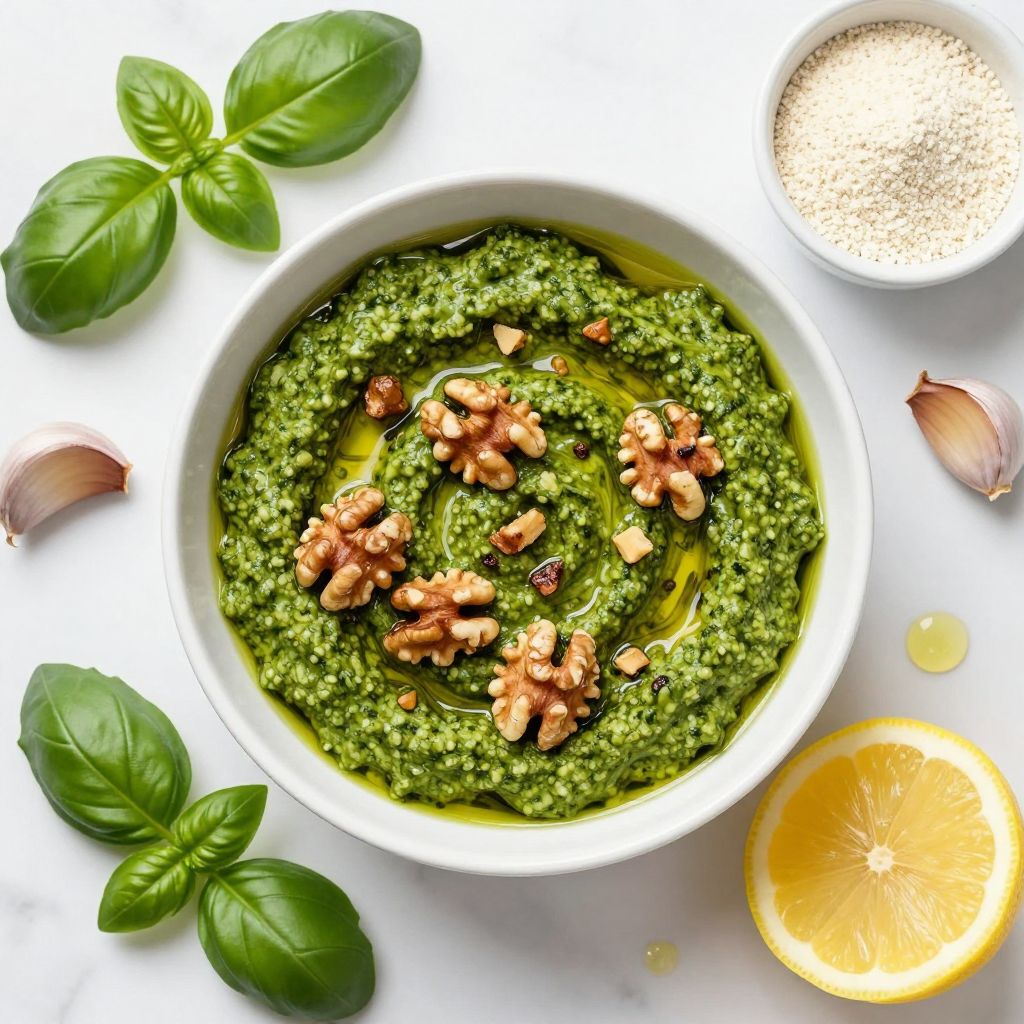
Pesto Recipe Vegan
Ingredients
Equipment
Method
- Assemble all your ingredients on the counter.
- In a dry skillet over medium heat, toast the walnuts for about 5 minutes until fragrant.
- In your food processor, combine the basil, toasted walnuts, garlic, and nutritional yeast.
- With the processor running, slowly drizzle in the olive oil until the mixture is smooth.
- Stop the processor and taste your pesto. Add salt and lemon juice to taste.
- If the pesto is too thick, add a little water or more olive oil to reach desired consistency.
- Transfer the pesto to a storage container if not using immediately.