
There’s something magical about the aroma of fresh tomatoes cooking on the stove, isn’t there? This Pasta Sauce Recipe With Fresh Tomatoes celebrates the natural sweetness and vibrant flavor of summer tomatoes, making it a delightful addition to your weeknight meals.
It’s simple yet incredibly satisfying, bursting with freshness that jarred sauces just can’t match. Perfect for busy nights or lazy weekends, this sauce is versatile enough to dress up any pasta dish or stand alone as a dipping sauce.
Why You’ll Love This Recipe
This recipe is a true winner for several reasons.
- Fresh ingredients create a vibrant flavor profile.
- Quick to prepare, making it ideal for weeknight dinners.
- Versatile enough to pair with various pastas and proteins.
- Simple enough for beginners, yet satisfying for seasoned cooks.
My Experience Making This Recipe
When I first made this sauce, I was surprised by how quickly the kitchen transformed into a cozy haven of delicious smells. The vibrant red of the tomatoes simmering with fresh herbs felt like a warm hug on a plate.
My family was delighted, and I could tell they appreciated the fresh flavors. The sauce was gone in minutes, leaving me to wonder why I ever settled for store-bought before!
Recipe Overview
- Recipe Name: Pasta Sauce Recipe With Fresh Tomatoes
- Servings: 4
- Prep Time: 10 minutes
- Cook Time: 30 minutes
- Total Time: 40 minutes
- Course: Sauce
- Cuisine: Italian
- Calories per Serving: 150
Equipment You Will Need
- Large pot
- Wooden spoon
- Knife and cutting board
- Measuring cups and spoons
- Blender or immersion blender (optional)
Ingredients for Pasta Sauce Recipe With Fresh Tomatoes
For the Sauce
- 2 pounds fresh tomatoes, diced
- 1/4 cup extra virgin olive oil
- 4 cloves garlic, minced
- 1 teaspoon salt
- 1/2 teaspoon black pepper
- 1 teaspoon sugar (optional, to balance acidity)
- 1/4 cup fresh basil, chopped
- 1 teaspoon dried oregano
Ingredient Notes and Substitutions
- Fresh tomatoes: They provide the best flavor and texture. Canned tomatoes can be used but may alter the final taste.
- Olive oil: Adds richness to the sauce. Feel free to use another oil like avocado, but olive oil is ideal for flavor.
- Garlic: Gives a wonderful aroma and depth. Garlic powder can replace fresh, but fresh is best.
- Basil: Fresh basil brightens the sauce. You can substitute with dried basil, but reduce the amount to 1 teaspoon.
- Sugar: Smooths out acidity from the tomatoes. Adjust based on your tomato variety.
How to Make Pasta Sauce Recipe With Fresh Tomatoes
Step 1: Prepare the Tomatoes
Start by washing and dicing the fresh tomatoes. This will help them release their juices, forming the base of the sauce.
Step 2: Heat the Olive Oil
In a large pot, heat the olive oil over medium heat. This will create a flavorful foundation for your sauce.
Step 3: Sauté the Garlic
Add the minced garlic to the pot and sauté for about 1 minute. You’ll know it’s ready when it becomes fragrant but not browned, as burnt garlic can taste bitter.
Step 4: Add the Tomatoes
Stir in the diced tomatoes, salt, and pepper. This allows the tomatoes to break down and release their juices.
Step 5: Simmer the Sauce
Reduce the heat to low and let the sauce simmer for about 20 minutes. This deepens the flavors as the tomatoes cook down.
Step 6: Add Herbs and Sugar
Stir in the fresh basil, oregano, and sugar if using. This will enhance the sauce’s flavor profile and balance acidity.
Step 7: Blend if Desired
If you prefer a smooth sauce, blend it with an immersion blender or transfer it to a regular blender. Just be careful with hot liquids!
Step 8: Taste and Adjust
Finally, taste your sauce and adjust seasoning as needed. This is your chance to make it just right for your palate.
Pro Tip: For an extra depth of flavor, try adding a splash of red wine during the simmering step.
Tips for the Best Pasta Sauce Recipe With Fresh Tomatoes
- Use ripe, in-season tomatoes for the best flavor.
- Don’t rush the simmering process; let the sauce cook down to develop rich flavors.
- Use fresh herbs whenever possible for brighter flavors.
- Experiment with different spices like red pepper flakes for a spicy kick.
- Pair the sauce with freshly cooked pasta for the ultimate meal experience.
Common Mistakes to Avoid
- Using unripe tomatoes can lead to a bland sauce. Always choose ripe and flavorful tomatoes.
- Sautéing garlic too long can cause bitterness. Keep an eye on it and remove it as soon as it’s fragrant.
- Not simmering long enough can prevent flavor development. Allow adequate time for the sauce to thicken.
- Forgetting to taste and adjust seasonings can lead to a flat sauce. Always check the flavor before serving.
Serving Suggestions
This sauce pairs beautifully with a variety of dishes. Here are some ideas to inspire your meal planning.
- Serve over spaghetti or your favorite pasta.
- Mix it with roasted vegetables for a hearty side dish.
- Use it as a dipping sauce for crusty bread.
- Top grilled chicken or fish with the sauce for added flavor.
Variations to Try
- Add red pepper flakes for a spicy version that packs a punch.
- Incorporate olives or capers for a Mediterranean twist.
- Stir in some cream for a rich, creamy sauce.
- Add sautéed mushrooms for an earthy flavor.
- Mix in some roasted red peppers for sweetness and depth.
Dietary Adaptations
- Gluten-free: Use gluten-free pasta to keep this dish accessible.
- Dairy-free: This recipe is naturally dairy-free.
- Vegan/Vegetarian: Totally plant-based and meat-free.
- Low-carb/Keto: Serve with zucchini noodles instead of pasta.
Storage and Reheating
Refrigerator
Store the sauce in an airtight container in the fridge for up to 5 days.
- Let it cool completely before sealing to avoid condensation.
Freezer
This sauce freezes well for up to 3 months.
- Use freezer-safe containers and label with the date.
Reheating
Reheat on the stove over low heat or in the microwave.
- Add a splash of water or broth if it thickens too much while reheating.
Nutrition Information
| Nutrient | Amount |
|---|---|
| Calories | 150 |
| Total Fat | 14g |
| Saturated Fat | 2g |
| Carbohydrates | 8g |
| Fiber | 2g |
| Sugar | 4g |
| Protein | 2g |
| Sodium | 250mg |
| Cholesterol | 0mg |
This nutritional information is estimated and may vary based on specific ingredients used.
Frequently Asked Questions
Can I use canned tomatoes instead of fresh?
Yes, canned tomatoes work in a pinch, but the flavor will be different from using fresh ones.
Can I make this sauce ahead of time?
Absolutely! It keeps well in the refrigerator or freezer, perfect for meal prep.
How can I make the sauce thicker?
Let it simmer longer to reduce the liquid or add a bit of tomato paste.
What if my sauce is too acidic?
Try adding a pinch of sugar to balance the acidity from the tomatoes.
Can I add meat to this sauce?
Yes, ground beef or sausage can be added for a heartier sauce.
Final Thoughts
Making your own pasta sauce with fresh tomatoes is a rewarding experience that brings a taste of summer to your kitchen. Give this recipe a try, and you’ll wonder why you ever bought sauce from a jar.
For more delicious sauce ideas, check out my Pomodoro Sauce Recipe or my Spaghetti Sauce Recipe No Meat for meatless options!
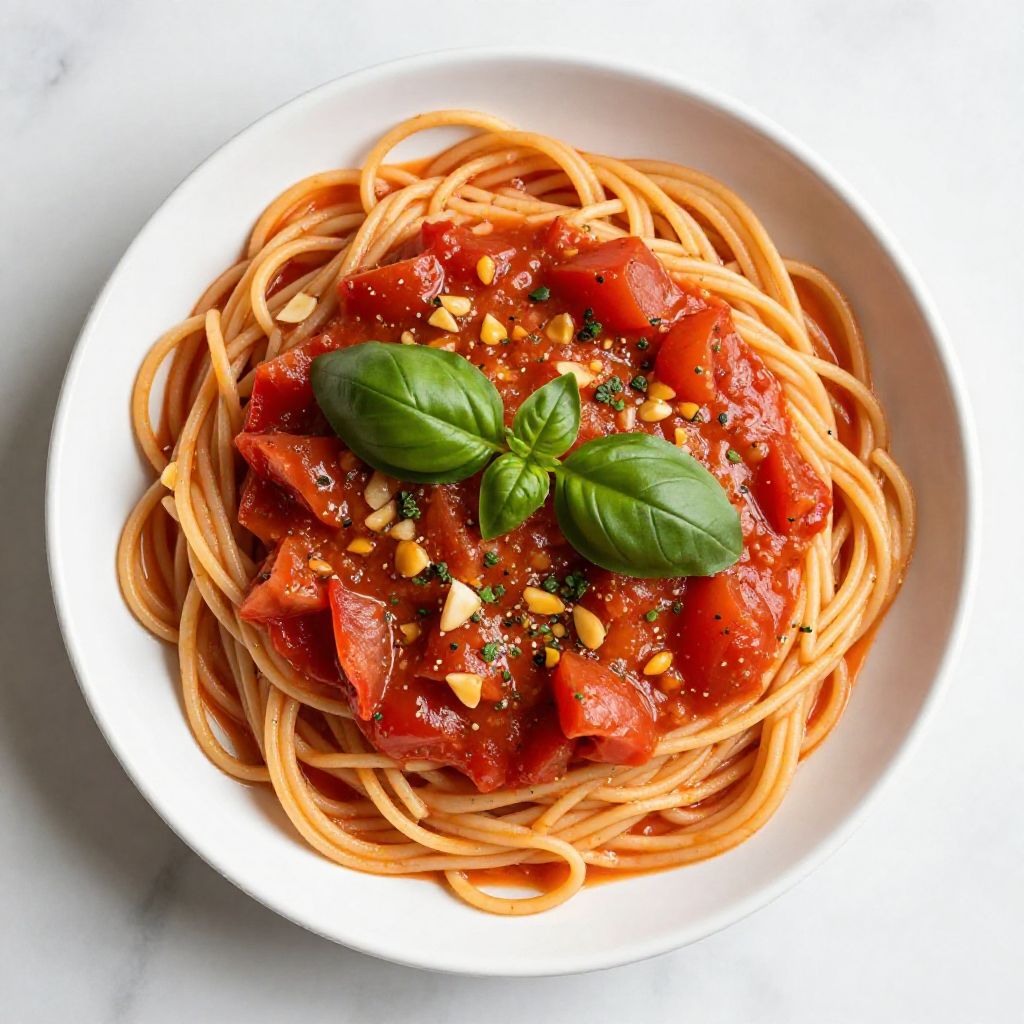
Pasta Sauce Recipe With Fresh Tomatoes
Ingredients
Equipment
Method
- Start by washing and dicing the fresh tomatoes.
- In a large pot, heat the olive oil over medium heat.
- Add the minced garlic to the pot and sauté for about 1 minute until fragrant.
- Stir in the diced tomatoes, salt, and pepper.
- Reduce the heat to low and let the sauce simmer for about 20 minutes.
- Stir in the fresh basil, oregano, and sugar if using.
- Blend if desired using an immersion blender or regular blender.
- Taste the sauce and adjust seasoning as needed.