
There’s something almost magical about the first bite of orange roughy, a delicate white fish with a subtle sweetness that feels like a restaurant-quality meal happening in your own kitchen.
This recipe shines because orange roughy cooks quickly, stays moist and tender, and pairs beautifully with simple seasonings that let the fish speak for itself.
Whether you’re a weeknight cook looking for something fast or a seafood lover craving restaurant-quality flavors at home, this dish delivers in under 30 minutes with minimal fuss and maximum impact.
Why You’ll Love This Recipe
Orange roughy is one of those ingredients that transforms a busy weeknight into something special without demanding hours in the kitchen.
- Ready in under 25 minutes from start to finish
- Mild, buttery flavor that appeals to seafood beginners and enthusiasts alike
- Naturally low in fat and high in protein for health-conscious eating
- Works beautifully with both classic and creative flavor combinations
- Impresses dinner guests with minimal effort on your part
My Experience Making This Recipe
I first made orange roughy when a friend brought me a fresh fillet from his fishing trip, and I was terrified of overcooking it. I prepared it simply with butter, lemon, and fresh herbs, and the result was so perfectly tender and flaky that I’ve been hooked ever since.
The smell of the fish cooking with garlic and white wine created this amazing aroma that filled my kitchen, and watching my skeptical dinner guests dig in with genuine enthusiasm sealed the deal for me.
Now I make this recipe regularly, and I’ve learned that the key is respecting the delicate nature of the fish and not adding so many ingredients that you mask its natural sweetness.
Recipe Overview
- Recipe Name: Pan-Seared Orange Roughy with Garlic and Lemon Butter
- Servings: 4
- Prep Time: 10 minutes
- Cook Time: 12 minutes
- Total Time: 22 minutes
- Course: Main Dish
- Cuisine: Contemporary American
- Calories per Serving: 245
Equipment You Will Need
- Large skillet or saute pan
- Cutting board
- Chef’s knife
- Paper towels
- Measuring spoons
- Meat thermometer (optional but helpful)
- Wooden spoon or silicone spatula
- Fish spatula or thin metal spatula
- Small bowl for mixing butter and seasonings
Ingredients for Orange Roughy
- 4 orange roughy fillets (5 to 6 ounces each)
- 3 tablespoons unsalted butter, divided
- 2 tablespoons extra virgin olive oil
- 4 cloves garlic, minced
- 1/4 cup dry white wine
- 2 lemons (1 juiced, 1 sliced for garnish)
- 1 teaspoon fresh thyme (or 1/2 teaspoon dried)
- Sea salt to taste
- Fresh cracked black pepper to taste
- Fresh parsley, chopped (for garnish)
Ingredient Notes and Substitutions
- Orange roughy fillets: This fish is mild and flakes easily, making it forgiving for home cooks. Substitute with cod, halibut, or tilapia if orange roughy is unavailable.
- Unsalted butter: Butter adds richness and helps create a golden crust on the fish. Use ghee or extra virgin olive oil for a dairy-free version, though you’ll lose some of the luxurious mouthfeel.
- Extra virgin olive oil: The oil prevents the butter from burning at high heat and adds subtle fruity notes. Use avocado oil or light vegetable oil if you prefer a neutral taste.
- Dry white wine: The wine deglazes the pan and adds acidity that brightens the fish. Swap it for chicken broth or additional lemon juice if cooking without alcohol.
- Fresh thyme: Thyme’s earthy flavor complements fish beautifully without overpowering it. Substitute with fresh rosemary, oregano, or tarragon for different flavor profiles.
How to Make Orange Roughy
Step 1: Prepare Your Fillets
Remove the orange roughy fillets from the refrigerator 10 minutes before cooking to bring them closer to room temperature. This helps them cook more evenly and prevents the outside from overdrying before the inside reaches the proper temperature.
Pat each fillet completely dry with paper towels, then season both sides generously with sea salt and fresh cracked black pepper.
Step 2: Set Up Your Workspace
Place your skillet on the stove and turn the heat to medium-high, allowing it to warm for about 2 minutes. While the pan heats, mince your garlic and juice your lemons so everything is ready when you need it.
Having ingredients prepped before you start cooking is the difference between a smooth experience and a stressful one.
Step 3: Heat the Oil and Butter
Add the olive oil and 1 tablespoon of butter to your heated skillet, watching as the butter melts and the oil shimmers. The combination of oil and butter gives you a higher smoke point than butter alone while keeping that rich, buttery flavor.
Once the butter is foamy and golden, you’re ready to add the fish.
Step 4: Sear the Orange Roughy
Carefully place each fillet skin-side up in the hot pan, laying them away from you to avoid splatters. Let them cook undisturbed for 4 to 5 minutes without moving them, which allows the bottom to develop a light golden crust.
The fish will naturally release from the pan when it’s ready to flip, so don’t force it.
Step 5: Flip and Cook the Second Side
Using a fish spatula, gently flip each fillet and cook for another 3 to 4 minutes until the flesh is opaque and flakes easily when tested with a fork. Orange roughy is a lean fish that cooks quickly, so watch carefully to avoid overcooking it into a dry, rubbery texture.
The internal temperature should reach 145 degrees Fahrenheit for food safety.
Step 6: Add Garlic and Aromatics
When the fish is nearly done, add the minced garlic to the pan and stir it constantly for about 30 seconds until fragrant. Adding garlic this late in cooking keeps it from burning and turning bitter.
The garlic will infuse the oil beautifully without overwhelming the delicate fish.
Step 7: Deglaze with Wine and Lemon
Pour in the dry white wine and squeeze the lemon juice into the pan, using a wooden spoon to scrape any flavorful browned bits from the bottom. This deglazing process creates a light pan sauce that brings all the flavors together.
Let everything simmer for about 1 minute to cook off some of the alcohol and concentrate the flavors.
Step 8: Create the Finishing Sauce
Remove the pan from heat and add the remaining 2 tablespoons of cold butter, stirring gently until it melts into the sauce. This technique, called mounting with butter, creates a silky, luxurious sauce that coats your fish beautifully.
Add a pinch of fresh thyme and taste the sauce for seasoning, adjusting salt and pepper as needed.
Step 9: Plate and Garnish
Transfer each orange roughy fillet to a warm plate and spoon the pan sauce over the top. Garnish with fresh parsley and thin lemon slices for color and brightness.
Serve immediately while everything is hot for the best flavor and texture.
Pro Tip: The moment you see the flesh turn from translucent to opaque at the thickest part of the fillet, it’s done. Overcooked fish is impossible to salvage, so err on the side of pulling it off heat a few seconds early.
Tips for the Best Orange Roughy
- Buy the freshest fillets available and use them within one day for optimal flavor and texture. Fresh fish should smell like the ocean, not fishy.
- Don’t skip drying the fillets thoroughly before cooking, as moisture on the surface prevents browning and creates steaming instead of searing.
- Keep your pan at medium-high heat rather than screaming high heat, which can burn the outside before the inside cooks through. This delicate fish needs a gentler touch than heartier white fish.
- Resist the urge to move the fillets around the pan while they’re cooking. Let them sit undisturbed to develop that gorgeous golden crust.
- Make the pan sauce right in the cooking pan rather than separately, as it captures all the flavorful browned bits that make the dish special.
- Serve on warm plates to keep the fish and sauce at their best temperature longer.
Common Mistakes to Avoid
- Cooking from a cold start: Always bring fillets to room temperature before cooking so they cook evenly throughout without overdrying the exterior.
- Using too high heat that burns the crust while leaving the center undercooked, which throws off the whole timing and texture.
- Flipping the fish too early or multiple times, which breaks apart the delicate flesh and prevents browning.
- Overcrowding the pan with too much seasoning or too many fillets at once, which causes steaming instead of proper searing.
- Making the pan sauce too acidic with too much lemon, which overpowers the delicate, subtle sweetness of the fish itself.
Serving Suggestions
Orange roughy’s delicate flavor pairs beautifully with light, fresh sides that don’t compete for attention on the plate.
- Roasted asparagus with garlic and a sprinkle of sea salt
- Creamy mashed cauliflower for a lighter alternative to potatoes
- Steamed baby potatoes with fresh dill and a bit of butter
- Simple green salad dressed with lemon vinaigrette
- Sauteed spinach with garlic and a squeeze of fresh lemon juice
Variations to Try
- Mediterranean Style: Add kalamata olives, sun-dried tomatoes, and fresh basil to the pan sauce for a brighter, more herbaceous flavor that transports you straight to the Greek islands.
- Cajun Spiced: Season the fillets with paprika, cayenne, garlic powder, and black pepper before searing, then finish with a creamy remoulade sauce for a bold, spicy twist.
- Asian Inspired: Replace the white wine with low-sodium soy sauce and mirin, add fresh ginger and sesame oil, then garnish with green onions and toasted sesame seeds.
- Herb Crusted: Mix panko breadcrumbs with fresh parsley, dill, and thyme, press the mixture onto the fillets before searing for an interesting textural contrast.
- Coconut Lime: Swap the white wine for coconut milk and add fresh lime juice instead of lemon, creating a tropical sauce that’s slightly sweet and luxuriously creamy.
Dietary Adaptations
- Gluten-free: This recipe is naturally gluten-free as written, making it perfect for those with gluten sensitivities with no modifications needed.
- Dairy-free: Replace butter with extra virgin olive oil or ghee, which maintains the richness while keeping the dish dairy-free and still delicious.
- Vegan/Vegetarian: Substitute orange roughy with thick slices of firm tofu or hearty mushrooms like portobello, which have a meaty texture and mild flavor that works beautifully with this cooking method.
- Low-carb/Keto: This recipe fits perfectly into low-carb eating plans, as fish and butter are keto-friendly staples with zero net carbs.
- Paleo: Skip any wheat-based sides and pair with roasted vegetables and healthy fats from the butter and olive oil for a fully compliant paleo meal.
Storage and Reheating
Refrigerator
Store leftover orange roughy in an airtight container for up to two days, keeping the fillets separate from the sauce if possible to prevent sogginess. Fresh fish doesn’t have a long shelf life, so use it quickly.
- Keep the container on the coldest shelf of your refrigerator, away from raw meat
- Store the pan sauce separately in a small container for best results
Freezer
Freeze cooked orange roughy in a freezer-safe container for up to one month, though the texture will be slightly less firm after thawing. Freeze the sauce separately for easier reheating.
- Wrap fillets individually in parchment paper to prevent freezer burn
- Label containers with the date to track storage time
Reheating
Reheat gently in a low oven at 275 degrees Fahrenheit for 8 to 10 minutes, covered loosely with foil to prevent drying. Avoid the microwave, which can make the fish rubbery and unpleasant.
- Warm the sauce separately in a small saucepan over low heat
- Spoon the warmed sauce over the fish just before serving
- Add a squeeze of fresh lemon juice to brighten the reheated dish
Nutrition Information
| Nutrient | Amount |
|---|---|
| Calories | 245 |
| Total Fat | 14 g |
| Saturated Fat | 5 g |
| Carbohydrates | 2 g |
| Fiber | 0 g |
| Sugar | 1 g |
| Protein | 28 g |
| Sodium | 385 mg |
| Cholesterol | 85 mg |
Nutrition values are approximate and based on a standard preparation of the recipe as written. Individual ingredients and brands will vary, so use this information as a general guide rather than a precise measurement.
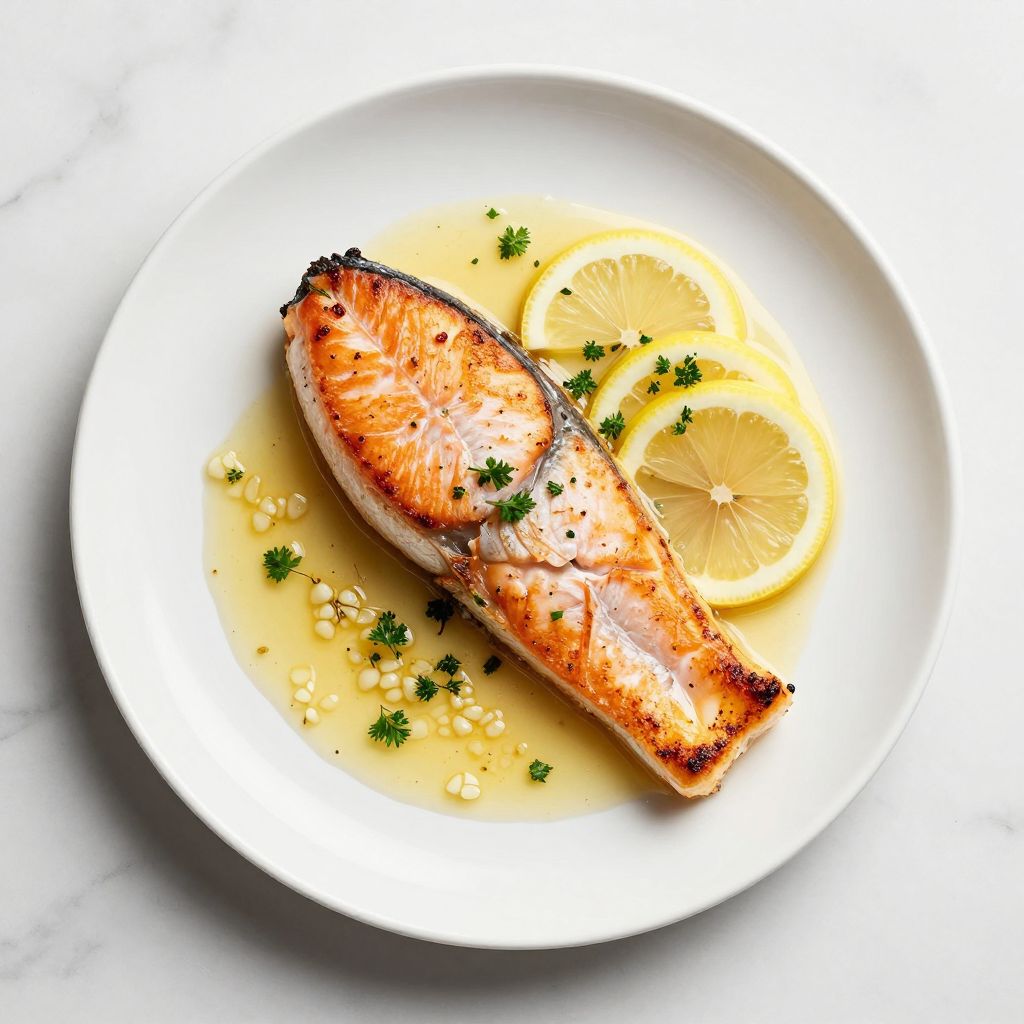
Pan-Seared Orange Roughy with Garlic and Lemon Butter
Ingredients
Equipment
Method
- Remove orange roughy fillets from the refrigerator and let stand at room temperature for 10 minutes.
- Pat the fillets dry with paper towels and season both sides generously with sea salt and fresh cracked black pepper.
- Heat a large skillet over medium-high heat for about 2 minutes.
- Add 2 tablespoons extra virgin olive oil and 1 tablespoon unsalted butter to the hot skillet; heat until the butter is foamy.
- Place fillets skin-side up in the pan and cook undisturbed for 4 to 5 minutes until the bottom is golden.
- Using a fish spatula, flip the fillets and cook for another 3 to 4 minutes until opaque and the internal temperature reaches 145°F.
- Add minced garlic to the pan and cook, stirring constantly, for 30 seconds until fragrant.
- Pour in 1/4 cup dry white wine and the juice of 1 lemon; scrape up any browned bits and simmer for 1 minute.
- Remove the pan from heat and stir in the remaining 2 tablespoons cold butter and fresh thyme until the sauce is silky.
- Transfer the fillets to plates, spoon the pan sauce over the top, and garnish with fresh parsley and lemon slices. Serve immediately.
Notes
Frequently Asked Questions
Can I use frozen orange roughy for this recipe?
Yes, but thaw it completely in the refrigerator overnight before cooking for the best texture and flavor. Cooking from frozen will result in uneven cooking and a less appealing final result.
What if I don’t have white wine for the pan sauce?
Substitute with chicken or vegetable broth, or simply use an equal amount of fresh lemon juice and a splash of water. The sauce will taste slightly different but will still be delicious and bright.
How do I know when the orange roughy is cooked through?
The flesh should change from translucent to opaque and should flake easily when poked with a fork. A meat thermometer inserted at the thickest part should read 145 degrees Fahrenheit.
Can I make this recipe ahead of time?
You can prep all your ingredients in advance, but cook the fish just before serving for the best texture and flavor. Cooked fish doesn’t hold well for more than a couple hours.
Is orange roughy a sustainable seafood choice?
Orange roughy is often considered overfished, so many chefs recommend choosing more sustainable white fish options like Pacific cod or halibut instead. Check local fishing reports and sustainable seafood guides for the most current information.
Why is my fish falling apart when I flip it?
Your heat is likely too high or you’re trying to flip before the bottom has set properly. Let the fish cook undisturbed for the full 4 to 5 minutes, and if it releases easily from the pan without sticking, it’s ready to flip.
Final Thoughts
Orange roughy doesn’t need fancy techniques or complicated flavor combinations to shine, and that’s exactly what makes this recipe so satisfying. When you treat this delicate fish with respect and keep things simple, you create something that tastes expensive but comes together in under 30 minutes.
Try this recipe this week and experience the joy of a restaurant-quality meal made in your own kitchen. Your weeknight dinner game is about to level up in the best possible way.
Explore More Seafood Recipes
If you loved making orange roughy, you’ll want to explore other delicious seafood options that cook just as quickly and impress just as easily.
Check out this fantastic ahi tuna recipe for a completely different flavor profile with a rich, meaty texture. You might also enjoy learning how to make mahi mahi in the oven, which offers another quick and elegant seafood dinner option for busy weeknights.