
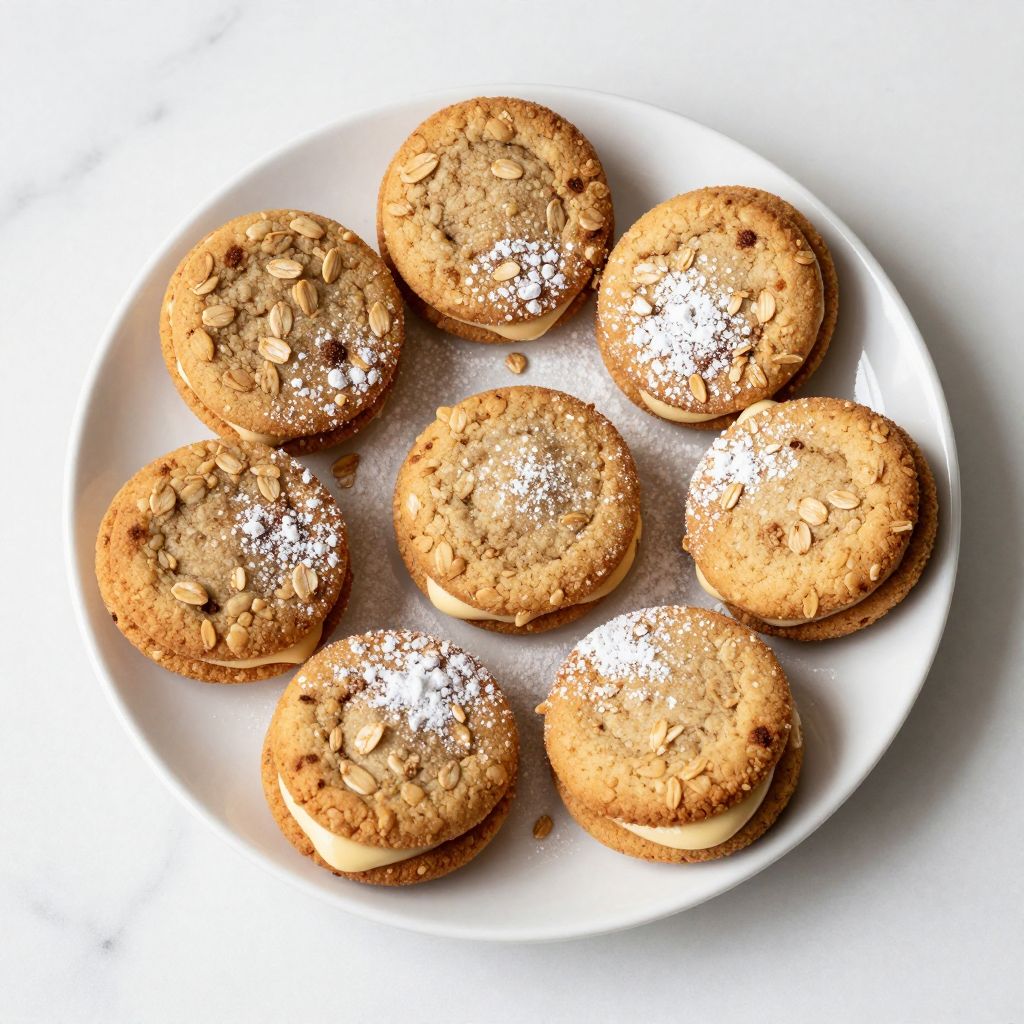
Picture this: you bite into a soft, chewy oatmeal cookie only to discover a thick layer of sweet, creamy filling sandwiched inside, and suddenly you understand why oatmeal cream pies have been beloved for generations. This oatmeal cream pie recipe delivers that nostalgic, homemade magic without requiring a culinary degree or hours in the kitchen.
What makes this recipe special is the perfect balance of textures: crispy-edged oatmeal cookies paired with a smooth, buttery filling that melts on your tongue. Whether you’re baking for a potluck, packing them in lunch boxes, or simply craving something indulgent, these cream pies hit the mark every single time.
Why You’ll Love This Recipe
This oatmeal cream pie recipe brings together the best of both worlds: chewy oatmeal cookies and creamy filling that tastes homemade, not store-bought.
- Soft, chewy oatmeal cookie exterior with slightly crispy edges
- Rich, smooth vanilla or brown butter filling that pairs perfectly with the oats
- Make-ahead friendly and stores well for several days
- Requires basic pantry ingredients you likely have on hand
- Impressive enough to serve guests yet simple enough for weeknight baking
My Experience Making This Recipe
The first time I made these, I was skeptical that homemade cream pies could rival the packaged versions I grew up eating. One bite changed everything, and I’ve been making them regularly ever since.
What struck me most was how the cookies spread just enough to get those golden, crispy edges while staying chewy in the center. The filling, when sandwiched between two warm cookies, softens slightly and creates this incredible texture contrast that packaged versions just cannot deliver.
My kids now request these over store-bought snacks, which tells you everything you need to know about how good they taste fresh from your own oven.
Recipe Overview
- Recipe Name: Oatmeal Cream Pie
- Servings: 12 cream pies (24 cookies)
- Prep Time: 20 minutes
- Cook Time: 12 minutes
- Total Time: 32 minutes, plus cooling and filling assembly
- Course: Dessert, Snack
- Cuisine: American
- Calories per Serving: 185
Equipment You Will Need
- Mixing bowls (at least two)
- Electric mixer or whisk
- Measuring cups and spoons
- Baking sheets
- Parchment paper
- Cookie scoop or spoon
- Wire cooling racks
- Rubber spatula
- Small saucepan for filling
- Piping bag with round tip (optional but helpful)
Ingredients for Oatmeal Cream Pie
For the Cookies
- Butter: 1/2 cup (115g), softened
- Brown sugar: 1/2 cup (100g) packed
- Granulated sugar: 1/4 cup (50g)
- Egg: 1 large
- Vanilla extract: 1 teaspoon
- All-purpose flour: 1 cup (120g)
- Rolled oats: 1 1/2 cups (150g) old-fashioned
- Baking soda: 1/2 teaspoon
- Salt: 1/2 teaspoon
- Cinnamon: 1/2 teaspoon
For the Cream Filling
- Butter: 1/2 cup (115g), softened
- Vegetable shortening: 1/4 cup (55g)
- Powdered sugar: 2 cups (240g)
- Vanilla extract: 2 teaspoons
- Salt: 1/8 teaspoon
- Milk: 2 to 3 tablespoons, as needed for consistency
Ingredient Notes and Substitutions
- Rolled oats: They provide the signature chewy texture and oatmeal flavor that defines this cookie. Quick oats work but yield a denser texture; steel-cut oats don’t soften properly in this application.
- Brown sugar: Its molasses content adds depth and chewiness compared to white sugar alone. You can substitute with an additional 1/4 cup granulated sugar, but the cookies will be slightly less moist.
- Vegetable shortening in the filling: It creates a fluffier, more stable frosting than butter alone and prevents greasiness. Substitute with an additional 1/4 cup softened butter for a richer, slightly less stable filling.
- Vanilla extract: Standard vanilla works perfectly, but you can use clear vanilla if you want the filling to stay pure white. Almond extract (1/2 teaspoon) is a delicious alternative.
- All-purpose flour: It provides structure without making cookies tough when combined with oats. Cake flour yields softer cookies but requires reducing by 2 tablespoons.
How to Make Oatmeal Cream Pie
Step 1: Preheat and Prepare
Preheat your oven to 350 degrees Fahrenheit and line your baking sheets with parchment paper. This prevents the cookies from sticking and ensures even browning on the bottom.
Step 2: Cream the Butter and Sugars
In a large mixing bowl, beat together the softened butter, brown sugar, and granulated sugar until the mixture is light and fluffy, about 2 to 3 minutes. This step incorporates air into the dough, which helps the cookies spread evenly and develop those desirable crispy edges.
Step 3: Add the Egg and Vanilla
Add the egg and vanilla extract to the butter mixture and beat until everything is well combined and smooth. Scrape down the bowl with a rubber spatula to ensure no pockets of unmixed butter remain.
Step 4: Combine Dry Ingredients
In a separate bowl, whisk together the flour, rolled oats, baking soda, salt, and cinnamon. Mixing the dry ingredients separately prevents lumps and distributes the leavening agent evenly throughout the dough.
Step 5: Mix the Dough
Add the dry ingredient mixture to the wet ingredients and stir until just combined. Do not overmix at this stage, as overworking the dough develops gluten and makes the cookies tough rather than chewy.
Step 6: Scoop and Space the Cookies
Using a cookie scoop or rounded tablespoon, place dough balls about 2 inches apart on your prepared baking sheets. Leave adequate space because these cookies spread moderately during baking.
Step 7: Bake the Cookies
Bake for 11 to 13 minutes, until the edges are golden brown but the centers still look slightly underdone. The cookies will continue cooking on the hot baking sheet after removal, so pulling them out slightly early ensures a chewy center paired with crispy edges.
Step 8: Cool Completely
Remove the baking sheets from the oven and let the cookies cool on the pan for 5 minutes before transferring them to a wire rack. Complete cooling takes about 30 minutes and is essential before assembling the cream pies, as warm cookies will melt the filling.
Step 9: Prepare the Filling
In a clean bowl, beat together the softened butter and vegetable shortening until smooth and creamy. Add the powdered sugar, vanilla extract, and salt, then beat on medium speed for 3 to 4 minutes until the filling is light and fluffy.
Step 10: Achieve the Right Consistency
Add milk one tablespoon at a time, beating gently, until the filling reaches a thick but spreadable consistency. The filling should hold its shape but be soft enough to spread or pipe without excessive effort.
Step 11: Assemble the Cream Pies
Match cookies into pairs of similar size, then spread or pipe a generous amount of filling onto the flat side of one cookie in each pair. Press the second cookie flat-side down onto the filling to create a sandwich.
Pro Tip: If you do not have a piping bag, simply spread the filling with a small offset spatula or the back of a spoon to avoid squishing the delicate cookies.
Tips for the Best Oatmeal Cream Pie
- Use old-fashioned rolled oats, not instant oatmeal, for the best texture and authentic flavor that defines this classic treat.
- Chill your baking sheets between batches if your kitchen runs warm, which helps prevent cookies from spreading too much before baking.
- Room-temperature ingredients mix more easily and incorporate air better than cold ones, resulting in lighter, fluffier cookies.
- Do not skip the cooling step before filling, as warm cookies collapse under the weight of the filling and create a messy texture.
- Store filled cookies in an airtight container with parchment between layers to prevent them from sticking together or breaking.
- For extra flavor, add a pinch of nutmeg or a teaspoon of molasses to the cookie dough for deeper, more complex spice notes.
Common Mistakes to Avoid
- Overmixing the dough: This develops too much gluten, resulting in tough, cake-like cookies instead of chewy ones that practically melt in your mouth.
- Using quick oats instead of rolled oats: Quick oats break down during mixing and baking, creating a mushy texture rather than the pleasant chewiness oatmeal cream pies should deliver.
- Skipping the cooling period: Assembling pies with warm cookies causes them to crumble and the filling to melt and seep out unevenly.
- Making the filling too thick or too thin: Filling that is too thick becomes hard to spread and lumpy, while filling that is too thin oozes out and makes cookies soggy.
- Baking the cookies too long: Overbaked cookies become hard and brittle, losing the tender, chewy quality that makes these treats special.
Serving Suggestions
These oatmeal cream pies shine on their own, but they pair beautifully with cold milk, coffee, or tea for an afternoon snack or simple dessert. Pack them in lunch boxes, serve them at bake sales, or enjoy them as an indulgent treat alongside other desserts.
- Serve with a cold glass of whole milk for a classic combination
- Pair with hot coffee or tea for an afternoon pick-me-up
- Pack in lunch boxes as a homemade alternative to store-bought snack cakes
- Arrange on a dessert platter alongside other homemade cookies and sweets
- Crumble and layer with whipped cream and berries for an elevated dessert
Variations to Try
- Brown Butter Filling: Brown your butter before mixing the filling to add nutty, complex flavor that elevates the entire cream pie experience and creates a deeper color.
- Spiced Oatmeal: Increase the cinnamon to 1 teaspoon and add 1/4 teaspoon each of ground ginger and cloves for a spiced version reminiscent of autumn baking.
- Maple Cream Filling: Substitute 1/4 cup of the powdered sugar with pure maple powder and add 1 tablespoon maple extract for a warm, seasonal twist.
- Chocolate-Dipped Edges: Melt 4 ounces of semi-sweet chocolate and dip the edges of assembled pies for extra indulgence and visual appeal.
- Raisin-Studded: Add 1 cup of raisins or chopped dried cranberries to the cookie dough for additional texture and tartness that complements the sweet filling.
Dietary Adaptations
- Gluten-Free: Substitute the all-purpose flour with a one-to-one gluten-free flour blend, though the cookies may be slightly denser and require 1 to 2 minutes less baking time.
- Dairy-Free: Use dairy-free butter and replace the milk in the filling with unsweetened almond or oat milk for a plant-based version that sacrifices minimal flavor.
- Vegan: Replace the egg with a flax egg (1 tablespoon ground flaxseed mixed with 3 tablespoons water) and use dairy-free butter and shortening for a fully vegan adaptation.
- Low-Sugar: Substitute granulated sugar and brown sugar with monk fruit sweetener or erythritol in equal amounts, though the texture may be slightly less chewy.
Storage and Reheating
Refrigerator
Store assembled oatmeal cream pies in an airtight container with parchment paper between layers to prevent sticking and preserve freshness. They remain soft and delicious for up to 5 days when refrigerated properly.
- Use parchment paper between layers to prevent cookies from sticking
- Keep the container sealed to prevent the filling from drying out
- Allow cookies to come to room temperature before eating for best texture
Freezer
Assembled cream pies freeze beautifully for up to 3 months when wrapped individually in plastic wrap and stored in a freezer-safe container. You can also freeze unfilled baked cookies for up to 2 months.
- Wrap each pie individually in plastic wrap before freezing
- Place wrapped pies in a freezer-safe container for extra protection
- Label the container with the date so you remember how long they have been frozen
Reheating
There is no need to reheat these cream pies; simply allow frozen ones to thaw at room temperature for 30 to 45 minutes before eating. If you prefer warm cookies, place unfilled baked cookies on a baking sheet and warm at 300 degrees for 5 minutes.
- Thaw frozen assembled pies at room temperature for 30 to 45 minutes
- Do not microwave assembled pies, as this makes the filling overly soft
- Warm unfilled cookies alone if you prefer them hot and fresh
Nutrition Information
| Nutrient | Amount |
|---|---|
| Calories | 185 |
| Total Fat | 9g |
| Saturated Fat | 5g |
| Carbohydrates | 24g |
| Fiber | 1g |
| Sugar | 18g |
| Protein | 2g |
| Sodium | 195mg |
| Cholesterol | 22mg |
This nutritional information is approximate and calculated using standard ingredients; actual values vary based on specific products and preparation methods used.
Frequently Asked Questions
Can I make the cookies ahead and fill them later?
Absolutely, and this is one of the best features of this recipe. Baked unfilled cookies keep in an airtight container for up to 5 days, allowing you to fill them whenever you like and saving cleanup time.
Why did my cookies turn out cakey instead of chewy?
This usually happens from overmixing the dough or overbaking the cookies. Mix just until combined and remove the cookies from the oven when the edges are golden but the centers look slightly underdone.
Can I use quick oats to save time?
Quick oats will work but produce a denser, mushier texture that lacks the pleasant chewiness of rolled oats. The texture difference is significant enough that it is worth seeking out old-fashioned rolled oats.
What if my filling is too thin and oozing out?
Add more powdered sugar by the tablespoon until the filling reaches a thicker consistency, then beat well to incorporate. If you accidentally made it too thin, simply refrigerate it for 15 to 20 minutes, which firms it up considerably.
How do I prevent the bottoms of my cookies from spreading too much?
Chill your dough for 15 minutes before scooping if your kitchen is warm, and rotate your baking sheets halfway through baking for even heat distribution. Using parchment paper also helps control spreading more effectively than a bare baking sheet.
Can I double this recipe?
Yes, simply double all ingredient amounts and be prepared to bake in multiple batches since your oven has limited space. Keep unused dough in the refrigerator while batches bake to prevent it from drying out or spreading excessively.
Final Thoughts
Making oatmeal cream pies at home transforms a nostalgic childhood favorite into something even better when crafted with care and quality ingredients. These cookies remind us that the best desserts need not be complicated or time-consuming to impress.
Bake a batch this week and discover why homemade truly tastes superior to store-bought, and why your family will request these again and again. Your kitchen will smell incredible, your loved ones will thank you, and you will have created memories baked right into every bite.
Looking for more cookie inspiration? Try our Cookie Monster Cookie recipe for a fun, indulgent treat, or explore our Protein Cookies recipe for a nutritious option that does not skimp on flavor.
Oatmeal Cream Pie
Ingredients
Equipment
Method
- Preheat oven to 350°F (175°C) and line baking sheets with parchment paper.
- In a large bowl, beat together softened butter, brown sugar, and granulated sugar for 2 to 3 minutes until light and fluffy.
- Add the egg and vanilla extract to the butter mixture and beat until smooth, scraping down the sides of the bowl.
- In a separate bowl, whisk together flour, rolled oats, baking soda, salt, and cinnamon until evenly combined.
- Add the dry ingredients to the wet ingredients and stir until just combined, being careful not to overmix.
- Using a cookie scoop or spoon, drop dough balls about 2 inches apart onto the prepared baking sheets.
- Bake cookies at 350°F (175°C) for 11 to 13 minutes, until the edges are golden brown and the centers still look slightly underdone.
- Let cookies cool on the baking sheets for 5 minutes, then transfer to wire racks and cool completely, about 30 minutes.
- In a clean bowl, beat softened butter and vegetable shortening until smooth, then add powdered sugar, vanilla extract, and salt and beat on medium speed for 3 to 4 minutes until light and fluffy.
- Add milk one tablespoon at a time and beat gently until the filling is thick but spreadable.
- Pair cookies of similar size and spread or pipe a generous amount of filling onto the flat side of one cookie, then top with the second cookie to form a sandwich.