
Picture this: a creamy, smooth, and rich mayonnaise that elevates your sandwiches and salads to another level. Making your own Mayonnaise Recipe With Olive Oil is not just about flavor, but it’s also a fun cooking adventure that lets you control the ingredients and tailor it to your taste.
This homemade mayo is quick and easy, boasting a delightful texture and a hint of fruity olive oil that store-bought versions just can’t match. Plus, it’s versatile and can be used in countless dishes, so let’s jump into the ingredients and steps to whip up this delightful condiment!
Why You’ll Love This Recipe
This mayonnaise recipe is a true kitchen staple that’s worth making from scratch.
- Rich and creamy texture that’s hard to beat.
- Using olive oil adds a lovely flavor twist.
- Simple ingredients you likely already have at home.
- Customization options to suit your personal taste.
- Healthier than many store-bought versions, with no preservatives.
My Experience Making This Recipe
When I first decided to make mayonnaise at home, I was pleasantly surprised by how straightforward it was. The aroma of fresh olive oil while blending brought back memories of family dinners where homemade condiments ruled the table.
After the first taste test, I couldn’t help but share it with friends. They were amazed at how much better it was compared to the jarred stuff, and let’s just say it quickly became a crowd favorite!
Recipe Overview
- Recipe Name: Mayonnaise Recipe With Olive Oil
- Servings: 8
- Prep Time: 10 minutes
- Cook Time: 0 minutes
- Total Time: 10 minutes
- Course: Condiment
- Cuisine: American
- Calories per Serving: 94
Equipment You Will Need
- Blender or food processor
- Measuring cups
- Measuring spoons
- Spatula
- Storage container
Ingredients for Mayonnaise Recipe With Olive Oil
- 1 large egg (at room temperature for best emulsion)
- 1 tablespoon Dijon mustard (for flavor and emulsion support)
- 1 tablespoon white wine vinegar (adds acidity)
- 1 cup extra virgin olive oil (for a rich flavor)
- Salt (to taste)
Ingredient Notes and Substitutions
- Egg: Essential for emulsifying the mayo; use pasteurized eggs for safety.
- Dijon mustard: Provides flavor; yellow mustard can be a substitute, but the taste will vary.
- White wine vinegar: Adds necessary acidity; lemon juice can be used instead.
- Extra virgin olive oil: Offers a robust flavor; avocado oil is a milder substitute.
- Salt: Enhances flavor; feel free to use sea salt or kosher salt.
How to Make Mayonnaise Recipe With Olive Oil
Step 1: Gather Ingredients
Start by gathering all your ingredients on the counter. Having everything ready makes the process smoother and more enjoyable.
Step 2: Blend the Egg and Mustard
Add the large egg and Dijon mustard to your blender or food processor. Blend on high for about 10 seconds until mixed well.
Step 3: Add Vinegar
Next, pour in the white wine vinegar. This adds acidity and helps create a stable emulsion.
Step 4: Start Blending
With the blender running, slowly begin to drizzle in the olive oil. Start slowly to ensure the mixture emulsifies properly and doesn’t separate.
Step 5: Continue Blending
Keep blending and gradually increase the speed as you add the oil. You will notice the mixture thickening and turning creamy.
Step 6: Season with Salt
Once all the oil is integrated, taste the mayonnaise and add salt to your liking. This step is crucial for enhancing the overall flavor.
Step 7: Check Consistency
If the mayo is too thick, you can blend in a teaspoon of water to achieve your desired consistency. Creamy and luscious is the goal!
Step 8: Store Properly
Transfer the mayonnaise to a storage container and refrigerate. Homemade mayo can last about a week in the fridge if sealed properly.
Pro Tip: Make sure all your ingredients are at room temperature for the best emulsion.
Tips for the Best Mayonnaise Recipe With Olive Oil
- Use fresh, high-quality olive oil for the best flavor.
- Experiment with different vinegars for unique flavor profiles.
- Keep your blender or food processor running during the oil addition for a stable emulsion.
- Don’t rush the oil pouring; a steady stream is key.
- Adjust seasoning after blending to perfect the taste.
Common Mistakes to Avoid
- Using cold ingredients can prevent emulsification.
- Pouring the oil too fast can lead to a broken mayo.
- Not blending long enough may leave the mayo too thin.
- Skipping the seasoning step can lead to bland mayo.
Serving Suggestions
This homemade mayonnaise is perfect for a variety of dishes. Serve it as a spread or dip, and enjoy its versatility.
- On sandwiches or wraps for an extra creamy layer.
- As a base for salad dressings.
- With roasted vegetables for a tasty dip.
- In potato or pasta salad for a rich flavor.
Variations to Try
- Add garlic for a delicious garlic mayo.
- Mix in fresh herbs like basil or dill for an herb-infused version.
- Use chipotle pepper for a smoky, spicy kick.
- Incorporate lemon zest for a bright and zesty twist.
- Swap olive oil for avocado oil for a milder flavor.
Dietary Adaptations
- Gluten-free: This recipe is naturally gluten-free.
- Dairy-free: No dairy is used, making it suitable for dairy-free diets.
- Vegan/vegetarian: Use aquafaba instead of egg for a vegan option.
- Low-carb/keto: This mayo is low in carbohydrates, making it keto-friendly.
Storage and Reheating
Refrigerator
Store your mayonnaise in an airtight container in the fridge. It should last about a week.
- Label the container with the date made.
- Keep it sealed to maintain freshness.
Freezer
Freezing mayonnaise is not recommended as it can change the texture. It’s best enjoyed fresh.
Reheating
Reheating mayonnaise is unnecessary since it’s served cold. Simply give it a good stir before using.
Nutrition Information
| Nutrient | Amount |
|---|---|
| Calories | 94 |
| Total Fat | 10g |
| Saturated Fat | 1.5g |
| Carbohydrates | 0g |
| Fiber | 0g |
| Sugar | 0g |
| Protein | 1g |
| Sodium | 70mg |
| Cholesterol | 37mg |
This nutrition information is an estimate and can vary based on specific ingredients used.
Frequently Asked Questions
Can I substitute the egg in this recipe?
Yes, you can use aquafaba, the liquid from canned chickpeas, for a vegan version.
How long can I store homemade mayonnaise?
It can be stored in the refrigerator for about a week if kept in an airtight container.
What if my mayonnaise doesn’t thicken?
If the mayo doesn’t thicken, try adding another egg yolk and blending again.
Can I make this mayo ahead of time?
Absolutely! It’s perfect for making ahead and storing for later use.
What can I use instead of olive oil?
You can substitute with avocado oil or a neutral oil like canola for a milder flavor.
Final Thoughts
Making your own mayonnaise is a rewarding experience that enhances your dishes with fresh flavor. Once you try it, you’ll wonder why you ever relied on store-bought!
So go ahead and experiment with this recipe, and don’t forget to check out more delicious ideas like garlic mayo or try out a savory mayo chicken dish to elevate your meals!
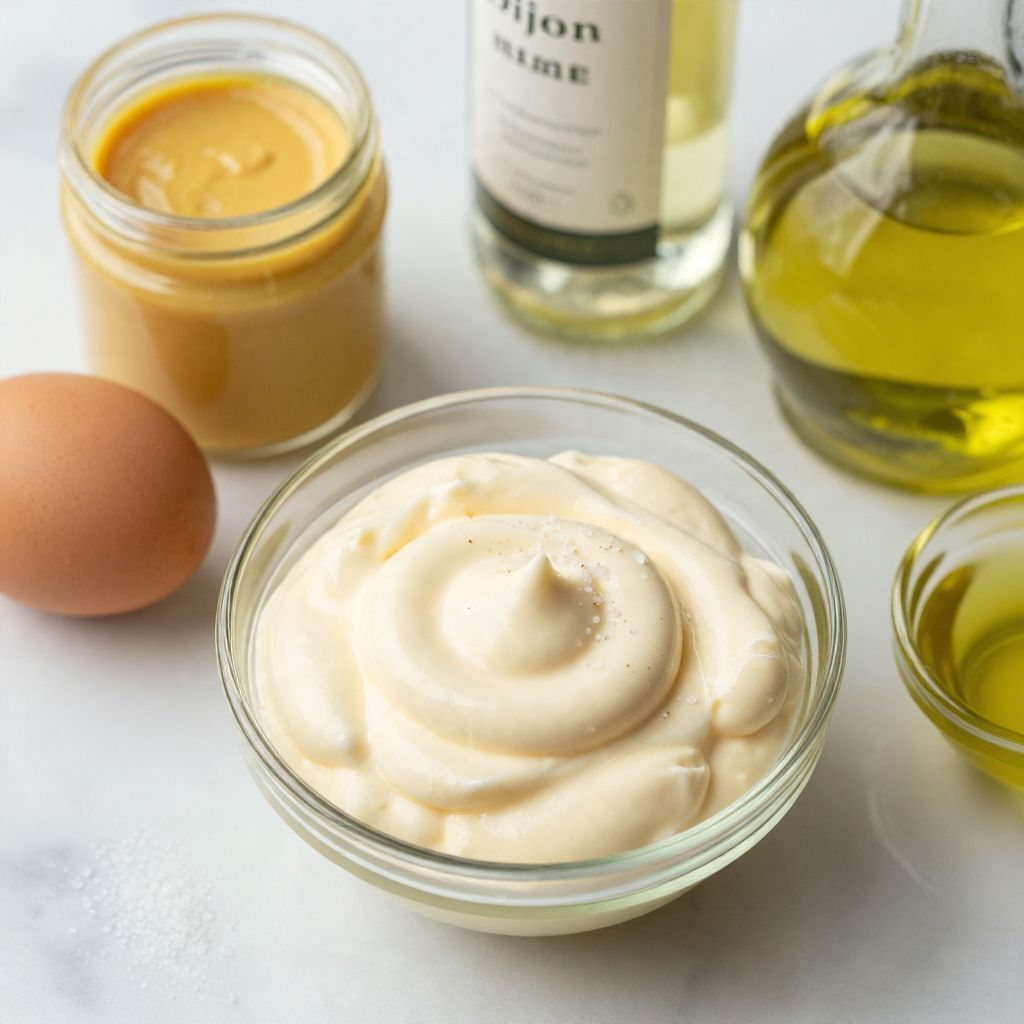
Mayonnaise Recipe With Olive Oil
Ingredients
Equipment
Method
- Gather all your ingredients on the counter.
- Add the large egg and Dijon mustard to your blender or food processor. Blend on high for about 10 seconds until mixed well.
- Pour in the white wine vinegar.
- With the blender running, slowly drizzle in the olive oil.
- Keep blending and gradually increase the speed while adding the oil until the mixture thickens and becomes creamy.
- Taste the mayonnaise and add salt to your liking.
- If the mayo is too thick, blend in a teaspoon of water for desired consistency.
- Transfer the mayonnaise to a storage container and refrigerate.