
There’s something magical about the aroma of sizzling beef marinated in a delicious blend of soy sauce, garlic, and ginger that instantly transports me to my favorite Korean BBQ spot. This Korean Beef Recipe is a quick, flavorful dish that’s perfect for busy weeknights yet impressive enough for gatherings. With its tender, juicy meat and a delightful balance of sweet and savory flavors, it’s bound to become a staple in your kitchen.
Why You’ll Love This Recipe
This recipe is a crowd-pleaser that brings a taste of Korea to your dinner table.
- Quick and easy to prepare, perfect for busy weeknights.
- Rich, savory flavors that make it incredibly satisfying.
- Versatile; serve it over rice, noodles, or in lettuce wraps.
- Great for meal prep; it tastes even better the next day!
My Experience Making This Recipe
The first time I made this dish, the aroma filled my kitchen, and I could hardly wait to dig in. My family gathered around the table, and the moment they took the first bite, their eyes lit up—it was a hit!
Each time I make this recipe, I can’t help but smile as I watch everyone enjoy the blend of flavors. It’s truly rewarding to see a dish bring such joy.
Recipe Overview
- Recipe Name: Korean Beef
- Servings: 4
- Prep Time: 15 minutes
- Cook Time: 10 minutes
- Total Time: 25 minutes
- Course: Main Course
- Cuisine: Korean
- Calories per Serving: 350
Equipment You Will Need
- Large mixing bowl
- Whisk or fork
- Skillet or frying pan
- Measuring cups and spoons
- Cutting board and knife
Ingredients for Korean Beef
- 1 lb flank steak, thinly sliced against the grain
- 1/4 cup soy sauce
- 2 tbsp brown sugar
- 1 tbsp sesame oil
- 3 cloves garlic, minced
- 1 tsp ginger, grated
- 1/4 tsp black pepper
- 2 tbsp green onions, chopped (for garnish)
- Sesame seeds (optional, for garnish)
Ingredient Notes and Substitutions
- Flank steak: This cut is tender and flavorful, perfect for quick cooking. You can substitute it with sirloin or ribeye if needed.
- Soy sauce: It adds umami and saltiness. For a gluten-free version, use tamari.
- Brown sugar: This gives a hint of sweetness. Honey or coconut sugar can work as alternatives.
- Sesame oil: It contributes a nutty flavor. You can replace it with olive oil for a lighter taste.
How to Make Korean Beef
Step 1: Prepare the Marinade
In a large mixing bowl, whisk together soy sauce, brown sugar, sesame oil, minced garlic, grated ginger, and black pepper. This marinade infuses the beef with flavor, so don’t skip this step!
Step 2: Marinate the Beef
Add the thinly sliced flank steak to the marinade, ensuring all pieces are well-coated. Let it marinate for at least 15 minutes; longer if you have time, as this deepens the flavors.
Step 3: Heat the Skillet
Place your skillet over medium-high heat and allow it to get hot. A hot pan helps sear the beef, locking in juices and flavor.
Step 4: Cook the Beef
Add the marinated beef in a single layer to the skillet. Avoid overcrowding; cook in batches if necessary to ensure a good sear.
Step 5: Sear the Beef
Cook the beef for about 2-3 minutes without stirring, allowing it to develop a nice brown crust. This adds depth to the dish.
Step 6: Stir and Finish Cooking
Once the underside is browned, stir the beef and cook for another 2-3 minutes until cooked through. This ensures even cooking and a great texture.
Step 7: Garnish and Serve
Remove the skillet from heat and sprinkle chopped green onions and sesame seeds on top. This adds a fresh and crunchy element to the dish.
Step 8: Enjoy!
Serve the beef over steamed rice, noodles, or in lettuce wraps. Enjoy the flavors and textures that make this dish so special.
Pro Tip: For the best flavor, let the beef marinate for at least 30 minutes, or even overnight if you can plan ahead.
Tips for the Best Korean Beef
- Slice the beef against the grain to maximize tenderness.
- Use fresh garlic and ginger for the best flavor.
- Don’t skip the sesame oil; it’s key to that authentic flavor.
- Adjust the sugar to your taste if you prefer a sweeter sauce.
- Feel free to add vegetables like bell peppers or broccoli for a colorful stir-fry.
Common Mistakes to Avoid
- Not marinating long enough; this can lead to bland beef.
- Cooking on low heat; you want a good sear for flavor.
- Overcrowding the skillet; it steams the beef instead of searing it.
- Using old spices; fresh ingredients make a huge difference in flavor.
Serving Suggestions
This dish pairs wonderfully with a variety of sides, making it adaptable to your meal preferences.
- Steamed jasmine or sticky rice
- Stir-fried vegetables for added crunch
- Kimchi for a spicy kick
- Cold noodles for a refreshing contrast
Variations to Try
- Add spicy gochujang for a kick; it enhances the depth of flavor.
- Swap beef for chicken or tofu for a different protein option.
- Incorporate mushrooms for an earthy flavor.
- Use zucchini noodles instead of rice for a low-carb twist.
Dietary Adaptations
- Gluten-free: Use tamari instead of soy sauce.
- Dairy-free: This recipe is naturally dairy-free.
- Vegan: Substitute beef with tofu or tempeh.
- Low-carb/keto: Serve with cauliflower rice instead of regular rice.
Storage and Reheating
Refrigerator
Store leftovers in an airtight container in the fridge for up to 3 days.
- Ensure the dish is completely cooled before sealing.
- Refrigerate promptly to keep it safe.
Freezer
This dish freezes well for up to 2 months.
- Use a freezer-safe container or bag, removing as much air as possible.
- Label with the date to keep track.
Reheating
Reheat in a skillet over medium heat until warmed through.
- Add a splash of water or broth if it seems dry.
- Microwaving is also an option, but be cautious not to overcook.
Nutrition Information
| Nutrient | Amount |
|---|---|
| Calories | 350 |
| Total Fat | 20g |
| Saturated Fat | 6g |
| Carbohydrates | 15g |
| Fiber | 1g |
| Sugar | 8g |
| Protein | 30g |
| Sodium | 800mg |
| Cholesterol | 70mg |
This nutritional information is approximate and may vary based on ingredients used.
Frequently Asked Questions
Can I use a different cut of beef?
Absolutely! Sirloin or ribeye can also work well and provide great flavor.
Can I make this ahead of time?
Yes, you can marinate the beef a day in advance for even better flavor.
How do I store leftovers?
Store leftover Korean beef in an airtight container in the refrigerator for up to 3 days.
Why is my beef tough?
Overcooking or not slicing against the grain can result in tough beef. Make sure to slice it correctly.
Can I make this dish spicy?
Yes! Adding gochujang or red pepper flakes can give it a nice heat.
Final Thoughts
Making Korean Beef at home is not just about flavor; it’s about creating memories around the dinner table. I encourage you to give this recipe a try and see how it transforms your weeknight meals.
If you enjoyed this recipe, explore more delicious options like Galbitang or learn to whip up a flavorful Gochujang Sauce for your next culinary adventure.
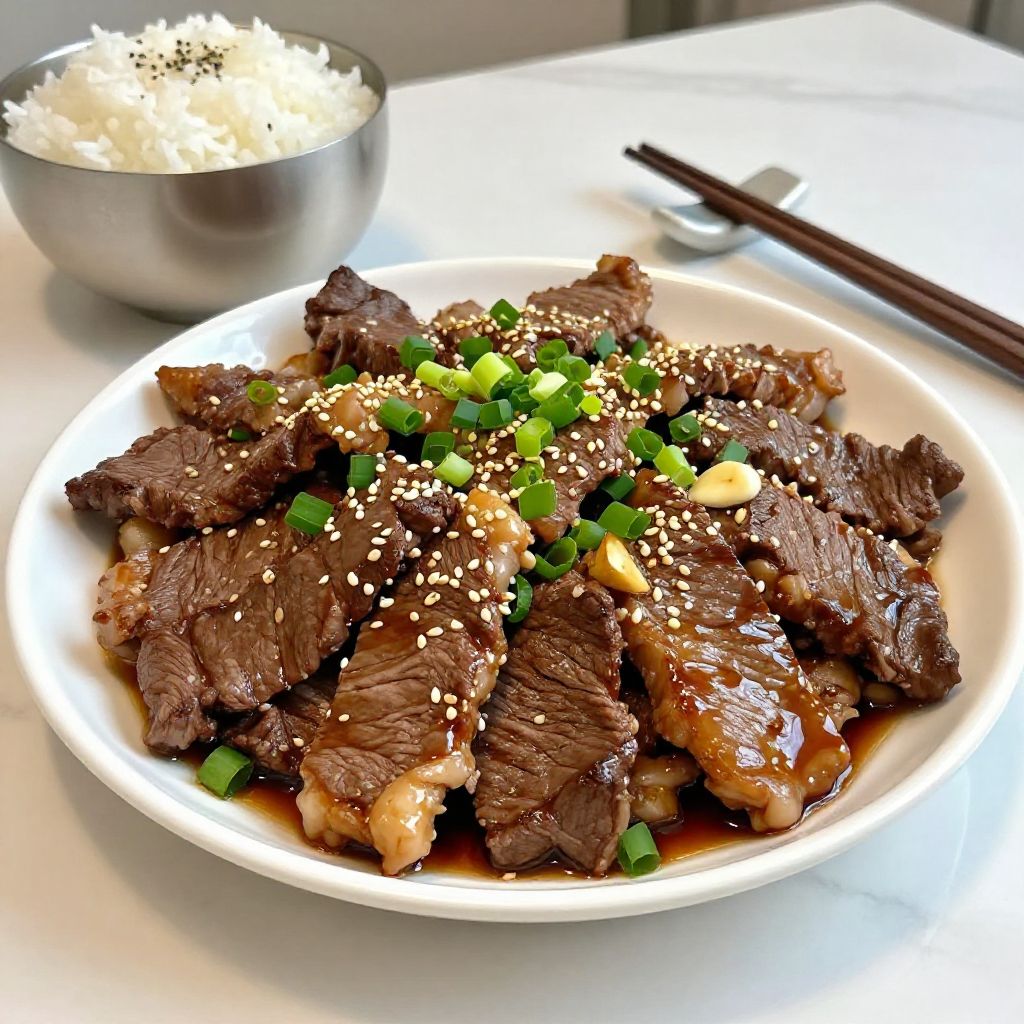
Korean Beef
Ingredients
Equipment
Method
- In a large mixing bowl, whisk together soy sauce, brown sugar, sesame oil, minced garlic, grated ginger, and black pepper.
- Add the thinly sliced flank steak to the marinade, ensuring all pieces are well-coated. Let it marinate for at least 15 minutes.
- Place your skillet over medium-high heat and allow it to get hot.
- Add the marinated beef in a single layer to the skillet. Avoid overcrowding; cook in batches if necessary.
- Cook the beef for about 2-3 minutes without stirring, allowing it to develop a nice brown crust.
- Once the underside is browned, stir the beef and cook for another 2-3 minutes until cooked through.
- Remove the skillet from heat and sprinkle chopped green onions and sesame seeds on top.
- Serve the beef over steamed rice, noodles, or in lettuce wraps.