
There’s something magical about the creamy texture and nutty flavor of hummus that makes it a beloved dip for gatherings or a simple snack at home. This recipe stands out because it’s quick to whip up, packed with protein, and endlessly versatile, allowing you to customize it with different spices and toppings. Whether you’re spreading it on pita, pairing it with fresh veggies, or slathering it on a sandwich, this hummus will elevate your snacking game!
Why You’ll Love This Recipe
You will adore this recipe for its simplicity and flavor.
- Quick to prepare with minimal ingredients.
- Healthy and packed with protein from chickpeas.
- Perfectly creamy with a rich, nutty flavor.
- Endlessly customizable with various toppings and spices.
- Great for meal prep and makes fantastic leftovers.
My Experience Making This Recipe
When I first made this hummus, I was amazed at how easy it was to get that restaurant-quality creaminess at home. The first time I served it, my friends devoured it faster than I could say “hummus” — it was a hit!
Since then, I’ve experimented with various flavor combinations and toppings. Each batch has been a delightful adventure, whether I added roasted garlic or a sprinkle of smoked paprika. Each version brings its own charm to the table!
Recipe Overview
- Recipe Name: Hummus
- Servings: 6
- Prep Time: 10 minutes
- Cook Time: 0 minutes
- Total Time: 10 minutes
- Course: Appetizer
- Cuisine: Middle Eastern
- Calories per Serving: 120
Equipment You Will Need
- Food processor or high-speed blender
- Measuring cups and spoons
- Spatula
- Serving bowl
Ingredients for Hummus
- 1 can (15 oz) chickpeas, drained and rinsed
- 1/4 cup tahini
- 2 tablespoons olive oil
- 1 tablespoon lemon juice
- 1 clove garlic, minced
- 1/2 teaspoon ground cumin
- Salt, to taste
- Water, as needed for consistency
Ingredient Notes and Substitutions
- Chickpeas: The base of hummus, providing creaminess and protein. You can use dried chickpeas, just soak and cook them first.
- Tahini: Adds a rich, nutty flavor. You can swap it with sunflower seed butter for a nut-free option.
- Olive oil: Enhances flavor and creaminess. Avocado oil works well as a substitute.
- Lemon juice: Provides brightness. Lime juice can be used in its place for a different zing.
- Garlic: Adds depth of flavor. Roasted garlic is a sweeter alternative.
How to Make Hummus
Step 1: Prepare the Chickpeas
Drain and rinse the chickpeas under cold water. This helps remove excess sodium and any canning liquid that can affect the flavor.
Step 2: Combine Ingredients
Add the chickpeas, tahini, olive oil, lemon juice, garlic, ground cumin, and salt to the food processor. This is where the magic begins!
Step 3: Blend Until Smooth
Process the mixture until it’s smooth and creamy. If it’s too thick, add water a tablespoon at a time until you reach your desired consistency.
Step 4: Taste and Adjust
Give your hummus a taste and adjust the seasoning as needed. This is your chance to customize it to your liking, so don’t hesitate to add more salt or lemon juice.
Step 5: Transfer to a Bowl
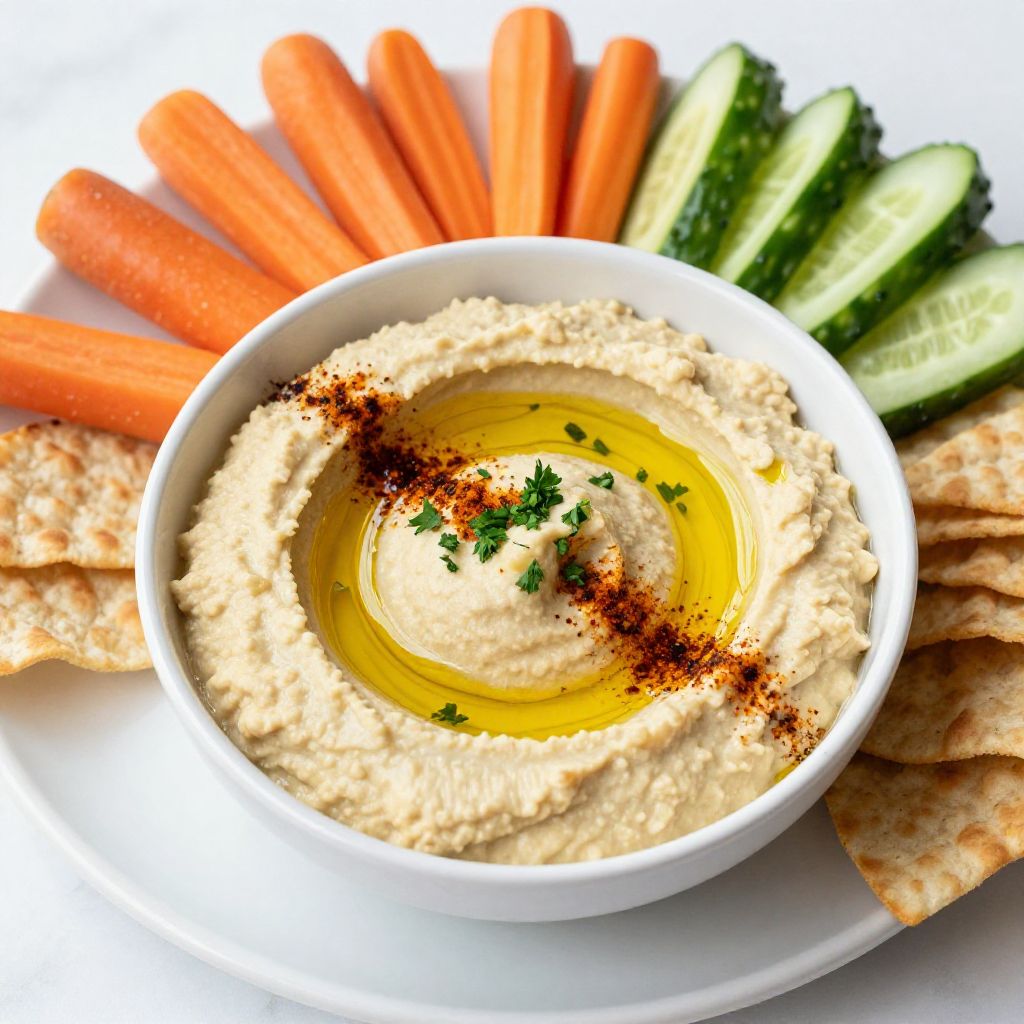
Scrape the hummus into a serving bowl. The presentation is key, so make it look lovely!
Step 6: Drizzle with Olive Oil
Drizzle a little olive oil on top for richness and flavor. This adds a beautiful sheen and enhances the taste.
Step 7: Add Garnishes
Sprinkle with paprika, chopped parsley, or toasted sesame seeds. These toppings not only look great but also add extra flavor.
Step 8: Serve and Enjoy!
Grab some pita bread, fresh veggies, or crackers and dive in! The best part is sharing it with friends and family.
Pro Tip: For an ultra-smooth hummus, peel the chickpeas before blending. It’s a bit of a chore, but the texture is worth it!
Tips for the Best Hummus
- Use high-quality tahini for a richer flavor.
- Experiment with herbs and spices to create unique variations.
- Serve with a variety of dippers for a colorful platter.
- Store leftovers in an airtight container to maintain freshness.
- For a smoky flavor, add a dash of smoked paprika or cumin.
Common Mistakes to Avoid
- Over-blending can make hummus too runny. Stop once it’s creamy.
- Not using enough salt leads to bland hummus. Season generously!
- Skipping the tahini makes for a less authentic flavor.
- Using cold ingredients can affect the texture. Bring them to room temperature first.
- Not tasting as you go might leave you with a less balanced dip.
Serving Suggestions
Hummus pairs beautifully with a variety of foods. Try serving it with:
- Pita chips
- Fresh vegetable sticks like carrots and cucumbers
- Crackers or bread
- As a spread on sandwiches or wraps
- With falafel or grilled meats for a Middle Eastern feast
Variations to Try
- Roasted red pepper hummus: Blend in roasted red peppers for a sweet twist.
- Spicy hummus: Add a pinch of cayenne or a splash of hot sauce for heat.
- Herbed hummus: Toss in fresh herbs like basil or cilantro for brightness.
- Beet hummus: Blend in cooked beets for a vibrant color and earthy flavor.
- Avocado hummus: Mix in avocado for creaminess and a hint of green.
Dietary Adaptations
- Gluten-free: Naturally gluten-free, perfect for everyone!
- Dairy-free: Completely free of dairy ingredients.
- Vegan: A fantastic plant-based option for all.
- Low-carb/keto: Pair with low-carb veggies for a keto-friendly snack.
Storage and Reheating
Refrigerator
Store hummus in an airtight container in the fridge. It stays fresh for up to a week.
- Make sure to press plastic wrap against the surface to minimize browning.
Freezer
Hummus can be frozen for up to three months. Just thaw it in the fridge overnight before serving.
- For best results, freeze in smaller portions.
Reheating
Hummus is best served cold or at room temperature. If it thickens, stir in a bit of water or olive oil to reach the desired consistency.
- Never microwave hummus, as it can change the flavor.
Nutrition Information
| Nutrient | Amount |
|---|---|
| Calories | 120 |
| Total Fat | 7g |
| Saturated Fat | 1g |
| Carbohydrates | 10g |
| Fiber | 3g |
| Sugar | 1g |
| Protein | 5g |
| Sodium | 200mg |
| Cholesterol | 0mg |
This nutrition information is based on a standard serving size and may vary based on specific ingredients used.
Frequently Asked Questions
Can I use fresh chickpeas instead of canned?
Yes, but you’ll need to soak and cook them beforehand, which takes extra time.
How far in advance can I make hummus?
You can make it up to a week ahead of time. Just store it properly in the fridge.
Can I freeze hummus?
Absolutely! Just make sure to store it in an airtight container.
What if my hummus is too thick?
Add a little water or olive oil to thin it out, blending until smooth.
Can I make hummus without tahini?
Yes, you can substitute it with a nut or seed butter for a different flavor profile.
Final Thoughts
Making your own hummus is a rewarding experience that lets you control flavors and ingredients. I encourage you to give this recipe a try; you might find yourself never going back to store-bought again!
For more delicious recipes, check out this hummus recipe without tahini for a delightful twist!
Hummus
Ingredients
Equipment
Method
- Drain and rinse the chickpeas under cold water to remove excess sodium and canning liquid.
- Add chickpeas, tahini, olive oil, lemon juice, garlic, ground cumin, and salt to the food processor.
- Process until smooth and creamy, adding water a tablespoon at a time if the mixture is too thick.
- Taste and adjust seasoning by adding more salt or lemon juice as desired.
- Transfer hummus into a serving bowl, smoothing the top with a spatula.
- Drizzle with a little olive oil for extra richness.
- Garnish with paprika, chopped parsley, or toasted sesame seeds.
- Serve with pita bread, fresh vegetables, or crackers.