
There’s something magical about dipping warm pita into a bowl of creamy, homemade hummus. This Homemade Hummus Recipe is not just a spread; it’s a versatile delight that can elevate any snack or meal. With its rich, nutty flavor and smooth texture, you’ll find yourself craving it more often than you expected. Plus, it’s super easy to whip up in under 10 minutes, making it perfect for busy weeknights or entertaining guests. Let’s dive into how to create this delicious dip!
Why You’ll Love This Recipe
This hummus is a crowd-pleaser that you can customize to your taste. It’s healthy, flavorful, and incredibly easy to prepare.
- Quick prep time of just 10 minutes.
- Made with simple ingredients you likely have on hand.
- Perfect as a snack, appetizer, or sandwich spread.
- Customizable with your favorite spices and additions.
- Great for meal prep and storage.
My Experience Making This Recipe
I still remember the first time I made hummus at home. The aroma of garlic mingled with tahini made my kitchen feel like a cozy Mediterranean café.
My friends were amazed that I had made this creamy delight from scratch, and it quickly vanished from the serving bowl. Now, I make it regularly, experimenting with flavors like roasted red pepper or spicy harissa.
Recipe Overview
- Recipe Name: Homemade Hummus
- Servings: 4
- Prep Time: 10 minutes
- Cook Time: 0 minutes
- Total Time: 10 minutes
- Course: Appetizer
- Cuisine: Mediterranean
- Calories per Serving: 100
Equipment You Will Need
- Food processor
- Measuring cups
- Measuring spoons
- Spatula
- Serving bowl
Ingredients for Homemade Hummus
- 1 can (15 oz) chickpeas, drained and rinsed
- 1/4 cup tahini
- 2 tablespoons lemon juice
- 2 cloves garlic, minced
- 2 tablespoons olive oil
- 1/2 teaspoon ground cumin
- Salt to taste
- Water as needed for consistency
Ingredient Notes and Substitutions
- Chickpeas: Provide the base of the hummus and a good source of protein. You can use dried chickpeas that have been cooked, but canned is much quicker.
- Tahini: Adds a creamy texture and nutty flavor. You can substitute with sunflower seed butter for a nut-free option.
- Lemon juice: Brings acidity to balance the flavors. Lime juice can be used as a substitute.
- Olive oil: Enhances the creaminess and richness. Avocado oil is a great alternative.
- Ground cumin: Adds warmth and depth. You can omit it for a more straightforward flavor.
How to Make Homemade Hummus
Step 1: Gather Ingredients
Start by assembling all the ingredients on your kitchen counter. Having everything at hand makes the process smooth and efficient.
Step 2: Prepare the Chickpeas
Drain and rinse the chickpeas under cold water to remove any excess sodium. This step ensures a cleaner flavor and smoother texture.
Step 3: Blend the Base
In a food processor, combine the chickpeas, tahini, lemon juice, and minced garlic. Blend until the mixture is smooth and creamy.
Step 4: Add Olive Oil and Spices
While blending, drizzle in the olive oil and add ground cumin. This enriches the flavor and gives it that classic hummus taste.
Step 5: Adjust Consistency
If the hummus is too thick, add a tablespoon of water at a time until you reach your desired consistency. This step is crucial for achieving that perfect creamy texture.
Step 6: Season to Taste
Add salt to your taste preference. A little pinch can go a long way in enhancing the flavors.
Step 7: Serve or Store
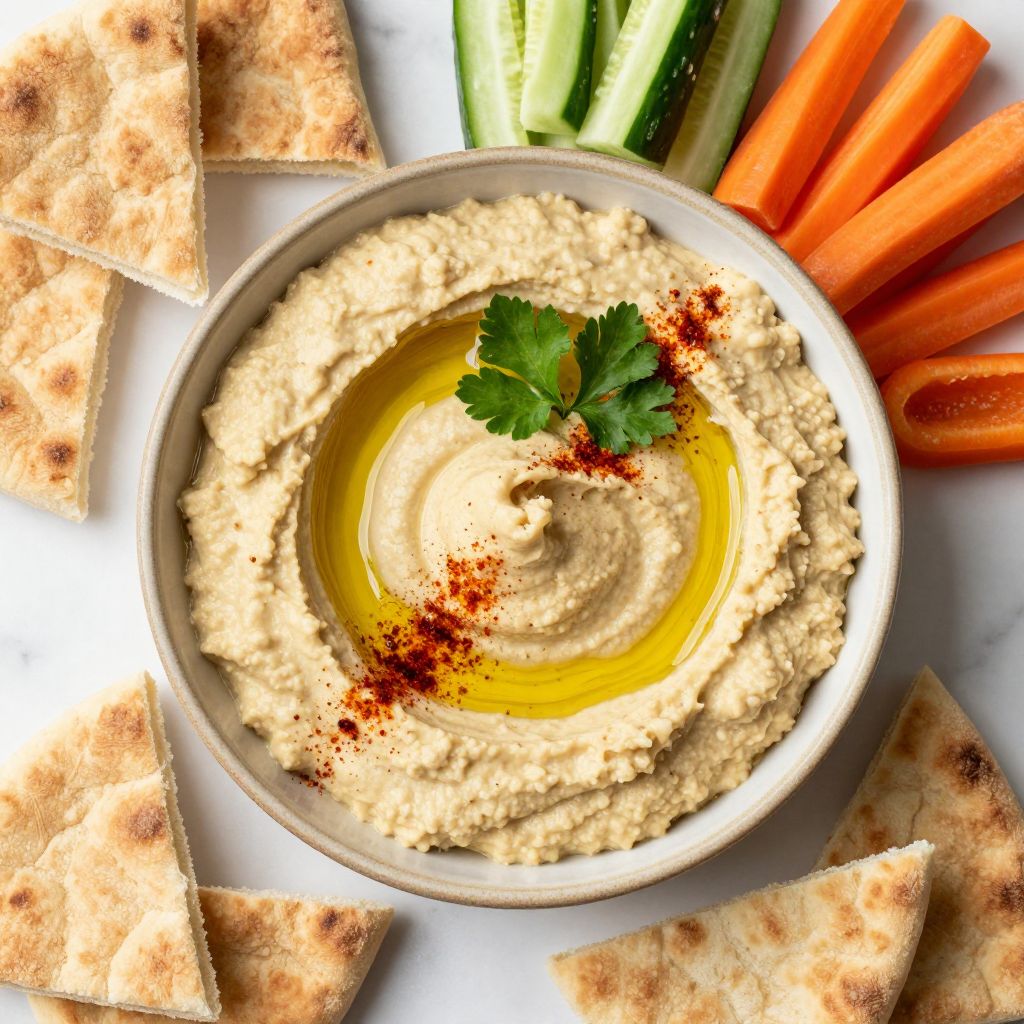
Transfer the hummus to a serving bowl. You can drizzle extra olive oil on top for a beautiful presentation.
Step 8: Enjoy!
Pair the hummus with pita chips, fresh vegetables, or spread it on sandwiches. The possibilities are endless with this delightful dip.
Pro Tip: For extra creaminess, consider peeling the chickpeas before blending. It might sound tedious, but it makes a noticeable difference!
Tips for the Best Homemade Hummus
- Use fresh lemon juice for a brighter flavor.
- Experiment with different spices like smoked paprika or cayenne for added depth.
- Chill the hummus in the fridge for an hour before serving to let the flavors meld.
- Garnish with a sprinkle of paprika or fresh herbs for a pop of color.
- Try roasting the garlic for a sweeter, milder flavor.
Common Mistakes to Avoid
- Skipping the rinsing step can lead to a salty taste from canned chickpeas.
- Not blending long enough can leave the hummus chunky instead of smooth.
- Overusing tahini can overpower the other flavors.
- Forgetting to season properly will make your hummus taste bland.
Serving Suggestions
This hummus is incredibly versatile and pairs well with a variety of foods.
- Pita bread or pita chips
- Fresh vegetable sticks like carrots and cucumbers
- As a spread on sandwiches or wraps
- On top of grain bowls or salads
- As part of a mezze platter with olives and feta
Variations to Try
- Roasted garlic hummus: Roast garlic cloves and blend them in for a sweeter flavor.
- Spicy hummus: Add jalapeños or sriracha for a kick.
- Beet hummus: Blend in roasted beets for a vibrant color and earthy flavor.
- Herbed hummus: Mix in fresh herbs like parsley or cilantro for a fresh twist.
Dietary Adaptations
- Gluten-free: This recipe is naturally gluten-free.
- Dairy-free: All ingredients are dairy-free, making it vegan-friendly.
- Low-carb/keto: Use less chickpeas and add more olive oil for a lower-carb option.
Storage and Reheating
Refrigerator
Store hummus in an airtight container in the fridge for up to a week.
- Cover the surface with a thin layer of olive oil to keep it fresh.
Freezer
Hummus can be frozen for up to three months. Just transfer it to a freezer-safe container.
- Thaw in the fridge overnight before serving.
Reheating
There’s no need to heat hummus, but if you prefer it warm, microwave in short bursts.
- Stir well to ensure even heating.
Nutrition Information
| Nutrient | Amount |
|---|---|
| Calories | 100 |
| Total Fat | 6g |
| Saturated Fat | 1g |
| Carbohydrates | 10g |
| Fiber | 2g |
| Sugar | 1g |
| Protein | 4g |
| Sodium | 200mg |
| Cholesterol | 0mg |
This nutritional information is an estimate and may vary based on specific ingredients used.
Frequently Asked Questions
Can I make hummus without tahini?
Yes, you can make hummus without tahini by using sunflower seed butter or simply omitting it. The texture will be slightly different but still delicious.
How long can I store hummus?
Hummus can be stored in the refrigerator for up to a week. Just make sure to keep it in an airtight container.
Can I freeze hummus?
Absolutely! Hummus freezes well for up to three months. Just thaw it in the fridge before serving.
Why is my hummus grainy?
A grainy texture can occur if you do not blend it long enough. Make sure to blend thoroughly until smooth.
What can I add to enhance the flavor?
You can experiment with spices, roasted vegetables, or herbs to create unique flavors. A pinch of smoked paprika or fresh herbs can make a big difference.
Final Thoughts
Making your own hummus is a rewarding experience that pays off in flavor and freshness. You’ll find that this simple recipe opens the door to a world of delicious possibilities.
So go ahead and give it a try; you might just find it becomes a staple in your kitchen. For more delicious dips, check out this hummus recipe without tahini or try a delightful whipped ricotta recipe!
Homemade Hummus
Ingredients
Equipment
Method
- Assemble all the ingredients on your kitchen counter.
- Drain and rinse the chickpeas under cold water.
- In a food processor, combine the chickpeas, tahini, lemon juice, and minced garlic. Blend until smooth and creamy.
- While blending, drizzle in the olive oil and add ground cumin.
- If the hummus is too thick, add water a tablespoon at a time until desired consistency is reached.
- Add salt to taste for seasoning.
- Transfer the hummus to a serving bowl and drizzle extra olive oil on top if desired.