
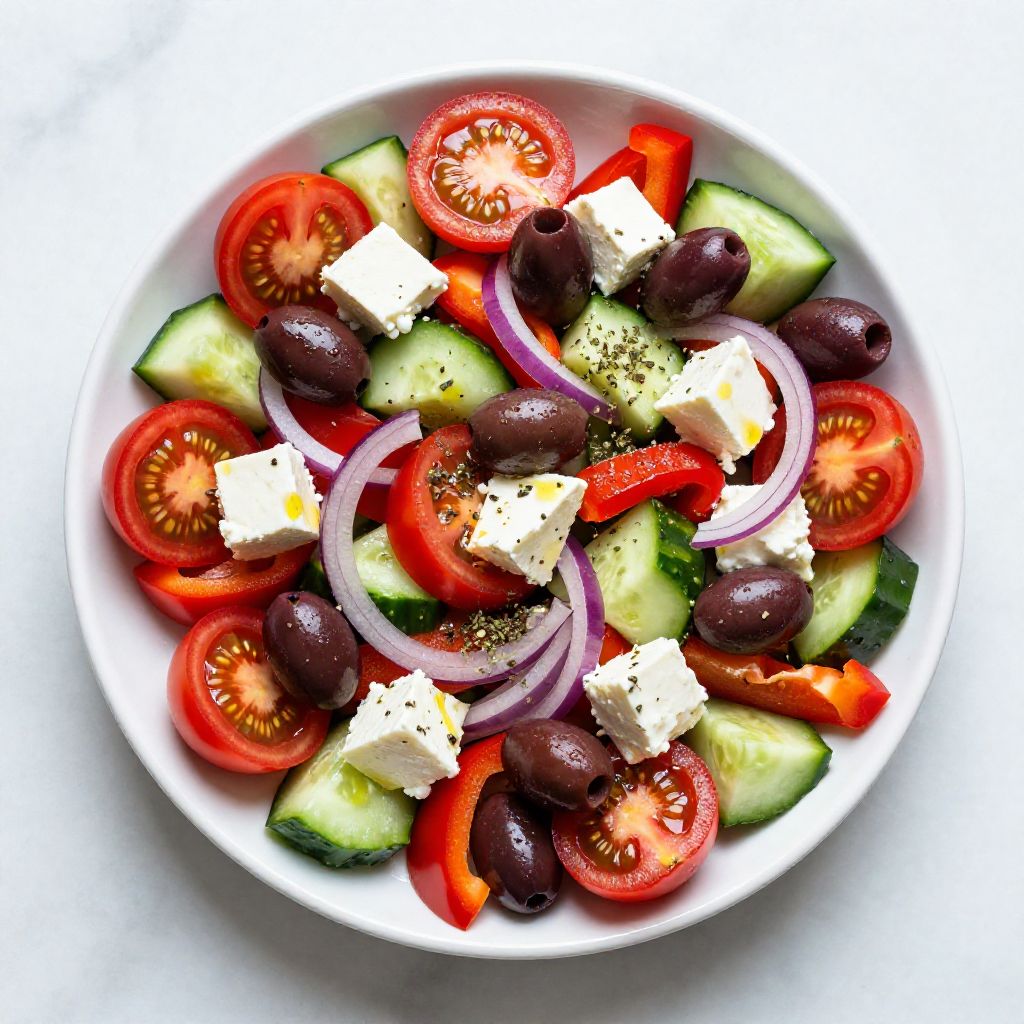
Picture this: a warm summer evening, the sun setting as you prepare a fresh and colorful Greek Salad. This dish is a delightful combination of juicy tomatoes, crisp cucumbers, and creamy feta, all drizzled with olive oil and a splash of tangy vinegar. It’s the perfect side for any meal or a light main course on its own. What makes this salad truly special is its bright flavors, vibrant colors, and the ease with which it comes together. In just a few minutes, you can create a dish that not only looks stunning but also tastes like a little slice of Greece. Let’s gather our ingredients and get started!
Why You’ll Love This Recipe
This Greek Salad is a crowd-pleaser that combines freshness and taste in every bite.
- Quick to prepare, making it perfect for busy days.
- Healthy and packed with nutritious ingredients.
- Versatile enough to serve as a side or main dish.
- Bright, fresh flavors that brighten any meal.
- Easy to customize with your favorite ingredients.
My Experience Making This Recipe
The first time I made Greek Salad, I was surprised at how simple yet flavorful it was. The crunch of fresh vegetables paired with the creaminess of feta is a match made in culinary heaven.
Everyone at the table went back for seconds, and I felt like a kitchen rockstar. It’s hard not to feel accomplished when you whip up something this easy that tastes so gourmet!
Recipe Overview
- Recipe Name: Greek Salad
- Servings: 4
- Prep Time: 15 minutes
- Cook Time: 0 minutes
- Total Time: 15 minutes
- Course: Salad
- Cuisine: Greek
- Calories per Serving: 200
Equipment You Will Need
- Cutting board
- Sharp knife
- Large mixing bowl
- Measuring cups and spoons
- Whisk (optional)
Ingredients for Greek Salad
- 2 cups cherry tomatoes, halved
- 1 cucumber, diced
- 1 bell pepper, diced
- 1/2 red onion, thinly sliced
- 1 cup Kalamata olives, pitted
- 1 cup feta cheese, crumbled
- 1/4 cup olive oil
- 2 tablespoons red wine vinegar
- 1 teaspoon dried oregano
- Salt and pepper to taste
Ingredient Notes and Substitutions
- Cherry tomatoes: They are sweet and juicy, but you can use any ripe tomatoes. Just chop them into bite-sized pieces.
- Cucumber: Adds crunch and freshness; substitute with a pickling cucumber if preferred.
- Kalamata olives: They bring a briny flavor; green olives can work if you prefer a milder taste.
- Feta cheese: Creamy and tangy; goat cheese can be a great alternative for a different flavor.
- Olive oil: Extra virgin is best for flavor; any light oil can replace it if needed.
How to Make Greek Salad
Step 1: Prepare the Vegetables
Start by washing all your vegetables thoroughly. This ensures they are clean and ready to enjoy.
Step 2: Chop the Tomatoes
Halve the cherry tomatoes and place them in a large mixing bowl. Their sweetness will add a burst of flavor to the salad.
Step 3: Dice the Cucumber
Dice the cucumber and add it to the bowl. This will provide a refreshing crunch that balances the other ingredients.
Step 4: Add the Bell Pepper
Dice the bell pepper and toss it into the bowl. The color and sweetness will elevate the salad visually and taste-wise.
Step 5: Slice the Red Onion
Thinly slice the red onion and add it to the mix. This will add a sharp contrast to the sweetness of the other vegetables.
Step 6: Toss in the Olives
Add the Kalamata olives to the bowl. Their briny flavor complements the salad and adds a Mediterranean touch.
Step 7: Crumble the Feta
Sprinkle the crumbled feta cheese over the top. It adds creaminess and a tangy flavor that pairs beautifully with the veggies.
Step 8: Prepare the Dressing
In a small bowl, whisk together the olive oil, red wine vinegar, oregano, salt, and pepper. This dressing brings all the flavors together.
Step 9: Combine and Toss
Pour the dressing over the salad and gently toss everything together. This ensures each bite is coated in deliciousness.
Step 10: Serve Immediately
Enjoy your Greek Salad right away for the best flavor and texture. Freshness is key here!
Pro Tip: Let the salad sit for about 10 minutes before serving to allow the flavors to meld beautifully.
Tips for the Best Greek Salad
- Use the freshest ingredients possible to enhance the salad’s flavor.
- Don’t over-dress the salad; you can always add more later if needed.
- For extra flavor, marinate the salad for a bit before serving.
- Experiment with different olives for a unique twist on flavor.
- Serve with crusty bread for a complete meal experience.
Common Mistakes to Avoid
- Skipping the salt: It brings out the flavors, so don’t leave it out.
- Using old vegetables: Fresh produce is key to a great salad.
- Not letting it sit: This allows flavors to blend and enhances taste.
- Overloading on dressing: Too much can drown out the fresh flavors.
Serving Suggestions
This Greek Salad pairs well with a variety of dishes, making it versatile for any meal.
- Grilled chicken or fish for a protein boost.
- Pita bread or warm naan for a delightful dip.
- Roasted vegetables for a hearty side.
- Quinoa or couscous for a filling meal.
Variations to Try
- Add avocado for a creamy texture and healthy fats.
- Incorporate chickpeas for extra protein and fiber.
- Mix in fresh herbs like parsley or basil for a burst of freshness.
- Try adding artichoke hearts for a unique Mediterranean flair.
Dietary Adaptations
- Gluten-free: This salad is naturally gluten-free.
- Dairy-free: Omit the feta or use a dairy-free cheese alternative.
- Vegan: Skip the cheese and enjoy the salad as is.
- Low-carb/keto: This salad is perfect as it is low in carbs.
Storage and Reheating
Refrigerator
Store leftovers in an airtight container in the refrigerator.
- Consume within 3 days for the best taste.
- Keep the dressing separate if possible to maintain freshness.
Freezer
Freezing is not recommended due to the texture of the vegetables.
- Fresh salads do not thaw well.
Reheating
Serve chilled; this salad is meant to be enjoyed cold.
- Simply take it out of the fridge and dig in!
Nutrition Information
| Nutrient | Amount |
|---|---|
| Calories | 200 |
| Total Fat | 15g |
| Saturated Fat | 5g |
| Carbohydrates | 10g |
| Fiber | 3g |
| Sugar | 4g |
| Protein | 6g |
| Sodium | 350mg |
| Cholesterol | 20mg |
This nutritional information is an estimate and can vary based on ingredient choices.
Frequently Asked Questions
Can I make this salad ahead of time?
Yes, but it’s best to add the dressing just before serving to keep the veggies crisp.
What can I substitute for feta cheese?
Goat cheese or a dairy-free alternative can work well if you want to make it dairy-free.
How do I store leftovers?
Keep leftovers in an airtight container in the fridge for up to three days.
Why is my salad watery?
This can happen if you use overripe tomatoes or let the salad sit too long before serving.
Can I add more protein to this salad?
Absolutely! Grilled chicken, shrimp, or chickpeas are all excellent additions.
Final Thoughts
This Greek Salad is a delightful, fresh dish that brings a taste of the Mediterranean to your table. With its vibrant colors and bold flavors, it’s a salad you will make again and again.
Don’t hesitate to experiment with the ingredients to make it your own. Explore more delicious recipes like this one, such as an olive salad recipe or a viral cucumber salad recipe that will keep your meals exciting!
Greek Salad
Ingredients
Equipment
Method
- Wash all vegetables thoroughly under cold running water.
- Halve the cherry tomatoes and place them in a large mixing bowl.
- Dice the cucumber and add it to the bowl.
- Dice the bell pepper and toss into the bowl.
- Thinly slice the red onion and add to the mixture.
- Add the pitted Kalamata olives to the bowl and gently stir.
- Sprinkle the crumbled feta cheese over the top of the salad.
- In a small bowl, whisk together the olive oil, red wine vinegar, dried oregano, salt, and pepper to make the dressing.
- Pour the dressing over the salad and gently toss until ingredients are evenly coated.
- Let the salad sit for about 10 minutes before serving to allow the flavors to meld.
- Serve immediately and enjoy fresh.