
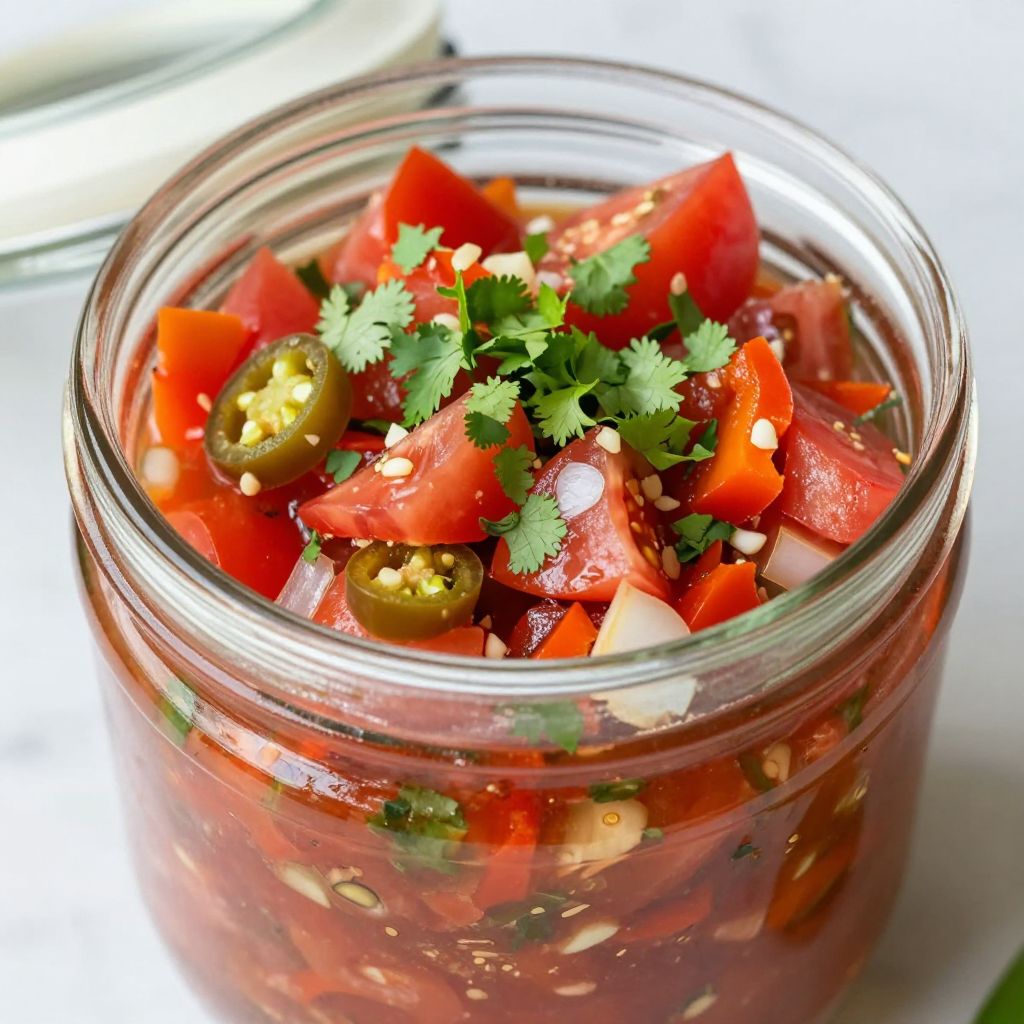
Picture this: a warm summer evening, and the air is filled with the intoxicating aroma of fresh tomatoes and herbs. Making your own Fermented Salsa is a delightful way to capture that essence in a jar, and it’s far easier than you might think! This recipe is not just about flavor; it brings a tangy twist that enhances your meals, all while being packed with probiotics. Plus, it’s a fantastic way to use up all those garden tomatoes. Let’s dive into how you can create this vibrant condiment at home!
Why You’ll Love This Recipe
This Fermented Salsa is a game changer for your kitchen. Its unique flavor and health benefits make it a must-try.
- Bold flavors from fresh ingredients.
- Probiotic-rich for gut health.
- Versatile for various dishes.
- Easy to customize based on your taste.
- Perfect for preserving seasonal produce.
My Experience Making This Recipe
I first tried my hand at fermenting salsa last summer, and wow, was I surprised at how delicious it turned out! The tanginess from the fermentation process added a depth of flavor that store-bought versions just can’t match.
Each bite bursts with freshness and a slight fizz that elevates tacos, chips, or even grilled meats. It became an instant hit at family gatherings, and I found myself making batch after batch!
Recipe Overview
- Recipe Name: Fermented Salsa
- Servings: 4 cups
- Prep Time: 15 minutes
- Cook Time: 0 minutes
- Total Time: 15 minutes + fermentation
- Course: Condiment
- Cuisine: Mexican
- Calories per Serving: 20
Equipment You Will Need
- Glass jar with lid (quart-sized)
- Mixing bowl
- Knife and cutting board
- Measuring cups and spoons
- Fermentation weight (optional)
Ingredients for Fermented Salsa
- 4 ripe tomatoes, diced
- 1 medium onion, diced
- 1 bell pepper, diced
- 1 jalapeño, seeded and minced
- 2 cloves garlic, minced
- 1 tablespoon sea salt
- 1 tablespoon lime juice
- 1/4 cup cilantro, chopped
Ingredient Notes and Substitutions
- Tomatoes: They provide the base and sweetness; substitute with canned tomatoes if fresh are not available.
- Onion: Adds flavor depth; red or yellow onions work well as alternatives.
- Bell Pepper: For sweetness and crunch; use any color or omit if preferred.
- Jalapeño: Delivers heat; swap with a milder pepper if you prefer less spice.
- Cilantro: Brightens the salsa; parsley can be used for a different flavor.
How to Make Fermented Salsa
Step 1: Prepare the Vegetables
Begin by washing and dicing your tomatoes, onion, bell pepper, and jalapeño. Cutting them into uniform pieces helps with even fermentation.
Step 2: Mix Ingredients
In a mixing bowl, combine the diced vegetables, minced garlic, salt, and lime juice. This mixture will create the brine necessary for fermentation.
Step 3: Pack the Jar
Transfer the mixture into your glass jar. Press down firmly to remove air pockets, ensuring the vegetables are submerged in their juices.
Step 4: Add Weight (If Needed)
If you have a fermentation weight, place it on top of the salsa to keep the vegetables submerged. This prevents spoilage due to exposure to air.
Step 5: Cover the Jar
Seal the jar loosely with the lid or cover with a cloth secured with a rubber band. This allows gases to escape during fermentation.
Step 6: Ferment the Salsa
Store the jar in a cool, dark place for 3 to 7 days. Taste it daily; once it reaches your desired tanginess, it is ready to be moved to the fridge.
Step 7: Store in the Refrigerator
After fermentation, tighten the lid and transfer the salsa to the refrigerator. This halts the fermentation process while keeping the flavors fresh.
Step 8: Enjoy!
Your Fermented Salsa is now ready to be enjoyed! Use it as a dip, topping, or even in recipes needing a flavor boost.
Pro Tip: Keep tasting your salsa daily during fermentation to find that perfect balance of tanginess!
Tips for the Best Fermented Salsa
- Use fresh, ripe tomatoes for the best flavor.
- Experiment with different pepper varieties to customize the heat level.
- Ensure all utensils and jars are clean to prevent unwanted bacteria.
- Store in the fridge once fermented to maintain flavor and freshness.
- Don’t skip the salt; it’s crucial for the fermentation process.
Common Mistakes to Avoid
- Not using enough salt can lead to spoilage instead of fermentation.
- Leaving the jar sealed tightly can cause it to explode from gas buildup.
- Insufficiently pressing the mixture can result in uneven fermentation.
- Ignoring the fermentation time can lead to an overly sour salsa.
Serving Suggestions
This salsa pairs wonderfully with a variety of dishes. Here are some great ideas to enjoy it:
- Serve with tortilla chips for a zesty appetizer.
- Top grilled chicken or fish for an added kick.
- Mix into scrambled eggs for a flavorful breakfast.
- Add it to tacos for an unbeatable flavor boost.
Variations to Try
- Add mango or pineapple for a sweet and spicy twist.
- Incorporate black beans for extra texture and protein.
- Try different herbs like basil or oregano for unique flavor profiles.
- Use smoked chili peppers for a smoky flavor.
Dietary Adaptations
- Gluten-free: Naturally gluten-free, perfect for all diets.
- Dairy-free: This recipe is completely dairy-free.
- Vegan: All ingredients are plant-based.
- Low-carb/Keto: Low in carbohydrates, suitable for a keto diet.
Storage and Reheating
Refrigerator
Store your fermented salsa in the fridge for up to 3 months. Keep it tightly sealed to maintain freshness.
- Transfer to smaller jars if you want to keep some untouched.
- Always use a clean utensil to scoop out salsa.
Freezer
You can freeze salsa for up to 6 months. However, the texture may change after thawing.
- Consider freezing in ice cube trays for easy portioning.
- Thaw in the fridge before use for best results.
Reheating
Reheating is not necessary unless using in a hot dish. Just let it come to room temperature before serving.
- Stir well after thawing to rehydrate the ingredients.
Nutrition Information
| Nutrient | Amount |
|---|---|
| Calories | 20 |
| Total Fat | 0g |
| Saturated Fat | 0g |
| Carbohydrates | 5g |
| Fiber | 1g |
| Sugar | 2g |
| Protein | 1g |
| Sodium | 450mg |
| Cholesterol | 0mg |
This nutritional information is an estimate and will vary based on the specific ingredients used.
Frequently Asked Questions
Can I use canned tomatoes instead of fresh?
Yes, canned tomatoes can work in a pinch but may alter the flavor slightly.
How long can I store the fermented salsa?
In the fridge, it can last up to 3 months, while frozen salsa should be used within 6 months.
What if my salsa is too salty?
If it’s too salty, consider adding more diced tomatoes to balance the flavor.
Can I use different types of peppers?
Absolutely! Feel free to experiment with different peppers to find your favorite heat level.
Is fermentation safe to do at home?
Yes, as long as you follow proper sanitation and fermentation guidelines, it is safe and rewarding.
Final Thoughts
Making Fermented Salsa is a fun and flavorful way to experiment in the kitchen. Once you try it, you may never go back to store-bought!
If you enjoyed this recipe, check out my other favorites like Habanero Salsa Recipe or Smoked Salsa Recipe for more culinary inspiration!
Fermented Salsa
Ingredients
Equipment
Method
- Begin by washing and dicing your tomatoes, onion, bell pepper, and jalapeño.
- In a mixing bowl, combine the diced vegetables, minced garlic, salt, and lime juice.
- Transfer the mixture into your glass jar, pressing down firmly to remove air pockets.
- If you have a fermentation weight, place it on top of the salsa.
- Seal the jar loosely with the lid or cover with a cloth secured with a rubber band.
- Store the jar in a cool, dark place for 3 to 7 days, tasting daily.
- Once it reaches your desired tanginess, tighten the lid and transfer the salsa to the refrigerator.
- Your Fermented Salsa is now ready to be enjoyed!