
Picture this: a crunchy, tangy bite of okra that packs a probiotic punch. My journey into the world of fermented okra began with a craving for something a little different, and I discovered that the process is not only simple but also incredibly rewarding.
This Fermented Okra Recipe is a delightful way to preserve this underappreciated vegetable while adding a zesty twist to your meals. The flavor is a perfect balance of tart and crunchy, making it an ideal snack or topping for salads and sandwiches.
Why You’ll Love This Recipe
This recipe is all about adding fun and flavor to your kitchen. It’s a unique way to enjoy okra while boosting your gut health.
- Easy to prepare with minimal ingredients.
- Full of probiotics that promote gut health.
- Versatile enough to use in various dishes.
- Crunchy texture that elevates any meal.
- Perfectly tangy flavor that makes it irresistible.
My Experience Making This Recipe
The first time I made fermented okra, I was amazed at how simple the process was. Watching the okra transform over a few days was like magic, and the aroma that filled my kitchen was a delightful reminder of the flavors to come.
When I finally tasted my first batch, it was a revelation. The crunchy texture and tangy flavor made it hard to resist snacking straight from the jar, and friends loved it as a unique party appetizer.
Recipe Overview
- Recipe Name: Fermented Okra
- Servings: 4
- Prep Time: 15 minutes
- Cook Time: 0 minutes (fermentation time varies)
- Total Time: 5 days (including fermentation)
- Course: Snack, Side Dish
- Cuisine: Southern
- Calories per Serving: 30
Equipment You Will Need
- Quart-sized mason jar
- Small pot for brine
- Measuring cups and spoons
- Weight or a smaller jar for pressing
- Clean cloth or coffee filter for covering
Ingredients for Fermented Okra
- 1 lb fresh okra, washed and trimmed
- 2 cups water, filtered
- 2 tablespoons sea salt
- 1 teaspoon mustard seeds (optional)
- 1 teaspoon garlic cloves, sliced (optional)
- 1 teaspoon red pepper flakes (optional)
Ingredient Notes and Substitutions
- Fresh okra: Provides the best texture and flavor. Frozen okra can be used but may not have the same crunch.
- Sea salt: Enhances flavor and promotes fermentation. Table salt can work but may contain additives.
- Mustard seeds: Add a nice flavor. You can omit them if you prefer.
- Garlic cloves: Bring depth to the flavor. Feel free to skip if you’re not a garlic fan.
- Red pepper flakes: Offer a spicy kick. Adjust to your heat preference or leave out.
How to Make Fermented Okra
Step 1: Prepare the Brine
Combine the filtered water and sea salt in a small pot. Heat gently until the salt dissolves completely, then let it cool.
Step 2: Pack the Jar
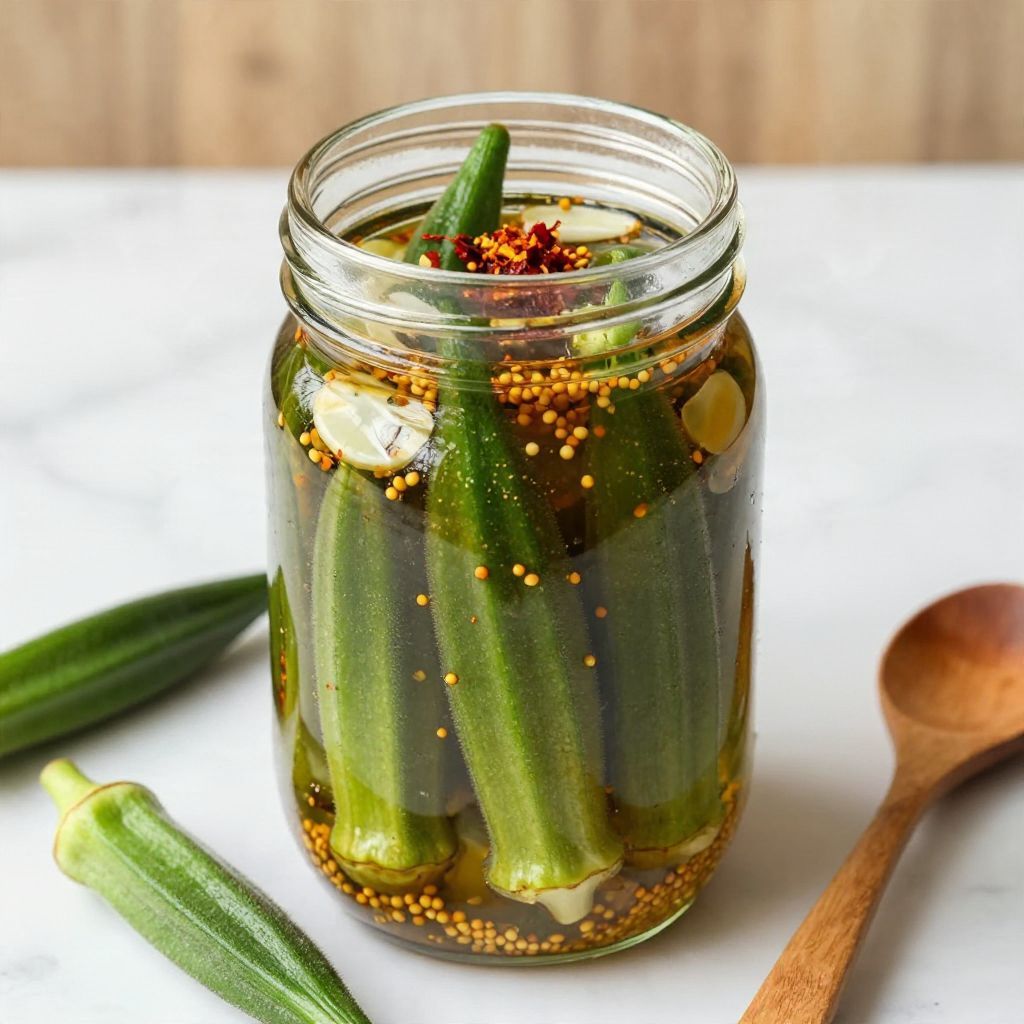
Place the trimmed okra in the mason jar, standing them upright for optimal brining. You can add mustard seeds, garlic, and red pepper flakes between layers for added flavor.
Step 3: Pour the Brine
Once the brine has cooled, pour it over the okra, ensuring they are fully submerged. Leave about an inch of headspace at the top of the jar.
Step 4: Weigh Down the Okra
Use a smaller jar filled with water or a fermentation weight to keep the okra submerged. This prevents exposure to air, which can lead to spoilage.
Step 5: Cover the Jar
Cover the jar with a clean cloth or coffee filter secured with a rubber band. This allows gases to escape while keeping dust and insects out.
Step 6: Ferment
Place the jar in a cool, dark spot for about 3 to 5 days. Check daily to ensure the okra remains submerged and look for bubbly activity, which indicates fermentation.
Step 7: Taste Test
After 3 days, taste a piece of okra. If it has reached your desired tanginess, it is ready. If not, let it ferment for another day or two.
Step 8: Store the Okra
Once fermented to your liking, cap the jar with a lid and store it in the refrigerator. This will slow down the fermentation process and keep the okra crisp.
Pro Tip: Always ensure the okra is submerged in the brine to prevent mold from forming.
Tips for the Best Fermented Okra
- Use fresh, firm okra for the best texture and flavor.
- Ferment in a cool place, but not too cold; room temperature is ideal.
- Experiment with flavors by adding different spices or herbs.
- Keep an eye on the fermentation process, as it can vary with temperature.
- Store fermented okra in the fridge to maintain crunchiness.
Common Mistakes to Avoid
- Not using enough salt can lead to spoilage instead of fermentation.
- Leaving okra exposed to air may cause mold to form.
- Using old or wilted okra won’t yield the best results.
- Fermenting in a warm spot can lead to overly sour okra.
Serving Suggestions
Fermented okra can be enjoyed in many ways, enhancing your meals with flavor and crunch.
- Top salads with a few pieces for added texture.
- Serve as a tangy side dish with grilled meats.
- Include in a charcuterie board for a unique snack.
- Chop and mix into dips for an extra zing.
Variations to Try
- Add dill sprigs for a classic pickle flavor.
- Incorporate sliced jalapeños for a spicy kick.
- Substitute vinegar for half of the water for a sharper taste.
- Mix in other vegetables like carrots or cucumbers for variety.
Dietary Adaptations
- Gluten-free: This recipe is naturally gluten-free.
- Dairy-free: No dairy ingredients are used.
- Vegan/Vegetarian: Suitable for all diets since it contains only vegetables.
- Low-carb/Keto: Great for low-carb diets; okra is low in carbs.
Storage and Reheating
Refrigerator
Store the fermented okra in the refrigerator to keep it fresh.
- Use an airtight container to maintain flavor and crunch.
- Consume within 4 to 6 months for the best taste.
Freezer
Fermented okra can be frozen, but the texture may change.
- Place in a freezer-safe container for longer storage.
- Thaw in the refrigerator before use.
Reheating
Reheat gently if desired, but enjoy it cold for the best probiotic benefits.
- Use in cooked dishes like stir-fries or soups.
- Avoid high heat to maintain probiotic content.
Nutrition Information
| Nutrient | Amount |
|---|---|
| Calories | 30 |
| Total Fat | 0g |
| Saturated Fat | 0g |
| Carbohydrates | 7g |
| Fiber | 3g |
| Sugar | 1g |
| Protein | 2g |
| Sodium | 500mg |
| Cholesterol | 0mg |
Nutrition values are estimates and can vary based on ingredient variations.
Frequently Asked Questions
Can I use frozen okra for fermentation?
It’s best to use fresh okra for the best texture and flavor. Frozen okra may not yield the same crunchy results.
How long can I store fermented okra?
Fermented okra can last 4 to 6 months in the refrigerator. Just be sure it stays submerged in the brine.
Can I make this ahead of time?
Yes, you can make fermented okra a week or two in advance. Just keep it chilled to slow down fermentation.
What if my okra is soft after fermentation?
Soft okra may be due to over-fermentation or using older okra. Use fresh, firm okra and monitor fermentation time.
Can I add other vegetables to the fermentation jar?
Absolutely! Carrots, cucumbers, or even radishes can be added for additional flavors and textures.
Final Thoughts
Making your own fermented okra is not just a fun kitchen project; it’s a delicious way to incorporate probiotics into your diet. I encourage you to give this recipe a try; your taste buds will thank you!
If you enjoyed this recipe, check out my pickled okra recipe and learn how to make your own ginger bug for crafting homemade sodas.
Fermented Okra
Ingredients
Equipment
Method
- Combine the filtered water and sea salt in a small pot. Heat gently until the salt dissolves completely, then let it cool.
- Place the trimmed okra in the mason jar, standing them upright for optimal brining. You can add mustard seeds, garlic, and red pepper flakes between layers for added flavor.
- Once the brine has cooled, pour it over the okra, ensuring they are fully submerged. Leave about an inch of headspace at the top of the jar.
- Use a smaller jar filled with water or a fermentation weight to keep the okra submerged.
- Cover the jar with a clean cloth or coffee filter secured with a rubber band.
- Place the jar in a cool, dark spot for about 3 to 5 days. Check daily to ensure the okra remains submerged.
- After 3 days, taste a piece of okra. If it has reached your desired tanginess, it is ready.
- Once fermented to your liking, cap the jar with a lid and store it in the refrigerator.