
Imagine the moment you slice into a fresh jalapeno, its vibrant green skin glistening as its spicy aroma fills the air. This Fermented Jalapeno Hot Sauce recipe captures that essence, transforming simple peppers into a tangy, complex sauce bursting with flavor. It’s a fantastic way to elevate your meals, offering a perfect blend of heat and zest. With its versatility, this sauce can add a kick to everything from tacos to scrambled eggs, turning ordinary dishes into something extraordinary. Let’s gather our ingredients and dive into this deliciously spicy adventure!
Why You’ll Love This Recipe
This fermented hot sauce is not only flavorful but also easy to make at home.
- Rich, complex flavors from fermentation.
- Adjustable spice level according to your taste.
- Perfect for enhancing a variety of dishes.
- Health benefits from probiotic fermentation.
- Simple ingredients that you likely have on hand.
My Experience Making This Recipe
The first time I made this hot sauce, my kitchen smelled like a spicy paradise. As the fermentation began, I could hardly wait to taste the tangy results.
Each time I opened the jar, a burst of aroma would greet me, and my family was intrigued. Once we tried it, I knew I had a new go-to for adding flavor to our meals.
Recipe Overview
- Recipe Name: Fermented Jalapeno Hot Sauce
- Servings: 16
- Prep Time: 15 minutes
- Cook Time: 0 minutes
- Total Time: 1 week (fermentation time)
- Course: Condiment
- Cuisine: Mexican
- Calories per Serving: 5
Equipment You Will Need
- Glass jar with lid
- Blender or food processor
- Measuring cups and spoons
- Non-metallic stirring utensil
- Cheesecloth or coffee filter (optional)
Ingredients for Fermented Jalapeno Hot Sauce
For the Sauce
- 10 fresh jalapenos, chopped
- 4 cloves garlic, minced
- 2 cups water (filtered or distilled)
- 1 tablespoon salt (non-iodized)
- 1 tablespoon vinegar (optional, for added tang)
Ingredient Notes and Substitutions
- Jalapenos: They provide the heat; substitute with serrano or habanero for a spicier kick.
- Garlic: Adds depth; try shallots for a milder flavor.
- Salt: Essential for fermentation; kosher salt works well as a substitute.
- Vinegar: Enhances tanginess; omit for a pure fermentation flavor.
How to Make Fermented Jalapeno Hot Sauce
Step 1: Prepare the Ingredients
Start by thoroughly washing the jalapenos and garlic. This ensures that any dirt or bacteria is removed before fermentation.
Step 2: Chop the Jalapenos
Chop the jalapenos into small pieces. The smaller they are, the more surface area for fermentation, leading to quicker results.
Step 3: Combine and Blend
In a blender, combine the chopped jalapenos, minced garlic, salt, and water. Blend until smooth to create a thick paste.
Step 4: Transfer to a Jar
Pour the blended mixture into a clean glass jar, leaving about an inch of headspace at the top. This space allows for bubbling during fermentation.
Step 5: Seal the Jar
Seal the jar loosely with the lid or cover it with cheesecloth to prevent contaminants while allowing gases to escape. This is crucial for successful fermentation.
Step 6: Ferment the Mixture
Place the jar in a cool, dark place for 5 to 7 days. Check daily for bubbles, which indicate fermentation is occurring.
Step 7: Taste Test
After a week, taste the sauce. If it has reached your desired tanginess, it’s ready for the next step. If not, let it ferment for a few more days.
Step 8: Blend Again and Store
Once fermented, blend the sauce again to achieve a smooth consistency. Transfer it to a clean bottle and store it in the refrigerator.
Pro Tip: Use non-iodized salt only, as iodized salt can inhibit fermentation.
Tips for the Best Fermented Jalapeno Hot Sauce
- Adjust the spice level by adding more or fewer jalapenos.
- Experiment with different types of peppers for unique flavors.
- Keep the jar in a stable temperature environment for consistent fermentation.
- Don’t rush the fermentation process; flavors develop over time.
- Label your jar with the start date to track fermentation time easily.
Common Mistakes to Avoid
- Using metal containers: They can react with the mixture and ruin the flavor.
- Skipping the tasting step: This ensures you catch the right flavor profile before storing.
- Not leaving headspace: Insufficient space can lead to overflow during fermentation.
- Using the wrong salt: Always choose a non-iodized salt for best results.
Serving Suggestions
This hot sauce is incredibly versatile and can be used in numerous ways.
- Drizzle over tacos or burritos for a spicy kick.
- Add to marinades for meats or vegetables.
- Mix into soups or stews for added depth.
- Use as a condiment for grilled cheese or burgers.
Variations to Try
- Mix in roasted red peppers for a sweeter sauce.
- Add lime juice for a zesty twist.
- Incorporate fruits like mango or pineapple for a tropical flavor.
- Experiment with herbs like cilantro or parsley for freshness.
Dietary Adaptations
- Gluten-free: This recipe is naturally gluten-free.
- Dairy-free: No dairy ingredients are used.
- Vegan: Completely plant-based with no animal products.
- Low-carb/keto: Very low in carbohydrates, making it suitable for keto diets.
Storage and Reheating
Refrigerator
Store the hot sauce in the refrigerator to maintain its flavor and freshness.
- Use an airtight container for best results.
- Consume within 6 months for optimal taste.
Freezer
For longer storage, you can freeze the hot sauce.
- Portion into ice cube trays for easy use.
- Transfer frozen cubes to a freezer-safe bag.
Reheating
Reheat gently if needed, but it’s typically used cold or at room temperature.
- Microwaving on low power works if you must heat it.
- Not recommended to boil, as it may alter the flavor.
Nutrition Information
| Nutrient | Amount |
|---|---|
| Calories | 5 |
| Total Fat | 0g |
| Saturated Fat | 0g |
| Carbohydrates | 1g |
| Fiber | 0g |
| Sugar | 0g |
| Protein | 0g |
| Sodium | 100mg |
| Cholesterol | 0mg |
Nutrition values are approximate and can vary based on ingredients used.
Frequently Asked Questions
Can I substitute other peppers?
Yes, you can use other peppers like serrano or habanero for different heat levels and flavors.
How long can I store this hot sauce?
In the refrigerator, it can last up to six months if stored properly in an airtight container.
Can I make it ahead of time?
Absolutely! This sauce improves with time, so making it a week or two in advance is a great idea.
What if my sauce is too thick?
If it’s too thick, you can thin it down with a little more water or vinegar until you reach the desired consistency.
Is it safe to ferment at home?
Yes, as long as you follow proper sanitation practices and use the right ingredients, home fermentation is safe and rewarding.
Final Thoughts
This Fermented Jalapeno Hot Sauce is a delightful way to spice up your meals and share with friends. The fermentation process adds layers of flavor that store-bought sauces just can’t match.
Give this recipe a try, and you might just find it becomes a staple in your kitchen. For more spicy delights, check out my Cowboy Candy Recipe or my Habanero Salsa Recipe.
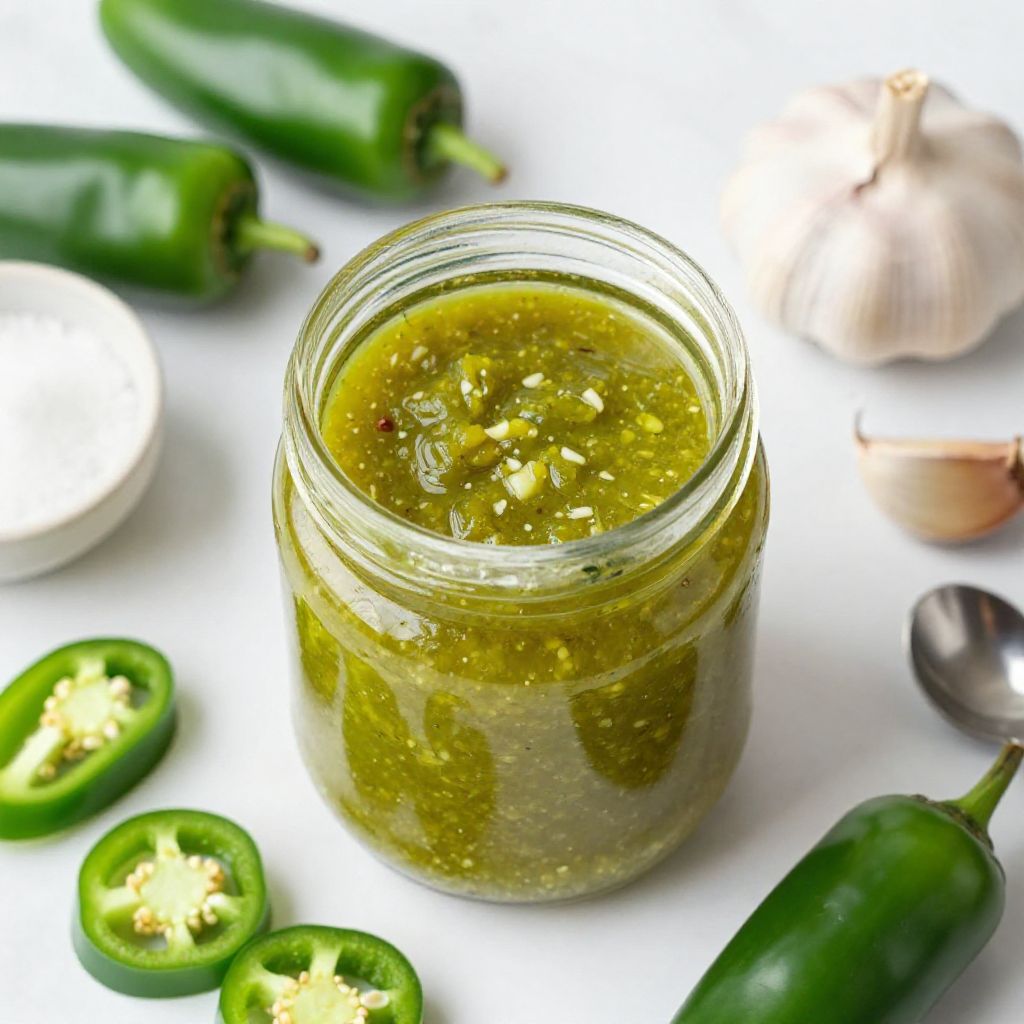
Fermented Jalapeno Hot Sauce
Ingredients
Equipment
Method
- Start by thoroughly washing the jalapenos and garlic to remove any dirt or bacteria.
- Chop the jalapenos into small pieces.
- In a blender, combine the chopped jalapenos, minced garlic, salt, and water. Blend until smooth to create a thick paste.
- Pour the blended mixture into a clean glass jar, leaving about an inch of headspace at the top.
- Seal the jar loosely with the lid or cover it with cheesecloth.
- Place the jar in a cool, dark place for 5 to 7 days, checking daily for bubbles.
- After a week, taste the sauce to check for desired tanginess.
- Once fermented, blend the sauce again for a smooth consistency and transfer it to a clean bottle for storage.