
There’s something deeply comforting about a pot of escarole and beans simmering on the stove, filling your kitchen with the aroma of garlic, olive oil, and leafy greens. This rustic Italian-American classic transforms humble ingredients into a dish that feels both nourishing and luxurious, with minimal effort required.
What makes this recipe special is its simplicity paired with surprising depth of flavor. Tender escarole wilts into creamy white beans while garlic and red pepper flakes work their magic, creating a one-pot meal that tastes like it took hours but comes together in under 30 minutes.
Why You’ll Love This Recipe
This dish delivers comfort, nutrition, and flavor all in one bowl. It’s naturally vegetarian, packed with fiber and protein, and tastes even better the next day.
- Ready in under 30 minutes from start to finish
- Requires just one pot, making cleanup effortless
- Budget-friendly with affordable pantry staples
- Naturally vegetarian and full of plant-based protein
- Tastes amazing fresh or reheated for lunch the next day
My Experience Making This Recipe
I first made this dish on a cold winter evening when I had nothing in the pantry except canned beans, a head of escarole, and garlic. The result was so satisfying that I’ve made it at least once a month ever since.
My family devours it straight from the pot, and I love how the flavors meld together as it sits. The second time I made it, I doubled the batch and froze half, which was smart planning for a busy week.
What impressed me most was how the simple combination of ingredients creates something that tastes far more sophisticated than the effort required. It’s now my go-to recipe when I want something warm, healthy, and genuinely delicious without fussing in the kitchen.
Recipe Overview
- Recipe Name: Escarole and Beans
- Servings: 4 to 6
- Prep Time: 10 minutes
- Cook Time: 20 minutes
- Total Time: 30 minutes
- Course: Main Course
- Cuisine: Italian-American
- Calories per Serving: 280
Equipment You Will Need
- Large heavy-bottomed pot or Dutch oven
- Wooden spoon or silicone spatula
- Chef’s knife and cutting board
- Colander for rinsing beans
- Ladle for serving
- Measuring cups and spoons
Ingredients for Escarole and Beans
- 3 tablespoons extra-virgin olive oil
- 6 cloves garlic, minced
- 1/2 teaspoon red pepper flakes, or to taste
- 1 large head fresh escarole, chopped into 2-inch pieces (about 8 cups)
- Two 15-ounce cans white beans, rinsed and drained
- 4 cups vegetable broth or chicken broth
- 1 teaspoon sea salt
- 1/2 teaspoon black pepper
- 1/4 cup fresh parmesan cheese, grated, optional
- Crusty bread for serving, optional
Ingredient Notes and Substitutions
- Extra-virgin olive oil: The foundation of this dish’s flavor, providing fruity depth and richness. Substitute with regular olive oil if needed, though the taste will be less complex.
- Escarole: A slightly bitter leafy green that balances the creaminess of beans perfectly. You can swap this for kale, spinach, or even Swiss chard, though each will shift the flavor profile slightly.
- White beans: Cannellini beans are traditional and provide a creamy texture. Great northern beans or navy beans work well too, though cannellini hold their shape best.
- Vegetable broth: Keeps the dish vegetarian and lets the escarole shine. Chicken broth adds more savory depth if you prefer a meatier flavor.
- Red pepper flakes: Brings gentle heat and complexity to the broth. Leave them out for a milder version, or use fresh diced chili peppers for a different kick.
How to Make Escarole and Beans
Step 1: Prep the Escarole
Rinse the escarole under cold water and chop it into 2-inch pieces, discarding the core. This size ensures even cooking and makes the finished dish easier to eat without it becoming mushy.
Step 2: Mince the Garlic
Mince 6 cloves of garlic finely so it distributes evenly throughout the oil and broth. Garlic minced small will infuse the entire pot with flavor rather than leaving chewy chunks.
Step 3: Heat the Olive Oil
Pour 3 tablespoons of extra-virgin olive oil into your large pot over medium heat and let it warm for about 1 minute. You want it hot enough to toast the garlic but not so hot that it burns, which would turn it bitter.
Step 4: Toast the Garlic and Red Pepper Flakes
Add the minced garlic and red pepper flakes to the hot oil and stir constantly for 30 seconds to 1 minute until fragrant. This step builds flavor by releasing the garlic’s natural sugars and the heat compounds in the red pepper flakes, creating an aromatic base for the entire dish.
Step 5: Add the Escarole
Stir in the chopped escarole gradually, allowing it to wilt down as you work through it. It looks like a huge pile at first, but escarole reduces significantly as the heat breaks down the cell walls and releases moisture.
Step 6: Pour in the Broth
Add 4 cups of vegetable or chicken broth to the pot once the escarole has wilted down by half. The broth becomes the cooking liquid for the beans and a flavorful base that ties everything together.
Step 7: Add the Beans and Season
Rinse your canned beans thoroughly and add them to the pot along with 1 teaspoon of sea salt and 1/2 teaspoon of black pepper. Rinsing canned beans removes excess sodium from the canning liquid and prevents the broth from becoming too thick or starchy.
Step 8: Simmer Until Flavors Meld
Bring the pot to a gentle simmer and let it cook uncovered for 15 to 20 minutes, stirring occasionally. This time allows the flavors to combine, the broth to reduce slightly and concentrate, and any raw bean flavor to disappear completely into the background.
Step 9: Taste and Adjust
After 15 minutes, taste a spoonful and adjust the salt, pepper, and red pepper flakes to your preference. Some people like more heat, while others prefer the escarole’s natural bitterness to stand out more prominently.
Pro Tip: Don’t skip rinsing the canned beans, as this removes excess sodium and starch that can make the broth cloudy or overly thick.
Tips for the Best Escarole and Beans
- Use fresh escarole if possible, as it has a more delicate bitterness than frozen varieties. The flavor will be brighter and more refined overall.
- Don’t overcrowd the pan when adding escarole; let each batch wilt before adding the next batch. This prevents steam from building up and causing the greens to become slimy.
- Add a splash of fresh lemon juice or red wine vinegar at the end for brightness and complexity. The acidity balances the richness of the olive oil and the earthiness of the beans.
- Stir in a handful of fresh parmesan rind while simmering for extra umami depth. Remove it before serving, or let it stay for texture.
- Make a double batch and freeze half for an easy weeknight dinner later. It reheats beautifully and actually tastes better the next day as flavors continue to develop.
- Serve with good quality crusty bread for soaking up every drop of the broth. The bread transforms the dish from a simple side into a complete meal.
Common Mistakes to Avoid
- Adding beans straight from the can without rinsing causes the broth to become cloudy and overly thick with starch.
- Cooking the escarole too long before adding broth turns it mushy and gray rather than tender and bright green.
- Using low-quality olive oil loses the fruity complexity that defines this dish and leaves the broth feeling flat.
- Skipping the garlic toast step means you miss the crucial flavor foundation that makes the entire pot taste cohesive and developed.
- Adding too much salt early in cooking prevents you from tasting and adjusting the final seasoning, often resulting in an overly salty dish.
Serving Suggestions
Serve this hearty dish in wide bowls with plenty of broth and let people customize with toppings. The broth is as important as the solids, so make sure each bowl gets a generous ladle of it.
- Top with grated parmesan cheese and a drizzle of good olive oil for richness
- Serve alongside crusty Italian bread or focaccia for soaking up the broth
- Add a squeeze of fresh lemon juice just before eating for brightness
- Pair with a simple green salad dressed in lemon and olive oil to balance the heartiness
- Serve as a first course in smaller portions, followed by grilled fish or chicken
Variations to Try
- Add diced tomatoes: Stir in a can of diced tomatoes with the broth for a slightly acidic, complex flavor that makes the dish taste more like a rustic minestrone.
- Include sausage: Brown sliced Italian sausage before adding the garlic and cook it in the broth for a heartier, meat-forward version that feeds a larger crowd.
- Make it spicy: Increase the red pepper flakes to 1 teaspoon or add fresh chopped chili peppers for a more aggressive heat that builds with each spoonful.
- Swap the beans: Use chickpeas or kidney beans instead of white beans for a different texture and earthier flavor profile.
- Add fresh herbs: Stir in fresh rosemary, thyme, or oregano during cooking for an herbaceous complexity that elevates the dish into something special.
Dietary Adaptations
- Gluten-free: This recipe is naturally gluten-free as written; just ensure your broth is certified gluten-free if that’s a concern for your household.
- Dairy-free: Skip the parmesan cheese or use a dairy-free alternative; the dish stands beautifully on its own without any cheese at all.
- Vegan and vegetarian: This recipe is already fully plant-based; use vegetable broth instead of chicken broth and you’re all set.
- Low-carb or keto: This dish is moderate in carbs from the beans, but you can reduce the beans by half and add more olive oil and vegetables like zucchini or mushrooms to lower the carb content.
Storage and Reheating
Refrigerator
Let the escarole and beans cool completely to room temperature before transferring it to an airtight container. It keeps for up to 4 days in the refrigerator, and the flavors actually deepen as it sits.
- Store in glass containers rather than plastic for best flavor retention
- Keep broth and solids together to prevent drying out
- Portion into individual containers for easy grab-and-go lunches
Freezer
This dish freezes beautifully for up to 3 months when stored in freezer-safe containers or bags. Leave an inch of headspace if using rigid containers, as the broth expands slightly when frozen.
- Freeze in individual portions for quick single servings
- Thaw overnight in the refrigerator before reheating
- Label with the date so you remember when you made it
Reheating
Reheat gently over medium-low heat in a pot on the stovetop, adding a splash of broth or water if it seems thick. Avoid microwaving if possible, as it can make the escarole mushy, though it works in a pinch for individual portions.
- Stir occasionally to ensure even heating throughout
- Taste and adjust seasonings after reheating, as flavors can mute slightly
- Add fresh lemon juice or herbs when reheating to brighten the dish
Nutrition Information
| Nutrient | Amount |
|---|---|
| Calories | 280 |
| Total Fat | 12g |
| Saturated Fat | 2g |
| Carbohydrates | 32g |
| Fiber | 8g |
| Sugar | 1g |
| Protein | 12g |
| Sodium | 850mg |
| Cholesterol | 0mg |
These values are approximate and based on standard ingredient sizes and USDA data. Actual nutrition will vary based on your specific brands and portion sizes.
Frequently Asked Questions
Can I make this recipe with frozen escarole?
Frozen escarole works, though it’s less flavorful than fresh and becomes mushier during cooking. Thaw it first, squeeze out excess moisture, and add it later in the cooking process to prevent it from breaking down too much.
What if I can’t find escarole at my grocery store?
Kale, spinach, or even collard greens work as substitutes, though each brings its own flavor profile. Kale will be earthier and tougher, requiring slightly longer cooking, while spinach will cook faster and taste milder.
Can I make this dish ahead of time?
Absolutely, and it actually tastes better the next day as flavors meld overnight. Make it up to 4 days ahead and reheat gently on the stovetop whenever you’re ready to eat.
Why does my escarole turn gray instead of staying green?
Gray escarole happens when you cook it too long or at too high a temperature, which breaks down chlorophyll. Keep the heat at a gentle simmer and avoid stirring constantly; just let it wilt naturally with occasional stirring.
Is this recipe actually Italian or Italian-American?
This is Italian-American, born from Italian immigrants adapting their cooking to available American ingredients. The classic Italian version called Escarole in Brodo is cooked similarly but often includes more herbs and sometimes tiny pasta shapes.
Final Thoughts
Escarole and beans is the kind of recipe that proves you don’t need fancy techniques or expensive ingredients to create something truly satisfying. It’s a dish that tastes like love and feels like home, no matter where you come from.
Give this recipe a try on your next cold evening when you want something warm, nutritious, and genuinely delicious. I promise you’ll find yourself making it again and again, perfecting your own version along the way.
If you enjoyed this recipe, explore more comforting bean dishes like our great northern beans recipe or try our calico beans recipe for more satisfying one-pot meals that bring families together around the table.
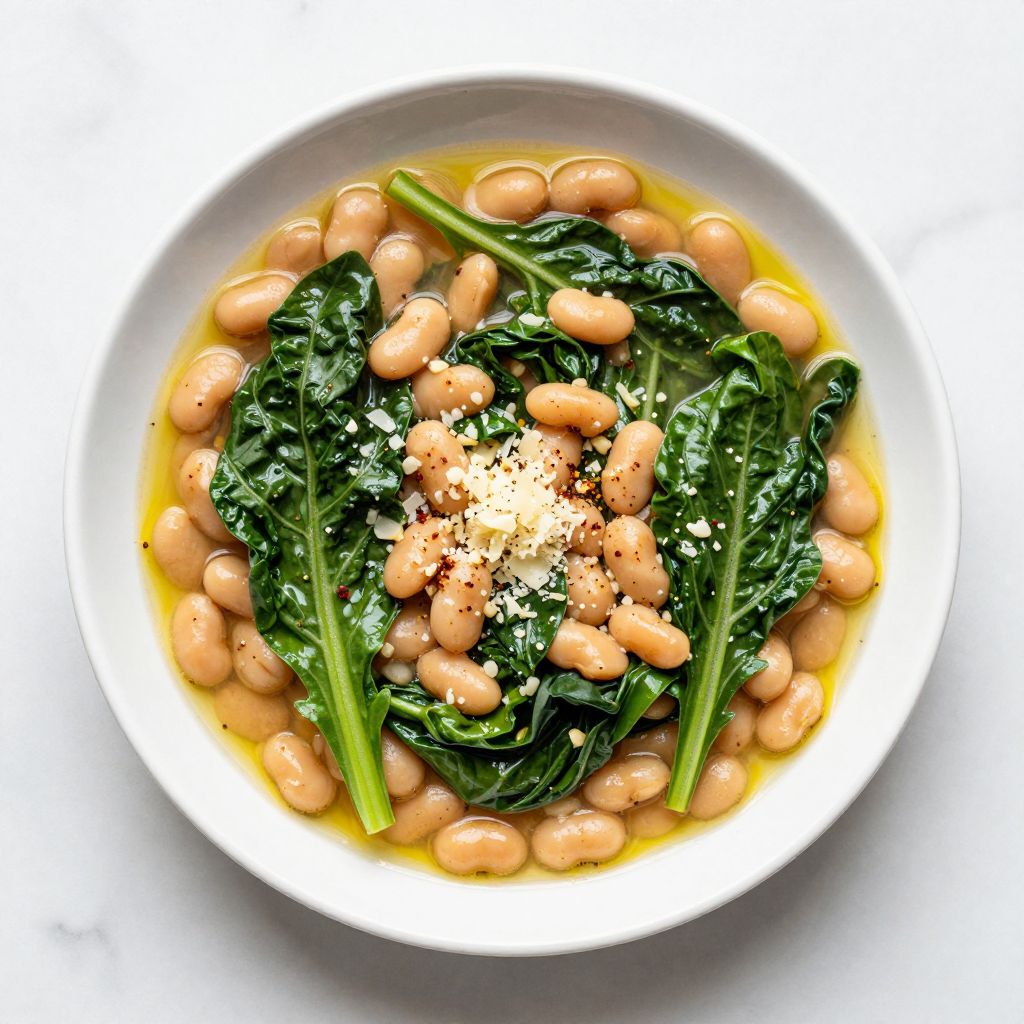
Escarole and Beans
Ingredients
Equipment
Method
- Rinse the escarole under cold water, chop into 2-inch pieces, and discard the core.
- Mince 6 cloves of garlic finely.
- Heat 3 tablespoons of extra-virgin olive oil in a large pot over medium heat for about 1 minute until shimmering.
- Add minced garlic and 1/2 teaspoon red pepper flakes to the hot oil and sauté, stirring constantly, for 30 seconds to 1 minute until fragrant.
- Gradually add chopped escarole, stirring to wilt each batch before adding more, about 2 to 3 minutes total.
- Pour in 4 cups of broth and bring the mixture to a gentle simmer over medium heat.
- Stir in rinsed and drained beans, 1 teaspoon sea salt, and 1/2 teaspoon black pepper, then return to a simmer.
- Cook uncovered at a gentle simmer for 15 to 20 minutes, stirring occasionally, until flavors meld and broth reduces slightly.
- Taste and adjust seasoning with additional salt, pepper, or red pepper flakes if desired.
- Serve hot, topped with grated parmesan and a drizzle of olive oil, with crusty bread on the side.