
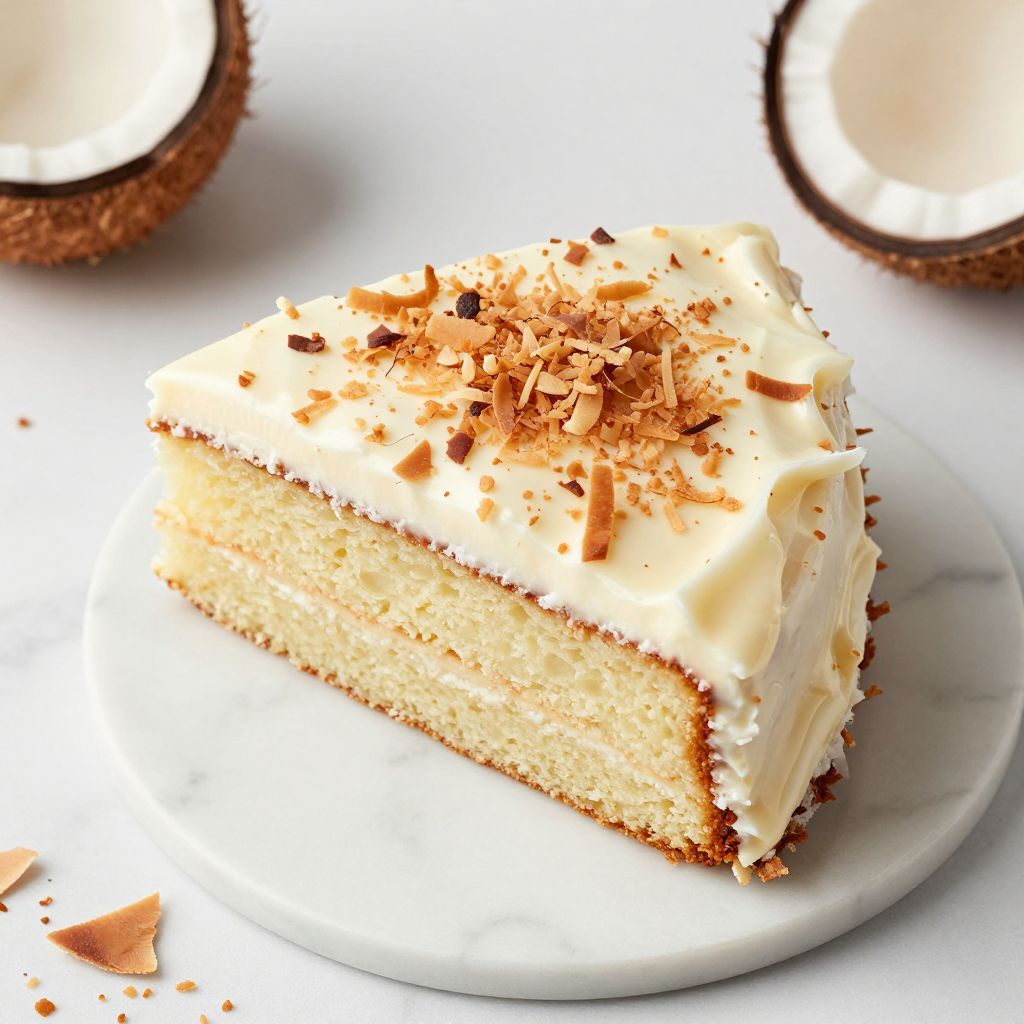
Imagine a fluffy slice of coconut cake topped with a creamy, dreamy icing that melts in your mouth. This Coconut Cake Icing Recipe is the icing on the cake—literally! It’s rich, sweet, and oh-so-coconutty, making it a showstopper for any dessert table. With its perfect balance of flavors and a texture that complements moist cakes beautifully, it’s an icing that ensures every bite is a delight. Let’s gather our ingredients and dive into this coconut wonder.
Why You’ll Love This Recipe
This coconut cake icing is a favorite for many reasons.
- It’s easy to whip up with just a few ingredients.
- It pairs perfectly with various cakes and cupcakes.
- This icing adds a tropical flair to your desserts.
- It has a luscious, creamy texture that everyone loves.
- Leftovers can be used for other treats, so nothing goes to waste!
My Experience Making This Recipe
When I first made this icing, the aroma of sweet coconut filled my kitchen like a tropical breeze. My family couldn’t resist sneaking spoonfuls right from the bowl.
Once I spread it on a simple vanilla cake, it transformed the ordinary into extraordinary. The delight on everyone’s faces was priceless, and I knew I had found a winner!
Recipe Overview
- Recipe Name: Coconut Cake Icing
- Servings: 12
- Prep Time: 15 minutes
- Cook Time: 0 minutes
- Total Time: 15 minutes
- Course: Dessert
- Cuisine: American
- Calories per Serving: 150
Equipment You Will Need
- Mixing bowl
- Electric mixer or whisk
- Spatula
- Measuring cups and spoons
- Storage container
Ingredients for Coconut Cake Icing
- 1 cup unsalted butter, softened
- 4 cups powdered sugar, sifted
- 1/4 cup coconut milk
- 1 teaspoon vanilla extract
- 1 cup shredded coconut, toasted (optional)
Ingredient Notes and Substitutions
- Unsalted butter: Used for a creamy texture; you can substitute with margarine if preferred.
- Powdered sugar: Provides sweetness and structure; granulated sugar can be used but will require more blending.
- Coconut milk: Adds richness; almond milk or heavy cream can work in a pinch.
- Vanilla extract: Enhances flavor; feel free to use coconut extract for extra coconut flavor.
- Shredded coconut: Adds texture; it can be omitted if you prefer a smoother icing.
How to Make Coconut Cake Icing
Step 1: Prepare Your Ingredients
Gather all your ingredients and equipment. This makes the process smoother and ensures you have everything at hand.
Step 2: Beat the Butter
In a mixing bowl, beat the softened butter until creamy. This step is crucial for achieving a light and fluffy icing.
Step 3: Gradually Add Powdered Sugar
Add the sifted powdered sugar, one cup at a time. This prevents a sugary cloud from forming and helps incorporate the sugar evenly.
Step 4: Mix in Coconut Milk
Pour in the coconut milk and vanilla extract, then mix until smooth. This is where the icing gets its creamy consistency.
Step 5: Adjust Consistency
If the icing is too thick, add more coconut milk, one tablespoon at a time. The goal is a spreadable yet firm icing.
Step 6: Fold in Shredded Coconut
Gently fold in the toasted shredded coconut, if using. This adds delightful texture and enhances the coconut flavor.
Step 7: Taste and Adjust
Give the icing a taste and adjust sweetness or flavor if needed. This is your chance to make it just right!
Step 8: Store or Use Immediately
Use the icing right away on your coconut cake or store it in an airtight container in the fridge. If refrigerating, let it come to room temperature before using.
Pro Tip: For a stunning finish, decorate your cake with additional toasted coconut on top!
Tips for the Best Coconut Cake Icing
- Ensure your butter is at room temperature for easy blending.
- Always sift powdered sugar to avoid lumps in your icing.
- Use fresh coconut if available for a more intense flavor.
- For a stronger coconut taste, use coconut extract along with vanilla.
- Let the icing sit for a few minutes after mixing for the flavors to meld.
Common Mistakes to Avoid
- Using cold butter can lead to a lumpy icing. Always start with softened butter for a smooth texture.
- Not sifting the powdered sugar can result in a gritty icing. Sift for a silky finish.
- Adding too much liquid at once can make the icing too runny. Add it gradually to control consistency.
- Overmixing can cause the icing to become too airy. Mix until just combined for the best texture.
Serving Suggestions
This coconut cake icing shines on a variety of desserts.
- Classic vanilla or coconut cake
- Chocolate cake for a delightful contrast
- Carrot cake for a tropical twist
- Cupcakes of any flavor
- Spread on cookies for a special treat
Variations to Try
- Add lime zest for a refreshing citrus kick.
- Mix in chocolate shavings for a decadent chocolate coconut icing.
- Use a combination of different extracts, like almond and coconut, for a unique flavor.
- Try a cream cheese base for a tangy twist on the traditional icing.
- Incorporate crushed pineapple for a piña colada-inspired icing.
Dietary Adaptations
- Gluten-free: This recipe is naturally gluten-free; always check ingredient labels.
- Dairy-free: Substitute butter with vegan butter and coconut milk with almond or oat milk.
- Vegan: Use a plant-based butter and ensure your powdered sugar is vegan-friendly.
- Low-carb/keto: Use a sugar substitute like erythritol to keep the sugar low.
Storage and Reheating
Refrigerator
Store leftover icing in an airtight container in the fridge for up to one week.
- Make sure it is completely cool before storing.
- Let it return to room temperature before using.
Freezer
You can freeze the icing for up to three months.
- Store it in a freezer-safe container.
- Thaw it in the fridge overnight before using.
Reheating
Gently reheat any refrigerated or frozen icing in the microwave for a few seconds.
- Stir well to maintain a smooth consistency.
- Be cautious not to overheat, as it can separate.
Nutrition Information
| Nutrient | Amount |
|---|---|
| Calories | 150 |
| Total Fat | 6g |
| Saturated Fat | 4g |
| Carbohydrates | 24g |
| Fiber | 0g |
| Sugar | 23g |
| Protein | 1g |
| Sodium | 50mg |
| Cholesterol | 15mg |
This nutritional information is an estimate and may vary based on specific ingredients used.
Frequently Asked Questions
Can I make this icing ahead of time?
Yes, you can prepare the icing a day in advance and store it in the refrigerator. Just let it come to room temperature before using.
What can I use instead of coconut milk?
You can substitute coconut milk with heavy cream or almond milk for a different flavor profile. Each will give a unique touch to the icing.
Why is my icing too runny?
If your icing is too runny, you may have added too much liquid. Add more powdered sugar gradually until you reach the desired consistency.
Can I use this icing for cookies?
Absolutely! This icing works wonderfully on cookies, giving them a delicious coconut flavor. Just adjust the thickness as needed.
What if I don’t like coconut?
You can replace the coconut with almond or another flavor of your choice for a completely different icing. Get creative with flavors!
Final Thoughts
This Coconut Cake Icing Recipe is a delightful addition to any dessert and is sure to impress your family and friends. It combines simplicity with a touch of tropical luxury that makes every bite unforgettable.
So why not give it a try? You might just find yourself whipping it up for every occasion. For more delicious ideas, check out this Tom Cruise Coconut Cake Recipe or these tasty Coconut Cookies.
Coconut Cake Icing
Ingredients
Equipment
Method
- Gather all your ingredients and equipment.
- In a mixing bowl, beat the softened butter until creamy.
- Add the sifted powdered sugar, one cup at a time.
- Pour in the coconut milk and vanilla extract, then mix until smooth.
- If the icing is too thick, add more coconut milk, one tablespoon at a time.
- Gently fold in the toasted shredded coconut, if using.
- Taste the icing and adjust sweetness or flavor if needed.
- Use the icing right away or store it in an airtight container in the fridge.