
Imagine the sweet and savory aroma of marinated pork sizzling on the grill, filling your kitchen with mouthwatering scents. This Bulgogi Pork Recipe is a delightful twist on a classic Korean dish that’s not only flavorful but also quick to prepare, making it perfect for busy weeknights or special occasions.
With its tender texture and rich marinade, this dish is a crowd-pleaser that pairs wonderfully with rice or fresh vegetables. Let’s gather our ingredients and get cooking!
Why You’ll Love This Recipe
This recipe brings a taste of Korea right into your kitchen.
- Quick to prepare, perfect for busy nights.
- Rich, sweet, and savory flavors that burst in every bite.
- Versatile, great on rice, in wraps, or on its own.
- Can be grilled, broiled, or cooked in a skillet.
My Experience Making This Recipe
When I first tried making bulgogi at home, I was surprised at how easy it was to recreate that restaurant flavor. The marinade works wonders on the pork, transforming it into a tender, juicy masterpiece.
Every bite took me straight back to my favorite Korean BBQ restaurant, and my family couldn’t get enough. It’s a recipe I now keep handy for gatherings and casual dinners alike.
Recipe Overview
- Recipe Name: Bulgogi Pork
- Servings: 4
- Prep Time: 15 minutes
- Cook Time: 10 minutes
- Total Time: 25 minutes
- Course: Main Course
- Cuisine: Korean
- Calories per Serving: 320
Equipment You Will Need
- Mixing bowl
- Whisk
- Skillet or grill
- Measuring cups and spoons
- Sharp knife
- Cutting board
Ingredients for Bulgogi Pork
- 1 pound pork tenderloin, thinly sliced
- 1/4 cup soy sauce
- 2 tablespoons brown sugar
- 1 tablespoon sesame oil
- 2 cloves garlic, minced
- 1 teaspoon ginger, grated
- 1/4 teaspoon black pepper
- 2 green onions, chopped (for garnish)
- Sesame seeds (for garnish)
Ingredient Notes and Substitutions
- Pork tenderloin: This cut is tender and cooks quickly. You can substitute with pork shoulder for a richer flavor.
- Soy sauce: Provides the salty depth. Use tamari for a gluten-free option.
- Brown sugar: Adds sweetness and balances the soy sauce. Honey or maple syrup can be used as substitutes.
- Sesame oil: Gives a nutty aroma. Can be replaced with olive oil if needed.
How to Make Bulgogi Pork
Step 1: Prepare the Marinade
In a mixing bowl, whisk together soy sauce, brown sugar, sesame oil, minced garlic, grated ginger, and black pepper. This marinade will flavor the pork and tenderize it.
Step 2: Marinate the Pork
Add the thinly sliced pork to the marinade, ensuring all pieces are coated. Let it marinate for at least 30 minutes, or overnight for deeper flavor.
Step 3: Preheat the Skillet or Grill
Heat your skillet over medium-high heat or preheat your grill. A hot cooking surface is essential for a nice sear on the pork.
Step 4: Cook the Pork
Remove the pork from the marinade, shaking off excess liquid. Place the pork in the skillet or on the grill, cooking for about 3-4 minutes on each side until browned and cooked through.
Step 5: Garnish and Serve
Once cooked, remove the pork and let it rest for a couple of minutes. This helps retain its juices, making every bite tender.
Step 6: Plate Your Bulgogi
Slice the pork into bite-sized pieces and arrange it on a plate. Garnish with chopped green onions and sesame seeds for added flavor and presentation.
Step 7: Pair with Sides
Serve your bulgogi pork with steamed rice and fresh vegetables. This enhances the meal and adds a colorful element.
Step 8: Enjoy
Dig in and enjoy the delicious flavors of homemade bulgogi. Each bite is sure to transport you to a Korean BBQ experience.
Pro Tip: Marinating overnight greatly enhances the flavor and tenderness of the pork.
Tips for the Best Bulgogi Pork
- Slice the pork thinly against the grain for maximum tenderness.
- Adjust the sugar based on your sweetness preference; a little more can go a long way.
- Use a non-stick skillet for easy cooking and cleanup.
- Don’t overcrowd the skillet; cook in batches if necessary for even cooking.
- For a smoky flavor, try grilling the pork outdoors.
Common Mistakes to Avoid
- Not marinating long enough; this can lead to less flavorful meat.
- Using thick slices of pork; they won’t cook evenly and can be tough.
- Overcrowding the skillet; this causes steaming instead of searing.
- Skipping the resting step; this keeps the meat juicy.
Serving Suggestions
Bulgogi pork pairs wonderfully with a variety of sides to create a balanced meal.
- Steamed jasmine rice for a classic pairing.
- Fresh cucumber salad to add crunch.
- Korean pickled vegetables for tanginess.
- Kimchi for a spicy kick.
Variations to Try
- Add thinly sliced bell peppers and onions to the skillet for extra veggies.
- Use beef instead of pork for a traditional bulgogi flavor.
- Incorporate sweet potato noodles for a unique twist.
- Try a spicy version with gochujang added to the marinade.
Dietary Adaptations
- Gluten-free: Use tamari or coconut aminos instead of soy sauce.
- Dairy-free: This recipe is naturally dairy-free.
- Vegetarian: Substitute the pork with marinated tofu or seitan.
- Low-carb/Keto: Serve with cauliflower rice instead of traditional rice.
Storage and Reheating
Refrigerator
Store leftover bulgogi pork in an airtight container in the fridge.
- Keep for up to 3 days for best quality.
Freezer
For longer storage, freeze the cooked pork in a freezer-safe container.
- Use within 2-3 months for optimal flavor.
Reheating
Reheat in a skillet over low heat, stirring occasionally to warm through.
- Add a splash of water or broth to keep it moist.
Nutrition Information
| Nutrient | Amount |
|---|---|
| Calories | 320 |
| Total Fat | 12g |
| Saturated Fat | 2g |
| Carbohydrates | 10g |
| Fiber | 1g |
| Sugar | 6g |
| Protein | 35g |
| Sodium | 800mg |
| Cholesterol | 90mg |
This nutritional information is approximate and varies based on specific ingredients used.
Frequently Asked Questions
Can I use a different type of meat?
Absolutely! You can substitute beef or chicken if you prefer, adjusting the cooking time as needed.
Can I make this ahead of time?
Yes, marinating the pork overnight can enhance the flavors. Cook it just before serving for the best results.
How should I store leftovers?
Store in an airtight container and keep in the refrigerator for up to three days for the best taste.
Why is my pork tough?
Overcooking can make pork tough, so be sure to cook it just until done and let it rest before slicing.
What can I serve with bulgogi?
It pairs well with rice, pickled vegetables, and salads for a complete meal.
Final Thoughts
This Bulgogi Pork Recipe is a delightful way to enjoy the rich flavors of Korean cuisine at home. I hope you give it a try and savor every bite.
Feel free to explore more delicious recipes like a classic pork marinade or a quick ground pork recipe. There’s always something new to discover!
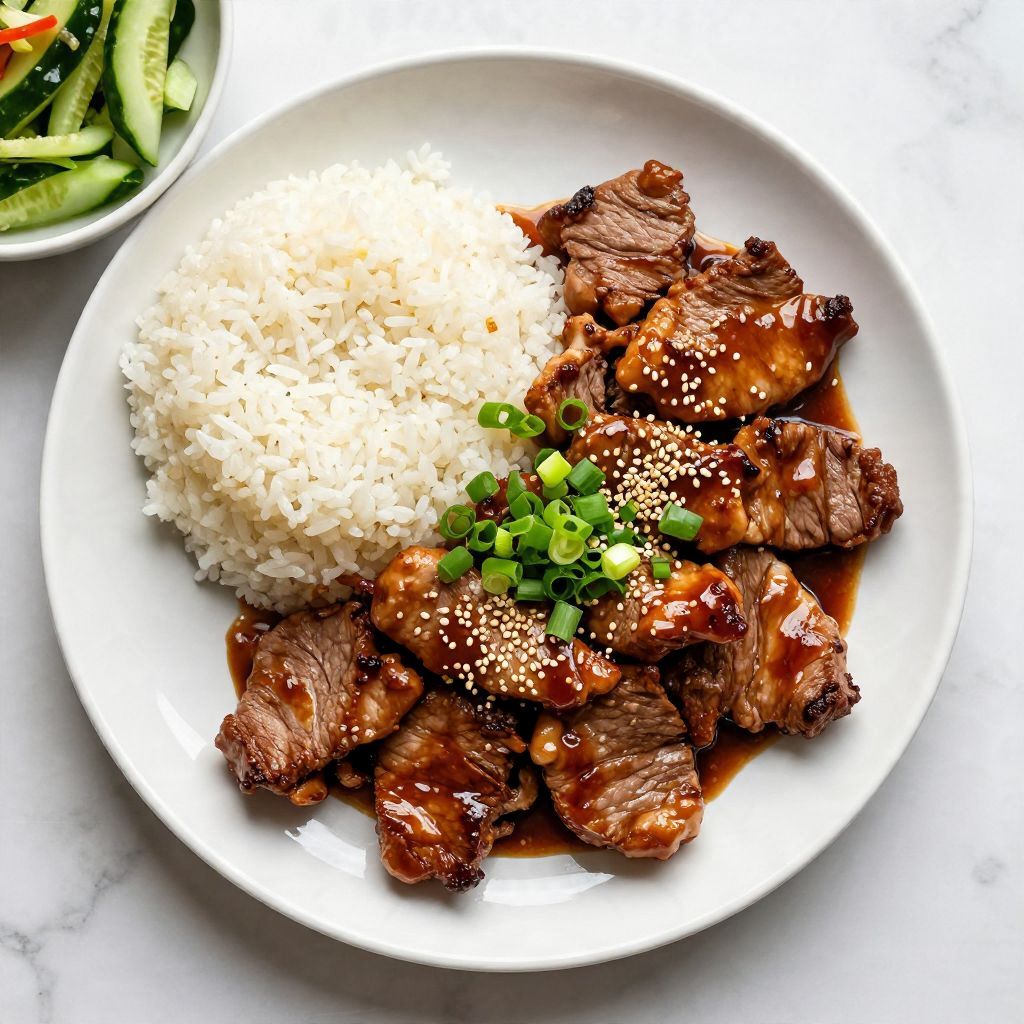
Bulgogi Pork
Ingredients
Equipment
Method
- In a mixing bowl, whisk together soy sauce, brown sugar, sesame oil, minced garlic, grated ginger, and black pepper.
- Add the thinly sliced pork to the marinade, ensuring all pieces are coated. Let it marinate for at least 30 minutes, or overnight for deeper flavor.
- Heat your skillet over medium-high heat or preheat your grill.
- Remove the pork from the marinade, shaking off excess liquid. Place the pork in the skillet or on the grill, cooking for about 3-4 minutes on each side until browned and cooked through.
- Once cooked, remove the pork and let it rest for a couple of minutes.
- Slice the pork into bite-sized pieces and arrange it on a plate. Garnish with chopped green onions and sesame seeds.
- Serve your bulgogi pork with steamed rice and fresh vegetables.
- Dig in and enjoy the delicious flavors of homemade bulgogi.