
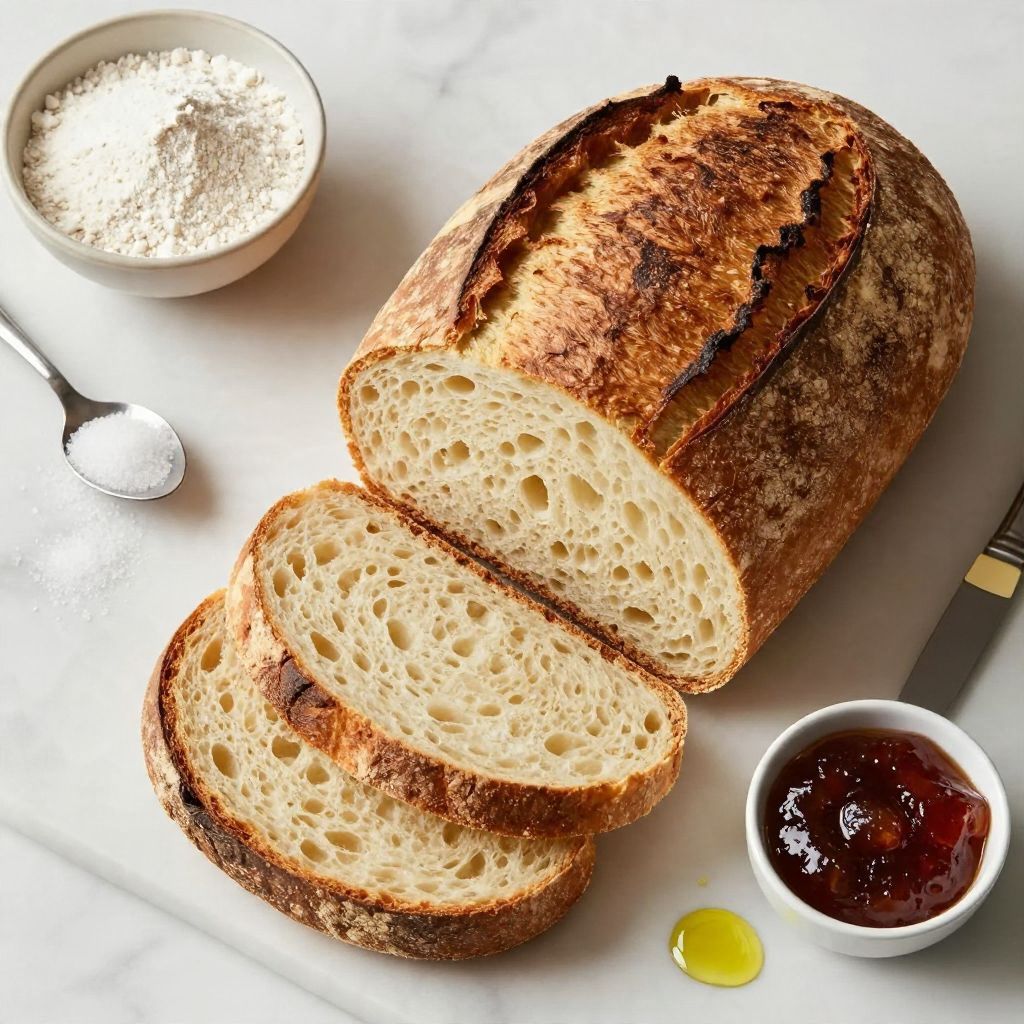
There’s something magical about the aroma of freshly baked bread wafting through the house, isn’t there? This Bread Recipe With Active Dry Yeast is not just any loaf; it’s a delightful combination of a crunchy crust and a soft, fluffy interior that makes it perfect for sandwiches or simply slathering with butter.
What makes this recipe stand out is its simplicity and the fantastic flavor that develops through the process. With just a few ingredients and some patience, you can create a loaf that rivals your favorite bakery. Let’s gather our ingredients and get started!
Why You’ll Love This Recipe
This recipe is a winner for several reasons.
- Simple ingredients you likely have on hand.
- Perfect for beginners and seasoned bakers alike.
- Customizable with herbs, spices, or seeds.
- Freezes well for later use.
My Experience Making This Recipe
Every time I make this bread, I’m reminded of my grandmother’s kitchen. The way the dough rises, almost as if it has a life of its own, is truly satisfying.
Not to mention, the first slice is always a moment to savor. Spread on some homemade jam, and you’ve got a breakfast that feels like a hug.
Recipe Overview
- Recipe Name: Bread Recipe With Active Dry Yeast
- Servings: 12 slices
- Prep Time: 15 minutes
- Cook Time: 30 minutes
- Total Time: 2 hours (including rising)
- Course: Bread
- Cuisine: American
- Calories per Serving: 120
Equipment You Will Need
- Large mixing bowl
- Measuring cups and spoons
- Wooden spoon or spatula
- Plastic wrap or a clean kitchen towel
- Loaf pan
- Oven
Ingredients for Bread Recipe With Active Dry Yeast
- 4 cups all-purpose flour
- 2 teaspoons active dry yeast
- 1 tablespoon sugar
- 1 teaspoon salt
- 1 ½ cups warm water (about 110°F)
- 2 tablespoons olive oil (optional)
Ingredient Notes and Substitutions
- All-purpose flour: This is the backbone of your bread. You can substitute with bread flour for a chewier texture.
- Active dry yeast: This helps the bread rise. Instant yeast can be used without activation.
- Sugar: This feeds the yeast. Honey or maple syrup can be a natural alternative.
- Salt: It enhances flavor. Sea salt or kosher salt can be used as substitutes.
- Olive oil: Adds moisture and flavor. You can skip it for a leaner bread.
How to Make Bread Recipe With Active Dry Yeast
Step 1: Activate the Yeast
In a small bowl, combine the warm water, sugar, and yeast. Let it sit for about 5-10 minutes until it’s frothy, which shows the yeast is alive and kicking.
Step 2: Mix Dry Ingredients
In a large mixing bowl, whisk together the flour and salt. This ensures even distribution of the salt, which is crucial for flavor.
Step 3: Combine Wet and Dry Ingredients
Add the activated yeast mixture to the flour mixture. Stir until a rough dough begins to form, and don’t worry if it looks a bit messy.
Step 4: Knead the Dough
Transfer the dough onto a floured surface and knead for about 8-10 minutes. This develops the gluten, giving your bread that lovely structure.
Step 5: First Rise
Place the dough in a greased bowl and cover it with plastic wrap or a kitchen towel. Let it rise in a warm spot for about 1 hour, or until it doubles in size.
Step 6: Shape the Dough
After the dough has risen, gently punch it down to release the air. Shape it into a loaf and place it in a greased loaf pan.
Step 7: Second Rise
Cover the pan and let it rise again for about 30 minutes. This helps create a light and airy texture in the finished bread.
Step 8: Bake the Bread
Preheat your oven to 375°F. Bake the bread for 30-35 minutes, or until golden brown. The aroma alone will make it hard to wait!
Pro Tip: For an extra crunchy crust, place a pan of water in the oven while baking.
Tips for the Best Bread Recipe With Active Dry Yeast
- Always use fresh yeast for the best rise.
- Measure flour accurately to avoid dense bread.
- Give your dough enough time to rise; patience is key!
- Experiment with adding herbs for flavor.
- Brush the top with melted butter after baking for added richness.
Common Mistakes to Avoid
- Using water that is too hot can kill the yeast, resulting in flat bread.
- Not kneading enough leads to a dense loaf.
- Skipping the second rise can make your bread heavy.
- Opening the oven door frequently can cause uneven baking.
Serving Suggestions
This bread is versatile and can be enjoyed in many ways.
- Serve with butter and jam for breakfast.
- Use for sandwiches with your favorite fillings.
- Pair with soups or stews for a hearty meal.
- Toast slices for a delicious snack.
Variations to Try
- Add herbs like rosemary or thyme for a savory twist.
- Incorporate seeds such as sesame or poppy for texture.
- Mix in cheese for a cheesy bread experience.
- Use whole wheat flour for a healthier option.
Dietary Adaptations
- Gluten-free: Substitute with a gluten-free flour blend, but adjust the liquid.
- Dairy-free: This recipe is already dairy-free; enjoy it as is!
- Vegan: Omit the olive oil if desired, though it adds great flavor.
- Low-carb/keto: Use almond flour instead of all-purpose, but expect a different texture.
Storage and Reheating
Refrigerator
Store the bread in an airtight container. It can last up to a week.
- Wrap in foil to maintain freshness.
- Slice before storing for easy access.
Freezer
For longer storage, freeze the bread. It can last up to three months.
- Wrap tightly in plastic wrap and then in aluminum foil.
- Label with the date for easy reference.
Reheating
To enjoy the bread again, reheat in the oven or toaster. This will revive its crust.
- Toast slices for a crunchy texture.
- Wrap in foil and warm in the oven for whole loaves.
Nutrition Information
| Nutrient | Amount |
|---|---|
| Calories | 120 |
| Total Fat | 1.5g |
| Saturated Fat | 0.2g |
| Carbohydrates | 24g |
| Fiber | 1g |
| Sugar | 0.5g |
| Protein | 4g |
| Sodium | 150mg |
| Cholesterol | 0mg |
This nutritional information is an estimate and can vary based on specific ingredients used.
Frequently Asked Questions
Can I use instant yeast instead of active dry yeast?
Yes, you can use instant yeast without activating it first. Just mix it directly with the dry ingredients.
Can I make this bread ahead of time?
Absolutely! You can prepare the dough in advance and refrigerate it before the second rise.
How should I store leftover bread?
Keep it in an airtight container at room temperature or freeze for longer storage.
Why is my bread dense?
This can happen if the dough wasn’t kneaded enough or if the yeast was inactive.
Can I add seeds or nuts to this recipe?
Yes, adding seeds or nuts can enhance flavor and texture; just be mindful of the total flour amount.
Final Thoughts
There’s nothing quite like the satisfaction of baking your own bread. I encourage you to try this recipe and enjoy the fruits of your labor.
For more delightful recipes, explore my Honey Wheat Bread Recipe or indulge in a sweet treat with my Amish Cinnamon Bread Recipe.