
Freshly baked bread fills your home with a warmth and aroma that instantly brings back memories of cozy family gatherings. This Braided Bread Recipe is not only a feast for the eyes, but it also offers a delightful texture and flavor that makes it perfect for any occasion. With its golden crust and soft, pillowy interior, this bread is versatile enough for breakfast or as a side dish. Let’s get started on creating this beautiful loaf that will impress everyone at your table.
Why You’ll Love This Recipe
This recipe is a true favorite among home bakers for several reasons.
- Visually stunning and perfect for special occasions.
- Soft and fluffy texture that melts in your mouth.
- Customizable with various fillings or toppings.
- A great way to bond with family while baking together.
My Experience Making This Recipe
The first time I made this braided bread, I was amazed at how easy it was to shape the dough. Watching it transform from simple ingredients into a braided masterpiece was incredibly satisfying.
My family couldn’t believe I made it from scratch, and the taste was even better than the store-bought versions we usually had. The combination of the warm aroma and that first pull apart of the soft bread was pure bliss.
Recipe Overview
- Recipe Name: Braided Bread
- Servings: 12
- Prep Time: 20 minutes
- Cook Time: 30 minutes
- Total Time: 50 minutes
- Course: Bread
- Cuisine: European
- Calories per Serving: 150
Equipment You Will Need
- Large mixing bowl
- Measuring cups and spoons
- Rolling pin
- Baking sheet
- Parchment paper
- Kitchen towel
Ingredients for Braided Bread
- 4 cups all-purpose flour
- 1 packet (2 1/4 teaspoons) active dry yeast
- 1 cup warm milk (about 110°F)
- 1/4 cup granulated sugar
- 1/4 cup unsalted butter, melted
- 2 large eggs
- 1 teaspoon salt
- 1 egg (for egg wash)
Ingredient Notes and Substitutions
- All-purpose flour: This provides the bread with structure. You can substitute with bread flour for a chewier texture.
- Active dry yeast: This is essential for leavening. Instant yeast can also be used without proofing.
- Warm milk: Adds richness and activates the yeast. Non-dairy milk can work well, but the flavor may vary slightly.
- Unsalted butter: This gives flavor and moisture. Use coconut oil for a dairy-free option.
How to Make Braided Bread
Step 1: Activate the Yeast
In a small bowl, combine warm milk, sugar, and yeast. Let it sit for about 5-10 minutes until bubbly, which indicates the yeast is active.
Step 2: Mix the Dough
In a large mixing bowl, combine flour and salt. Make a well in the center and add the yeast mixture, melted butter, and eggs.
Step 3: Knead the Dough
Mix until combined, then knead the dough on a floured surface for about 8-10 minutes until it is smooth and elastic. This helps develop gluten, giving the bread its structure.
Step 4: First Rise
Place the dough in a greased bowl, cover it with a kitchen towel, and let it rise in a warm place for about 1 hour or until doubled in size. This fermentation process enhances flavor and texture.
Step 5: Shape the Loaf
Once risen, punch down the dough to release air. Divide it into three equal pieces and roll each into a long strand about 12 inches long.
Step 6: Braid the Strands
Place the strands side by side and braid them together, pinching the ends to seal. This creates a beautiful shape that’s fun to make.
Step 7: Second Rise
Transfer the braided dough to a lined baking sheet, cover it, and let it rise for another 30 minutes. This ensures the bread is light and fluffy.
Step 8: Bake the Bread
Preheat the oven to 350°F. Brush the loaf with beaten egg for a shiny finish, then bake for 25-30 minutes until golden brown. The egg wash helps create that irresistible crust.
Pro Tip: For extra flavor, try adding herbs or cheese to the dough before braiding.
Tips for the Best Braided Bread
- Ensure your yeast is fresh; expired yeast will not rise properly.
- Don’t rush the rising process; it’s key to a fluffy loaf.
- Use a kitchen thermometer to check milk temperature for optimal yeast activation.
- Experiment with fillings like cinnamon or cheese to customize your bread.
- Brush the loaf with butter after baking for added richness.
Common Mistakes to Avoid
- Not kneading enough can lead to dense bread; ensure it’s smooth and elastic.
- Using cold milk will inhibit yeast activity; always use warm milk.
- Overbaking can dry out the bread; check for golden color and a hollow sound when tapped.
- Skipping the second rise leads to a heavy loaf; patience is key.
Serving Suggestions
This braided bread is delightful on its own, but it pairs wonderfully with several dishes.
- Serve with homemade jams or butter.
- Enjoy alongside soups or salads for a cozy meal.
- Slice it for sandwiches, using your favorite fillings.
- Toast it for breakfast and pair with eggs.
Variations to Try
- Add herbs like rosemary or thyme for an aromatic twist.
- Incorporate cheese for a savory flavor.
- Swirl in cinnamon sugar for a sweet breakfast treat.
- Top with sesame or poppy seeds before baking for added crunch.
Dietary Adaptations
- Gluten-free: Use a gluten-free flour blend; the texture may vary slightly.
- Dairy-free: Substitute the milk with almond or oat milk and use coconut oil.
- Vegan: Replace eggs with flax eggs and use plant-based butter.
- Low-carb/Keto: Use almond flour and adjust sweeteners accordingly.
Storage and Reheating
Refrigerator
Store the bread wrapped in plastic wrap for up to 5 days to keep it fresh.
- Slice before wrapping for easy access.
- Reheat slices in a toaster for extra warmth.
Freezer
This bread freezes beautifully for up to 3 months.
- Wrap tightly in foil or plastic wrap before freezing.
- Label with the date for easy tracking.
Reheating
To enjoy your frozen bread, thaw overnight in the refrigerator and warm in the oven.
- Bake at 350°F for about 10-15 minutes until warmed through.
Nutrition Information
| Nutrient | Amount |
|---|---|
| Calories | 150 |
| Total Fat | 5g |
| Saturated Fat | 3g |
| Carbohydrates | 22g |
| Fiber | 1g |
| Sugar | 3g |
| Protein | 4g |
| Sodium | 150mg |
| Cholesterol | 30mg |
This information may vary based on specific ingredients used and portion sizes.
Frequently Asked Questions
Can I make this bread ahead of time?
Yes, you can prepare the dough in advance and refrigerate it before the second rise.
What can I use instead of milk?
Any non-dairy milk works well, just be aware of potential flavor changes.
Why did my bread come out dense?
This usually happens from under-kneading or not allowing enough rising time.
Can I add fillings to this bread?
Absolutely! Cheese, herbs, or sweet fillings like cinnamon sugar can be incorporated before braiding.
How do I know when my bread is done baking?
The bread should be golden brown and sound hollow when tapped on the bottom.
Final Thoughts
This braided bread is a wonderful addition to any meal and sure to impress. The process may seem daunting at first, but the rewards are oh so worth it.
Gather your ingredients and enjoy the process of making this delightful bread that everyone will be talking about. For more delicious recipes, check out Dollywood Cinnamon Bread and Amish Cinnamon Bread.
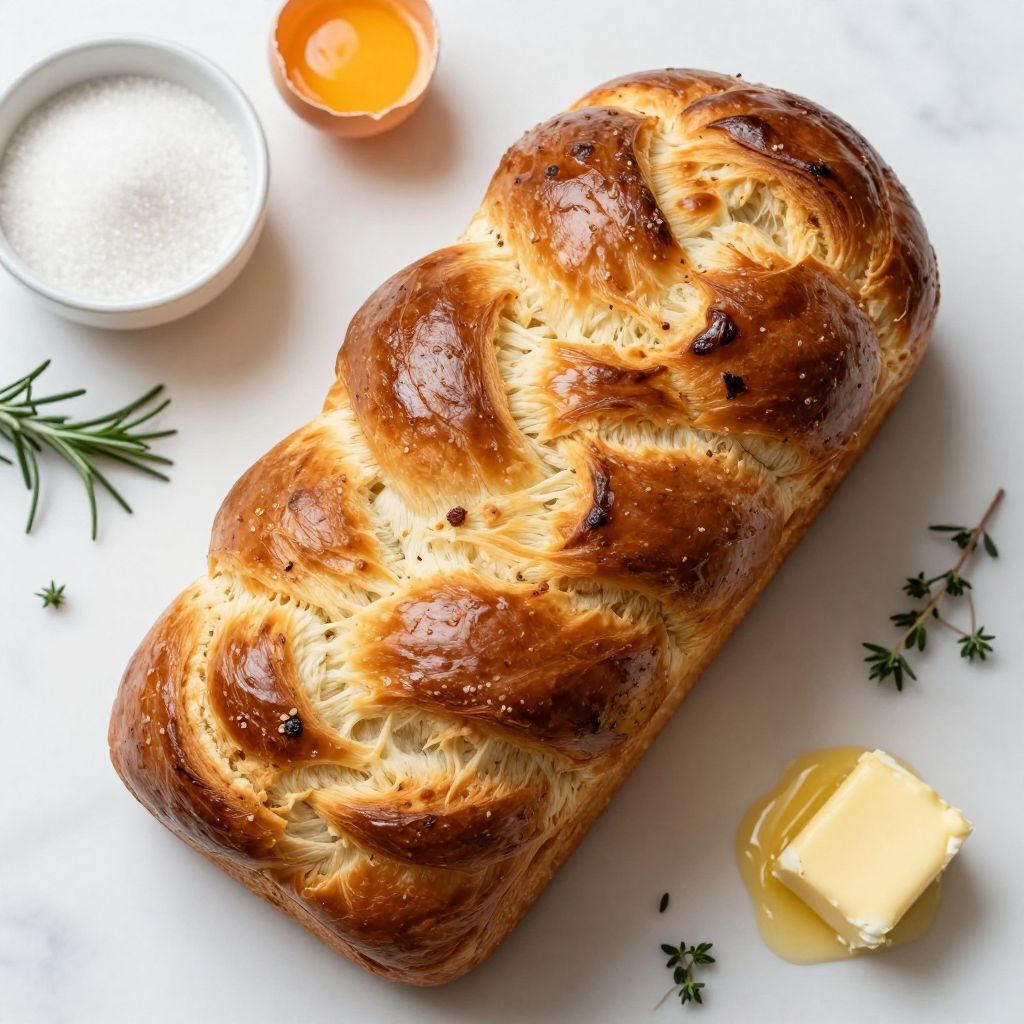
Braided Bread
Ingredients
Equipment
Method
- In a small bowl, combine warm milk, sugar, and yeast. Let it sit for about 5-10 minutes until bubbly.
- In a large mixing bowl, combine flour and salt. Make a well in the center and add the yeast mixture, melted butter, and eggs.
- Mix until combined. Knead the dough on a floured surface for about 8-10 minutes until it is smooth and elastic.
- Place the dough in a greased bowl, cover it with a kitchen towel, and let it rise for about 1 hour or until doubled in size.
- Once risen, punch down the dough to release air. Divide it into three equal pieces and roll each into a long strand about 12 inches long.
- Place the strands side by side and braid them together, pinching the ends to seal.
- Transfer the braided dough to a lined baking sheet, cover it, and let it rise for another 30 minutes.
- Preheat the oven to 350°F. Brush the loaf with beaten egg for a shiny finish, then bake for 25-30 minutes until golden brown.