
There’s something magical about cooking a whole fish with the skin still on, watching it turn golden and crispy while the flesh stays buttery and tender inside. Black sea bass is one of those fish that rewards you for keeping things simple, and a perfectly roasted fillet or whole fish with just lemon, olive oil, and fresh herbs is a restaurant-quality meal you can pull off at home in under 30 minutes.
This recipe shines because it lets the delicate, slightly sweet flavor of the bass speak for itself, and the quick cooking time means dinner comes together faster than you’d expect. The skin crisps up beautifully while the meat stays moist, giving you texture and flavor in every bite. Whether you’re cooking for a weeknight dinner or impressing guests, this dish feels elegant without being fussy.
Why You’ll Love This Recipe
Black sea bass is a lean, mild white fish that cooks quickly and pairs beautifully with bright, simple flavors. You get restaurant-quality results with minimal fuss, and the whole process takes less time than ordering takeout.
- Ready in under 30 minutes from start to finish
- Requires just a handful of pantry staples: olive oil, lemon, garlic, and herbs
- Works for weeknight dinners or impressing dinner guests
- Naturally gluten-free and fits most dietary preferences
- Crispy skin and tender, flaky meat in every bite
My Experience Making This Recipe
The first time I cooked black sea bass at home, I was nervous about whether I’d mess it up. I’d eaten it at restaurants plenty of times, but recreating that crispy skin and perfectly cooked flesh felt intimidating for some reason.
Then I realized the secret: stop overthinking it and let the fish do the work. A hot pan, a little oil, salt and pepper, and about six minutes per side gave me exactly what I wanted. My kitchen smelled like a seaside restaurant, and my partner actually asked if I’d bought takeout.
Since then, I’ve made this dish dozens of times, and it never disappoints. The beauty of it is that there’s nowhere to hide with just a few ingredients, so using fresh fish from a good fishmonger really matters. Your results will be only as good as your raw materials, and that’s actually a wonderful thing.
Recipe Overview
- Recipe Name: Pan-Seared Black Sea Bass with Lemon and Garlic
- Servings: 2 people
- Prep Time: 10 minutes
- Cook Time: 12 minutes
- Total Time: 22 minutes
- Course: Main Dish
- Cuisine: Mediterranean
- Calories per Serving: 280
Equipment You Will Need
- Large stainless steel or cast iron skillet
- Tongs or fish spatula
- Paper towels
- Cutting board
- Chef’s knife
- Measuring spoons
- Small bowl for mixing seasonings
Ingredients for Black Sea Bass
- Two black sea bass fillets (6 ounces each, skin on, pin bones removed)
- 3 tablespoons extra virgin olive oil
- 2 cloves garlic, thinly sliced
- 1 lemon, cut into wedges
- Fresh thyme, 3 to 4 sprigs
- Kosher salt, to taste
- Freshly cracked black pepper, to taste
- 1 tablespoon unsalted butter (optional, for finishing)
Ingredient Notes and Substitutions
- Black sea bass fillets: This fish has delicate, flaky white meat with a mild, sweet flavor that cooks fast and pairs beautifully with bright, acidic sauces. If you can’t find black sea bass, striped bass, halibut, or branzino work equally well with no changes to cook time or technique.
- Extra virgin olive oil: Good quality olive oil adds fruity, buttery notes that complement the fish without overpowering it. You can use regular olive oil, but the flavor won’t be quite as rich. Clarified butter or avocado oil work if you prefer a neutral taste.
- Fresh thyme: Thyme’s earthy, slightly minty flavor pairs perfectly with delicate white fish and doesn’t overpower the bass. Rosemary, oregano, or dill are excellent swaps, though rosemary is stronger so use slightly less.
- Lemon: Fresh lemon juice brightens the richness of the fish and cuts through the oil. Lime or white wine vinegar work in a pinch, though they shift the flavor profile slightly.
- Garlic: Sliced thin rather than minced, garlic infuses the oil gently and crisps up alongside the fish for texture. Skip it if you’re garlic-averse, or substitute with a small shallot sliced thin.
How to Make Black Sea Bass
Step 1: Pat the Fish Completely Dry
Remove the bass fillets from the refrigerator about 10 minutes before cooking so they reach closer to room temperature. Use paper towels to pat both sides completely dry, pressing gently but firmly, since moisture prevents the skin from crisping and causes sticking in the pan.
Step 2: Season Generously
Sprinkle kosher salt and freshly cracked black pepper on both sides of each fillet, paying special attention to the skin side. Let the seasonings sit for 2 to 3 minutes so they begin to dissolve slightly and adhere better to the fish.
Step 3: Heat Your Skillet Until Smoking Hot
Place a large stainless steel or cast iron skillet over medium-high heat and let it heat for about 2 minutes. You want the pan genuinely hot so the fish skin makes contact with the hot surface and crisps immediately rather than steaming.
Step 4: Add Oil and Heat Until It Shimmers
Add 2 tablespoons of olive oil to the hot skillet and let it heat for about 30 seconds until it shimmers and moves easily across the pan surface. This tells you the oil is hot enough to sear without burning.
Step 5: Place Fish Skin-Side Down
Carefully lay each fillet skin-side down in the hot oil, pressing gently with a fish spatula or tongs for the first few seconds to ensure full contact. You should hear a satisfying sizzle immediately; this is where the magic happens and the skin starts to crisp.
Step 6: Cook Without Moving for 5 to 6 Minutes
Resist the urge to move the fish around. Let each fillet sit undisturbed skin-side down for 5 to 6 minutes, until the skin is golden brown and crispy and the flesh has turned opaque about halfway up the side. Checking too early tears the skin and ruins the texture.
Step 7: Flip and Finish Cooking
Using a fish spatula or thin metal spatula, flip each fillet gently and add the remaining 1 tablespoon of olive oil to the pan. Cook for another 4 to 5 minutes on the flesh side until the fish flakes easily when tested with a fork and is cooked through but still moist.
Step 8: Add Aromatics and Finish
During the last minute of cooking, add the sliced garlic and fresh thyme sprigs to the pan, letting them infuse the oil and toast slightly. If using butter, add it now and let it melt into a golden, foamy sauce that you can drizzle over the finished fish.
Step 9: Transfer to Plates and Serve
Plate each fillet skin-side up and spoon the infused oil, garlic, and herbs over the top. Squeeze fresh lemon juice over each serving and serve immediately while the skin is still crispy.
Pro Tip: The most common mistake is moving the fish too early or too often; let the skin develop an undisturbed crust for the first 5 to 6 minutes, and you’ll get restaurant-quality crispiness every time.
Tips for the Best Black Sea Bass
- Buy your bass the same day you plan to cook it from a fishmonger you trust. Ask them to check for pin bones and remove them if they haven’t already, since these tiny bones get stuck in your teeth and ruin the eating experience.
- Pat the fish dry right before cooking, not 10 minutes ahead. Any moisture on the surface will prevent the skin from crisping and can cause the fish to stick to the pan no matter how hot it is.
- Use a fish spatula or thin metal spatula rather than a regular spatula. The flat, flexible design lets you slide under the fish smoothly without tearing the delicate skin or breaking the fillet.
- Don’t skip the preheat step. A truly hot pan is non-negotiable for crispy skin; if you add cold or room-temperature fish to a lukewarm pan, you’ll get gray, rubbery skin that steams instead of sears.
- Finish with fresh lemon juice right before eating. Acid brightens the fish and balances the richness of the oil and butter, making every bite taste fresher and more complete.
- If your fillets are thicker than three-quarters of an inch, lower the heat slightly after the initial sear so the skin doesn’t burn before the flesh cooks through.
Common Mistakes to Avoid
- Cooking from too cold of a starting temperature: Pulling the fish straight from the fridge and into a moderately hot pan means the flesh and skin cook unevenly, and the skin never gets crispy. Always let fillets sit out for 10 minutes and heat your pan until it’s genuinely hot.
- Flipping too early: The skin needs 5 to 6 undisturbed minutes to develop a golden crust. Flipping at 3 minutes rips the skin and leaves you with a mushy, pale surface instead of that satisfying crispiness.
- Skipping the paper towel step: Even a thin layer of moisture prevents the Maillard reaction that creates the flavorful, crispy crust. Pat the fish dry right before cooking, not way ahead of time.
- Not seasoning enough: Salt and pepper aren’t optional here; they’re essential for flavor. Under-seasoning makes the fish taste bland and wasted, so season both sides generously and let it sit briefly before cooking.
- Using old fish: Bass is delicate and deteriorates quickly. If your fish smells off, looks dull, or has a mushy texture, start over with fresh fish. You can’t fix old seafood with technique.
Serving Suggestions
Black sea bass pairs beautifully with light, fresh sides that don’t compete with its delicate flavor. A squeeze of lemon and some crispy skin is really all you need, but here are some ideas to round out the plate.
- Roasted asparagus with garlic and a squeeze of lemon juice
- Buttered new potatoes with fresh dill and fleur de sel
- Crispy fingerling potatoes cooked in the same pan after you remove the fish
- A simple green salad with a light vinaigrette to cut the richness
- Sauteed spinach or chard with garlic and a pinch of red pepper flakes
Variations to Try
- Mediterranean-style bass: Add capers, olives, and cherry tomatoes to the pan along with the garlic and thyme, letting them warm through before serving. This adds briny, tangy notes that make the dish feel more substantial without weighing it down.
- Whole roasted bass: If you want to cook a whole fish instead of fillets, follow the same method but roast it in a 425-degree oven for 15 to 20 minutes after searing both sides briefly in a hot pan. The cooking time scales up with the size of the fish.
- Herb-crusted bass: Mix panko breadcrumbs, fresh herbs, and grated lemon zest, then press this mixture gently onto the flesh side of the fillet before cooking. This adds texture and keeps the flesh moist while the crust browns.
- Spicy black sea bass: Add a pinch of red pepper flakes and a touch of smoked paprika to the oil, and finish with a drizzle of hot sauce or sriracha. This transforms the delicate fish into something with more kick and depth.
- Citrus-glazed bass: Make a quick glaze with orange juice, white wine, and a touch of honey, then reduce it in the pan and spoon it over the cooked fish. The sweetness and acidity create a more complex sauce than lemon alone.
Dietary Adaptations
- Gluten-free: This recipe is naturally gluten-free as written, since fish, oil, lemon, and herbs contain no gluten. Just verify that any butter or other ingredients come from certified gluten-free sources if you have severe celiac disease.
- Dairy-free: Skip the optional butter or use a dairy-free butter substitute, or simply finish the dish with a bit more olive oil and lemon juice. The fish is rich enough on its own that the butter is truly optional for flavor.
- Paleo and whole30: This recipe fits both diets without any changes. The cooking method, ingredients, and flavor profile align perfectly with paleo and whole30 guidelines.
- Low-carb and keto: Black sea bass is an excellent keto choice with zero carbs and healthy fats from both the fish and oil. Pair it with low-carb sides like roasted cauliflower or zucchini noodles for a complete keto meal.
Storage and Reheating
Refrigerator
Store leftover cooked bass in an airtight container for up to 2 days. The skin won’t stay crispy when reheated, so plan to eat leftovers cold or accept that texture change.
- Keep it away from other strong-smelling foods since fish absorbs odors easily
- Don’t store raw bass in the fridge for more than 1 day after purchase
Freezer
Cooked fish freezes well for up to 3 months if wrapped tightly in plastic wrap and then placed in a freezer bag. Raw bass also freezes well if you buy it frozen from the start, though fresh fish is always preferable.
- Wrap cooked fillets individually so you can thaw just what you need
- Label the container with the date so you don’t forget how long it’s been frozen
Reheating
Gently reheat cooked bass in a 275-degree oven for about 5 minutes, just until heated through. Don’t use the microwave, which dries out the delicate flesh and ruins the texture.
- Place the fish in a small covered baking dish with a splash of water or broth to keep it moist
- Serve immediately and don’t overheat or the flesh becomes mushy and falls apart
Nutrition Information
| Nutrient | Amount |
|---|---|
| Calories | 280 |
| Total Fat | 18g |
| Saturated Fat | 3g |
| Carbohydrates | 1g |
| Fiber | 0g |
| Sugar | 0g |
| Protein | 35g |
| Sodium | 420mg |
| Cholesterol | 65mg |
These values are based on cooking two 6-ounce fillets with 3 tablespoons of olive oil and minimal salt. Actual nutrition will vary based on the exact size of your fillets and how much oil stays in the pan after cooking.
Frequently Asked Questions
Can I Use Frozen Black Sea Bass?
Yes, but it must be thawed completely and patted very dry before cooking. Frozen fish releases extra moisture when it thaws, so expect to wait longer for the skin to crisp and the flesh to cook through properly.
How Do I Know When the Fish Is Fully Cooked?
The flesh should flake easily when you press it with a fork and should be opaque throughout with no translucent areas. If you have a meat thermometer, sea bass reaches doneness at 145 degrees Fahrenheit, but the fork test is more reliable for such delicate fish.
What If I Overcook the Fish by Accident?
If the fish is overcooked, it becomes dry and rubbery, and there’s no fixing that in the moment. Focus on nailing the timing with your next attempt, and remember that carryover cooking means you can take the fish off the heat 30 seconds before it looks fully done.
Can I Make This Recipe for More Than Two People?
Absolutely, but cook in batches rather than overcrowding the pan. Each fillet needs direct contact with the hot surface to crisp properly, so don’t squeeze three or four fillets into the skillet at once or they’ll steam instead of sear.
Should I Remove the Skin Before or After Cooking?
Leave the skin on during cooking so it protects the delicate flesh and crisps up beautifully. After cooking, you can eat the skin (it’s delicious and nutritious) or remove it with a fork if you prefer, but the cooking method stays the same either way.
What’s the Difference Between Black Sea Bass and Striped Bass?
Black sea bass has finer, more delicate meat and a slightly sweeter flavor, while striped bass is a bit firmer and meatier. Both cook the same way and are excellent choices, though black sea bass is more commonly available and milder in flavor.
Final Thoughts
Black sea bass is one of those dishes that proves you don’t need complicated techniques or a long ingredient list to create something memorable and delicious. The magic comes from respecting the fish, using high heat, and getting out of the way and letting it cook.
Make this recipe once and you’ll have a go-to weeknight dinner that feels elegant enough for guests and comes together in less time than it takes to make pasta. Your kitchen will smell amazing, and you’ll wonder why you didn’t discover this sooner.
Explore more seafood recipes on the site like our ahi tuna recipe for grilled fish with a sear, or try our steelhead trout recipe for another stunning pan-seared option. Each offers its own unique flavor and texture, but the simple cooking method works beautifully across all your favorite fish.
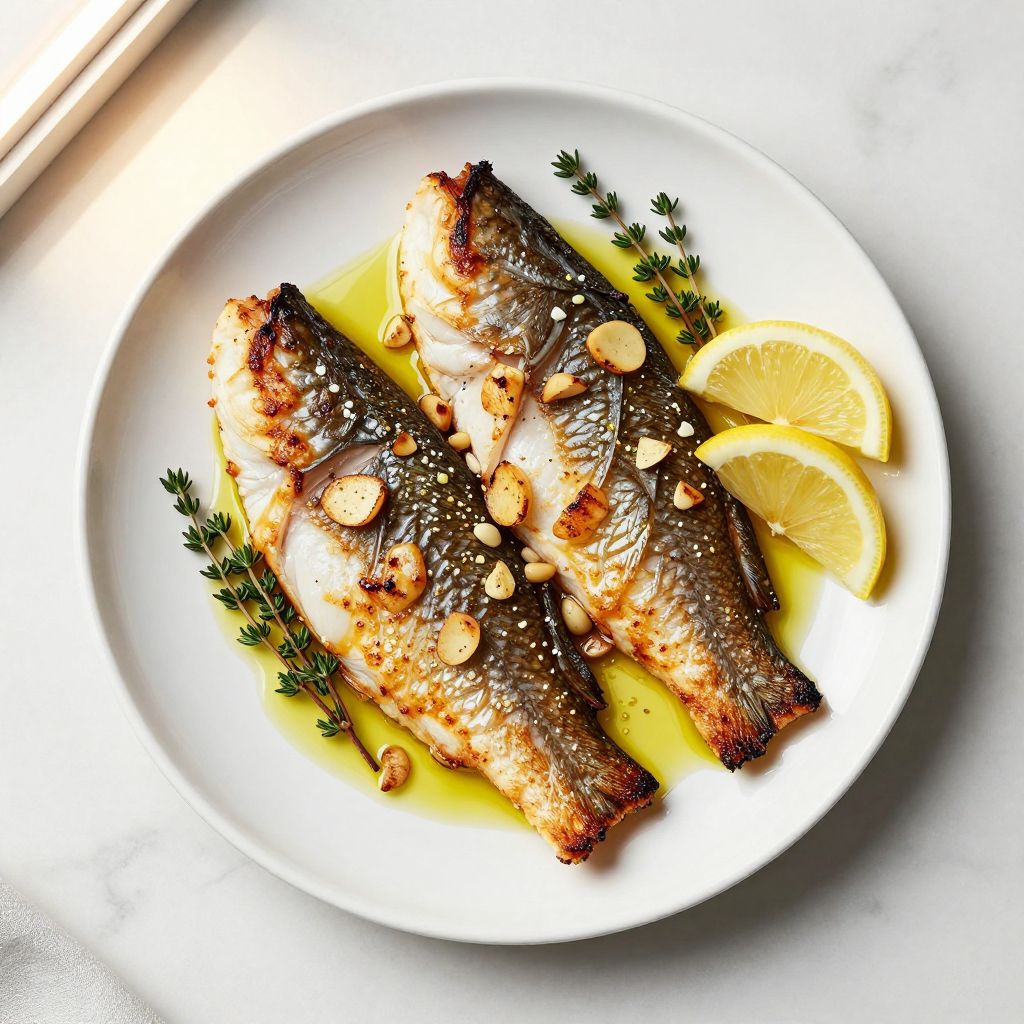
Pan-Seared Black Sea Bass with Lemon and Garlic
Ingredients
Equipment
Method
- Remove the bass fillets from the refrigerator 10 minutes before cooking to bring them closer to room temperature.
- Pat both sides of the fillets completely dry with paper towels, pressing gently but firmly to remove all moisture.
- Season both sides of each fillet with kosher salt and freshly cracked black pepper and let sit for 2 to 3 minutes to adhere.
- Heat a large stainless steel or cast iron skillet over medium-high heat for about 2 minutes until it is smoking hot.
- Add 2 tablespoons of olive oil and heat until it shimmers, about 30 seconds.
- Place each fillet skin-side down in the hot oil, pressing gently with a spatula for the first few seconds to ensure full contact, and cook undisturbed for 5 to 6 minutes until the skin is golden and crispy.
- Gently flip each fillet and add the remaining 1 tablespoon of olive oil. Cook the flesh side for 4 to 5 minutes until the fish flakes easily with a fork.
- During the last minute of cooking, add sliced garlic and fresh thyme to the pan. If using butter, add 1 tablespoon and let it melt into a foamy sauce that coats the fish.
- Transfer the fillets to plates skin-side up, spoon the infused oil, garlic, and herbs over them, squeeze fresh lemon juice on top, and serve immediately.