
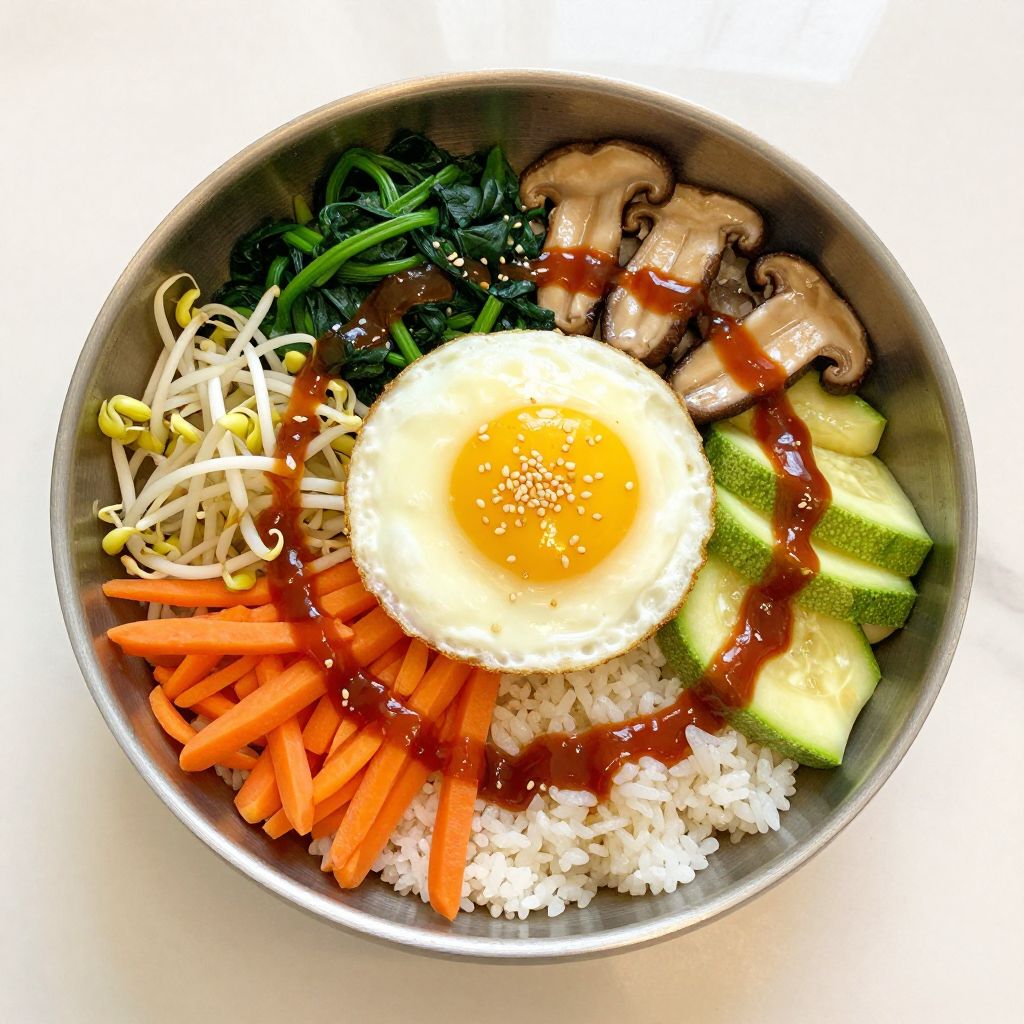
Picture a vibrant bowl filled with colorful vegetables, tender meat, and a perfectly fried egg on top, all mingling together in a delicious symphony of flavors. The Bibimbap Bowl is not just a meal; it’s an experience that brings joy and warmth with every bite, making it a must-try for anyone who loves a hearty and healthy dish.
This recipe shines with its versatility, allowing you to customize toppings and ingredients based on your preferences or what you have on hand. Plus, it’s a fantastic way to incorporate a variety of textures and flavors into one stunning bowl.
Why You’ll Love This Recipe
This dish is a true crowd-pleaser that never fails to impress.
- Customizable: Mix and match toppings based on your mood.
- Quick to prepare: A delicious meal ready in under 30 minutes.
- Healthy and balanced: Packed with veggies and protein.
- Visually stunning: A feast for the eyes as well as the palate.
- Comforting: The combination of flavors warms the soul.
My Experience Making This Recipe
The first time I made Bibimbap, the kitchen filled with enticing aromas, and I couldn’t help but sneak a taste of everything before serving. Watching the vibrant colors come together in the bowl felt like creating a piece of art.
As my family gathered around the table, their eyes lit up in anticipation. The smiles on their faces as they dug in confirmed that this dish was a winner in our home.
Recipe Overview
- Recipe Name: Bibimbap Bowl
- Servings: 4
- Prep Time: 15 minutes
- Cook Time: 15 minutes
- Total Time: 30 minutes
- Course: Main Course
- Cuisine: Korean
- Calories per Serving: 450
Equipment You Will Need
- Large skillet or frying pan
- Medium saucepan
- Cutting board
- Chef’s knife
- Small bowl for mixing sauce
- Rice cooker or pot for cooking rice
Ingredients for Bibimbap Bowl
- 2 cups cooked rice (white or brown)
- 1 cup spinach, blanched
- 1 cup bean sprouts, blanched
- 1 cup carrots, julienned
- 1 cup zucchini, julienned
- 1 cup shiitake mushrooms, sliced
- 1 pound ground beef or tofu
- 4 eggs
- 2 tablespoons sesame oil
- 2 tablespoons soy sauce
- 1 tablespoon gochujang (Korean chili paste)
- 1 teaspoon garlic, minced
- 1 tablespoon sesame seeds
- Salt and pepper to taste
Ingredient Notes and Substitutions
- Rice: It serves as the base, providing texture. Quinoa can be used for a gluten-free option.
- Vegetables: These add color and nutrients. Feel free to use any vegetables you prefer.
- Ground beef: It adds protein and flavor. Tofu is a great vegetarian substitute.
- Gochujang: This gives a spicy kick. Sriracha can substitute if you’re in a pinch.
How to Make Bibimbap Bowl
Step 1: Prepare the Rice
Start by cooking your rice according to package instructions. The rice will be the heart of your bibimbap, so make sure it’s fluffy and well-cooked.
Step 2: Sauté the Vegetables
In a large skillet, heat 1 tablespoon of sesame oil over medium heat. Sauté each vegetable separately for about 2-3 minutes until tender, adding a pinch of salt and pepper for flavor.
Step 3: Cook the Meat or Tofu
Add the ground beef or tofu to the skillet. Cook until browned and fully cooked, seasoning with soy sauce and minced garlic for added depth.
Step 4: Prepare the Eggs
In another pan, fry the eggs sunny-side up. The runny yolk will create a rich sauce when mixed into the bowl.
Step 5: Assemble the Bowl
In a large bowl, layer the cooked rice at the bottom. Neatly arrange the sautéed vegetables and meat or tofu on top of the rice for a beautiful presentation.
Step 6: Add the Egg
Place a fried egg right in the center of your colorful vegetable arrangement. This adds a creamy texture that complements the other ingredients.
Step 7: Drizzle with Sauce
Mix gochujang with a little water if it’s too thick, and drizzle it over the bowl. The sauce adds the essential spicy kick that ties everything together.
Step 8: Garnish and Serve
Finally, sprinkle sesame seeds over the top for a nutty crunch. Serve immediately and enjoy the delightful flavors!
Pro Tip: When assembling, keep the ingredients separate until ready to eat for the best presentation and flavor balance.
Tips for the Best Bibimbap Bowl
- Prep all ingredients before cooking to make the process smooth and efficient.
- Adjust the spice level by adding more or less gochujang according to your taste.
- Consider using day-old rice for better texture; it holds up nicely during cooking.
- Top with sliced green onions for an extra layer of flavor.
- Don’t skip the sesame oil; it adds a delightful nutty aroma.
Common Mistakes to Avoid
- Overcooking the vegetables can make them soggy; sauté quickly to retain crunch.
- Skipping the sauce means missing out on the essential flavor; don’t hold back.
- Using cold rice can lead to a clumpy texture; warm it up before assembling.
- Not seasoning adequately can leave the dish bland; taste as you cook.
Serving Suggestions
This dish is fantastic on its own, but pairing it with other sides can elevate your meal.
- Korean kimchi adds a tangy, spicy kick.
- Serve with a refreshing cucumber salad.
- A light miso soup complements the flavors well.
- Pair with pickled radishes for extra crunch.
Variations to Try
- Swap out the protein for grilled chicken or shrimp for a different flavor profile.
- Add sliced avocado for creaminess and a modern twist.
- Use different sauces, like teriyaki, for a unique flair.
- Try adding roasted sweet potatoes for a touch of sweetness.
Dietary Adaptations
- Gluten-free: Use tamari instead of soy sauce.
- Dairy-free: This recipe is naturally dairy-free, so enjoy without worry.
- Vegan: Substitute meat with tofu and use a vegan egg substitute.
- Low-carb: Use cauliflower rice instead of regular rice for a lighter option.
Storage and Reheating
Refrigerator
Store leftover bibimbap in an airtight container in the fridge.
- It will last up to 3 days.
- Keep the sauce separate if possible.
Freezer
This dish is best enjoyed fresh, but you can freeze the components separately.
- Cooked rice and vegetables can be frozen for up to a month.
- Raw eggs shouldn’t be frozen; add them fresh when serving.
Reheating
Reheat the rice and vegetables in a skillet over medium heat.
- Add a splash of water to steam and prevent drying.
- Fry a fresh egg when ready to serve for optimal taste.
Nutrition Information
| Nutrient | Amount |
|---|---|
| Calories | 450 |
| Total Fat | 20g |
| Saturated Fat | 4g |
| Carbohydrates | 54g |
| Fiber | 6g |
| Sugar | 3g |
| Protein | 20g |
| Sodium | 600mg |
| Cholesterol | 186mg |
This nutrition information is an estimate and may vary based on ingredient choices.
Frequently Asked Questions
Can I use other proteins?
Absolutely! Chicken, shrimp, or even a plant-based protein like tempeh works well.
Can I make this ahead of time?
Yes, you can prepare the components in advance and assemble just before serving.
How should I store leftovers?
Keep leftovers in an airtight container in the fridge for up to three days.
What if I don’t have gochujang?
You can substitute it with sriracha or a mix of chili powder and soy sauce.
Why is my rice mushy?
Mushy rice often comes from too much water or overcooking; make sure to follow rice cooking instructions.
Final Thoughts
Making a Bibimbap Bowl can be a fun and creative way to enjoy a meal packed with flavors and textures. I encourage you to try this recipe and make it your own.
Feel free to explore more delicious recipes like Bibimbap Sauce Recipe and Cava Bowl Recipe for more culinary inspiration!
Bibimbap Bowl
Ingredients
Equipment
Method
- Start by cooking your rice according to package instructions.
- In a large skillet, heat 1 tablespoon of sesame oil over medium heat.
- Sauté spinach, bean sprouts, carrots, zucchini, and shiitake mushrooms separately for about 2-3 minutes each until tender, adding a pinch of salt and pepper.
- Add the ground beef or tofu to the skillet. Cook until browned and fully cooked, seasoning with soy sauce and minced garlic.
- In another pan, fry the eggs sunny-side up.
- In a large bowl, layer the cooked rice. Neatly arrange the sautéed vegetables and meat or tofu on top.
- Place a fried egg in the center of the bowl.
- Mix gochujang with a little water and drizzle it over the bowl.
- Sprinkle sesame seeds over the top and serve immediately.