
Nothing beats the aroma of fresh bagels baking in your kitchen, filling the air with a warm, inviting scent. Making your own Bagels is not just a delightful adventure, but it also offers the chance to customize flavors and toppings, making each batch uniquely yours.
Why You’ll Love This Recipe
This bagel recipe is a true winner for several reasons.
- Simple ingredients that you probably already have at home.
- Customizable with your favorite toppings.
- Freshly baked bagels taste so much better than store-bought.
- Perfect for breakfast or a satisfying snack any time of day.
My Experience Making This Recipe
When I first tackled this bagel recipe, I was pleasantly surprised by how straightforward it was. The dough came together beautifully, and watching them puff up in the oven was pure magic.
My family couldn’t resist tearing into the warm, chewy bagels as soon as they cooled. The satisfying crunch on the outside paired with the soft interior was simply irresistible.
Recipe Overview
- Recipe Name: Bagels
- Servings: 8 bagels
- Prep Time: 20 minutes
- Cook Time: 25 minutes
- Total Time: 45 minutes
- Course: Breakfast
- Cuisine: Jewish
- Calories per Serving: Approximately 250
Equipment You Will Need
- Large mixing bowl
- Wooden spoon or dough whisk
- Measuring cups and spoons
- Clean kitchen towel
- Baking sheet
- Parchment paper
- Large pot for boiling
- Slotted spoon
Ingredients for Bagels
- 4 cups all-purpose flour
- 1 packet instant yeast (2 1/4 teaspoons)
- 1 tablespoon sugar
- 1 1/2 teaspoons salt
- 1 1/2 cups warm water (about 110°F)
- 1 tablespoon baking soda (for boiling water)
- Optional toppings: sesame seeds, poppy seeds, or everything seasoning
Ingredient Notes and Substitutions
- All-purpose flour: This provides the perfect texture. You can substitute with bread flour for a chewier bagel.
- Instant yeast: This allows for a quicker rise. Active dry yeast can also be used; just proof it in warm water first.
- Sugar: This helps activate the yeast. You can use honey or agave syrup as a natural sweetener.
- Salt: This enhances flavor, but be cautious with the amount if using salted butter in toppings.
How to Make Bagels
Step 1: Prepare the Dough
In a large mixing bowl, combine the warm water, sugar, and yeast. Let it sit for about 5 minutes until foamy; this means the yeast is activated.
Step 2: Mix the Dry Ingredients
In a separate bowl, whisk together the flour and salt. This ensures even distribution of the salt throughout the dough.
Step 3: Combine Wet and Dry Ingredients
Gradually add the flour mixture to the yeast mixture, stirring until a rough dough forms. This step is crucial as it allows the dough to come together without being overly sticky.
Step 4: Knead the Dough
Turn the dough out onto a lightly floured surface and knead for about 10 minutes. This develops the gluten, giving your bagels that perfect chew.
Step 5: Let the Dough Rise
Place the kneaded dough in a greased bowl and cover it with a clean kitchen towel. Allow it to rise in a warm place for about 1 hour or until doubled in size.
Step 6: Shape the Bagels
Once risen, punch down the dough and divide it into 8 equal pieces. Roll each piece into a ball, then poke a hole in the middle and stretch to form a bagel shape.
Step 7: Boil the Bagels
Bring a large pot of water to a boil and add the baking soda. Boil each bagel for about 1 minute per side; this helps create that classic bagel texture.
Step 8: Bake the Bagels
Preheat your oven to 425°F. Place boiled bagels on a parchment-lined baking sheet and add any toppings. Bake for 20-25 minutes until golden brown.
Pro Tip: For a shiny finish, brush the bagels with an egg wash before baking.
Tips for the Best Bagels
- Use a kitchen scale for precise measurements, especially for flour.
- Experiment with different toppings to find your favorite flavor combination.
- Allow the dough to rise in a warm environment, like near a sunny window.
- Don’t skip the boiling step; it’s key for that classic bagel texture.
- Let bagels cool on a wire rack to maintain their crusty exterior.
Common Mistakes to Avoid
- Skipping the kneading phase; it’s essential for proper texture.
- Not allowing the dough to rise fully, leading to dense bagels.
- Overcrowding the pot while boiling; this prevents even cooking.
- Using cold water instead of warm water, which can stall yeast activity.
Serving Suggestions
Fresh bagels are best enjoyed warm and can be served in various ways.
- Spread with cream cheese and topped with smoked salmon.
- Layered with avocado and a sprinkle of salt.
- Toasted with butter and jam for a sweet treat.
- Used as a base for breakfast sandwiches with eggs and cheese.
Variations to Try
- Add everything seasoning to the dough for a flavor-packed twist.
- Incorporate cheddar cheese into the dough for a cheesy delight.
- Mix in cinnamon and raisins for a sweet version.
- Top with garlic and herbs for a savory option.
Dietary Adaptations
- Gluten-free: Use a gluten-free flour blend suitable for baking.
- Dairy-free: Substitute any dairy toppings with plant-based alternatives.
- Vegan: Omit egg wash or use a plant-based alternative.
- Low-carb/Keto: Explore almond flour-based bagel recipes instead.
Storage and Reheating
Refrigerator
Store bagels in an airtight container for up to 3 days.
- Wrap them in plastic wrap to maintain freshness.
- Toast before serving for the best texture.
Freezer
Bagels freeze well for up to 3 months.
- Slice them before freezing for easy toasting.
- Use a freezer-safe bag to avoid freezer burn.
Reheating
Reheat bagels from frozen or refrigerated by toasting or baking.
- Toast in a toaster or oven until heated through.
- Microwaving is quick but may result in a chewy texture.
Nutrition Information
| Nutrient | Amount |
|---|---|
| Calories | 250 |
| Total Fat | 1g |
| Saturated Fat | 0g |
| Carbohydrates | 50g |
| Fiber | 2g |
| Sugar | 1g |
| Protein | 9g |
| Sodium | 300mg |
| Cholesterol | 0mg |
This information is approximate and can vary based on specific ingredients used.
Frequently Asked Questions
Can I use bread flour instead of all-purpose flour?
Yes, bread flour can give your bagels a chewier texture due to its higher protein content.
Can I make the dough ahead of time?
Absolutely! You can prepare the dough and refrigerate it overnight before shaping and boiling.
How long can I store bagels?
Bagels can be stored in an airtight container at room temperature for up to three days.
Why did my bagels turn out dense?
This usually happens if the dough didn’t rise enough or if it was over-kneaded.
Can I add toppings before boiling?
It’s recommended to add toppings after boiling for better adhesion and texture.
Final Thoughts
Making your own bagels is a rewarding experience that brings a touch of joy to your breakfast table. I encourage you to try this recipe and savor the satisfaction of crafting these delicious treats from scratch.
For more bagel inspiration, check out my Blueberry Bagel Recipe and the delightful Sourdough Discard Bagel Recipe. Happy baking!
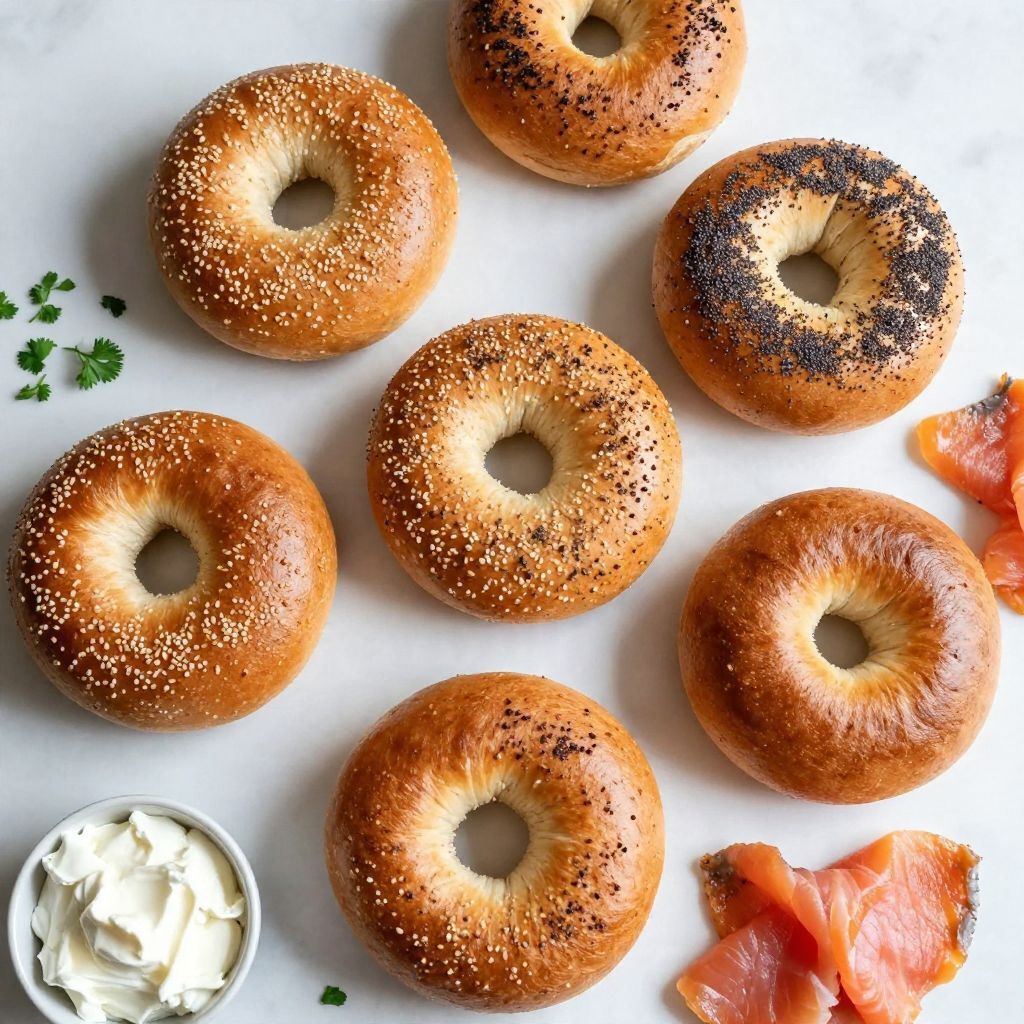
Bagels
Ingredients
Equipment
Method
- In a large mixing bowl, combine the warm water, sugar, and yeast. Let it sit for about 5 minutes until foamy.
- In a separate bowl, whisk together the flour and salt.
- Gradually add the flour mixture to the yeast mixture, stirring until a rough dough forms.
- Turn the dough out onto a lightly floured surface and knead for about 10 minutes.
- Place the kneaded dough in a greased bowl and cover it with a clean kitchen towel. Allow it to rise in a warm place for about 1 hour.
- Once risen, punch down the dough and divide it into 8 equal pieces. Roll each piece into a ball and poke a hole in the middle to form bagels.
- Bring a large pot of water to a boil and add the baking soda. Boil each bagel for about 1 minute per side.
- Preheat your oven to 425°F. Place boiled bagels on a parchment-lined baking sheet and add any toppings. Bake for 20-25 minutes until golden brown.