
There’s something almost meditative about stirring a pot of creamy risotto, watching each ladle of broth transform the rice from individual grains into a silky, luxurious dish. Arborio rice is the secret ingredient that makes this magic happen, and once you master the technique, you’ll understand why this Italian classic has captivated home cooks for centuries.
This recipe teaches you how to coax the natural starches from short-grain Arborio rice to create a restaurant-quality dish at home with nothing more than patience, good broth, and constant attention. The result is a creamy, elegant side dish or light meal that pairs beautifully with everything from roasted vegetables to seafood to truffle oil.
Why You’ll Love This Recipe
Risotto sounds fancy but is surprisingly forgiving once you understand the fundamentals. This version delivers pure, clean flavor that lets quality ingredients shine without fussy additions.
- Creamy texture without cream, just from the rice’s natural starch release
- Takes just 20 minutes of active cooking time from start to finish
- Endlessly adaptable to seasonal vegetables, proteins, or aromatics you have on hand
- Impressive enough for dinner guests yet simple enough for a quiet weeknight
- One-pot meal that requires minimal cleanup and one main technique to master
My Experience Making This Recipe
I learned to make risotto from a small cookbook written by a woman from Piedmont, and her insistence on using only Arborio rice and warm broth stayed with me. The first time I made it, I was convinced I was doing something wrong because the rice kept absorbing liquid and asking for more, but that moment when it shifted from soupy to luxuriously creamy felt like a small kitchen victory.
Since then, I’ve made risotto in tiny apartment kitchens and during dinner parties where I stirred the pot while talking with guests gathered around the stove. My family requests it regularly, and I’ve taught several friends to make it by having them stand beside me and feel how the rice moves when it’s ready for the next ladle of broth.
The sensory experience never gets old: the gentle bubbling sound, the aroma of good broth and butter, the way your forearm gets a workout from constant stirring. People taste it and immediately ask how long it took, and they’re always surprised when I tell them it’s faster than ordering takeout.
Recipe Overview
- Recipe Name: Creamy Arborio Rice Risotto
- Servings: 4
- Prep Time: 10 minutes
- Cook Time: 18 minutes
- Total Time: 28 minutes
- Course: Main dish or side
- Cuisine: Italian
- Calories per Serving: 285
Equipment You Will Need
- One heavy-bottomed pot or Dutch oven (at least 3 quarts)
- Wooden spoon for constant stirring
- One small saucepan for keeping broth warm
- Ladle for adding broth gradually
- Measuring cups and spoons
- Chef’s knife and cutting board
- Grater for Parmesan cheese
Ingredients for Creamy Arborio Rice Risotto
- 1.5 cups Arborio rice (short-grain Italian rice with high starch content)
- 4 cups vegetable or chicken broth (warm, kept simmering in a separate pot)
- 1/2 cup dry white wine (optional but recommended for depth)
- 1 medium yellow onion, minced finely
- 3 cloves garlic, minced
- 3 tablespoons butter, divided
- 2 tablespoons olive oil
- 1/2 cup freshly grated Parmesan cheese
- Salt and black pepper to taste
- 2 tablespoons fresh parsley, chopped (optional garnish)
Ingredient Notes and Substitutions
- Arborio rice: This short-grain variety has high starch content that releases during cooking to create natural creaminess. Carnaroli rice works as a substitute with nearly identical results, though it holds its shape slightly firmer.
- Warm broth: Keeping broth warm ensures the rice cooks evenly and doesn’t shock the mixture with cold liquid. Cold broth from the refrigerator will work but takes longer and cooks less evenly.
- White wine: Wine adds acidity and subtle flavor complexity that balances the richness. Omit it if you prefer, and add an extra 1/2 cup broth instead.
- Butter: Use real butter for the best flavor and texture; it emulsifies with the rice starch to create silkiness. Olive oil alone makes the risotto less creamy.
- Parmesan cheese: Freshly grated Parmesan melts smoothly into the risotto and tastes dramatically better than pre-grated versions. Pecorino Romano works as a substitute with a sharper, saltier flavor.
How to Make Creamy Arborio Rice Risotto
Step 1: Prepare Your Mise en Place
Measure out all your ingredients into separate small bowls before you begin cooking. This prevents scrambling for items mid-stir and lets you work confidently without pausing.
Step 2: Warm the Broth
Pour your broth into a separate small saucepan and bring it to a gentle simmer over medium heat. Warm broth helps the rice cook evenly and absorb liquid more effectively than cold broth would.
Step 3: Toast the Rice
Heat olive oil and 1 tablespoon butter in a large heavy-bottomed pot over medium heat until the butter foams. Add the minced onion and cook for 2 to 3 minutes, stirring occasionally, until softened and translucent.
Step 4: Add Rice and Garlic
Stir in the minced garlic and cook for 30 seconds until fragrant. Add the Arborio rice and stir constantly for 1 to 2 minutes to coat each grain with fat, which prevents them from sticking together during cooking.
Step 5: Deglaze with Wine
Pour in the dry white wine and stir frequently until the liquid is almost completely absorbed by the rice, about 1 to 2 minutes. The wine adds depth and the acid helps flavor development, so don’t skip this step even if you dislike cooking with alcohol.
Step 6: Begin Adding Broth Gradually
Add broth one ladle at a time, stirring frequently, and wait until each addition is mostly absorbed before adding the next ladle. This gradual process takes about 15 to 18 minutes total and is where your constant attention matters most.
Step 7: Stir Constantly for Creaminess
Keep your wooden spoon moving throughout the cooking process to coax starch from the rice grains, which is what creates the signature creamy texture. You’re not stirring to prevent sticking as much as you’re stirring to develop the sauce from within the rice itself.
Step 8: Taste for Doneness
After about 16 to 18 minutes, taste a few grains of rice to check texture. The grains should be tender on the outside with a slight firmness in the very center, a quality Italians call “al dente.”
Step 9: Finish with Butter and Cheese
Remove the pot from heat and stir in the remaining 2 tablespoons of cold butter and the grated Parmesan cheese, stirring vigorously until fully incorporated and creamy. This final addition of cold butter creates an emulsion that makes the risotto silky and luxurious.
Step 10: Season and Serve Immediately
Taste the risotto and adjust salt and pepper as needed, remembering that both the broth and Parmesan are salty. Divide among serving bowls and garnish with fresh parsley if desired, then serve right away while it’s hot and creamy.
Pro Tip: Keep your broth at a gentle simmer the entire time you’re making risotto; this single detail makes the difference between creamy risotto and gluey, overcooked rice.
Tips for the Best Creamy Arborio Rice Risotto
- Use good quality broth, whether store-bought or homemade, because it’s a main flavor component that makes a noticeable difference.
- Don’t walk away from the pot; constant stirring develops the starch that creates creaminess, and it also prevents sticking on the bottom.
- Keep the broth temperature consistent by maintaining a gentle simmer in a separate pot; switching between hot and cold liquid disrupts even cooking.
- Add broth in measured ladle amounts so you can track absorption and avoid oversaturating the rice near the end.
- Grate Parmesan cheese fresh just before cooking; pre-grated versions contain anti-caking agents that prevent smooth melting.
- The risotto continues to cook slightly after you remove it from heat, so pull it from the stove when the rice is still slightly underdone.
Common Mistakes to Avoid
- Using the wrong rice variety: Long-grain white rice, jasmine rice, or basmati won’t work because they lack the starch needed for creaminess.
- Adding all the broth at once: This makes the rice cook unevenly and creates a gluey texture instead of creamy sauce.
- Skipping the wine: Wine adds acidity and flavor complexity that makes basic risotto taste sophisticated and balanced.
- Not stirring constantly: Infrequent stirring means the starch doesn’t release properly, and you miss the window to stir up any rice sticking to the bottom.
- Letting the broth cool: Cold broth shocks the pot temperature and slows cooking, making the final texture less creamy.
Serving Suggestions
Risotto shines as a creamy bed for roasted vegetables, seared proteins, or rich sauces, and it works equally well as a main dish or an elegant side. Serve it immediately while it’s hot and at peak creaminess, as risotto thickens as it cools.
- Top with a perfectly fried egg and crispy pancetta for a simple dinner
- Pair with sauteed mushrooms and fresh thyme for an earthy vegetarian main
- Serve alongside roasted chicken thighs with lemon and rosemary
- Top with seared scallops or shrimp for an elegant seafood version
- Drizzle with truffle oil and top with crispy sage leaves for a luxury side dish
Variations to Try
- Mushroom Risotto: Saute 8 ounces sliced mushrooms in butter before adding the onion, then fold in additional roasted mushrooms at the end for earthy depth.
- Saffron Risotto (Risotto Milanese): Steep a pinch of saffron threads in the warm broth before adding it; the rice turns golden and takes on a subtle floral flavor.
- Asparagus Risotto: Add 1 pound chopped fresh asparagus about halfway through cooking and fold in more raw asparagus tips at the end for textural contrast.
- Seafood Risotto: Stir in cooked shrimp, scallops, or diced white fish in the final minute of cooking along with fresh lemon juice and parsley.
- Butternut Squash Risotto: Replace 1 cup of broth with roasted butternut squash puree and add a tiny pinch of nutmeg for warm, autumn flavors.
Dietary Adaptations
- Gluten-free: Arborio rice is naturally gluten-free, but confirm your broth and any added ingredients don’t contain hidden gluten sources.
- Dairy-free: Replace butter with olive oil and substitute Parmesan with nutritional yeast for savory umami flavor, though the texture will be less creamy.
- Vegan: Use vegetable broth, olive oil instead of butter, and nutritional yeast instead of Parmesan cheese for a plant-based version.
- Low-carb or keto: This dish is high in carbohydrates from rice and not suitable for strict keto, but you could substitute cauliflower rice for a lower-carb version.
Storage and Reheating
Refrigerator
Let risotto cool completely, then transfer to an airtight container where it will keep for up to 3 days. Risotto thickens significantly when chilled as the starches set.
- Store in shallow containers for faster cooling
- Keep away from other pungent foods that might transfer flavors
Freezer
Risotto freezes well for up to 2 months when stored in freezer bags or airtight containers. Flat freezer bags save space and thaw quickly.
- Freeze in portion-sized amounts for easy reheating
- Label with the date and contents
Reheating
Reheat gently on the stovetop with added broth, white wine, or water to loosen the texture back to creamy. Microwave reheating works but tends to create hot spots and uneven texture.
- Add 1/4 to 1/2 cup liquid per portion and stir frequently over medium heat
- Don’t reheat at high heat, which can break the creamy emulsion
- Risotto is best eaten fresh but tastes good reheated if handled gently
Nutrition Information
| Nutrient | Amount |
|---|---|
| Calories | 285 |
| Total Fat | 12g |
| Saturated Fat | 6g |
| Carbohydrates | 38g |
| Fiber | 1g |
| Sugar | 1g |
| Protein | 8g |
| Sodium | 620mg |
| Cholesterol | 22mg |
This nutrition information is an estimate based on standard ingredients and assumes four servings. Variations will change the nutritional content, and actual values may differ based on specific brands and preparation methods.
Frequently Asked Questions
Can I make risotto ahead of time?
You can partially cook risotto up to 30 minutes before serving, then finish it with the remaining broth when ready to eat. This helps for dinner parties when timing multiple dishes is tricky.
Why is my risotto mushy or gluey?
Mushy risotto usually results from adding too much liquid too quickly or not stirring enough during cooking. Gluey risotto often comes from using the wrong rice variety or cooking past al dente.
Can I substitute arborio rice with another type?
Carnaroli rice works nearly identically and holds its shape slightly firmer. Vialone Nano and Baldo rice are also excellent Italian varieties, but standard white rice won’t produce the creamy texture you’re after.
How do I know when the risotto is done?
Taste a few grains of rice; they should be tender on the outside with a tiny firm center and the overall mixture should be creamy and flow slightly on the plate. If you stir it and it sits in a stiff mound, it needs more liquid and cooking.
What broth type works best?
Vegetable broth, chicken broth, and seafood broth all work depending on what you’re serving with the risotto. Use whichever complements your final dish, and avoid broth with very strong spices that would overpower the delicate rice.
Can I make risotto without wine?
Yes, simply omit the wine and add an extra 1/2 cup of broth instead, though the risotto will be less complex. A splash of fresh lemon juice at the end adds some of the acidity you lose without wine.
Final Thoughts
Risotto teaches you something valuable every time you make it: that good cooking often comes not from complicated techniques but from understanding how individual ingredients work and having the patience to let them do their job. Once you master this classic version, you’ll find yourself making variations based on what vegetables you have on hand and what flavors you’re craving that night.
The next time you’re planning dinner and want something that tastes like you spent hours in the kitchen but only took 30 minutes, pull out your Arborio rice and reach for that wooden spoon. Your guests will be impressed, you’ll feel confident, and you’ll have a technique you can lean on for years of delicious meals to come.
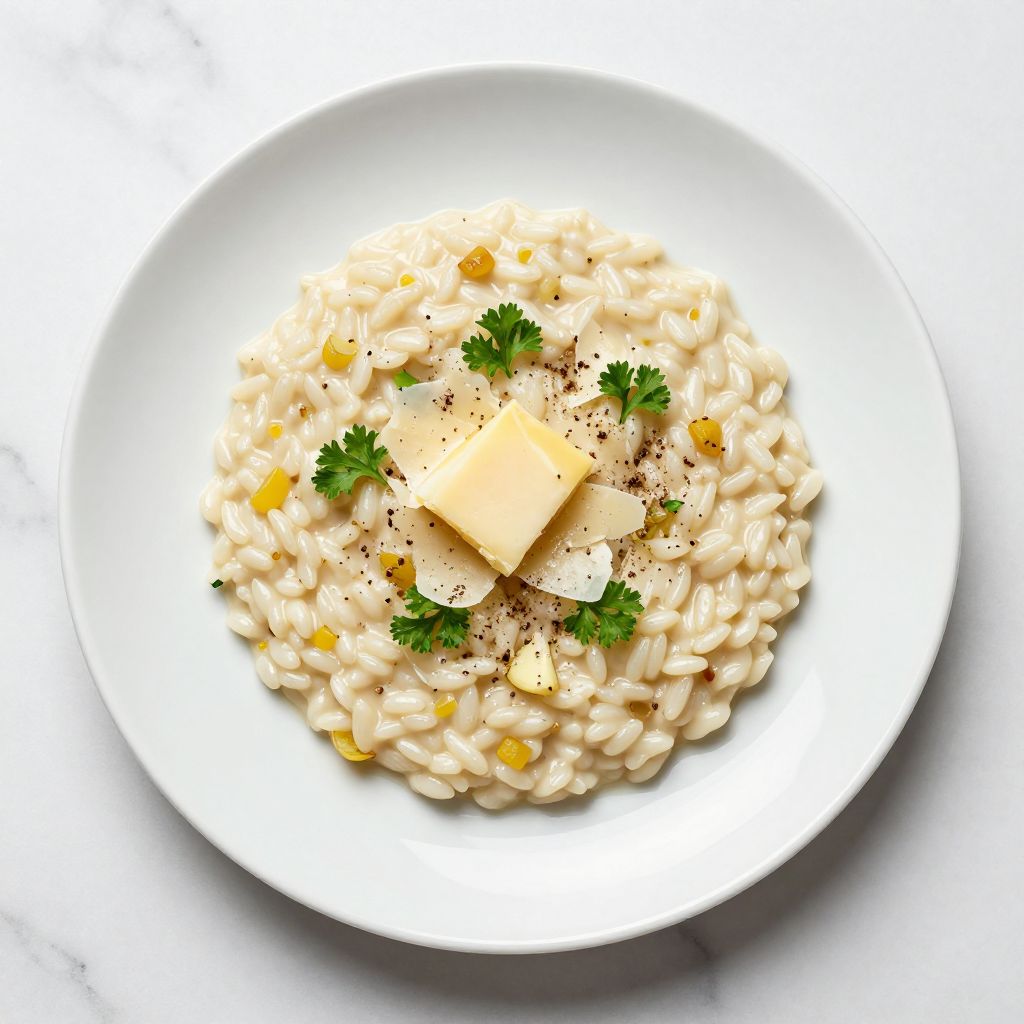
Creamy Arborio Rice Risotto
Ingredients
Equipment
Method
- Measure out all your ingredients into separate small bowls before you begin cooking.
- Pour your broth into a separate small saucepan and bring it to a gentle simmer over medium heat. Keep warm throughout cooking.
- Heat olive oil and 1 tablespoon butter in a large heavy-bottomed pot over medium heat until the butter foams. Add the minced onion and cook for 2 to 3 minutes, stirring occasionally, until softened and translucent.
- Stir in the minced garlic and cook for 30 seconds until fragrant. Add the Arborio rice and stir constantly for 1 to 2 minutes to coat each grain with fat.
- Pour in the dry white wine and stir frequently until the liquid is almost completely absorbed by the rice, about 1 to 2 minutes.
- Add broth one ladle at a time, stirring frequently, and wait until each addition is mostly absorbed before adding the next ladle. Continue this process for 15 to 18 minutes total.
- Keep your wooden spoon moving throughout the cooking process to coax starch from the rice grains and create the signature creamy texture.
- After about 16 to 18 minutes, taste a few grains of rice to check texture. The grains should be tender on the outside with a slight firmness in the very center (al dente).
- Remove the pot from heat and stir in the remaining 2 tablespoons of cold butter and the grated Parmesan cheese, stirring vigorously until fully incorporated and creamy.
- Taste the risotto and adjust salt and pepper as needed. Divide among serving bowls and garnish with fresh parsley if desired. Serve immediately while hot and creamy.