Nothing says “slow-cooked comfort” quite like the aroma of cholent filling your kitchen on a Friday afternoon, ready to warm your Shabbat table hours later.
This traditional Jewish stew is pure magic: beef, beans, barley, and potatoes meld into a rich, deeply savory one-pot meal that practically cooks itself overnight.
What makes cholent special is its hands-off nature and the way flavors deepen as it simmers for hours, creating a dish that tastes better the longer it sits. Whether you’re honoring family tradition or discovering it for the first time, this cholent recipe delivers tender meat, creamy beans, and a broth so good you’ll want to drink it straight from the bowl.
Why You’ll Love This Recipe
Cholent checks every box for comfort food lovers and busy cooks alike.
- Minimal hands-on time: brown the meat, throw everything in a pot, and let the oven do the work.
- Perfect for meal prep: makes enough to serve 8 and tastes even better as leftovers.
- Naturally gluten-free and packed with protein and fiber.
- Feeds a crowd without fussing or hovering over the stove.
- Fills your home with the kind of aroma that makes people ask what you’re cooking.
My Experience Making This Recipe
I first made cholent for a Shabbat dinner years ago, hoping to impress relatives who grew up eating it every week. What struck me was how forgiving this dish is: I second-guessed myself about the spice levels and cooking time, but when I lifted that lid after twelve hours, the steam that rose up smelled absolutely perfect.
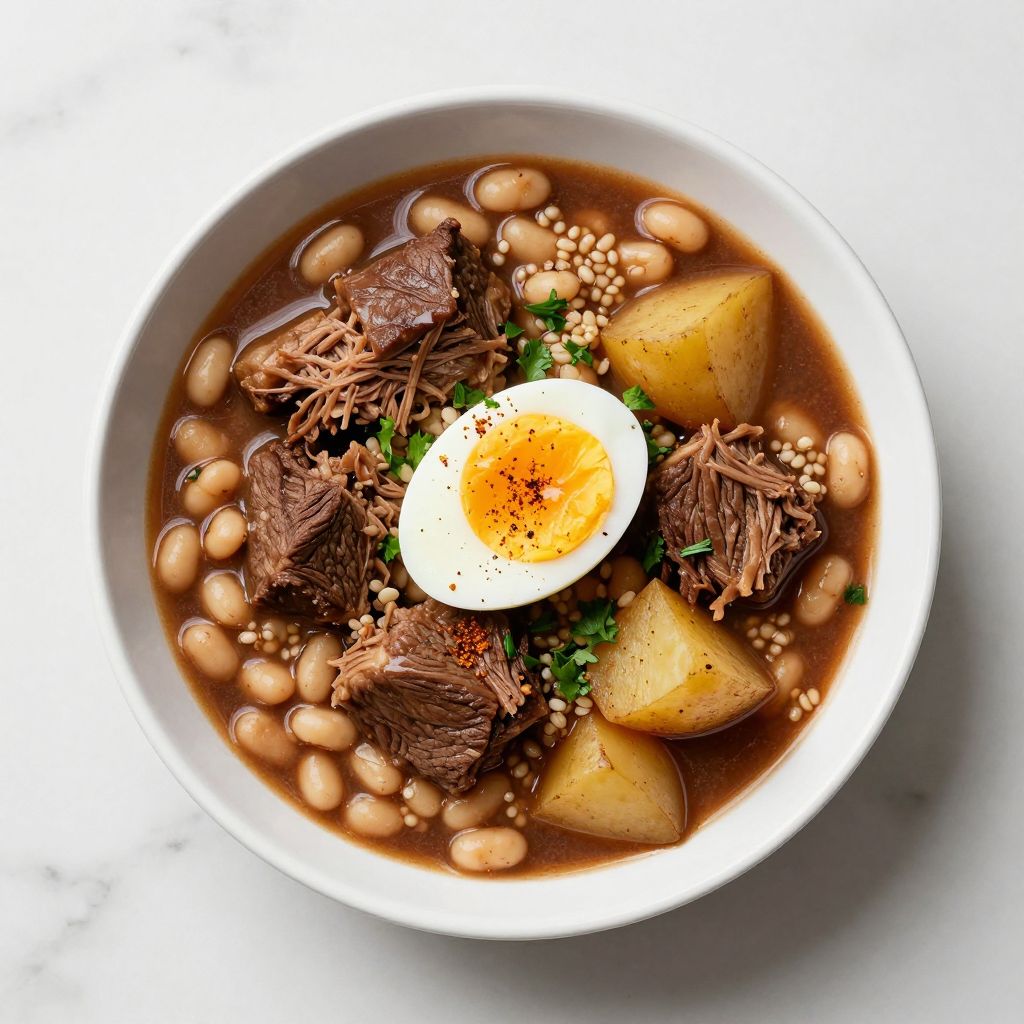
The meat fell apart with a spoon, the beans had softened into creamy submission, and the broth had turned a rich, mahogany brown. My guests sat down to eat and nobody spoke for the first few minutes, which in my experience means the food is doing its job.
The leftover portion I reheated three days later tasted sharper and more developed, proving that this is a dish that rewards patience and time. Now I make it at least once a month, and my kids actually request it.
Recipe Overview
- Recipe Name: Cholent
- Servings: 8
- Prep Time: 20 minutes
- Cook Time: 12 hours
- Total Time: 12 hours 20 minutes
- Course: Main Dish
- Cuisine: Jewish
- Calories per Serving: 420
Equipment You Will Need
- Large heavy-bottomed Dutch oven or 5-quart oven-safe pot with a lid
- Cutting board
- Sharp knife
- Large skillet or sauté pan for browning meat
- Wooden spoon or silicone spatula
- Measuring cups and spoons
- Paper towels for drying meat
Ingredients for Cholent
- 3 pounds beef chuck, cut into 2-inch chunks
- 2 tablespoons kosher salt, divided
- 1 teaspoon black pepper
- 3 tablespoons olive oil
- 2 large onions, diced
- 6 cloves garlic, minced
- 4 cups beef broth
- 2 cans 15-ounce white beans, drained and rinsed
- 1 cup pearl barley
- 4 medium russet potatoes, peeled and cut into 1-inch cubes
- 2 tablespoons paprika
- 1 tablespoon garlic powder
- 1 teaspoon turmeric
- 1 teaspoon dried thyme
- 1 tablespoon ketchup or tomato paste
- 2 large eggs in shells, uncooked
- 1 tablespoon honey
- Water as needed to cover ingredients by 1 inch
Ingredient Notes and Substitutions
- Beef chuck: This cut contains enough fat and connective tissue to break down into tender shreds during long, slow cooking, creating natural richness. Swap for brisket or short ribs if you prefer, though you may need to adjust the cook time slightly.
- Pearl barley: It adds a nutty flavor and creamy texture as it absorbs broth, thickening the stew naturally. Use brown rice or farro for a different texture, but reduce the amount slightly since both absorb liquid faster.
- Paprika: This spice delivers warm, earthy depth without heat and is traditional in Ashkenazi cholent. Spanish or Hungarian paprika works best; smoked paprika adds a different flavor dimension if you experiment.
- White beans: Cannellini beans are traditional and add creaminess when soft. Great Northern or kidney beans work fine, though kidney beans stay firmer and will change the texture slightly.
- Eggs in shells: These cook gently in the stew and develop a creamy, custard-like yolk; some families serve one per bowl. You can skip them entirely or use hard-boiled eggs added at the end.
How to Make Cholent
Step 1: Prepare and Brown the Meat
Pat the beef chunks dry with paper towels, then season them generously with 1 tablespoon of salt and the black pepper. Browning the meat creates a savory crust and adds depth to the broth, so don’t skip this step even though it takes extra time.
Heat the olive oil in a large skillet over medium-high heat until it shimmers, then add the beef in batches without crowding the pan. Let each batch sit undisturbed for 3 to 4 minutes so the meat develops a golden-brown crust, then flip and brown the other side.
Step 2: Sauté the Aromatics
Transfer the browned beef to your Dutch oven. Pour out most of the oil from the skillet, leaving just a thin layer, then add the diced onions and cook over medium heat for 5 minutes, stirring occasionally, until they soften and turn translucent.
Add the minced garlic and cook for another minute until fragrant. The garlic should not brown, as it will taste bitter if charred.
Step 3: Deglaze and Add the Onions and Garlic
Transfer the softened onions and garlic to the Dutch oven with the beef. Scrape the bottom of the skillet with a wooden spoon to loosen any browned bits, which hold tons of flavor.
Step 4: Layer in the Dried Ingredients and Spices
Add the paprika, garlic powder, turmeric, and dried thyme directly to the pot with the meat and onions. Stir well for about 30 seconds so the spices toast slightly and release their oils, which deepens their flavor.
Add the ketchup or tomato paste and stir until everything is coated evenly. This small amount of acidity balances the richness of the meat and broth.
Step 5: Add the Broth and Barley
Pour in the beef broth and add the pearl barley, stirring to distribute it evenly throughout the pot. Add enough water so the liquid covers all the ingredients by about 1 inch, which ensures the stew cooks evenly and the barley absorbs liquid without drying out.
Step 6: Add the Beans, Potatoes, and Eggs
Stir in the drained and rinsed white beans, then add the diced potatoes and stir well. Nestle the two uncooked eggs (in their shells) into the stew, which will cook gently in the residual heat and develop silky yolks.
Add the remaining 1 tablespoon of salt and the honey, which adds a subtle sweetness that rounds out the savory flavors. Taste the broth and adjust seasoning as needed.
Step 7: Bring to a Simmer on the Stovetop
Place the Dutch oven over medium-high heat and bring the liquid to a gentle simmer, stirring occasionally. This step takes about 10 to 15 minutes and allows the flavors to start melding before the long, slow cook.
Step 8: Transfer to the Oven and Cook Low and Slow
Cover the pot with its lid and transfer it to a 250-degree Fahrenheit oven. The low, gentle heat ensures the beef becomes fork-tender without drying out, and all the flavors blend into a cohesive, rich stew.
Cook for 10 to 12 hours, depending on your oven and how tender you like the meat. You can start this in the early evening and have it ready for dinner the next day, or prepare it overnight for a weekend meal.
Step 9: Rest and Serve
Remove the cholent from the oven and let it rest for 10 to 15 minutes before opening the lid, which allows the heat to distribute evenly and prevents the sudden release of very hot steam. Carefully remove the cooked eggs with a slotted spoon and set aside to cool slightly, then peel and halve them.
Ladle the cholent into deep bowls, making sure each serving gets meat, potatoes, beans, and plenty of broth. Top with half an egg if desired and serve hot.
Pro Tip: Never lift the lid during cooking unless absolutely necessary, as every opening releases heat and extends the cooking time unpredictably. The stew will thicken as it cools, so don’t worry if it seems soupy when you first open the pot.
Tips for the Best Cholent
- Use a heavy Dutch oven with a snug-fitting lid so heat distributes evenly and moisture stays trapped inside, creating that signature tender result.
- Do not skip browning the meat; this caramelization step builds depth that hours of simmering alone cannot achieve.
- Soak dried beans overnight if using them instead of canned beans, which reduces cook time and improves texture.
- If your oven runs hot or cold, check the stew after 10 hours; some ovens finish in as little as 9 hours.
- Make cholent the day before serving so flavors meld overnight and you can skim any fat from the surface when it cools.
- Keep the liquid level consistent; if it drops below the ingredients halfway through cooking, add a cup of warm water to maintain the stew’s texture.
Common Mistakes to Avoid
- Cutting meat too small: small pieces fall apart and disappear into the broth instead of staying intact and meaty.
- Cooking at too high a temperature: this causes the exterior of the meat to toughen while the interior remains tough, defeating the purpose of the long cook.
- Adding fresh herbs that will turn bitter: stick to dried herbs, which hold up to the long cooking time without losing flavor.
- Skipping the browning step: this is where you build the foundational flavor that makes cholent taste rich and satisfying rather than bland.
- Overfilling the pot: leave at least 2 inches of headspace so the stew doesn’t bubble over and fill your oven with a mess.
Serving Suggestions
Cholent is a complete meal on its own, but a few simple sides amplify the experience.
- Crusty rye bread or challah for soaking up the rich broth.
- Pickled vegetables or a sharp vinegar-based slaw to cut through the richness.
- Roasted root vegetables like carrots or parsnips for extra sweetness.
- A simple green salad with lemon dressing for brightness and contrast.
- Horseradish or spicy mustard for those who like a kick of heat.
Variations to Try
- Meat-Lover’s Cholent: Add 8 ounces of diced pastrami or corned beef in the last hour of cooking for smokier flavor and extra richness without extending the cook time.
- Bean-Heavy Cholent: Increase white beans to 3 cans and reduce beef to 2 pounds for a lighter, more vegetable-forward stew that still feels hearty.
- Spiced Cholent: Add 1 teaspoon of cinnamon and 1/4 teaspoon of cloves to the spice mix for a hint of sweetness and warmth inspired by North African cholent traditions.
- Vegetable-Packed Cholent: Stir in 2 cups of diced butternut squash or sweet potato along with the regular potatoes for natural sweetness and different texture.
- Mushroom Cholent: Brown 12 ounces of diced mushrooms with the onions to add umami depth and earthiness that complements the beef beautifully.
Dietary Adaptations
- Gluten-Free: Cholent is naturally gluten-free as written; just confirm your broth and ketchup contain no hidden gluten.
- Dairy-Free: Cholent contains no dairy, so it’s ready to serve as is to anyone avoiding dairy products.
- Vegan/Vegetarian: Replace beef with hearty mushrooms or extra beans, increase broth to 5 cups, and skip the eggs; the result is lighter but still deeply flavored.
- Low-Carb/Keto: Reduce barley to 1/4 cup and double the amount of cauliflower rice or celery root if you want bulk; the macros shift toward fat and protein from the meat.
Storage and Reheating
Refrigerator
Cholent keeps beautifully in the fridge for up to 5 days in an airtight container. The stew thickens as it cools because the starches from the barley and potatoes continue to hydrate.
- Store in shallow containers so it cools quickly and evenly.
- Skim congealed fat from the surface if you prefer a leaner version.
- The flavor deepens each day, so day 3 often tastes even better than day 1.
Freezer
Cholent freezes excellently for up to 3 months in freezer-safe containers or bags. Leaving 1 inch of headspace prevents the container from cracking as the stew expands.
- Label containers with the date so you remember when you made it.
- Freeze in individual portions for easy weeknight reheating.
- Thaw overnight in the refrigerator before reheating for best results.
Reheating
Reheat cholent gently on the stovetop over low to medium heat, stirring occasionally and adding a splash of water or broth if it’s thicker than you like. The oven method works beautifully too: cover and warm at 325 degrees for 30 to 45 minutes.
- Never use the microwave, which can scorch the bottom and unevenly heat the stew.
- Add a pinch of salt to freshen the flavors if they seem muted after storage.
- If reheating from frozen, allow an extra 30 minutes on the stovetop or add 20 minutes in the oven.
Nutrition Information
| Nutrient | Amount |
|---|---|
| Calories | 420 |
| Total Fat | 18g |
| Saturated Fat | 6g |
| Carbohydrates | 32g |
| Fiber | 7g |
| Sugar | 4g |
| Protein | 38g |
| Sodium | 680mg |
| Cholesterol | 95mg |
Cholent delivers substantial protein and fiber, making it a complete and filling meal that keeps you satisfied for hours. The values above are estimates based on standard ingredients and may vary depending on your specific brands and portion sizes.
Frequently Asked Questions
Can I make cholent in a slow cooker instead of the oven?
Yes, absolutely. Use the high setting for 8 to 10 hours or the low setting for 12 to 16 hours, depending on your slow cooker’s power. The result is equally tender, though you’ll lose the deep brown flavor from stovetop browning if you skip that initial step.
What if I don’t have white beans?
Kidney beans, chickpeas, or lentils all work beautifully in cholent. The cook time and final texture vary slightly, but the overall dish remains delicious and hearty.
Can I prepare cholent earlier in the day and cook it overnight?
Yes, this is actually ideal. Assemble the pot in the morning, refrigerate it, and transfer it directly to the oven in the evening so it cooks overnight and is ready for dinner or lunch the next day.
Why did my barley turn mushy?
Barley absorbs liquid and softens significantly during the 10 to 12-hour cook, so it’s normal for it to lose its individual shape and help thicken the broth. If you prefer firmer barley, reduce the amount to 3/4 cup.
Is cholent supposed to be thick or soupy?
Traditional cholent falls somewhere in between, with enough broth to spoon over bread but thick enough to hold meat and vegetables on the spoon. If yours is too soupy after cooking, simmer it uncovered on the stovetop for 30 minutes to reduce the liquid.
Final Thoughts
Making cholent teaches a valuable lesson: some of the best food doesn’t require constant attention or complex techniques. This stew hands you a gift of time, asking only that you brown the meat, layer in your ingredients, and let the oven work its magic while you live your life.
The first time you serve a steaming bowl to someone who has never tasted cholent, watch their face as they discover how tender the meat is, how creamy the beans have become, and how those flavors have woven together into something greater than the sum of its parts. That moment makes every minute of cook time worth it.
Explore More Recipes
If you loved making this cholent, you’ll find plenty more traditional and modern recipes waiting for you. Check out our full recipe collection for more comfort food favorites that feed families and create memories. For something with a similar slow-cooked, hearty vibe, our cowboy chili recipe delivers the same warming, satisfying results in a completely different flavor profile.
Cholent
Ingredients
Equipment
Method
- Pat the beef chuck dry with paper towels and season with 1 tablespoon of kosher salt and black pepper.
- Heat 3 tablespoons of olive oil in a large skillet over medium-high heat until shimmering.
- Brown the beef in batches without crowding the pan, cooking each batch for 3 to 4 minutes per side until golden brown; transfer to the Dutch oven.
- Discard most of the oil from the skillet, add diced onions, and sauté over medium heat for 5 minutes until translucent.
- Add minced garlic and cook for 1 minute until fragrant, then transfer onions and garlic to the Dutch oven with the beef.
- Add paprika, garlic powder, turmeric, and dried thyme; stir for 30 seconds to toast the spices, then stir in ketchup or tomato paste until evenly coated.
- Pour in beef broth and pearl barley; add water to cover ingredients by 1 inch and stir to combine.
- Stir in drained white beans, diced potatoes, uncooked eggs in shells, the remaining 1 tablespoon kosher salt, and honey; taste and adjust seasoning.
- Bring the mixture to a gentle simmer over medium-high heat on the stovetop, stirring occasionally for about 10 minutes.
- Cover the Dutch oven with its lid and transfer to a preheated 250°F oven; cook low and slow for 10 to 12 hours.
- Remove the pot from the oven and let rest for 10 to 15 minutes before opening the lid.
- Carefully remove the cooked eggs, peel and halve them; ladle the cholent into bowls, top each with half an egg if desired, and serve hot.