
As the aroma of freshly baked bread fills your kitchen, it’s hard not to feel a sense of comfort and warmth. The Olive Bread Recipe combines the earthy flavor of olives with a soft, chewy crumb, making it a delightful addition to any meal or a perfect snack on its own.
This bread is not only delicious but also versatile; it pairs beautifully with cheese, soups, or even just a drizzle of olive oil. It’s a fantastic way to impress your family and friends, and trust me, they will be begging for the recipe!
Why You’ll Love This Recipe
This recipe offers a unique twist on traditional bread, making it a must-try.
- Easy to follow and requires minimal ingredients.
- Perfectly chewy texture with a flavorful kick.
- Great for sandwiches, toasting, or as a side.
- Can be customized with different types of olives.
- Freezes well for later enjoyment.
My Experience Making This Recipe
The first time I made this olive bread, I was amazed at how simple the process was. With each knead, the dough transformed into a silky ball of goodness.
When it came out of the oven, the crust was golden brown and the smell was irresistible. I could hardly wait for it to cool before slicing into it, and the first bite was pure bliss.
Recipe Overview
- Recipe Name: Olive Bread
- Servings: 8
- Prep Time: 15 minutes
- Cook Time: 30 minutes
- Total Time: 45 minutes
- Course: Bread
- Cuisine: Mediterranean
- Calories per Serving: 180
Equipment You Will Need
- Large mixing bowl
- Wooden spoon or spatula
- Measuring cups and spoons
- Baking sheet
- Parchment paper
- Kitchen towel
Ingredients for Olive Bread
- 3 cups all-purpose flour
- 1 cup pitted olives, chopped
- 1 packet (2 ¼ teaspoons) instant yeast
- 1 teaspoon salt
- 1 ¼ cups warm water (about 110°F)
- 1 tablespoon olive oil
Ingredient Notes and Substitutions
- All-purpose flour: Provides structure and chew. You can use bread flour for a chewier texture.
- Pitted olives: Adds flavor and texture. Substitute with sun-dried tomatoes for a different taste.
- Instant yeast: Helps the bread rise quickly. Active dry yeast can also be used, just activate it in warm water first.
- Salt: Enhances flavor. Leave it out for a low-sodium option, but the taste will be affected.
- Olive oil: Adds moisture and richness. Any neutral oil can work in a pinch.
How to Make Olive Bread
Step 1: Mix the Dry Ingredients
In a large mixing bowl, combine the flour, instant yeast, and salt. This ensures even distribution of the ingredients.
Step 2: Add the Wet Ingredients
Pour in the warm water and olive oil. Stir until a rough dough forms, which will help activate the yeast.
Step 3: Incorporate the Olives
Add the chopped olives to the dough and mix until evenly distributed. This will infuse the bread with those delicious olive flavors.
Step 4: Knead the Dough
Transfer the dough onto a floured surface and knead for about 5-7 minutes. This develops gluten, resulting in a chewy texture.
Step 5: First Rise
Place the dough in a greased bowl and cover it with a kitchen towel. Let it rise in a warm place for about 1 hour, or until doubled in size.
Step 6: Shape the Dough
Once risen, punch down the dough to release air. Shape it into a loaf and place it on a baking sheet lined with parchment paper.
Step 7: Second Rise
Cover the shaped loaf with a towel and let it rise for another 30 minutes. This additional rise ensures a lighter texture.
Step 8: Bake the Bread
Preheat your oven to 375°F (190°C). Bake the bread for 30 minutes, or until golden brown and sounds hollow when tapped.
Pro Tip: For a crispy crust, place a tray of water in the oven while baking.
Tips for the Best Olive Bread
- Use a variety of olives for more complex flavors.
- Don’t rush the rising times; they are crucial for texture.
- Cool the bread on a wire rack to maintain crustiness.
- Experiment with herbs like rosemary or thyme for added flavor.
- Make sure your water is warm, not hot; too hot can kill the yeast.
Common Mistakes to Avoid
- Skipping the second rise; it leads to denser bread.
- Using cold water; it can hinder yeast activation.
- Over-kneading the dough; this can make the bread tough.
- Not measuring flour correctly; too much can lead to dry bread.
Serving Suggestions
This olive bread is versatile and can be enjoyed in many ways.
- Serve with a platter of cheeses and cured meats.
- Pair with a bowl of soup or salad.
- Toast slices and top with avocado or spreads.
- Use for delicious sandwiches with your favorite fillings.
Variations to Try
- Add sun-dried tomatoes for a Mediterranean twist.
- Incorporate herbs like basil or oregano for extra flavor.
- Use different types of olives, like Kalamata or green.
- Try adding feta cheese for a rich, tangy flavor.
Dietary Adaptations
- Gluten-free: Use a gluten-free flour blend.
- Dairy-free: This recipe is naturally dairy-free.
- Vegan: Suitable as it contains no animal products.
- Low-carb/Keto: Consider using almond flour for a lower-carb option.
Storage and Reheating
Refrigerator
Store leftover bread in an airtight container for up to 5 days.
- Wrap in plastic or foil to maintain freshness.
Freezer
This bread freezes well for up to 3 months.
- Slice before freezing for easy access.
- Wrap tightly in foil or freezer bags.
Reheating
To reheat, simply place in a preheated oven at 350°F (175°C) for about 10-15 minutes.
- This will revive the crust and warm the inside.
Nutrition Information
| Nutrient | Amount |
|---|---|
| Calories | 180 |
| Total Fat | 4g |
| Saturated Fat | 0.5g |
| Carbohydrates | 32g |
| Fiber | 1g |
| Sugar | 0g |
| Protein | 5g |
| Sodium | 180mg |
| Cholesterol | 0mg |
This information is an estimate and can vary based on the specific ingredients used.
Frequently Asked Questions
Can I substitute the olives?
Yes, you can use sun-dried tomatoes or roasted red peppers for a different flavor.
Can I make this bread ahead of time?
Absolutely! Prepare the dough and let it rise, then refrigerate it overnight before baking.
How should I store leftover bread?
Store in an airtight container at room temperature for up to 5 days.
What if my bread is too dense?
This can happen if the dough doesn’t rise enough, so ensure proper rising time.
What can I serve with olive bread?
This bread pairs well with cheese, soups, or as part of a charcuterie board.
Final Thoughts
Making homemade olive bread is a rewarding experience that fills your home with delightful aromas. I encourage you to give this recipe a try — it’s sure to become a favorite.
For more delicious ideas, check out my olive salad recipe or try your hand at making lavash bread next!
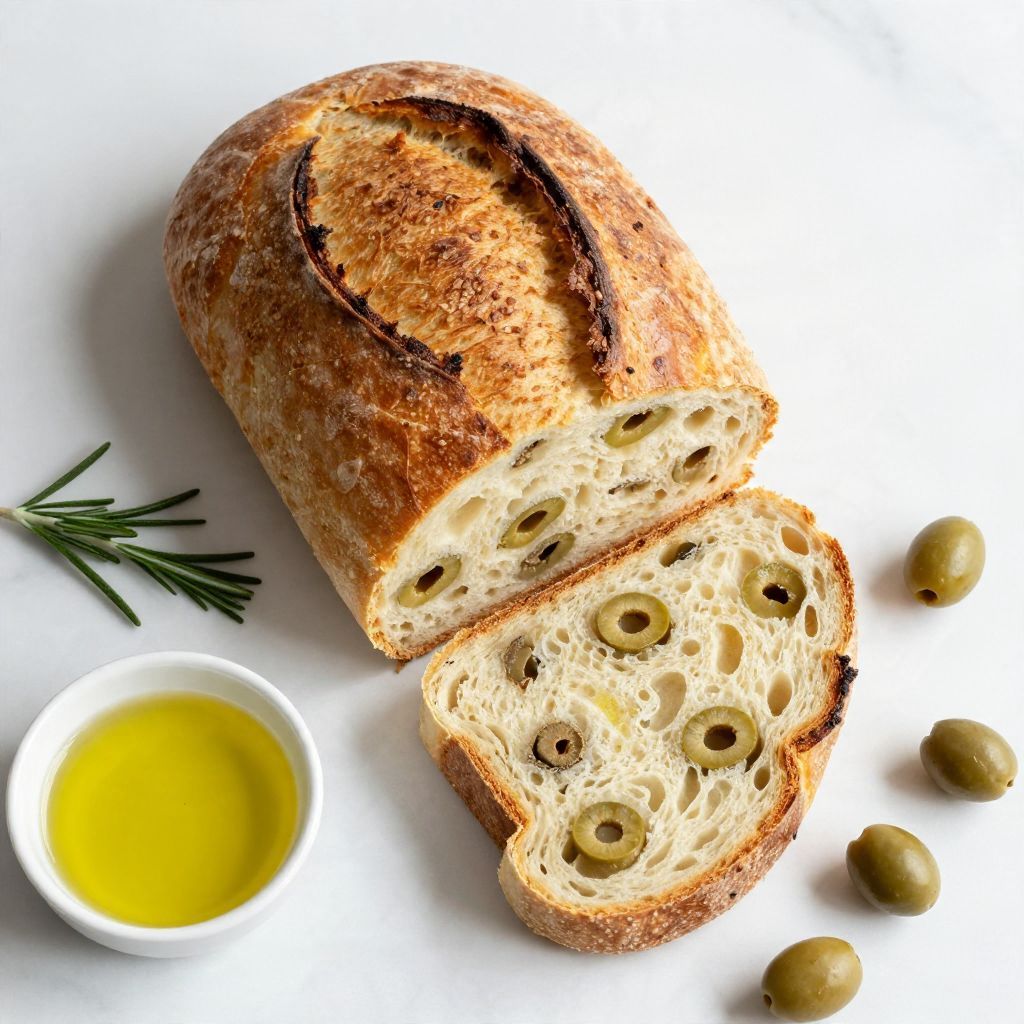
Olive Bread
Ingredients
Equipment
Method
- In a large mixing bowl, combine the flour, instant yeast, and salt.
- Pour in the warm water and olive oil. Stir until a rough dough forms.
- Add the chopped olives to the dough and mix until evenly distributed.
- Transfer the dough onto a floured surface and knead for about 5-7 minutes.
- Place the dough in a greased bowl and cover it with a kitchen towel. Let it rise in a warm place for about 1 hour.
- Once risen, punch down the dough to release air. Shape it into a loaf and place it on a baking sheet lined with parchment paper.
- Cover the shaped loaf with a towel and let it rise for another 30 minutes.
- Preheat your oven to 375°F (190°C). Bake the bread for 30 minutes, or until golden brown.