Picture this: a massive flat-top griddle sizzling with strips of steak, shrimp, and colorful vegetables while flames dance across the surface and your guests lean in with wide eyes. That’s the magic of blackstone hibachi, and you can recreate it right in your own backyard or kitchen.
This recipe brings the theatrical excitement and incredible flavors of a hibachi restaurant straight to your home without the steep price tag. The beauty of blackstone hibachi lies in its speed, versatility, and the fact that everyone watches their food cook right before them, making it a showstopper for entertaining.
Whether you’re cooking for a casual weeknight dinner or impressing a crowd, this guide walks you through the techniques, timing, and tricks that separate mediocre flat-top cooking from truly memorable meals.
Why You’ll Love This Recipe
Blackstone hibachi offers the perfect balance of restaurant-quality flavor, interactive entertainment, and practical home cooking. You’ll have a complete meal on the griddle in under 30 minutes, and your guests won’t stop talking about it.
- Cooks in one pan with minimal cleanup and maximum impact
- Customizable for any protein, vegetable, or dietary preference
- Fast enough for weeknight dinners, impressive enough for entertaining
- Develops incredible caramelization and depth of flavor that’s hard to achieve in a regular pan
- Interactive cooking experience that keeps diners engaged and entertained
My Experience Making This Recipe
The first time I fired up my blackstone griddle for hibachi-style cooking, I was nervous about managing the heat and timing everything correctly. Within five minutes of hearing that sizzle and watching the butter melt into golden pools, my anxiety vanished and pure joy took over.
What surprised me most was how forgiving the technique actually is once you understand the basic heat zones on your griddle. My guests were mesmerized watching the vegetables get chopped and tossed right in front of them, and the fried rice that cooked in the drippings of the meat was legitimately some of the best rice I’ve ever eaten.
I’ve made this recipe dozens of times now, and every single time I learn something new about timing or temperature management. The beauty is that even small mistakes taste incredible because a hot griddle with good ingredients and proper seasoning masks almost everything.
Recipe Overview
- Recipe Name: Blackstone Hibachi
- Servings: 4
- Prep Time: 25 minutes
- Cook Time: 20 minutes
- Total Time: 45 minutes
- Course: Main Course
- Cuisine: Japanese-inspired
- Calories per Serving: 520
Equipment You Will Need
- Blackstone griddle or large flat-top cooking surface
- Stainless steel or wooden spatulas (at least 2)
- Tongs
- Sharp knife for chopping vegetables and proteins
- Metal mixing bowl or small container for oil and seasonings
- Butter knife or small scraper for moving food around
- Meat thermometer (optional but helpful)
- Prep bowls for organized ingredient staging
Ingredients for Blackstone Hibachi
For the Protein and Vegetables
- Steak (ribeye or New York strip): 1.5 pounds, cut into 1-inch cubes or thin slices
- Shrimp: 1 pound, peeled and deveined (optional, can substitute with chicken or tofu)
- Onion (yellow): 2 large, cut into 1-inch chunks
- Zucchini: 2 medium, sliced into 1/4-inch rounds
- Mushrooms (button or cremini): 8 ounces, halved or quartered
- Broccoli: 3 cups florets, cut into bite-sized pieces
- Garlic: 4 cloves, minced
- Ginger: 1 tablespoon, minced
For Cooking and Seasoning
- Butter: 6 tablespoons, divided
- Vegetable oil: 3 tablespoons
- Salt: 2 teaspoons
- Black pepper: 1 teaspoon
- Garlic powder: 1 teaspoon
- Soy sauce: 4 tablespoons
- Mirin or honey: 2 tablespoons
- White wine (optional): 2 tablespoons, for deglazing
For Serving (Optional)
- Steamed rice or fried rice
- Green onions, chopped
- Sesame seeds
Ingredient Notes and Substitutions
- Steak: Ribeye and New York strip hold up beautifully under high heat and develop excellent caramelization. If budget is tight, sirloin works fine and cooks just as well, though it’s slightly leaner and less forgiving if overcooked.
- Shrimp: Large or jumbo shrimp (16-20 per pound) cook evenly and don’t dry out as quickly as smaller varieties. Chicken breast cut into 1-inch cubes or thick-cut pork loin makes excellent substitutes and cooks in similar timeframes.
- Butter: Clarified butter or ghee won’t burn at high heat as easily as regular butter, reducing the risk of darkening your food. Regular butter works fine if you watch carefully and keep the heat moderate during vegetable cooking.
- Soy sauce: Tamari or coconut aminos provide similar umami depth for those avoiding wheat or soy respectively. Regular soy sauce is standard and provides the most authentic hibachi flavor.
- Mirin: This sweet Japanese rice wine creates the signature slight sweetness of hibachi cooking. Brown sugar dissolved in water works as a substitute, though the flavor won’t be quite as refined.
How to Make Blackstone Hibachi
Step 1: Prep and Stage Your Ingredients
Cut all vegetables into uniform, bite-sized pieces and arrange them in separate prep bowls on one side of your workspace. Cube or slice your protein, pat it dry with paper towels, and season everything lightly with salt and pepper about 10 minutes before cooking, which helps the seasonings adhere and creates better browning.
Step 2: Heat Your Blackstone Griddle
Turn your griddle to high heat and let it preheat for at least 5 minutes until you see wisps of smoke and water droplets immediately bead and vanish when splashed on the surface. This ensures the griddle is hot enough to sear proteins properly and develop that crucial caramelized crust.
Step 3: Cook the Protein First
Add 1 tablespoon of oil to the center of the griddle, then place your steak cubes or slices on the hot surface and let them sit undisturbed for 2-3 minutes per side. Resist the urge to move them around constantly; the stillness is what creates that beautiful brown exterior, and internal juices will reabsorb as it rests, keeping it tender.
Once the steak reaches your desired doneness (medium-rare at 130-135 degrees Fahrenheit internal temperature), move it to one side of the griddle and add your shrimp if using, cooking for 1-2 minutes per side until they turn pink and opaque. Remove both proteins and tent them loosely with foil to keep warm while you cook the vegetables.
Step 4: Create Heat Zones for Vegetables
Push your cooked proteins to a cooler edge of the griddle, then divide the cooking surface into two zones: high heat for vegetables that benefit from quick searing, and medium heat for items that need slower cooking. This prevents overcrowding and allows each vegetable to cook optimally without steaming.
Step 5: Cook the Dense Vegetables First
Add 2 tablespoons of butter to the high-heat zone and place your broccoli and mushrooms on the griddle, stirring occasionally for 4-5 minutes until they develop golden-brown edges. Dense vegetables need more time and heat to cook through and caramelize properly, so they go first before softer vegetables get added.
Step 6: Add the Softer Vegetables
Move the cooked dense vegetables to the warm side of the griddle, add another tablespoon of butter to the high-heat zone, then add your zucchini and onion chunks, stirring every minute or so for 4-5 minutes until they’re soft on the inside with slightly charred edges. The higher water content in these vegetables means they cook faster and can turn mushy if overcooked, so watch them carefully.
Step 7: Build the Seasoning Layer
Create a small space on the griddle by moving vegetables aside, add 1 tablespoon of butter, then add your minced garlic and ginger and let them sizzle for 30 seconds until fragrant. This blooming technique releases the aromatic oils in garlic and ginger, distributing their flavors throughout the entire dish rather than having them taste raw.
Pour in your soy sauce and mirin, stirring quickly to combine with the butter and aromatics, then toss all the vegetables and proteins together to coat everything evenly with the glaze. If you’re using wine, deglaze the griddle by pouring it in first, letting it sizzle and bubble for 10 seconds, then adding your soy and mirin to combine with the reduced liquid.
Step 8: Final Toss and Plate
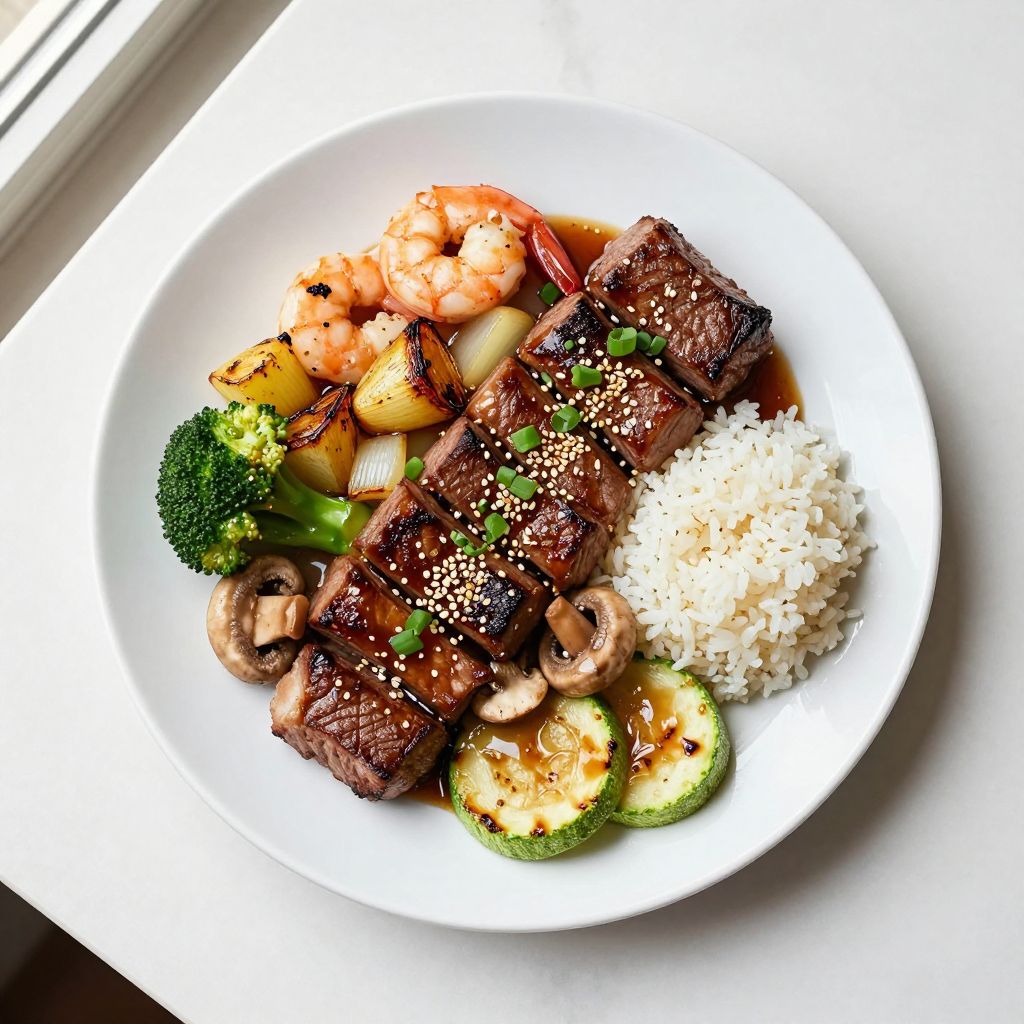
Give everything one final toss on the griddle for about 30 seconds to bring everything to the same temperature and ensure every piece gets a final coat of the glaze. Transfer to serving plates while everything is hot and sizzling, and serve immediately with rice and extra garnishes like green onions and sesame seeds if desired.
Pro Tip: The most critical factor in hibachi cooking is proper griddle temperature; a hot enough surface creates caramelization that makes even simple ingredients taste restaurant-quality, while a cool griddle produces steamed, mushy vegetables and tough proteins.
Tips for the Best Blackstone Hibachi
- Pat your proteins completely dry before cooking, since moisture on the surface prevents browning and causes steaming. Dry meat or shrimp sears properly and develops that desirable crust.
- Don’t overcrowd your griddle; give each piece of protein and vegetable space to touch the hot surface directly. Overcrowding creates steam, which prevents caramelization and makes everything taste boiled instead of seared.
- Use a two-temperature griddle approach with a very hot zone for searing and a medium zone for finishing and keeping cooked items warm. This prevents overcooking proteins while giving vegetables time to caramelize properly.
- Keep your seasonings simple and taste as you go; you can always add more soy sauce or salt, but you can’t remove it once it’s on the griddle. Start with less seasoning than you think you need and adjust toward the end of cooking.
- Have all your ingredients prepped and staged before you start cooking, since everything moves fast once the griddle is hot. Scrambling to chop garlic while your steak overcooks defeats the purpose of this quick, efficient cooking method.
- Let proteins rest in a warm spot for a minute or two after cooking to allow juices to redistribute, which keeps them tender and flavorful. Cutting into meat immediately after cooking causes juices to run onto the plate instead of staying in the meat.
Common Mistakes to Avoid
- Cooking on a griddle that’s not hot enough results in steamed, pale vegetables and tough, gray proteins instead of beautifully caramelized, tender food. Always preheat thoroughly and test the temperature with water droplets before adding food.
- Moving proteins constantly prevents proper browning and creates a rubbery texture. Let your steak and shrimp sit undisturbed for at least 2-3 minutes to develop a proper crust.
- Mixing all ingredients at the start creates a crowded, steamy environment and prevents proper caramelization. Cook proteins first, then vegetables by density, then combine at the end for maximum flavor development.
- Using low-quality proteins results in tough, flavorless meat that no amount of high heat or seasoning can save. Invest in good-quality steak and fresh shrimp for restaurant-level results.
- Adding sauce too early causes ingredients to steam and stick rather than caramelize; always add soy and mirin-based glazes in the final moments of cooking. This keeps the flavors bright and prevents a muddy, over-reduced sauce.
Serving Suggestions
Blackstone hibachi pairs beautifully with steamed rice, fried rice, or noodles that soak up the flavorful glazes and drippings from the griddle. The interactive nature of this cooking style makes it perfect for casual entertaining, date nights, or fun family dinners where everyone watches their meal come together.
- Serve over jasmine or sushi rice to catch all the savory glaze and complement the umami flavors
- Pair with a simple green salad dressed in rice vinegar and sesame oil to balance the richness
- Add a side of steamed edamame or a cucumber salad for fresh contrast
- Serve with extra hibachi sauce recipe on the side for dipping or extra drizzling
- Include yum yum sauce (a creamy, tangy condiment) or spicy mayo for those who want additional flavor layers
Variations to Try
- Seafood-Forward: Replace steak with scallops or a mix of shrimp and white fish for a lighter, briny version that cooks even faster. The delicate proteins need only 1-2 minutes per side, so add them last and watch them closely.
- Vegetarian Hibachi: Skip the protein entirely and double down on vegetables like bell peppers, asparagus, snap peas, and cauliflower with extra garlic and ginger. Cook everything by texture and density, then finish with a splash of soy and white miso paste dissolved in butter for umami depth.
- Spicy Kick: Add sliced fresh chili peppers, sriracha, or chili flakes to the garlic and ginger bloom for heat that builds throughout the meal. Start small since the griddle concentrates flavors intensely; you can always add more heat but can’t remove it.
- Asian Fusion: Marinate your proteins in a mixture of soy, ginger, and sesame oil before cooking, then finish with a splash of rice vinegar and a sprinkle of furikake seasoning for complex, layered flavors. This approach brings more depth to simpler proteins like chicken.
- Korean-Inspired: Use gochujang mixed with butter and honey instead of mirin for a spicy-sweet sauce, and add kimchi as a final topping for funky, fermented flavor. This variation transforms hibachi into something with bold, adventurous character.
Dietary Adaptations
- Gluten-Free: Use tamari instead of regular soy sauce and verify all seasonings contain no gluten additives. The rest of the recipe is naturally gluten-free, and rice or alternative grains pair perfectly for a complete meal.
- Dairy-Free: Replace butter with ghee or avocado oil and use coconut aminos instead of soy sauce for similar umami flavor without dairy products. The final dish tastes virtually identical, though you lose the slight richness butter provides.
- Vegan and Vegetarian: Use extra-firm tofu pressed and cubed, or thick portobello mushroom caps sliced into steaks as your protein, then cook using the exact same method as meat. Add extra garlic, ginger, and nutritional yeast to compensate for umami depth normally provided by animal proteins.
- Low-Carb and Keto: Skip the rice and load up on non-starchy vegetables like broccoli, zucchini, mushrooms, and cauliflower, using butter and oil generously for healthy fats. The high protein content of steak and shrimp makes this naturally keto-friendly with minimal adjustments.
Storage and Reheating
Refrigerator
Store leftover hibachi in an airtight container for up to 3 days, keeping the proteins and vegetables separate from the rice if possible since vegetables release moisture as they cool. Cold hibachi is actually delicious served over cold rice as a deconstructed bowl for lunch the next day.
- Separate proteins and vegetables from rice to prevent sogginess
- Store any extra sauce separately to prevent everything from absorbing excess liquid
- Keep in an airtight container to prevent absorption of refrigerator odors
Freezer
Freeze cooked hibachi for up to 2 months in freezer bags or containers, though the texture of vegetables becomes softer after thawing. For best results, freeze proteins and vegetables separately from rice and any sauces.
- Use freezer bags laid flat to save space and speed up thawing
- Label containers with the date and contents for easy identification
- Freeze in portion-sized containers for convenient reheating
Reheating
Reheat on your blackstone griddle over medium heat for the best texture and flavor, or use a skillet on the stovetop if a griddle isn’t available. Avoid using a microwave, which makes vegetables mushy and proteins tough.
- Thaw in the refrigerator overnight before reheating for best results
- Add a splash of soy sauce and a pat of butter while reheating to refresh flavors
- Cook until just heated through to avoid overcooking already-cooked proteins
Nutrition Information
| Nutrient | Amount |
|---|---|
| Calories | 520 |
| Total Fat | 28g |
| Saturated Fat | 12g |
| Carbohydrates | 18g |
| Fiber | 4g |
| Sugar | 6g |
| Protein | 48g |
| Sodium | 890mg |
| Cholesterol | 125mg |
These values are calculated based on a four-serving portion with steak and shrimp, excluding optional rice and garnishes which would add carbohydrates and calories. Actual nutrition varies based on specific brands and portion sizes used, so adjust accordingly for your dietary needs.
Frequently Asked Questions
Can I Make Blackstone Hibachi Without a Blackstone Griddle?
Yes, you can use a large cast-iron skillet, carbon steel pan, or even a large stainless steel pan, though you won’t achieve quite the same level of theatrical presentation or even heat distribution. Cook in batches to avoid overcrowding and maintain high enough temperature for proper caramelization.
What’s the Best Temperature for Cooking Hibachi?
Keep your griddle around 400-450 degrees Fahrenheit for searing proteins and high-heat vegetable cooking, then reduce to 300-350 degrees for finishing vegetables and combining everything at the end. A cooler zone on the griddle is essential for controlling cooking speed and preventing overcooking.
How Far in Advance Can I Prep the Ingredients?
Prep vegetables up to 24 hours ahead and store them in airtight containers in the refrigerator, though they’re best when prepared just before cooking for maximum crispness and moisture retention. Pat proteins dry and season them just 10 minutes before cooking for best browning and seasoning adhesion.
Why Did My Vegetables Get Mushy?
Mushy vegetables result from overcrowding the griddle, which creates steam instead of dry heat, or cooking everything together at once so soft vegetables finish long before dense ones. Cook by vegetable density, give everything space on the griddle, and keep the heat high enough to evaporate moisture quickly.
Can I Use Frozen Vegetables and Proteins?
Frozen proteins work fine if fully thawed and patted dry before cooking, though fresh is always superior for texture and browning. Frozen vegetables release excess moisture that interferes with caramelization, so fresh vegetables are strongly preferred for hibachi cooking.
What’s the Difference Between Hibachi and Teppanyaki?
Hibachi traditionally refers to a small tabletop charcoal grill for grilling meats and vegetables, while teppanyaki is the style of cooking on a large flat-top griddle with theatrical presentation. This recipe uses teppanyaki-style cooking techniques on a blackstone griddle for home entertaining.
Final Thoughts
Blackstone hibachi brings restaurant magic into your home kitchen, creating memorable meals that taste incredible and look even better. Once you understand the core techniques of high-heat searing and layered seasoning, you’ll make this recipe confidently and customize it endlessly based on what’s in your fridge.
Your first attempt might feel chaotic with heat management and timing, but that’s completely normal and part of the learning curve. After just a few times on your blackstone, you’ll develop an intuition for when to move things around, how hot your griddle really is, and when flavors are perfectly balanced.
If you loved this recipe, explore more entertaining options like our benihana fried rice recipe that cooks beautifully on a blackstone using the same high-heat techniques. Your guests will be amazed, your family will request it constantly, and you’ll wonder why you didn’t start cooking hibachi-style years ago.
Blackstone Hibachi
Ingredients
Equipment
Method
- Cut all vegetables into uniform, bite-sized pieces and cube or slice the steak; pat the protein dry and season everything lightly with salt and pepper, then stage ingredients in prep bowls.
- Preheat the griddle over high heat (400-450°F) for at least 5 minutes until water droplets sizzle and evaporate instantly.
- Add 1 tablespoon oil to the center of the griddle and sear steak cubes undisturbed for 2-3 minutes per side until medium-rare (130-135°F), then move steak to a cooler zone and tent with foil.
- Add shrimp to the hot zone and cook 1-2 minutes per side until pink and opaque; remove and tent with the steak.
- Divide the griddle into a high-heat zone and a medium-heat zone; push cooked proteins to the medium zone for warming.
- Melt 2 tablespoons butter in the high-heat zone and cook broccoli and mushrooms, stirring occasionally for 4-5 minutes until golden-brown; move to the warm zone.
- Add 1 tablespoon butter to the high-heat zone and cook zucchini and onions, stirring every minute for 4-5 minutes until tender with charred edges; transfer to the warm zone.
- Create a small well, melt 1 tablespoon butter, sauté garlic and ginger for 30 seconds, then pour in soy sauce and mirin (and deglaze with wine if using), stirring to combine into a glaze.
- Return all proteins and vegetables to the hot zone, toss for 30 seconds to coat in the glaze, then serve immediately with rice and garnishes.