
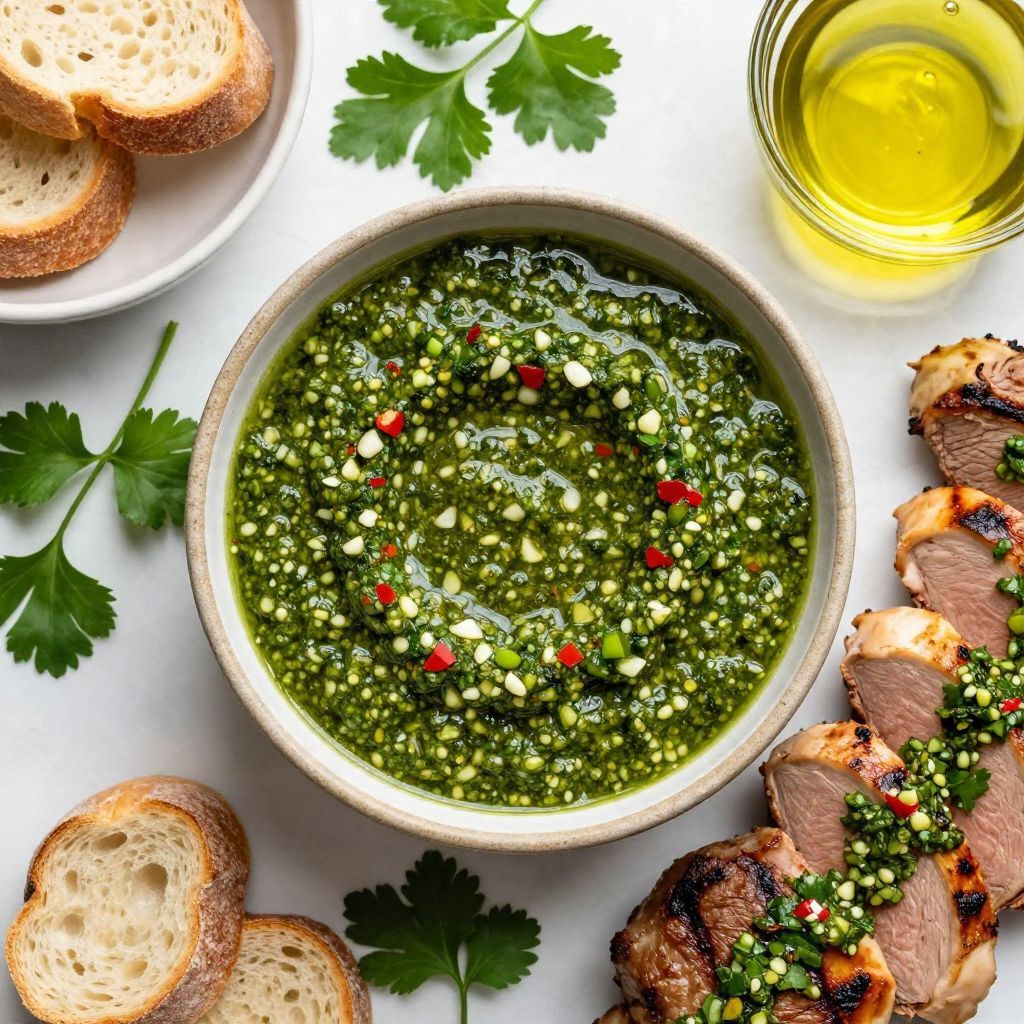
Fresh, zesty, and downright irresistible, Chimichurri is the condiment that can turn any meal into a flavor explosion. This vibrant sauce hails from Argentina and is perfect for grilled meats, vegetables, or even as a dipping sauce. With its punchy mix of herbs, garlic, and a hint of heat, you’ll find it hard to resist slathering it on everything. Trust me, once you make this, you’ll be looking for excuses to use it every day.
Why You’ll Love This Recipe
This Chimichurri recipe is a must-try for several reasons.
- Quick to make with minimal prep time.
- Versatile: perfect for grilling or as a marinade.
- Fresh ingredients create a bright flavor.
- Customizable by adjusting the heat and herbs.
- Great for meal prepping and storing.
My Experience Making This Recipe
The first time I made Chimichurri, my kitchen was alive with the scent of fresh herbs and garlic. I remember drizzling it over grilled steak, and the combination was pure magic.
Friends who joined me for dinner were raving about it, asking for the recipe. It was one of those moments where a simple sauce elevated the entire meal.
Recipe Overview
- Recipe Name: Chimichurri
- Servings: 8
- Prep Time: 10 minutes
- Cook Time: 0 minutes
- Total Time: 10 minutes
- Course: Condiment
- Cuisine: Argentine
- Calories per Serving: 70
Equipment You Will Need
- Food processor or blender
- Measuring cups
- Measuring spoons
- Mixing bowl
- Spatula
Ingredients for Chimichurri
- 1 cup fresh parsley, packed
- 1/2 cup fresh cilantro, packed
- 4 cloves garlic, minced
- 1/2 teaspoon red pepper flakes (adjust to taste)
- 1/2 cup olive oil
- 1/4 cup red wine vinegar
- 1 teaspoon salt
- 1/2 teaspoon black pepper
Ingredient Notes and Substitutions
- Fresh parsley: This is the base herb for chimichurri. Substitute with fresh basil for a different flavor.
- Fresh cilantro: Adds a citrusy note. If you’re not a fan, simply use more parsley.
- Red pepper flakes: Offers a kick. You can replace it with minced jalapeño for more heat.
- Olive oil: Provides richness. Any neutral oil can work, but olive oil enhances the flavor.
- Red wine vinegar: Gives acidity. White wine vinegar or lemon juice can be used instead.
How to Make Chimichurri
Step 1: Prepare the Herbs
Start by washing and drying the parsley and cilantro thoroughly. Removing excess moisture ensures the sauce doesn’t become watery.
Step 2: Chop the Herbs
Finely chop the parsley and cilantro. A food processor is handy, but a sharp knife works well too for a rustic texture.
Step 3: Add Garlic and Spices
In a mixing bowl, add the minced garlic and red pepper flakes to the chopped herbs. This combination boosts the sauce’s flavor profile significantly.
Step 4: Mix in the Liquids
Pour in the olive oil and red wine vinegar. These ingredients bring the sauce together and balance the herbiness with acidity.
Step 5: Season It Right
Add the salt and black pepper to taste. Adjusting the seasoning is crucial for achieving the perfect flavor.
Step 6: Blend Until Combined
Use a food processor or blender to mix everything until well combined, but don’t purée it completely. You want a chunky texture for that authentic feel.
Step 7: Taste and Adjust
Give your chimichurri a taste and adjust the seasoning if necessary. This is your chance to make it just right for your palate.
Step 8: Let It Rest
Allow the chimichurri to rest for at least 30 minutes before serving. This lets the flavors meld beautifully.
Pro Tip: Make it ahead of time! Chimichurri tastes even better the next day as the flavors deepen.
Tips for the Best Chimichurri
- Use fresh herbs for the best flavor; dried herbs will not yield the same results.
- Don’t skip the resting time; it enhances the flavor significantly.
- Adjust the heat level according to your preference; more or less red pepper flakes can change the game.
- Store in an airtight container to keep it fresh longer.
- Experiment with different vinegar types for unique flavor profiles.
Common Mistakes to Avoid
- Using dried herbs instead of fresh — it will lack that vibrant taste.
- Over-blending the mixture — you want a chunky sauce, not a paste.
- Not letting it rest — skipping this step means you miss out on the flavor melding.
- Ignoring the taste test — adjusting seasoning is key to making it your own.
Serving Suggestions
Chimichurri is incredibly versatile and pairs well with many dishes.
- Grilled steak or chicken for a burst of flavor.
- Roasted vegetables to brighten up the dish.
- As a marinade for meats before grilling.
- On top of fish for a fresh twist.
- With crusty bread for dipping.
Variations to Try
- Try adding mint for a refreshing twist.
- Use lime juice instead of vinegar for a citrusy kick.
- Incorporate roasted red peppers for added sweetness.
- Swap in different herbs like oregano for a unique flavor.
- Add a bit of honey for a sweet contrast to the tangy vinegar.
Dietary Adaptations
- Gluten-free: This recipe is naturally gluten-free.
- Dairy-free: Contains no dairy products.
- Vegan/Vegetarian: Suitable for both diets.
- Low-carb/Keto: Fits well within low-carb guidelines.
Storage and Reheating
Refrigerator
Store chimichurri in an airtight container in the fridge.
- It will last up to a week.
- Give it a good stir before serving again.
Freezer
You can freeze chimichurri for longer storage.
- Store in ice cube trays for easy portioning.
- Thaw in the fridge before use.
Reheating
This sauce is best served fresh, but if you need to reheat it, do so gently.
- Warm it in a saucepan over low heat.
- Avoid boiling, as it can alter the flavors.
Nutrition Information
| Nutrient | Amount |
|---|---|
| Calories | 70 |
| Total Fat | 7g |
| Saturated Fat | 1g |
| Carbohydrates | 2g |
| Fiber | 1g |
| Sugar | 0g |
| Protein | 1g |
| Sodium | 150mg |
| Cholesterol | 0mg |
This nutrition information is approximate and can vary based on specific ingredients used.
Frequently Asked Questions
Can I make chimichurri ahead of time?
Absolutely! It tastes even better after sitting for a day to let the flavors meld.
What can I substitute for red wine vinegar?
You can use white wine vinegar or lemon juice as a substitute.
How do I store leftover chimichurri?
Store it in an airtight container in the refrigerator for up to a week.
Why is my chimichurri too watery?
Excess moisture can come from not drying the herbs properly. Always wash and dry them thoroughly.
Can I use dried herbs instead of fresh?
While you can, fresh herbs provide the best flavor and texture for chimichurri.
Final Thoughts
Making Chimichurri is an easy way to elevate your meals with vibrant flavor. I encourage you to give it a try and enjoy how it transforms simple dishes into something special.
If you’re interested in exploring more recipes, check out this authentic chimichurri recipe or try this red chimichurri recipe for a twist on the classic.
Chimichurri
Ingredients
Equipment
Method
- Wash and dry the parsley and cilantro thoroughly.
- Finely chop the parsley and cilantro.
- In a mixing bowl, add the minced garlic and red pepper flakes to the chopped herbs.
- Pour in the olive oil and red wine vinegar.
- Add the salt and black pepper to taste.
- Use a food processor or blender to mix everything until well combined but chunky.
- Taste and adjust the seasoning if necessary.
- Allow the chimichurri to rest for at least 30 minutes before serving.