
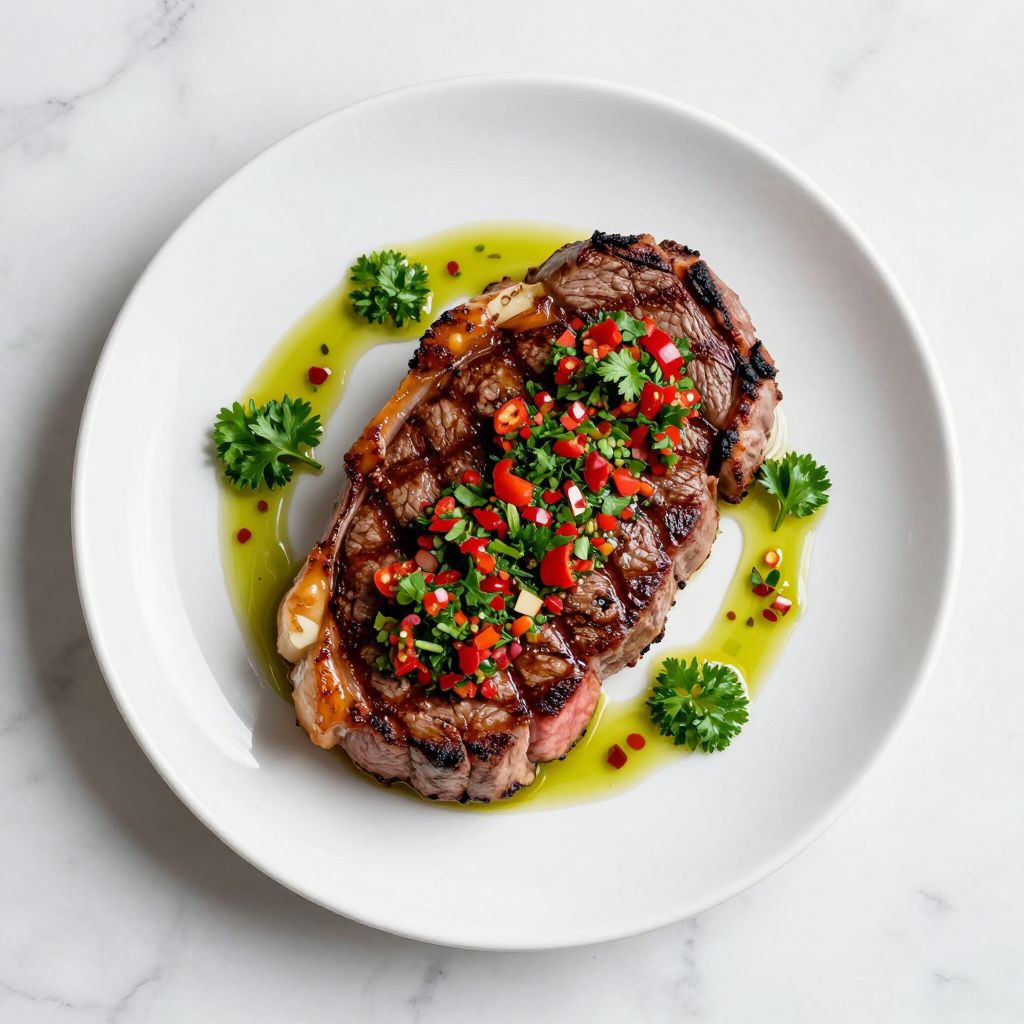
Picture yourself standing in an Argentine kitchen, breathing in that heady blend of fresh parsley, garlic, and red pepper as it hits your palate like a flavor bomb. Red chimichurri is the kind of sauce that makes you understand why a simple grilled steak needs absolutely nothing else on the plate.
This vibrant condiment transforms ordinary proteins and vegetables into something memorable in minutes. The magic lies in its bright, herbaceous heat and the perfect balance of acid and oil that coats every bite with pure joy.
Why You’ll Love This Recipe
Red chimichurri delivers restaurant-quality results at home without any fussy technique or rare ingredients. Once you make it, you’ll find yourself spooning it onto everything from grilled chicken to roasted potatoes to scrambled eggs.
- Ready in under 10 minutes with no cooking required
- Works beautifully with beef, pork, chicken, fish, and vegetables
- Keeps for two weeks in the fridge, making meal prep effortless
- Bold, complex flavors from simple pantry staples
- Naturally gluten-free, dairy-free, and vegan
My Experience Making This Recipe
I first made red chimichurri after a trip to Buenos Aires left me desperately missing the sauce that came with every meal. My homemade version took three attempts before I nailed the ratio of red pepper flakes to acid, but now I make a batch every week.
The first time I served it to friends with grilled steak, someone actually stopped mid-bite and asked if I’d somehow bottled restaurant magic. That’s the power of this sauce: it makes you look like a better cook than you actually are.
The smell alone sells it. When you blend the fresh parsley with garlic and red pepper, your entire kitchen fills with this incredible herbaceous aroma that promises something delicious is coming.
Recipe Overview
- Recipe Name: Red Chimichurri
- Servings: Makes about 1 cup (16 servings at 1 tablespoon per serving)
- Prep Time: 8 minutes
- Cook Time: 0 minutes
- Total Time: 8 minutes
- Course: Sauce/Condiment
- Cuisine: Argentine
- Calories per Serving: 45
Equipment You Will Need
- Food processor or blender
- Measuring cups and spoons
- Cutting board
- Chef’s knife
- Glass jar with lid for storage
- Rubber spatula
Ingredients for Red Chimichurri
- 1 cup fresh flat-leaf parsley, loosely packed
- 1/2 cup olive oil, preferably extra virgin
- 1/4 cup red wine vinegar
- 4 cloves garlic, roughly chopped
- 1 tablespoon red pepper flakes, or more if you like serious heat
- 1 teaspoon dried oregano
- 1/2 teaspoon kosher salt
- 1/4 teaspoon black pepper
Ingredient Notes and Substitutions
- Flat-leaf parsley is the backbone of chimichurri, offering a fresh, slightly peppery flavor without bitterness. Cilantro adds a bright earthiness but completely changes the profile, so use it only if you want a different sauce.
- Extra virgin olive oil gives the sauce its silky texture and subtle fruitiness. Regular olive oil works fine if budget is tight, though you lose some complexity.
- Red wine vinegar provides the acidity that wakes up your taste buds. Apple cider vinegar or white wine vinegar work in a pinch but will shift the flavor slightly more toward sweetness.
- Garlic cloves add pungent bite and depth. If you prefer milder garlic, use two cloves instead of four, or substitute with shallots for a softer onion-like sweetness.
- Red pepper flakes deliver the signature heat and slightly smoky undertone. Fresh red chili peppers or cayenne powder can replace them, using about one teaspoon of either for medium heat.
- Dried oregano brings subtle earthiness and warmth. Fresh oregano can work but use triple the amount, as fresh herbs are more delicate than their dried counterparts.
How to Make Red Chimichurri
Step 1: Prepare Your Parsley
Rinse your fresh parsley under cold water and pat it completely dry with paper towels. Wet parsley will make your sauce watery and dilute the bright flavors you’re after.
Step 2: Rough Chop Your Aromatics
Cut your four garlic cloves into rough chunks on a cutting board. This makes them easier for the food processor to handle and ensures they blend evenly without creating harsh garlic chunks.
Step 3: Combine Dry Ingredients
Add your loosely packed parsley, chopped garlic, red pepper flakes, dried oregano, kosher salt, and black pepper into your food processor. Pulsing dry ingredients first helps break everything down into smaller pieces before the oil goes in.
Step 4: Pulse Until Roughly Combined
Pulse the mixture 4 to 5 times until the parsley breaks down into small, herbaceous pieces and the garlic disappears into the mix. You want a chunky, vibrant green base, not a smooth puree.
Step 5: Add the Vinegar
Pour in your red wine vinegar while pulsing another 2 to 3 times. The vinegar will help break down the herbs further and start to extract their oils and flavors.
Step 6: Stream In the Olive Oil
With the food processor running on low speed, slowly drizzle in your olive oil. Adding oil gradually creates an emulsion that makes the sauce creamy and cohesive rather than separated and greasy.
Step 7: Taste and Adjust Heat
Stop the food processor and taste a tiny spoonful on your finger. If you want more heat, add another half teaspoon of red pepper flakes and pulse once or twice to combine.
Step 8: Transfer and Rest
Scrape the finished chimichurri into a glass jar using a rubber spatula, making sure to get every fleck of those precious herbs. Let it sit at room temperature for 15 minutes before using so the flavors can marry and develop.
Pro Tip: Make your chimichurri the night before serving. The flavors actually intensify as the sauce sits, and you’ll have more time to actually cook your protein instead of rushing to make the sauce.
Tips for the Best Red Chimichurri
- Use a food processor, not a blender. Blenders turn the sauce into a puree and generate too much heat, which damages the fresh parsley flavor.
- Keep your parsley in the freezer for 15 minutes before chopping. Cold herbs retain their bright color and fresh taste better than room temperature ones.
- Taste your vinegar first. Some bottles taste more acidic than others, so you might need slightly less or more to balance the oil.
- Store in glass, never plastic. Plastic absorbs the oils and can make the sauce taste metallic or off after a few days.
- Stir before using. The herbs naturally settle to the bottom and oil rises to the top, so a quick stir distributes the flavors evenly across your plate.
- Make a double batch. This sauce freezes beautifully, and you’ll be thrilled to have it on hand for unexpected steak dinners or weekend grilling.
Common Mistakes to Avoid
- Overblending your sauce turns it into a murky puree instead of a fresh, chunky condiment. Pulse, don’t process. You want texture and visible flecks of herbs.
- Using wet parsley waters down the sauce and mutes the herbaceous punch. Always pat your herbs completely dry before they go into the food processor.
- Skipping the vinegar creates an oil-heavy sauce that feels greasy on the palate. The acid is essential for balance and cutting through rich meats.
- Adding too much garlic overpowers the delicate parsley flavor and makes the sauce taste harsh. Four cloves is plenty; more becomes a one-note garlic bomb.
- Storing in plastic containers ruins the sauce. The oils stain and degrade the plastic, and the flavor takes on an unpleasant chemical note after just a few days.
Serving Suggestions
Red chimichurri is the ultimate steak companion, but its versatility goes far beyond beef. This sauce transforms grilled vegetables, roasted potatoes, fresh mozzarella, and crusty bread into something crave-worthy.
- Spoon generously over grilled or pan-seared steak, letting it pool on the plate
- Toss with roasted cauliflower, zucchini, or bell peppers right from the oven
- Mix into sour cream or Greek yogurt for a tangy dipping sauce for crudites
- Drizzle over grilled fish, especially flaky white fish or salmon fillets
- Dollop onto scrambled eggs, fried eggs, or morning toast for a protein-packed breakfast
Variations to Try
- Green Chimichurri: Replace the red pepper flakes with fresh green chiles or jalapeños for a spicier, greener sauce. The flavor becomes brighter and less smoky.
- Roasted Red Pepper Version: Blend in one roasted red pepper (jarred is fine) for a sweeter, milder sauce with a silky texture that works beautifully with fish and vegetables.
- Spicy Lime Chimichurri: Swap the red wine vinegar for fresh lime juice and add one teaspoon of cumin. This version pairs beautifully with grilled chicken and works wonderfully as a marinade.
- Herb-Forward Blend: Add two tablespoons of fresh mint or basil alongside the parsley for a more complex herbal profile that feels lighter and summery.
- Smoky Chipotle Version: Add one chipotle pepper in adobo sauce and swap the red pepper flakes for smoked paprika. This creates a deeper, more complex sauce that works on grilled pork and beef.
Dietary Adaptations
- Gluten-Free: This recipe is naturally gluten-free as written. Just confirm your dried oregano comes from a certified gluten-free source if you have celiac disease.
- Dairy-Free: Red chimichurri contains no dairy, making it perfect for dairy-free diets right out of the gate.
- Vegan: The recipe is completely vegan with no animal products of any kind.
- Low-Carb/Keto: This sauce fits perfectly into ketogenic eating. One tablespoon contains less than 1 gram of carbohydrates.
Storage and Reheating
Refrigerator
Red chimichurri keeps beautifully in a sealed glass container for up to two weeks in the refrigerator. The flavors actually deepen over time, so it tastes even better on day three than day one.
- Store in an airtight glass jar
- Keep away from direct light
- Stir before each use
Freezer
Chimichurri freezes exceptionally well for up to three months. Divide it into ice cube trays so you can thaw individual portions as needed.
- Pour into silicone ice cube trays
- Freeze until solid, then pop cubes into a freezer bag
- Each cube equals about one tablespoon
Reheating
Never heat chimichurri. Thaw frozen cubes at room temperature for 30 minutes, then use immediately. Heat destroys the fresh parsley flavor and kills the bright, vibrant taste you’re after.
- Thaw frozen portions at room temperature
- Use at room temperature or chilled
- Stir well before serving
Nutrition Information
| Nutrient | Amount |
|---|---|
| Calories | 45 |
| Total Fat | 4.5g |
| Saturated Fat | 0.6g |
| Carbohydrates | 1g |
| Fiber | 0.2g |
| Sugar | 0g |
| Protein | 0.1g |
| Sodium | 150mg |
| Cholesterol | 0mg |
These values are approximations based on standard ingredient databases. Individual nutrition may vary based on your specific brands and portion sizes. Consult a nutritionist if you need exact macro counts for specific dietary goals.
Frequently Asked Questions
Can I Make Red Chimichurri Without a Food Processor?
Absolutely. Finely mince your parsley and garlic by hand, then whisk everything together in a bowl. The texture will be more rustic with larger herb pieces, but the flavor remains just as excellent.
How Far Ahead Can I Make This Sauce?
Make it up to two weeks in advance and store it in the refrigerator. The flavors actually deepen and meld together nicely after a day or two, so there’s no downside to making it ahead.
Can I Use Dried Parsley Instead of Fresh?
Dried parsley loses most of its bright flavor and becomes dusty and bitter. If you absolutely cannot find fresh, use triple the amount of dried, though the final sauce won’t taste nearly as good.
Why Is My Chimichurri Separating?
This is completely normal and happens because oil and vinegar are immiscible. Just stir vigorously before serving, or shake the jar hard for 30 seconds to temporarily emulsify it.
What’s the Difference Between Red and Green Chimichurri?
Red chimichurri uses red pepper flakes and typically more vinegar, creating a spicier, tangier profile. Green chimichurri relies on fresh herbs and chiles for a brighter, fresher taste without much heat.
Can I Use This as a Marinade?
Yes, absolutely. Use it to marinate beef, pork, or chicken for two to four hours before grilling. The acid in the vinegar tenderizes the meat while the herbs infuse deep flavor.
Final Thoughts
Red chimichurri is one of those sauces that pays for itself after just one use. Once you taste what it does for a simple grilled steak or roasted vegetables, you’ll understand why Argentine cooks refuse to eat meat without it.
Make a batch this week and watch as your weeknight dinners instantly feel more restaurant-quality. This sauce transforms the ordinary into the memorable, and that’s worth the eight minutes of prep time every single time.
Red Chimichurri
Ingredients
Equipment
Method
- Rinse your fresh parsley under cold water and pat it completely dry with paper towels. Wet parsley will make your sauce watery and dilute the bright flavors.
- Cut your 4 garlic cloves into rough chunks on a cutting board. This makes them easier for the food processor to handle and ensures they blend evenly.
- Add your loosely packed parsley, chopped garlic, red pepper flakes, dried oregano, kosher salt, and black pepper into your food processor.
- Pulse the mixture 4 to 5 times until the parsley breaks down into small pieces and the garlic disappears into the mix. You want a chunky, vibrant green base, not a smooth puree.
- Pour in your red wine vinegar while pulsing another 2 to 3 times. The vinegar will help break down the herbs further and start to extract their oils and flavors.
- With the food processor running on low speed, slowly drizzle in your olive oil. Adding oil gradually creates an emulsion that makes the sauce creamy and cohesive.
- Stop the food processor and taste a tiny spoonful. If you want more heat, add another half teaspoon of red pepper flakes and pulse once or twice to combine.
- Scrape the finished chimichurri into a glass jar using a rubber spatula. Let it sit at room temperature for 15 minutes before using so the flavors can marry and develop.